REVIEW · CITY TOURS
Kathmandu at Sunset: Explore the City on Rickshaw
Book on GetYourGuide →Operated by Intrepid Urban Adventures - Asia · Bookable on GetYourGuide
Sunset in Kathmandu changes your pace fast. This ride strings together temples, markets, and backstreets in the hours when the city feels most human. I like that you’re not doing a checklist; you’re doing the streets, with time to pause and watch.
My favorite part is the way the guide ties the places together, from snack-and-prayer rhythms to the big set-piece of Kathmandu Durbar Square. You’ll also get a quick taste of spice culture in Asan Market without it turning into a shopping sprint. One thing to consider: the tour length can vary a bit in practice, and on at least one past run it felt closer to 1.5 hours for the whole thing.
In This Review
- Key highlights worth planning around
- Why a rickshaw at sunset is the right way to see Kathmandu
- Starting at Hotel Marshyangdi in Thamel
- Thamel: a short orientation before the city turns inward
- Sigal shrine: a quiet break inside an alley
- Asan Market: spices, vegetables, and real daily trade
- Kathmandu Durbar Square: the UNESCO courtyard where life continues
- What to watch for in Durbar Square
- How the rickshaw experience supports drivers and locals
- Price and value: what $49 buys you
- Comfort, timing, and what to bring for a night-on-the-streets ride
- Who this tour fits best
- Should you book this Kathmandu sunset rickshaw tour?
- FAQ
- FAQ
- How long is the Kathmandu sunset rickshaw tour?
- Where do I meet for the tour?
- What does the tour cost?
- What’s included in the price?
- Is food or drinks included?
- Which stops will I visit during the evening?
- Is it a small group?
- Are rickshaws still used in Kathmandu?
- Can I cancel if my plans change?
Key highlights worth planning around
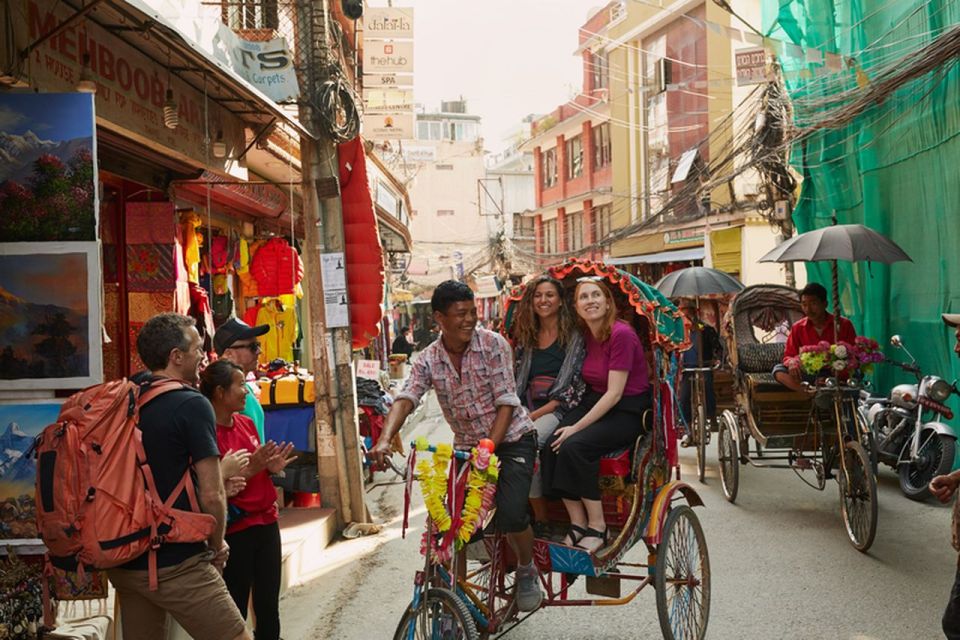
- Rickshaw time that’s actually local: you ride through inner-city lanes instead of only bouncing between viewpoints
- Sigal Buddhist shrine stop: a calm interior break reached from a small alley
- Asan Market focus: an hour for vegetables, spices, and daily Kathmandu smells and sounds
- Durbar Square for people-watching: time to sit in a temple square and observe rituals and routine
- Small group attention: up to 12 people, plus a private group option
- Support built into the route: entrance fees and rickshaw hiring meant to help local preservation and drivers
Why a rickshaw at sunset is the right way to see Kathmandu
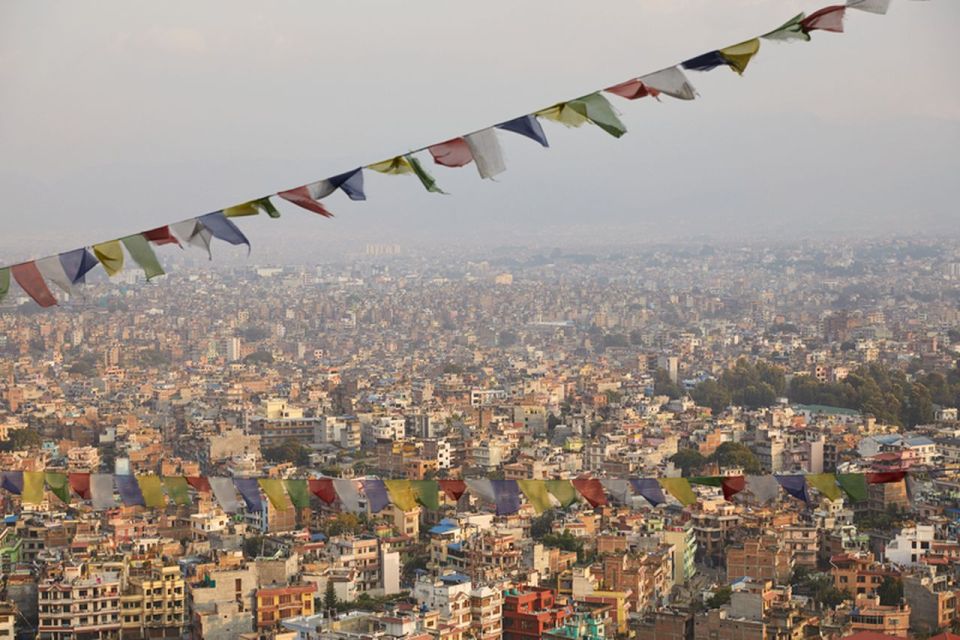
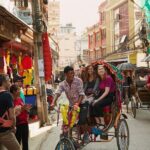
Kathmandu at night isn’t quiet. It’s active, loud in spots, and full of small moments that only show up when you slow down. A rickshaw helps because you’re moving through the city at street level, with enough speed to cover ground, but not so fast that everything becomes a blur.
This tour is built around that rhythm. You start in Thamel (the tourist heart), then shift into the quieter, more lived-in parts. The contrast matters. Thamel gives you an orientation for the sounds and crowds you’ll hear later, while the backstreets show you how the city runs for people who live there.
Also, sunset is when colors soften and the light turns temple stone from gray to warm. You don’t need special photography skills here. The courtyards and carved facades look better when the day is winding down.
You can also read our reviews of more city tours in Kathmandu
Starting at Hotel Marshyangdi in Thamel
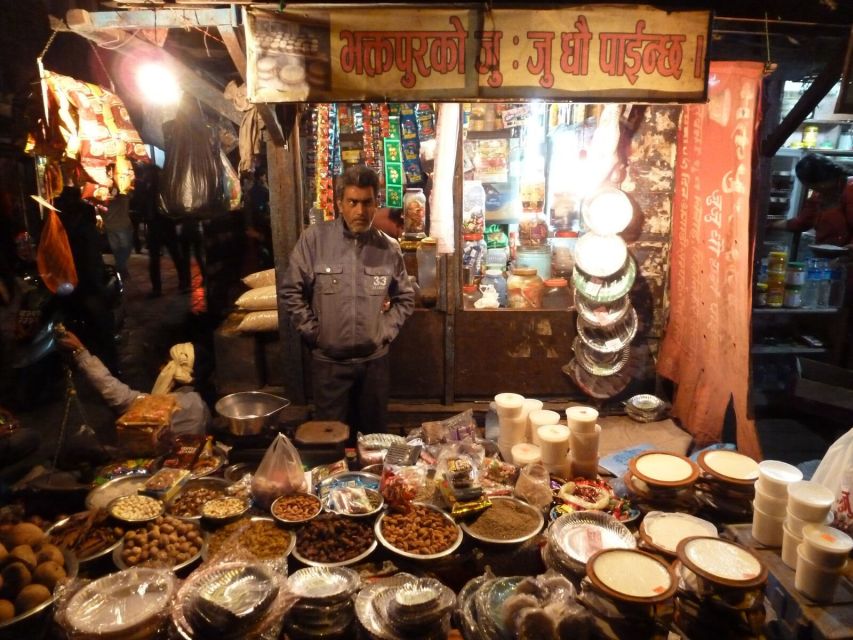
You meet at Hotel Marshyangdi, on Chaksibari Marg, Thamel. This is handy because Thamel is where most first-time visitors end up anyway, so you’re not trekking across town before the tour even starts.
From there, you’ll get onto a pedicab/rickshaw. The schedule lists about one hour of rickshaw time, then shorter on-foot visits at key stops. Translation: expect a mix of riding and walking, but not a marathon. You’re there for the atmosphere and the guide’s explanations, not for long hikes.
Practical note: in Kathmandu, streets can change character block by block. Even within a short distance, you may go from wider roads to tight lanes. A rickshaw is a good match because it keeps you close to what’s happening right beside you.
Thamel: a short orientation before the city turns inward
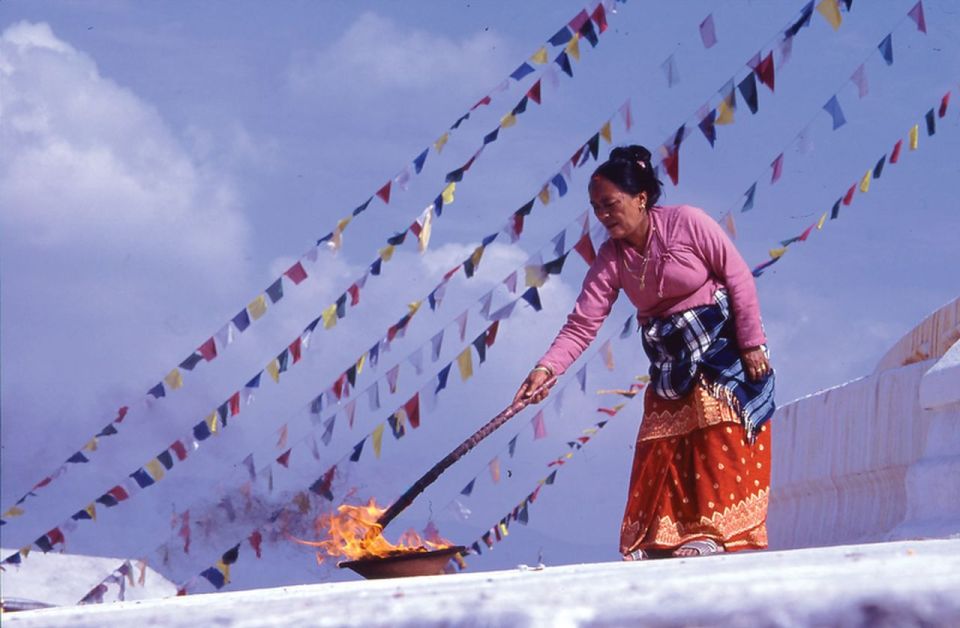
The itinerary includes a 15-minute visit in Thamel. Don’t treat this as the main event. Think of it as a warm-up: you’ll get your bearings fast in the area that tourists know, so later you can recognize what’s different once you’re riding away from the obvious paths.
You’ll likely notice how quickly the energy changes. Thamel can feel like a mix of cafés, shops, and hotels—busy, yes, but also useful. It’s an easy place to understand how many people are moving through the city at once.
Then your guide moves you on, and the tour becomes less about big landmarks and more about Kathmandu’s smaller textures: alley turns, nearby shrines, and the markets that feed daily life.
Sigal shrine: a quiet break inside an alley
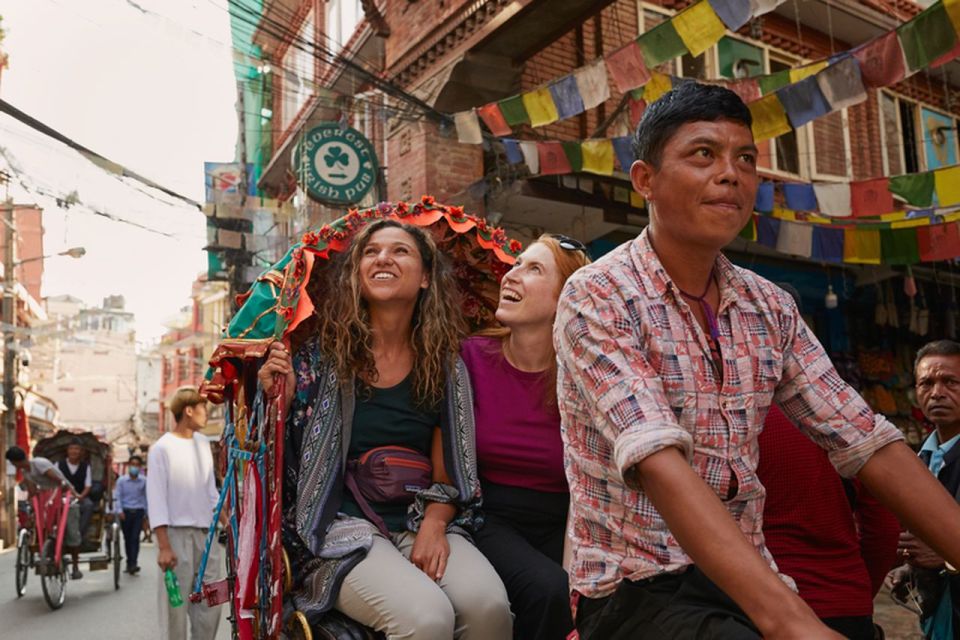
One of the best-feeling stops is Sigal, a Buddhist shrine that you reach just a few steps inside an alley. The point here isn’t that you’ll spend a long time reading every plaque. It’s that you get a sudden change in temperature—sound drops, movement slows, and you see devotion up close.
This is the kind of stop that’s hard to replicate on your own without planning. A guide makes the difference because you’re not only entering the place; you’re understanding what you’re seeing as you arrive.
I like this stop because it balances the day’s more public spaces. After riding and moving through busy market areas, Sigal gives you a calmer moment to reset. If you’re sensitive to crowds, this is a good psychological breath.
Asan Market: spices, vegetables, and real daily trade
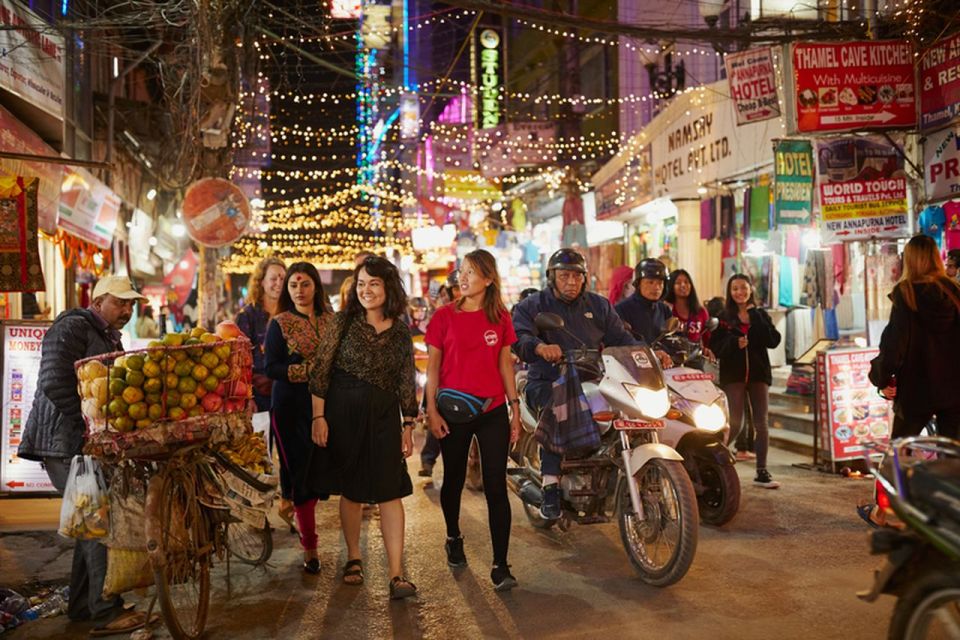
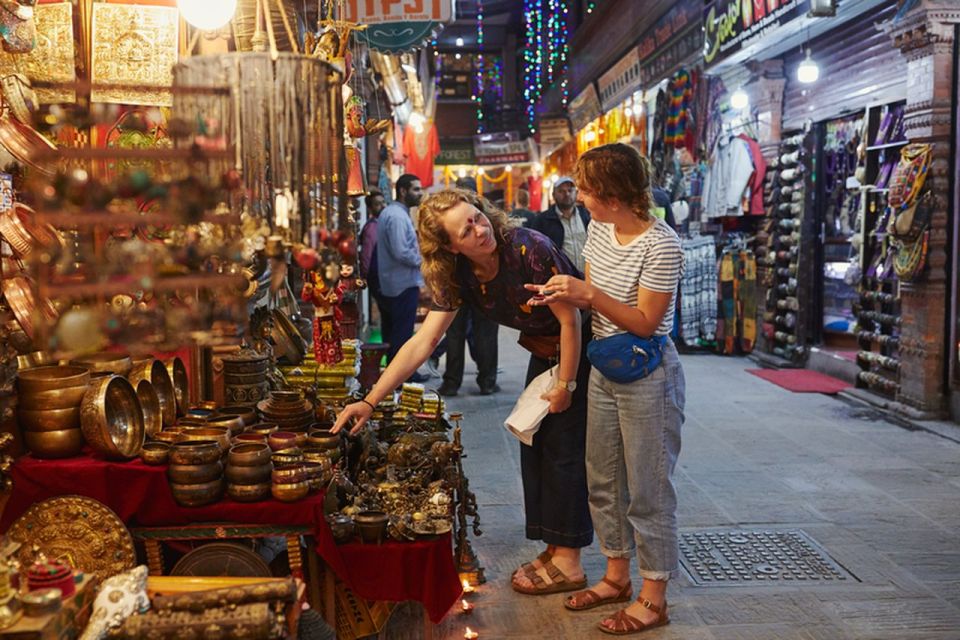
Asan Market is one of the tour’s centerpieces, with about one hour there. You’re especially connected to its identity: this area is known for vegetable and spice trading, and the market’s personality comes through in smell as much as in sight.
What you get with a guided stop is context. You’re not only looking at goods; you’re learning how the market fits into the day’s routine. That’s what turns a market visit from shopping into understanding.
You’ll also likely notice how quickly food culture and religion overlap here. The tour description points out Annapurna Temple overlooking the market, so the market isn’t a separate world. It’s part of the same neighborhood ecosystem where people pray, eat, buy, and go back to work.
One practical consideration: markets are active. Even if you like street life, give yourself permission to stand still for a minute. Look up, notice architecture, and then rejoin the flow. Your guide will help you pick the right moments to pause.
You can also read our reviews of more evening experiences in Kathmandu

Kathmandu Durbar Square: the UNESCO courtyard where life continues
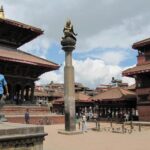
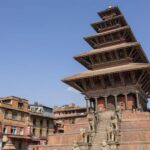
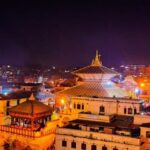
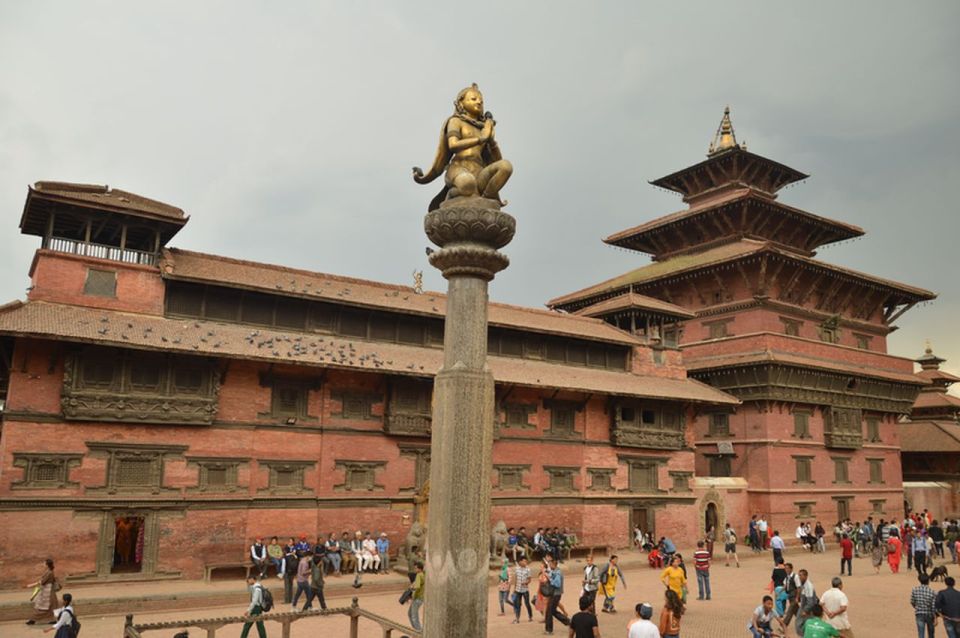
Then you land at the big one: Kathmandu Durbar Square for about 1.5 hours, including an entrance fee. This is a UNESCO-listed site, and the courtyard scale is exactly why it works at sunset. The light softens the stone, and the place starts to feel less like a monument and more like a living arena.
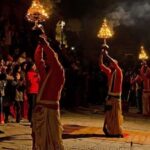
The most valuable part is not just seeing the structures. It’s having time to park yourself in one of the temple squares and watch what happens around you. People are sipping hot chai, devotees are deep in prayer, and daily tasks continue in the background. Even pigeons are part of the rhythm.
I really like how this stop is structured. You’re not rushed from gate to gate. You get time to settle, look, and listen as your guide explains what you’re seeing.
What to watch for in Durbar Square
- How rituals happen in public space, not behind closed doors
- How the architecture frames movement and sightlines
- How the square still functions day to day, even with all its historic weight
If you only have time for one cultural stop in Kathmandu, Durbar Square is the one. It’s also where the guide’s storytelling can make the biggest difference, because the visual density can be overwhelming if you’re trying to figure it out alone.
How the rickshaw experience supports drivers and locals
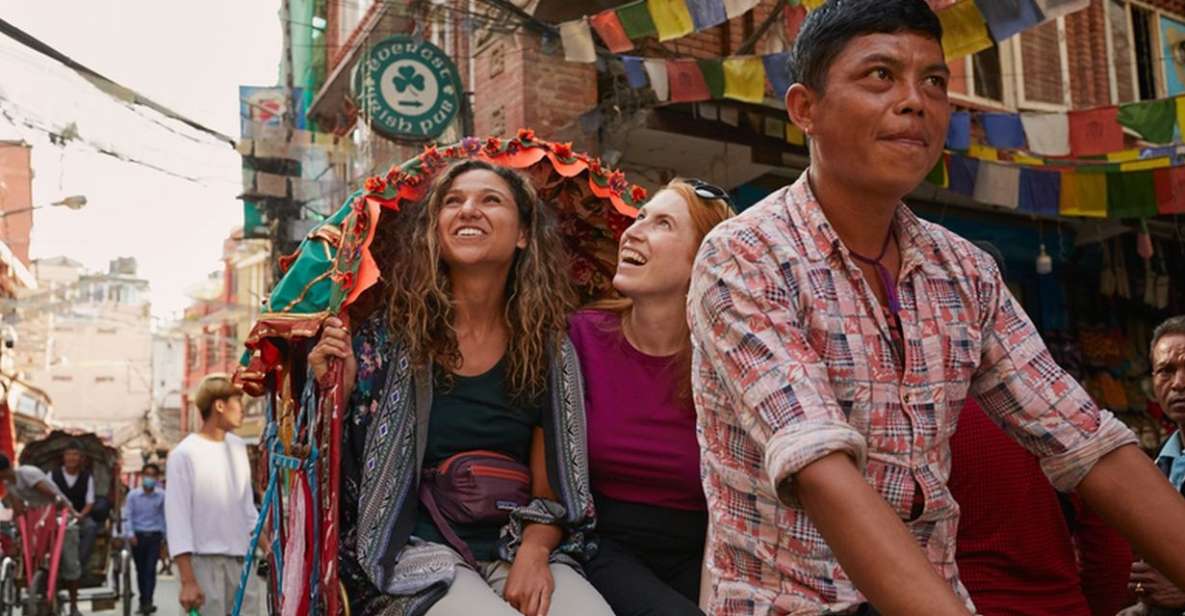
You’ll likely hear that modern cars and motorbikes have replaced rickshaws in many parts of Kathmandu. This tour takes a different approach: it hires rickshaws directly from drivers, giving them real work and financial support.
That matters. When you’re riding, it’s not just transportation; it’s participation in a small economic loop. It’s one reason the experience can feel more respectful than a quick tourist gimmick.
Also, there’s a sustainability angle stated for this tour: it’s listed as carbon neutral, run by a B Corp certified company committed to using travel as a force for good. I can’t verify emissions myself on the ground, but I do like that the operator at least puts this claim in writing and connects it to a broader “do good” approach.
Price and value: what $49 buys you
At $49 per person for 2.5 to 3 hours, this isn’t a budget bargain, but it’s also not priced like a private luxury car tour. You’re paying for three things you don’t get when you DIY it:
- A guide in English who helps you connect the dots
- Access costs (Durbar Square entrance fee is included)
- Rickshaw hire that supports drivers and gets you the right street-level movement
Small group size is part of that value. The tour is designed for groups up to 12 people. That size tends to keep things personal enough that you can ask questions or pause without feeling like you’re inside a bus tour machine. And there’s a private group option if you want the flexibility for your own pace.
Food and drinks are not included, so if you get hungry, plan ahead. You might find snacks along the way, especially in areas like Thamel and Asan, but you should budget for that yourself.
Comfort, timing, and what to bring for a night-on-the-streets ride
This is a sunset tour, so you’ll start in daylight and end as it cools down. Kathmandu nights can feel cooler than you expect, even when days are warm. Bring layers you can manage easily, because you’ll be changing from riding to walking to sitting in courtyards.
A few practical tips based on how this kind of route usually plays out:
- Wear shoes with grip for uneven stone and market paths
- Bring a small bag you can keep close while you’re moving through crowds
- If you wear jewelry or carry valuables, keep them secure—markets are busy
- Have a basic plan for staying hydrated since food and drinks aren’t included
Also, note the duration listing: it says 2.5 to 3 hours, but one prior experience reported a shorter on-the-ground time. That doesn’t necessarily mean the tour is consistently shorter, but it’s a good reminder to avoid scheduling a tight next appointment right after the ride.
Who this tour fits best
This is a great match if you want Kathmandu to feel personal and street-level. You’ll probably enjoy it most if you like:
- Temples and city atmosphere
- Markets that explain how daily life works
- Learning with a guide rather than wandering alone
It’s also a smart first evening in Kathmandu. You start in Thamel, then move outward, so you leave with a mental map of how different neighborhoods feel.
Kids: the provided info says children must be 6 to 11 years inclusively, and also notes that children below 6 are permitted. If you’re traveling with children, it’s worth confirming the operator’s exact age expectations when you book.
Should you book this Kathmandu sunset rickshaw tour?
I’d book it if you want a guided evening that mixes Durbar Square courtyard time, Asan’s spice-and-vegetable market energy, and a rickshaw ride that helps local drivers. The strongest pull is the structure: you get orientation in Thamel, a calm break at Sigal, then the two big “see and feel” stops that make Kathmandu memorable.
I would think twice if you need strict, guaranteed timing every minute. Even with a clear schedule, real-world conditions in cities like Kathmandu can shift how long certain moments take. And if you’re only interested in major monuments with minimal street time, you might prefer a more single-site tour.
FAQ
FAQ
How long is the Kathmandu sunset rickshaw tour?
The duration is listed as 2.5 to 3 hours.
Where do I meet for the tour?
You meet at Hotel Marshyangdi, Chaksibari Marg, Thamel, Kathmandu.
What does the tour cost?
It costs $49 per person.
What’s included in the price?
Included are rickshaw hire, an English-speaking Nepali guide, the entrance fee to Kathmandu Durbar Square, and a visit to the Buddhist shrine called Sigal.
Is food or drinks included?
No. Food and drinks are not included.
Which stops will I visit during the evening?
You’ll go through Thamel, visit Asan Market, visit Kathmandu Durbar Square, and stop at the Sigal Buddhist shrine.
Is it a small group?
Yes. It’s designed for a small group of up to 12 people, and a private group is also available.
Are rickshaws still used in Kathmandu?
Modern motorbikes and cars have replaced rickshaws in many places, but this tour hires rickshaws directly from drivers.
Can I cancel if my plans change?
Yes. Free cancellation is available up to 24 hours in advance for a full refund.