REVIEW · EVENING EXPERIENCES
Kathmandu Sunset Tour by Rickshaw Including Durbar Square Visit
Book on Viator →Operated by Intrepid Urban Adventures - India · Bookable on Viator
Kathmandu glows at 6 pm. This sunset rickshaw tour takes you from Thamel past Asan’s market streets to Kathmandu Durbar Square, then you walk temple lanes as the light cools down.
I love the angle of an elevated seat: you watch foot traffic, spice shops, and temple doorways without constantly looking over shoulders. I also love the on-foot pause at Durbar Square, where you get time to spot details like Gaddhi Baithak and take in the quieter mood after the ride.
Night streets can be darker than you expect, and the lanes are uneven, so wear closed shoes and stay with your group rather than heading off alone.
In This Review
- Key things to know before you go
- Why a Kathmandu sunset rickshaw at 6 pm works
- Meet at Hotel Marshyangdi and expect a smooth start
- Stop 1: Thamel basics before the city shifts gears
- Stop 2: Asan market streets and temple-side details
- The moment you arrive: Kathmandu Durbar Square after dark
- What to look for on your Durbar Square walk
- Freak Street vibes and chai when you need a break
- Rickshaw logistics: comfort, lane conditions, and pacing
- Local impact and carbon neutral choices that actually show up
- Price: is $50.30 a fair value?
- Who should book this Kathmandu sunset rickshaw tour
- Should you book the Kathmandu Sunset Tour by Rickshaw with Durbar Square?
- FAQ
- What time does the Kathmandu sunset rickshaw tour start?
- How long is the tour?
- Where do I meet the guide and driver?
- Is Durbar Square entrance included?
- Is food included?
- What group size is this tour limited to?
- Does the tour use a mobile ticket?
- Are children allowed?
- Is the tour carbon neutral or eco-focused?
- What is the cancellation policy window?
Key things to know before you go
- Small group (max 12): easier pacing and more time to ask questions.
- Rickshaw plus walking: you get the best of both worlds—street views from your seat, then slower temple time on foot.
- Durbar Square entrance included: money and hassle saved while you’re sightseeing.
- Thamel to Asan in the evening: you’ll pass markets and side temples before you reach the main temple cluster.
- UNESCO Kathmandu Durbar Square: you’re not just passing through; you get actual time inside the complex.
- Carbon neutral with local impact: the ride supports rickshaw drivers directly and helps fund heritage preservation via entrance fees.
Why a Kathmandu sunset rickshaw at 6 pm works
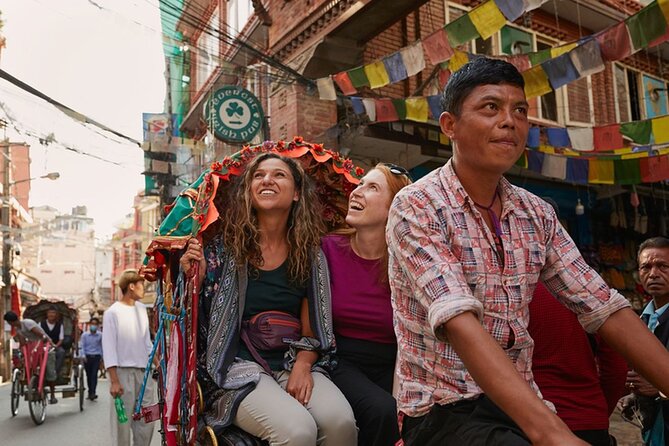
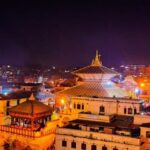
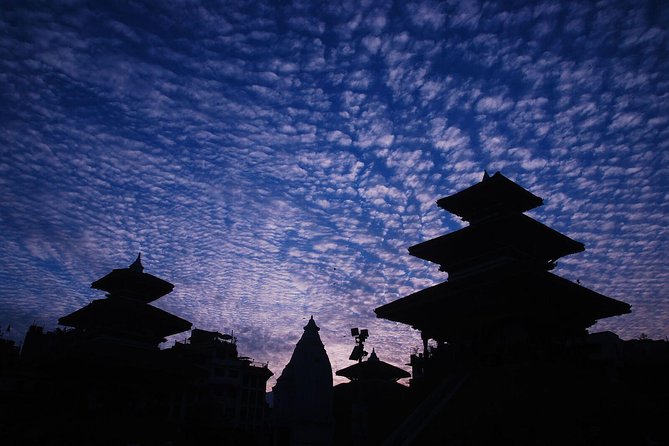
Kathmandu feels different at night, and this tour times it well. You start at 6:00 pm and ride through central Kathmandu while shop lights come on and evening crowds gather. The day’s heat is fading, but the city is still awake—perfect for temple silhouettes and street-level scenes.
This is not a long trek or a museum slog. You’re moving on a rickshaw through narrow lanes, then slowing down with a guided walk at the biggest historic stop. That rhythm matters. It keeps you from getting temple fatigue before you’ve even reached Durbar Square.
And because you’re elevated on the rickshaw, you don’t just get a “look around.” You get an angle. You see what people are doing below—vendors, pedestrians, scooters, and side-street life—while your guide points out the sights you might miss from ground level.
You can also read our reviews of more evening experiences in Kathmandu

Meet at Hotel Marshyangdi and expect a smooth start
You’ll meet at Hotel Marshyangdi (Chaksibari Marg, Kathmandu 44600) and then head out by rickshaw with your driver and local guide. Your total time is about 2 hours 30 minutes, so the evening stays focused without dragging.
You’ll also get a mobile ticket, which is handy when you’re moving through busy areas. The tour ends back at your starting meeting point, so you don’t have to worry about figuring out your route at night.
The biggest practical thing to keep in mind: you’re in a walking-and-riding format. There’s a short ride before each stop, then a chunk of time on foot at Durbar Square. That’s good news if you like structure. It also means you should be comfortable moving on uneven surfaces in the evening.
Stop 1: Thamel basics before the city shifts gears
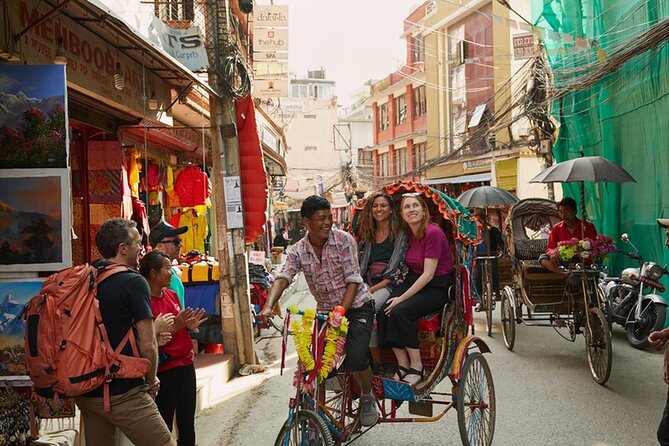
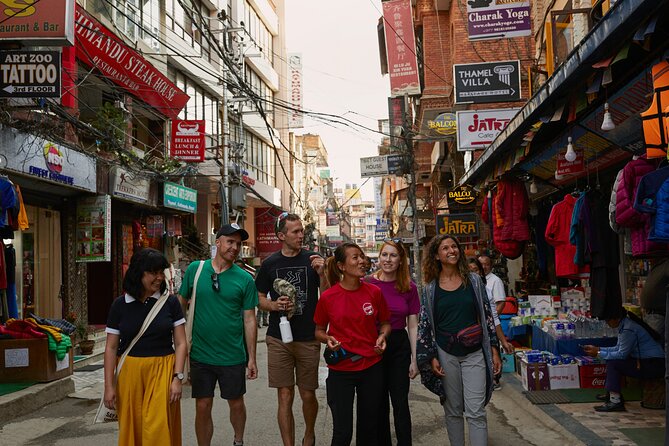
Your first stop is Thamel, a tourist hub with hotels, restaurants, shops, and plenty of activity. You’ll board your rickshaw here and get your first taste of the Kathmandu rhythm without jumping straight into the densest historic lanes.
This part is brief—about 15 minutes—and there’s no admission fee involved here. Think of it as your warm-up: meet your people, get oriented, and settle into the idea of riding through narrow streets.
Thamel can feel busy and a bit chaotic at first, but that’s useful. It gets you into the flow fast. From here, you’ll head toward Asan, and the tour’s energy gradually shifts from tourist bustle to older market life.
Stop 2: Asan market streets and temple-side details
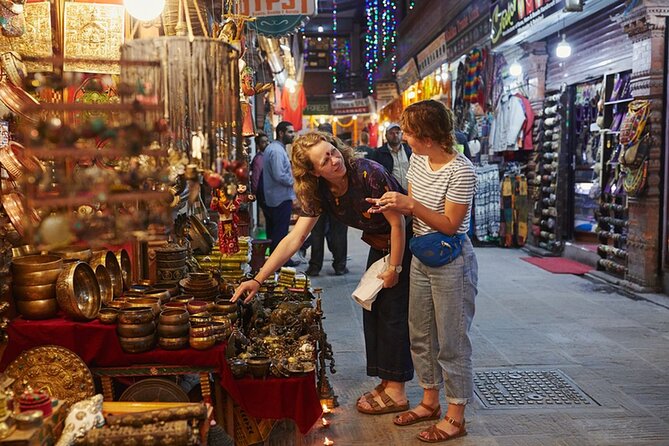
Next comes Asan, one of the oldest market areas in Kathmandu. Here you’re not just seeing stalls. You’re watching commerce that locals use day-to-day—spices, herbs, and the everyday mix of goods that make the city run.
Your time in Asan is about 50 minutes, and admission is free. Expect crowds and tight lanes. This is where you’ll start noticing how Kathmandu’s religious and commercial spaces overlap. Alongside market life, you’ll find temples and old monuments tucked into corners.
A few named places your guide will help you spot:
- Annapurna Temple, associated with the goddess of abundance. The tour explains the wordplay: Anna for Food and Purna for Fulfil.
- Seto Machindranath, also known as Janabaha Dyo, honored by both Hindus and Buddhists in Kathmandu.
- Aakash Bhairab, tied to the First King in Nepal Bhasa, described in the tour as King Yalambar.
You’ll also ride your rickshaw through narrow streets in Asan to reach Kathmandu Durbar Square. This ride segment is one of the tour’s strengths. You experience the city as people experience it—on foot, on scooters, and in tight lanes that force you to pay attention.
The moment you arrive: Kathmandu Durbar Square after dark
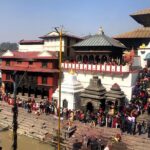
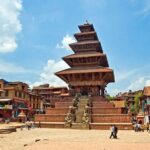
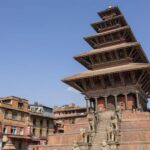
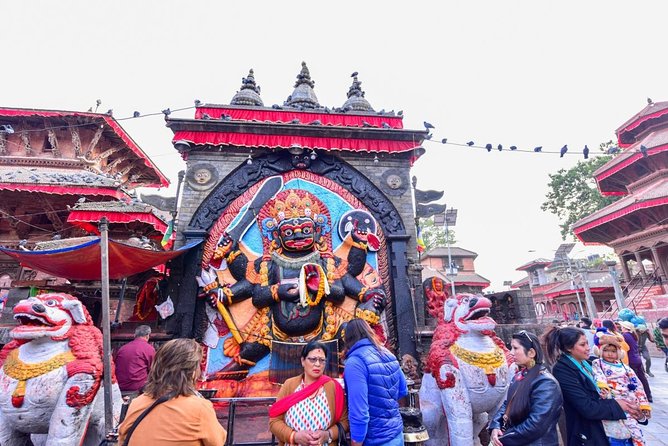
Then you reach Kathmandu Durbar Square, a UNESCO World Heritage site with more than 50 temples and shrines spread across a few blocks. Built between the 12th and 18th centuries, it reflects the Malla kings’ seat of power in Kathmandu.
This is the main event, and your walk time is substantial—about 1 hour 25 minutes—with the entrance fee included. That matters because Durbar Square isn’t just an outside viewpoint. You’ll be in the courtyards and temple cluster, where details show up as you move slowly.
Your guide leads you through what you’re seeing, and you’ll have time to look, sit, and people-watch. Evening is a good choice here. Daytime crowds can feel relentless, and at night you get a calmer pace without losing energy.
What to look for on your Durbar Square walk
Durbar Square can look like “lots of temples” until someone helps you read it. That’s where the guide makes the difference.
Here are a few specific things you’ll want to keep an eye out for:
- Temple courtyards and shrines in close range: it’s a concentrated cluster, so you can compare styles and materials block by block.
- Buddhist presence in the mix: the tour includes a Buddhist Sigal shrine visit within the broader temple area.
- Gaddhi Baithak (Rana-era influence): you’ll see a white, European-influenced building linked to the Rana regime, called Gaddhi Baithak. The balcony is used for ceremonial programs.
I like this mix because it prevents Durbar Square from becoming a single-style photo stop. You’re seeing layers: older temple forms, and later influences that explain how Kathmandu’s rulers and ceremonies evolved.
Also, don’t rush. The tour’s format gives you a “pause” moment. You can take a bench and watch people drift through the square while the light changes on the stone. That’s when the place starts feeling human instead of just historic.
Freak Street vibes and chai when you need a break
During the Durbar Square time, you may also spend time around shop-lined lanes associated with Freak Street, a nod to Kathmandu’s 1960s hippie heyday. You’ll get that sense of a neighborhood that’s always had visitors, but the difference is that you’re in the temple complex too, so the mood shifts quickly from souvenir shops back to sacred spaces.
If you get thirsty or want a quick comfort break, you can grab a cup of chai from a local food vendor or pub. Food and drinks aren’t included in the tour price, so this is one of your pay-as-you-go moments—but it’s also a nice way to slow down without losing momentum.
This is one of those tours where small pauses add up. You’re not only “doing sights.” You’re giving yourself a moment to reset your senses after the ride.
Rickshaw logistics: comfort, lane conditions, and pacing
Riding a rickshaw in Kathmandu isn’t like a smooth city bus. Expect uneven and busy lanes, with pedestrians moving in every direction and vehicles weaving through tight turns. Your driver’s job is to thread that needle, and you’ll feel the skill in how the rickshaw handles corners and turns.
Your guide also keeps you on time. Because this tour is about 2.5 hours, there’s little downtime. That makes it ideal if you’re tight on evening schedule or you’re arriving in town and want an organized way to get your bearings.
What to wear:
- Closed shoes for uneven pavement
- A layer for the evening, since it cools down during your walk
- Something simple for your phone/camera so you’re not fumbling while crossing busy lanes
One more thing: this is a small-group experience with a maximum of 12 people. That matters at Durbar Square, where space can feel tight. Smaller groups move more naturally through doorways, courtyards, and crowded areas.
Local impact and carbon neutral choices that actually show up
This tour is listed as carbon neutral and operated by a B Corp certified company committed to using travel for good. That’s not just marketing language here—it lines up with how the tour supports local work.
Two local-impact points stand out:
- You pay Durbar Square entrance, which supports preservation of cultural heritage.
- The tour hires rickshaws directly from drivers, giving them practical income rather than cutting them out of the economy.
If you care about how tourism money flows, this is a tour style that matches those values. You’re not only consuming a view. You’re paying for access and for local transportation.
And when the driver’s navigating well, you’ll understand why that income matters. It’s a job with real skill in real conditions.
Price: is $50.30 a fair value?
At $50.30 per person, this isn’t a throwaway add-on, but it also isn’t priced like a private car charter. The value comes from stacking multiple costs into one simple evening.
You’re paying for:
- Rickshaw hire (included)
- A local guide and driver
- Durbar Square entrance fee (included)
- Time walking inside a UNESCO-listed temple complex
- A guided route through Thamel and Asan
Food and drinks are not included, so you should budget for chai or snacks if you want them. But the big fixed cost is handled: Durbar entrance and the ride.
For many people, the biggest “value win” is not the dollar amount—it’s the way the tour reduces decision fatigue. You don’t have to guess which lanes to take, where to stop inside Durbar Square, or how long to spend. You can just show up at 6 pm and let the structure do the heavy lifting.
If you already have a full day of sightseeing, this can still work because it’s a different perspective: street ride at night plus temple time when the lighting changes.
Who should book this Kathmandu sunset rickshaw tour
This tour fits best if you:
- Want a first-timer introduction to central Kathmandu without getting overwhelmed
- Like guided context, especially for temple details and named sites
- Prefer a mix of riding and walking instead of only walking
- Appreciate small groups and a more personal pace
It’s also child-friendly, and children under 6 can join free of charge.
If your main goal is only grand views from afar, you might feel this is more about local streets and temple reading than sweeping scenery. But if you want Kathmandu in motion—markets, temples, and evening life—this is a strong match.
Should you book the Kathmandu Sunset Tour by Rickshaw with Durbar Square?
I’d book it if you want an efficient evening that combines transport, guidance, and real time inside Kathmandu’s most important historic square. The Durbar Square walk plus a rickshaw ride through Thamel and Asan is a smart pairing for your first days in town.
Skip it or think twice if you’re very sensitive to dark conditions and uneven pavement, or if you’ve already done a very similar central-city itinerary that day. For me, the biggest practical reminder is simple: bring shoes you trust at night, and stay with the group once you’re in the temple complex.
If you want a thoughtful, lower-stress way to see Kathmandu as locals do, this is the kind of tour that earns its place.
FAQ
What time does the Kathmandu sunset rickshaw tour start?
It starts at 6:00 pm, with the meeting point at Hotel Marshyangdi.
How long is the tour?
The duration is about 2 hours 30 minutes.
Where do I meet the guide and driver?
You meet at Hotel Marshyangdi, Chaksibari Marg, Kathmandu 44600, Nepal.
Is Durbar Square entrance included?
Yes. Kathmandu Durbar Square entrance fee is included in the tour.
Is food included?
Food and drinks are not included.
What group size is this tour limited to?
The tour has a maximum of 12 travelers.
Does the tour use a mobile ticket?
Yes, the tour features a mobile ticket.
Are children allowed?
Yes. Children under 6 are permitted to join for free of charge.
Is the tour carbon neutral or eco-focused?
It’s listed as carbon neutral and operated by a B Corp certified company committed to using travel as a force for good.
What is the cancellation policy window?
You can cancel for a full refund if you cancel at least 24 hours in advance of the experience start time.