REVIEW · HISTORICAL TOURS
TOP 4 UNESCO World Heritage Sites Tour
Book on Viator →Operated by Green Valley Nepal Treks & Research Hub Pvt Ltd · Bookable on Viator
One day in Kathmandu can feel like a whole education. This private Top 4 UNESCO World Heritage Sites loop strings together Hindu and Buddhist landmarks in a tight 6 to 7 hour plan, with the big win being door-to-door pickup plus an English-speaking guide who keeps the story clear as you move.
I especially like that you get to switch spiritual gears all day, from Shiva at Pashupatinath to stupa rituals at Boudhanath and Swayambhunath, then land in Newari architecture at Patan Durbar Square. The main catch is practical and important: there’s a strict dress code (no shorts or sleeveless tops, shoulders and knees covered), and you must be Hindu to enter Pashupatinath.
In This Review
- Key things to know before you go
- How the Kathmandu UNESCO loop saves your day (and your legs)
- Price and logistics: what $50 really means in Kathmandu
- Stop 1: Pashupatinath Temple and the entry rules you can’t skip
- Stop 2: Boudhanath Stupa, big scale Buddhism, and calm ritual
- Stop 3: Swayambhunath (Monkey Temple) views that actually earn their reputation
- Stop 4: Patan Durbar Square and Newari architecture details
- The guide and driver factor: what makes this tour feel smooth
- Timing and pacing: can you really do all four in one day
- Who this tour is best for (and who should rethink it)
- Should you book the Top 4 UNESCO World Heritage Sites Tour?
- FAQ
- Are monument entrance fees included?
- Is hotel pickup and drop-off included?
- Is this tour private?
- What dress code is required?
- Can non-Hindus enter Pashupatinath Temple?
- Is tipping expected?
Key things to know before you go
- Private, door-to-door route: pick-up and drop-off from anywhere in Kathmandu, in an air-conditioned vehicle.
- Four UNESCO stops, timed for reality: 1 hour at Pashupatinath, 1 hour at Boudhanath, 45 minutes at Swayambhunath, 1 hour at Patan Durbar Square.
- Two religions in one itinerary: you’ll see how Hindu and Buddhist practice shapes daily life here.
- Religion and entry rules matter: Pashupatinath requires Hindu entry, and the dress code is enforced at places of worship.
- Guide quality really shapes the day: people highlight guides such as Kapil and Saraswati Ghimire for clear explanations and calm help with temple flow.
- Budget for extras: monument entrance fees are not included (around NPR 2700), and tipping for driver and guide is expected.
How the Kathmandu UNESCO loop saves your day (and your legs)
Kathmandu Valley is packed with UNESCO sites, but the city layout is spread out. This tour is built around a simple idea: hit the big four in one day without spending half your time figuring out transport, traffic, and which stop is next.
You’ll choose a morning or afternoon departure, which is handy if you want to align your day with jet lag, other sightseeing, or temple hours. Either way, the rhythm stays the same: drive to each site, get your bearings fast, then spend a focused block of time there before moving on.
The private format is also the real deal for value. Instead of getting swept along by a crowd schedule, you can ask questions and adjust how long you linger at each stop—especially useful in places where prayer, crowds, and photos move at different speeds.
You can also read our reviews of more historical tours in Kathmandu

Price and logistics: what $50 really means in Kathmandu
At $50 per person, this is a very doable way to see four UNESCO sites back-to-back. The catch is that the headline price does not include monument entrance fees—listed at about NPR 2700—and you should also plan a tip for the guide and driver.
Duration is listed as 6 to 7 hours, which is a clear time window for a full-day cultural circuit. It’s not an all-day wander; it’s a guided route with intentional timing, so you get the highlights without turning the day into a marathon.
One more small but helpful detail: the tour uses a mobile ticket, and it’s confirmed at booking time. If you like having your plan ready in your phone instead of hunting for paperwork on the street, this is the kind of convenience that adds up.
Stop 1: Pashupatinath Temple and the entry rules you can’t skip
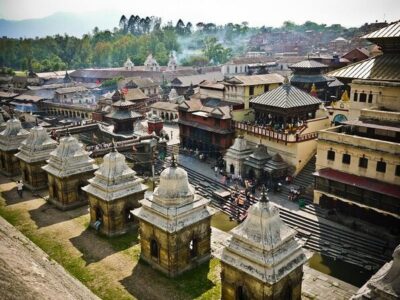
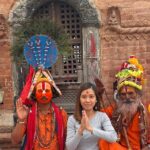
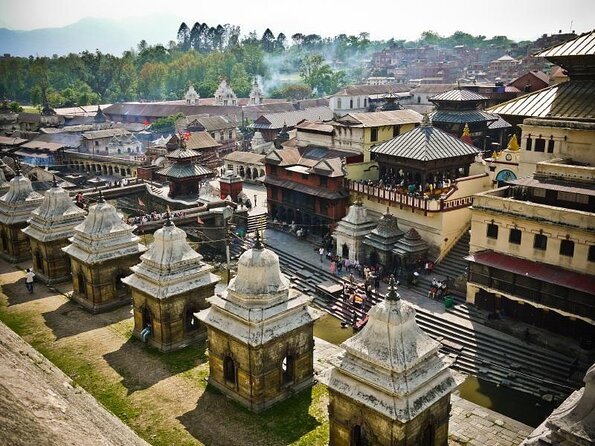
Pashupatinath is dedicated to Lord Shiva and sits about 5 kilometers east of Kathmandu on the Bagmati River. The temple is known for its two golden roofs and four silver doors, and it’s a high-signal place to see how Hindu religious life works in real time.
Here’s what you should plan around. First: there’s a dress code requirement. Shoulders and knees must be covered for both men and women, and the warning is real—if you show up wrong, you risk being refused entry. Second: entry at this site requires you to be Hindu. This is not a small detail, so check this early before you fall in love with the idea of the stop.
Time here is set at about 1 hour, which is long enough to get your bearings, watch devotion in action, and step back for photos when crowds thin a bit. If you want to pray, the guide can help you navigate the flow. People praise guides like Kapil and Kapil Pandey for patient support and for helping make space for special prayer moments even when it’s busy.
My practical take: treat this stop like a sacred working place, not a sightseeing checklist. Keep your voice low, follow staff direction, and think of your hour as participation rather than conquest.
Stop 2: Boudhanath Stupa, big scale Buddhism, and calm ritual
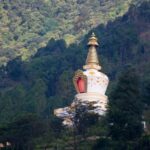
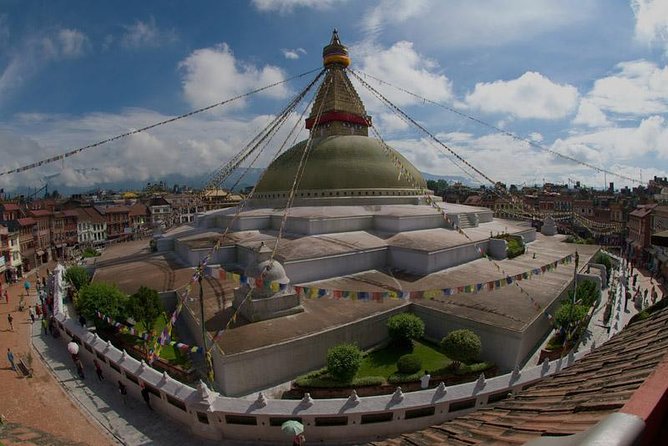
Next up is Boudhanath Stupa, about 6 kilometers east of Kathmandu. This stupa is believed to date to the 5th century AD, and it’s widely noted for its huge scale. It’s also one of those places where the architecture and the practice are inseparable: you don’t just look at the stupa, you watch people circle it and move with purpose.
This stop is scheduled at about 1 hour, which you can use in two ways. You can stand back to take in the full shape, or you can spend more time walking the perimeter if that feels more natural. Either way, you’ll notice monks and lamas forming a ring around the area, and the steady rhythm helps you slow down after Pashupatinath.
The practical value of a guide shows up here too. An English-speaking guide can point out what you’re seeing without turning it into a lecture. In feedback for this tour, people mention guides connecting the sites to Nepal’s shifting culture over recent years—helpful context when you’re watching rituals that are still evolving.
One consideration: Boudhanath can be crowded, so expect to share sightlines. If your priority is photos, ask the guide when the movement pattern shifts, then use that moment instead of fighting elbows for every shot.
Stop 3: Swayambhunath (Monkey Temple) views that actually earn their reputation
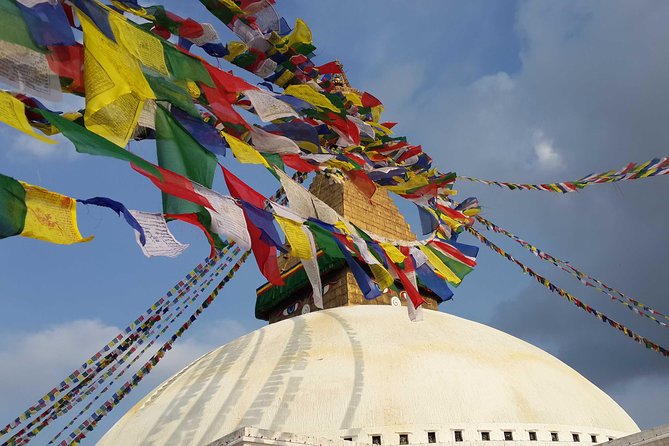
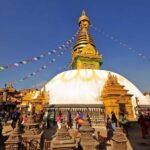
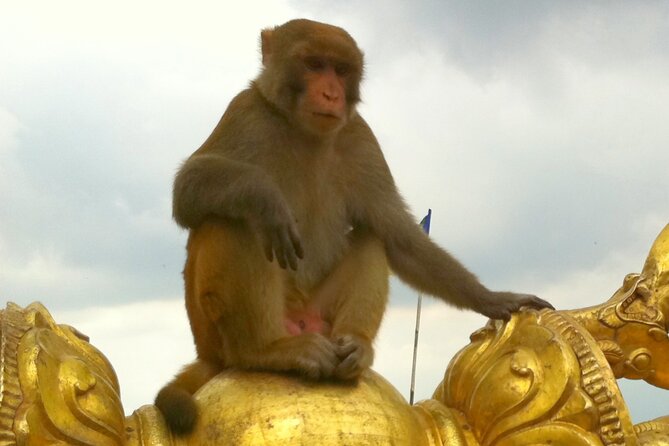
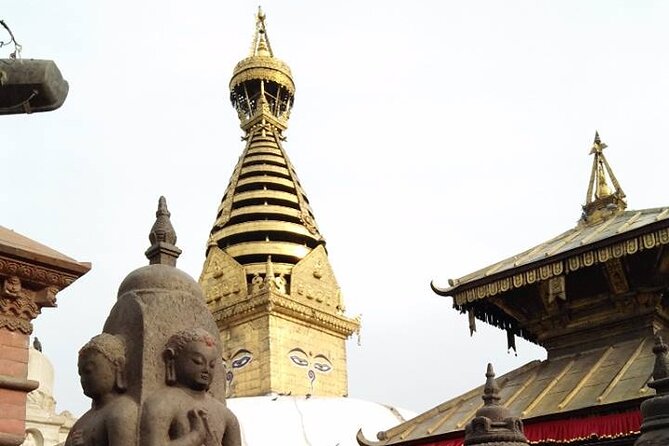
Swayambhunath is one of the most scenic stops in the Kathmandu Valley circuit. It’s often called the Monkey Temple, and it’s a stupa about 2,500 years old perched on a hillock roughly 77 meters above ground level. When you arrive, the height matters fast: you’re suddenly looking over the valley instead of being trapped in street-level motion.
You’ll get about 45 minutes here, which is short, but enough to climb up, spot the stupa details, and enjoy the sweeping view. The dome has a famous painted eye, a symbol you’ll likely spot from different angles as you move around.
The main benefit of using this as a scheduled stop is time management. If you go unguided, Swayambhunath can quietly eat your day because it’s all stairs, detours, and photo opportunities. In this tour, you still get the views, but you keep control.
Practical tip: wear shoes you can walk in comfortably. This stop includes uneven steps and frequent pauses for photo angles, and those pauses add up fast in sandals.

Stop 4: Patan Durbar Square and Newari architecture details
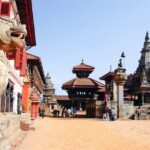
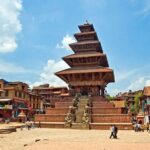
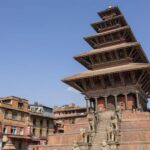
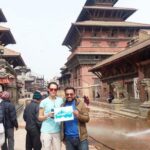
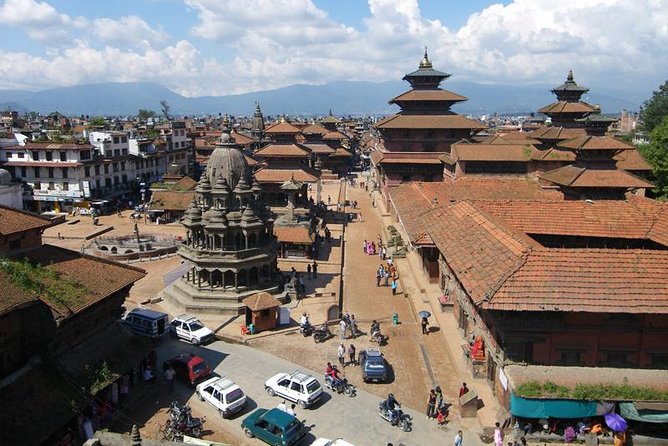
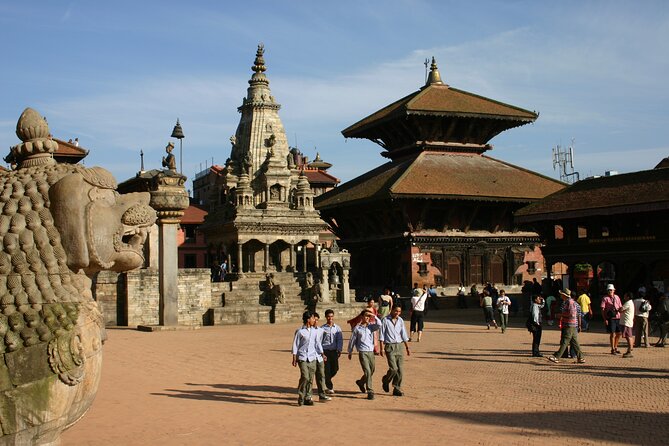
Patan Durbar Square is the last UNESCO stop, and it shifts the day toward architecture and royal-era craft. It’s tied to the former Patan Royal Family and is often described as the most photographed of Kathmandu’s three Durbar Squares.
This square is where Newari architecture becomes the main character. You’ll see stonework, courtyards, and temple structures laid out in a way that makes you understand why these places feel like living museums. Your time here is set at about 1 hour, so plan to mix quick overview walking with a deeper look at a couple of key facades.
This is also a nice close-out stop because the crowd mood can feel different from the major worship sites earlier in the day. You still see devotional and cultural life, but you also get the “how these cities were built” angle.
A guide helps here: the more context you have, the more you notice. People praise guides on this tour for explaining what you’re looking at in clear, organized ways, so you don’t leave with only pretty photos and vague impressions.
The guide and driver factor: what makes this tour feel smooth
The best part of a private day trip is rarely the monuments. It’s the people who prevent chaos.
Across feedback, the drivers are consistently described as friendly and reliable, and they handle the Kathmandu reality—traffic and sudden street changes—with calm. One driver named Ram is mentioned for looking after people, including offering an unopened bottle of water when needed. Another driver named Suman gets credit for navigating with ease during stressful traffic.
On the guide side, you’ll see names like Kapil, Kapil Pandey, and Saraswati Ghimire. The praise is consistent: clear explanations, flexibility when the day needs it, and extra care when someone wants to participate in prayer at Pashupatinath. If that kind of attention matters to you, this tour is the right style: a guide who doesn’t just point, but guides.
English-speaking support is included, and that matters more than you might think. In a dense spiritual setting, misunderstandings happen fast. A good guide keeps you on track, answers questions in plain language, and helps you move with respect.
Timing and pacing: can you really do all four in one day
Yes, but you should understand what you’re buying. The stop lengths are limited by design—1 hour, 1 hour, 45 minutes, 1 hour—so you’ll see the highlights, not every corner in depth.
This pacing works best if you go in with two mindsets:
- Accept that you’re sampling, not studying every detail.
- Treat the route like a story with chapters, not a photo marathon.
The morning or afternoon departure choice also affects your vibe. Morning can feel fresher for walking, while afternoon can work better if you prefer a slower start. Either way, the full-day structure keeps the logistics from unraveling.
Who this tour is best for (and who should rethink it)
This works well for most people because it’s a simple format: pickup, transport, an English-speaking guide, and a timed UNESCO circuit. If you want cultural depth without planning four separate trips, this is a strong fit.
It’s especially good for:
- First-time visitors to Kathmandu Valley who want the major UNESCO sites in one day
- People who care about understanding what they’re seeing, not just photographing it
- Travelers in a small group who prefer a private flow over a larger bus schedule
It may not fit you if:
- You are not Hindu and want to enter Pashupatinath (entry requires being Hindu)
- You dislike strict dress code rules for temples and worship sites
- You want slow travel with long stays at a single site
Should you book the Top 4 UNESCO World Heritage Sites Tour?
If you want a one-day, high-impact Kathmandu Valley plan, this tour is easy to recommend. The value comes from the whole package: hotel pickup and drop-off, air-conditioned private transport, an English-speaking guide, and a route that connects Hindu and Buddhist heritage without wasting time.
I’d book it when you’re clear about the two big constraints: the Pashupatinath Hindu entry rule and the dress code. If those fit your situation, you’ll likely come away feeling you understood the day, not just saw it.
If they don’t fit, you can still plan these sites separately, but you’ll spend more time managing logistics on your own. In that case, it’s worth comparing your priorities: maximum flexibility versus a guided, timed UNESCO day.
FAQ
Are monument entrance fees included?
No. Entrance fees for monuments are not included and are listed as around NPR 2700.
Is hotel pickup and drop-off included?
Yes. You get hotel pickup and drop-off from anywhere in Kathmandu by private vehicle.
Is this tour private?
Yes. It’s a private tour, so only your group participates.
What dress code is required?
You need to cover your knees and shoulders. No shorts or sleeveless tops are allowed, and you may be refused entry if you don’t meet the dress requirements.
Can non-Hindus enter Pashupatinath Temple?
Entry into Pashupatinath Temple requires you to be Hindu.
Is tipping expected?
Yes. Tips for the guide and driver are expected, and they are not included in the tour price.