REVIEW · EVENING EXPERIENCES
Evening Photography Tour of Kathmandu
Book on Viator →Operated by Third Rock Adventures · Bookable on Viator
Night rituals turn Kathmandu into a photo studio. This half-day evening tour helps you hit the right moments at Boudhanath and Pashupatinath, with a guide who explains what you’re seeing as the light changes. I like how you’re not wandering blind; you get guided positioning for Boudhanath devotees and monks. I also like that the second stop includes a Hindu arati fire ceremony, not just a quick temple glance. The main catch is simple: since it’s evening, low light can be tricky if you don’t have a camera that performs well at higher ISO.
You’ll get pickup support from central Kathmandu plus private transport so you spend your energy shooting and watching instead of bargaining with traffic. Each stop runs about an hour, and admission is included, which makes it feel like a clean, all-in plan for $102 per person. Still, this isn’t a dinner tour, and you may want water or a snack plan since bottled water isn’t included.
In This Review
- Key Things That Make This Evening Photo Tour Work
- Why Boudhanath and Pashupatinath Look Better at Night
- Price and Logistics: Is $102 a Good Deal Here?
- Stop One: Boudhanath Stupa After Dark (Butter Lamps and Parikrama)
- Stop Two: Pashupatinath Temple Evening Arati by the Bagmati
- How the Guide Improves Your Photos (Not Just the Stops)
- Photography Tips That Fit This Exact Night Format
- Get ready for low light
- Look for warm light sources
- Compose with movement in mind
- Be respectful with space
- Bring only what you’ll actually use
- What to Expect From the Timing (3 to 4 Hours, Two Stops)
- What’s Missing: Dinner, Water, and the Stuff You Should Pack
- Who Should Book This Tour (and Who Might Skip It)
- Should You Book This Kathmandu Evening Photography Tour?
- FAQ
- How long is the evening photography tour?
- Where does the tour take place?
- Is pickup available?
- Is this tour private?
- What’s included in the price?
- Is dinner or bottled water included?
- Does the tour require good weather?
- What’s the cancellation policy?
- What if there aren’t enough travelers?
Key Things That Make This Evening Photo Tour Work
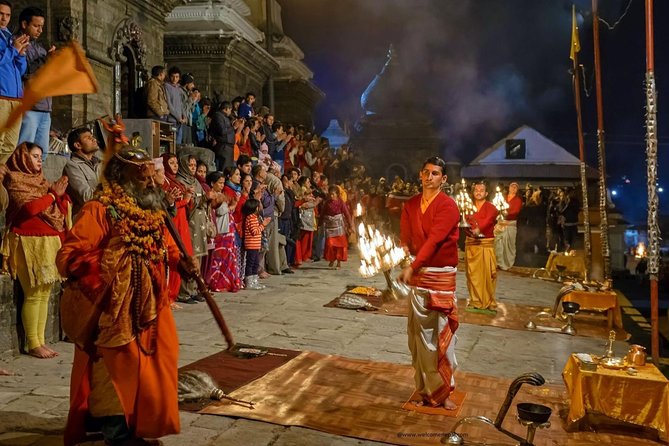
- Two major spiritual landmarks in one evening: Boudhanath’s parikrama and Pashupatinath’s arati
- You get pointed to the right moments for photographing butter lamps and fire rituals
- Private transport plus pickup support from central Kathmandu to keep things smooth
- Admission tickets are included, so you’re not budgeting time or money mid-tour
- English-speaking licensed city guide with context that actually helps your photos
- Time-efficient 3 to 4 hours—long enough for scenes, short enough to stay flexible
Why Boudhanath and Pashupatinath Look Better at Night
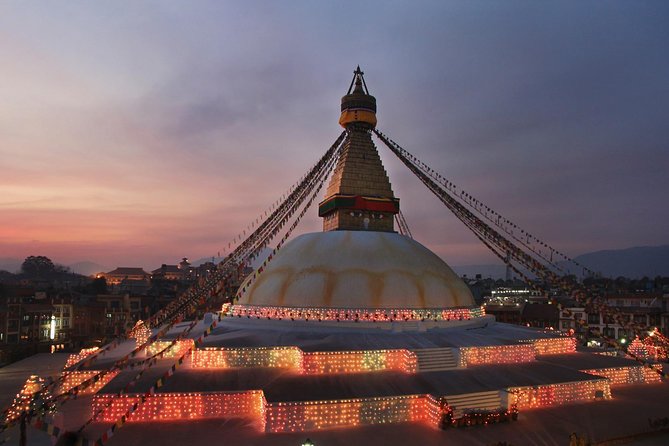
Kathmandu after dark has a specific rhythm. The air cools down, the crowds thin out a little compared to midday, and the ceremonies start to glow. That’s exactly why an evening photography approach makes sense here: you’re aiming at light—butter lamps, temple flames, reflected glow on stone, and faces turned toward prayer.
What I like most about this kind of tour is that it treats photography as a relationship with the place. A good guide won’t just say where to stand. They explain what is happening, why people are moving the way they are, and what timing to look for. That makes a huge difference when you’re trying to capture something honest rather than just a tourist photo.
There’s also the practical side. With private transport and a structured route, you can focus on your camera instead of navigating between sites. In a city like Kathmandu, that matters more than it sounds.
You can also read our reviews of more evening experiences in Kathmandu
Price and Logistics: Is $102 a Good Deal Here?
At $102 per person for a 3 to 4 hour private evening tour, the value comes from what’s included and what isn’t.
Included value:
- Private transportation (so you’re not piecing together rides)
- Admission tickets for both Boudhanath and Pashupatinath stops
- English-speaking licensed city guide who provides context
- All fees and taxes
- Pickup offered, with service from central Kathmandu
Not included (so you plan ahead):
- Dinner
- Bottled water
- Alcoholic beverages
If you were paying separately for entry tickets and a guide, plus trying to arrange transport, $102 starts to look reasonable fast. The other thing that justifies the price is time efficiency: you get about one hour at each landmark, which is enough to see the ceremony flow without burning your whole evening.
One extra detail: this tour is commonly booked around 12 days in advance. That doesn’t guarantee crowds will be identical every night, but it’s a hint that the time slots can fill, especially for private groups. If you have fixed travel dates, I’d book early.
Stop One: Boudhanath Stupa After Dark (Butter Lamps and Parikrama)
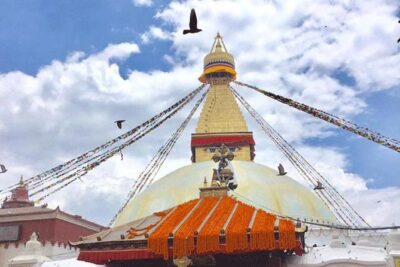
Boudhanath isn’t just a famous viewpoint. It’s a key pilgrimage center for Tibetan Buddhism, and at night it turns into a living stage for devotion.
What you’ll experience:
- You’ll see devotees doing Parikrama, the circumambulation around the stupa.
- The white dome and surrounding areas are typically lit up, making the stupa pop in low light.
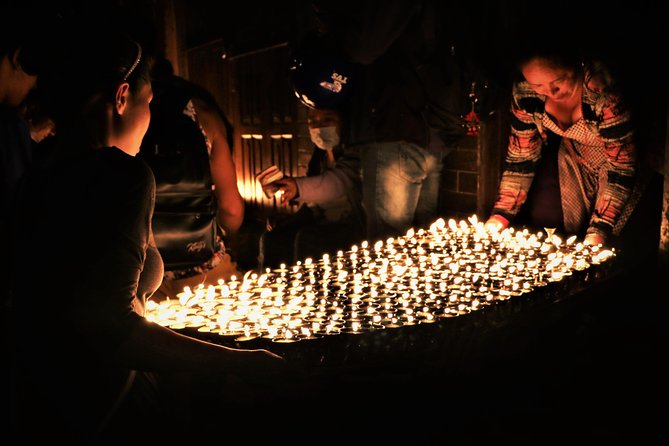
- Monks and devotees light butter lamps and pray for well-being and peace.
Why this is photo-friendly:
Butter lamps create exactly the kind of small, warm light sources that make night photos feel spiritual instead of dull. The key is that people move in predictable patterns—the parikrama route is a loop—so you can shoot without constantly guessing where the action will go next.
Also, Boudhanath’s architecture helps. With a large central form and circular movement, your composition has clear structure. Even if you’re not an advanced photographer, the scene gives you natural framing: the stupa as the anchor, the lamps as the color, and faces turning toward prayer.
A realistic consideration:
This area can feel busy around key moments. Even with private transport, you’re still in an active religious site. Be ready to work around pedestrian flow and follow local etiquette. If you’re shooting for longer exposures, you’ll want to stay patient—tripods and sudden movements can be a problem in crowded areas.
Stop Two: Pashupatinath Temple Evening Arati by the Bagmati
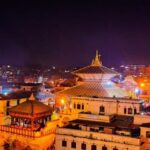
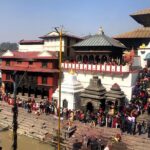
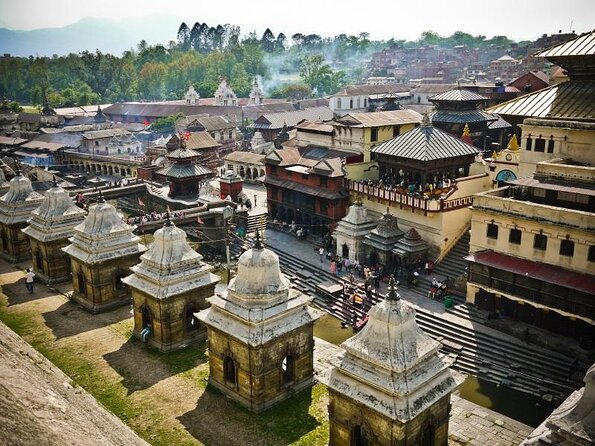
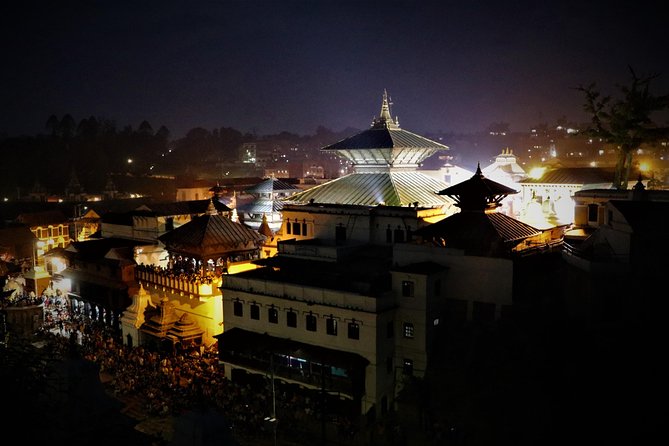
Pashupatinath is one of Nepal’s most important Hindu shrines, dedicated to Lord Shiva. In the evening, the mood shifts. Instead of quiet sightseeing, you get ritual energy—chanting, singing, and fire offerings.
What happens during your visit:
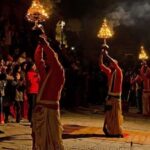
- You’ll witness evening arati, where priests offer light from a flame to the gods.
- The ritual includes chanting of sacred Vedic shlokas and hymns.
- Devotees may dance in trance-like ways during the ceremony.
- The setting is tied to the sacred Bagmati River, which gives the evening atmosphere its extra emotional weight.
Why this stop is a standout for photography:
Fire rituals give you movement and light in the same frame. That’s the hard combination to plan for on your own. An arati ceremony has its own timing—flame rises, faces turn, chanting peaks—and your guide helps you be in the right place when those moments happen.
Also, the context matters. When you understand what the chants are for and what the flame offering represents, your photos become more than documentation. They feel like a record of an event with meaning.
A realistic consideration:
Fire and chanting are not static. If your camera relies on slow focusing or you’re uncomfortable in close proximity, you might need to adapt your shooting style. Don’t push too close. Let the ceremony come to you, then frame from a respectful distance.
How the Guide Improves Your Photos (Not Just the Stops)
This tour leans heavily on one thing: a licensed, English-speaking city guide who gives you context and shows you where to go for the best shooting angles.
That changes the whole experience. Without context, religious sites can become a blur of buildings and people. With context, you start seeing cause and effect:
- Why someone is standing there
- Why the group is moving in a loop
- Why the priest’s movements matter during arati
- What kind of images the night conditions naturally favor
From past participants’ notes, two names come up: Mr Bikash and Deepa. Both are described as professional and attentive, and that matters because evening scenes can be time-sensitive. When a ceremony hits a high-energy moment, you don’t want to be searching for the right spot.



Photography Tips That Fit This Exact Night Format
You don’t need fancy gear to enjoy this tour, but evening religious ceremonies demand a few practical habits. Here’s how to set yourself up without getting technical for the sake of it.
Get ready for low light
Evening photography often means higher ISO or slower shutter speeds. If you have a camera that handles noise well, you’ll have an easier time. If you don’t, focus on shorter bursts and steady shooting instead of trying to freeze every flame flicker perfectly.
Look for warm light sources
Butter lamps and arati flames create warm highlights. Meter carefully and watch for blown highlights on bright flames. If your camera has exposure compensation, consider dialing down slightly so the fire stays detailed rather than white-hot.
Compose with movement in mind
Parikrama creates a circular flow. Fire rituals create bursts of motion around the priest and flames. Plan for sequencing:
- One frame with context (stupa/temple + crowd)
- One close-ish frame (hands/lamp/flame)
- One reaction frame (faces turned toward prayer)
Be respectful with space
These are active worship spaces. If you’re tempted to set up too aggressively, don’t. Position yourself where you can shoot without blocking foot traffic or interfering with the ceremony.
Bring only what you’ll actually use
This tour is camera-first. Extra gear you won’t touch turns into extra weight in crowded areas. A compact lens setup is often easier than a heavy kit.
What to Expect From the Timing (3 to 4 Hours, Two Stops)
The total time is short on purpose: you get a focused half-day that covers both landmarks without dragging. Each stop is about an hour, which means you can settle in, watch the flow, and shoot your key scenes.
A smooth evening usually has two phases:
1) Arrive and orient yourself (the guide sets your path)
2) Stay ready for peaks (butter lamp lighting and arati rhythms)
If you’ve shot night ceremonies before, you know patience is part of the job. If you haven’t, think of it as watching a live event while you learn how to frame it.
What’s Missing: Dinner, Water, and the Stuff You Should Pack
This isn’t a meal-included outing. Dinner isn’t part of the plan, and bottled water isn’t included either. That doesn’t ruin anything, but it does affect how you should plan your evening.
I recommend:
- Have a light snack before you meet up
- Carry your own water if you get thirsty in evenings
- Use a simple layering plan: temples and streets can cool down quickly at night
- Bring your camera strap and storage, because once the light is there, you won’t want to stop
Also, alcohol isn’t included, so if you’re thinking of a relaxed drink-and-shoot evening, plan that separately.
Who Should Book This Tour (and Who Might Skip It)
This tour fits well if you:
- Love night photography and want a clear shot plan
- Want culture with structure, not a random walk
- Appreciate religious traditions enough to learn what you’re seeing
- Prefer private pacing over shared group chaos
You might consider skipping if you:
- Want guaranteed quiet, empty spaces for photography
- Hate low-light shooting and don’t have a camera setup that feels comfortable at night
- Are only interested in daytime viewpoints and architectural details
For most people who like meaningful travel moments, this is a smart way to spend a half-day in Kathmandu—especially if it’s your first trip and you want two heavyweight spiritual landmarks in one evening.
Should You Book This Kathmandu Evening Photography Tour?
If your goal is to photograph Kathmandu’s spiritual life at the hour it actually feels alive, I think this is a strong booking. You get private transport, a licensed English guide, admission included, and two major sites in a tight, efficient window. The guide’s role is more than route planning; it’s about understanding timing and meaning, which helps your photos land better.
Book it if you’re ready for night shooting and you respect active worship spaces. Skip it if you’re looking for a relaxed, minimal-effort stroll or you only want daylight sightseeing.
If you do book, charge your batteries, bring water, and give yourself permission to shoot slowly. The best images here come from being present for the prayer rhythm, not from rushing the frame.
FAQ
How long is the evening photography tour?
It runs about 3 to 4 hours.
Where does the tour take place?
It focuses on Kathmandu’s Boudhanath Stupa and Pashupatinath Temple.
Is pickup available?
Pickup is offered from central Kathmandu.
Is this tour private?
Yes. It’s a private tour, and only your group participates.
What’s included in the price?
Private transportation, all fees and taxes, and an English-speaking licensed city guide are included. Admission tickets for both stops are included as well.
Is dinner or bottled water included?
No. Dinner and bottled water are not included.
Does the tour require good weather?
Yes. The experience requires good weather, and if it’s canceled due to poor weather, you’ll be offered a different date or a full refund.
What’s the cancellation policy?
You can cancel up to 24 hours in advance for a full refund. If you cancel less than 24 hours before the start time, the amount paid will not be refunded.
What if there aren’t enough travelers?
If the minimum number of travelers isn’t met, the tour may be canceled, and you’ll be offered a different date/experience or a full refund.