REVIEW · EVENING EXPERIENCES
Pashupatinath Evening Aarati: Few Divinely Hours in Kathmandu
Book on Viator →Operated by Three Jewels Adventures · Bookable on Viator
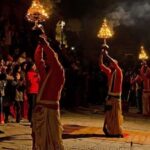
Firelight on the Bagmati changes your mood. This evening Kathmandu experience centers on the Pashupatinath Aarati Pooja, where Brahmin priests offer light, flowers, incense, and other ritual objects to Lord Shiva while devotees sing Bhajana. I love how the guide explains what you’re seeing so it feels less like a spectacle and more like a living tradition. I also love the pacing and timing that help you get a good look before the hour-long ceremony hits its high point. One possible drawback: the riverbank cremation ceremony is real and can be emotionally intense, so bring a respectful, steady mindset.
You’ll also get solid logistics for a short outing: hotel pickup happens sometime between 4:30 PM and 5:30 PM, then you head out before the evening ritual window. The Aarati typically runs around 6:00–7:00 PM depending on the season, so you still have time after to grab dinner and decompress.
In This Review
- Key points to know before you go
- Why Pashupatinath Evening Aarati feels like more than a show
- Timing It Right: arriving before the 6 PM peak
- The pickup and the air-conditioned ride that keeps your evening on track
- Pashupatinath Temple at dusk: what you’ll notice right away
- The Bagmati River cremation ceremony: respectful viewing without going numb
- The Aarati Pooja itself: light, flowers, incense, and Bhajana
- The surrounding monuments: small stops that add depth
- Price and value: is $35 a fair deal?
- Who this experience suits best (and who should think twice)
- Should you book the Pashupatinath Evening Aarati tour?
- FAQ
- What time does the Pashupatinath evening Aarati happen?
- How long is the tour?
- Do you offer hotel pickup in Kathmandu?
- What does the tour include?
- Is the Pashupatinath entry fee included?
- What else do you see besides the Aarati at Pashupatinath?
- Are most people able to participate?
- How does the mobile ticket work?
- What cancellation options do I have?
- Who provides the tour?
Key points to know before you go
- Evening Aarati at Pashupatinath Temple: an hour of offerings, chanting Bhajana, and a prayer-led rhythm you can follow.
- Bagmati River cremation ceremony viewing: you’ll observe rites on the holy river—be prepared for strong emotions.
- Meeting time matters: pickup is arranged earlier in the afternoon so you don’t arrive late and miss the best viewing.
- Guides add the context: people highlighted guides like Mani, Mahesh Ji, and Amber for clear, on-time explanations.
- Short, high-impact format: plan on about 2–4 hours total, with an air-conditioned vehicle handling the driving.
Why Pashupatinath Evening Aarati feels like more than a show
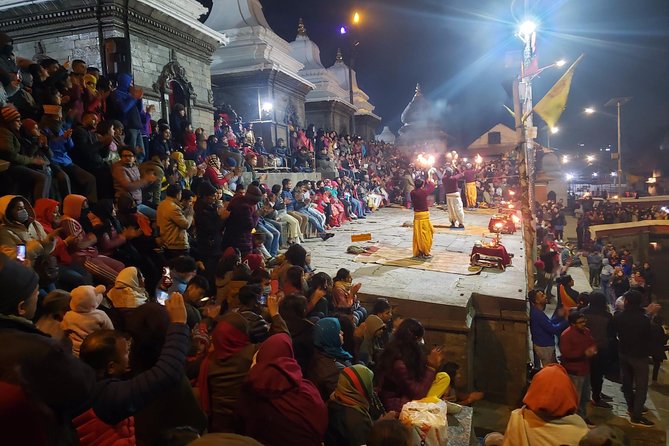
If you’ve been to temples in daylight, you know the basics. Then evening comes, and everything gets sharper. At Pashupatinath, the light changes how the stone, incense smoke, and people’s movements look. The air feels different. The ritual becomes the schedule.
What makes this tour special is the combination: you’re not only watching the Aarati Pooja. You’re also seeing the Bagmati River in action during the cremation ceremony, and you’ll spend time around other temple-area monuments. That mix gives the night a sense of continuity—life, devotion, and the end of life all showing up in the same sacred geography.
For me, the best part is how the guide helps you connect the dots. One review praised Mani’s detailed explanations, and I can see why that matters here. Without context, the cremation scenes can land as shock or confusion. With context, it shifts toward understanding why the ritual is happening and what it means to the community.
The other reason this works for a lot of people is that it’s time-smart. It’s designed for an evening slot that stays focused. You’re not spending half the day driving. You’re out just long enough to see the main events and then return.
You can also read our reviews of more evening experiences in Kathmandu



Timing It Right: arriving before the 6 PM peak
This experience is built around the evening prayer cycle. The Aarati typically starts at about 6:00 PM to 7:00 PM, depending on season, and it lasts roughly one hour. Because of that, timing is everything—arrive too late and the atmosphere and flow may not feel the same.
That’s why pickup is scheduled for 4:30 PM to 5:30 PM. You’re getting to the temple area before the ritual gets underway, and you’re not left scrambling. This is also one of the reasons the tour feels smoother than a DIY plan. You can focus on observation instead of route math.
Here’s a practical approach I recommend: when you’re told when to meet, treat it like a real departure time, not a loose suggestion. Evening traffic and crowded temple approaches can compress your options fast. Showing up a little early gives you breathing room to take your bearings.
Also, keep your expectations honest. This is not a quiet museum moment. Even with the solemn prayers, you’ll be part of the movement—priests performing, devotees singing, and people shifting positions to see better.
The pickup and the air-conditioned ride that keeps your evening on track
Kathmandu afternoons can be long, hot, and traffic-heavy. That’s where the air-conditioned vehicle inclusion helps. It’s a small detail, but for an evening event, it reduces the chance you arrive tired or frazzled.
Your guide and driver meet you in your hotel pickup window (again, 4:30 PM to 5:30 PM) and then you head out together. For a short tour, this is a big deal. It means you don’t waste time negotiating transportation or trying to figure out the best drop-off point.
I also like that the plan is built around a group format. Group experiences can be hit or miss, but when the timing is tight, having a coordinated team reduces stress. And the tour offers group discounts, which can make the value better if you’re traveling with friends or family.
One thing to note: the tour includes pickup and drop-off around your schedule, but you’ll still want to keep your own evening flexible. Expect to come back when the tour ends, not at an exact clock time.
Pashupatinath Temple at dusk: what you’ll notice right away
Pashupatinath is Nepal’s most revered Hindu temple dedicated to Lord Shiva. In the evening, that reverence is visible in how people gather and how the ritual space is used. You’ll likely notice priests in their roles, devotees moving through with purpose, and the general shift from daytime sightseeing to evening devotion.
During this part, you’re focused on the main ritual setting: the temple environment where the Aarati Pooja takes place. It’s not just the building. It’s the living practice around it. Even if you don’t know the language, you can feel the structure—chants, offerings, and the repeated motions that make the ceremony legible.
A practical heads-up: the tour does not include the entry fee to the Pashupati Temple premises. So, if you’re budgeting, don’t assume temple admission is included in the tour price.
Also, manage your camera use. This is a religious moment, not a concert. If you want photos, keep them respectful, avoid blocking movement, and follow your guide’s direction on where viewing is appropriate.
The Bagmati River cremation ceremony: respectful viewing without going numb
This is the part that makes the tour unforgettable—and the part that needs the most preparation.
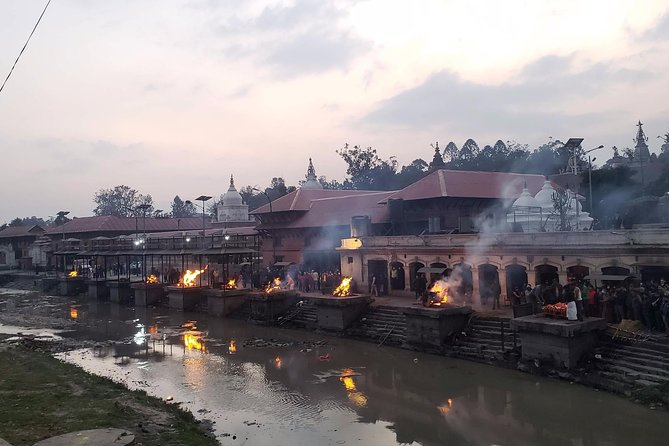
You’ll observe the cremation ceremony on the bank of the holy Bagmati River. This is not an activity staged for visitors. It’s a real rite, and it can be emotionally heavy. One of the strongest pieces of advice that came from past participants was simple: read up on Hindu funeral practices before you go, so you’re not surprised but can understand what you’re watching.
I agree with that approach. If you arrive completely unprepared, the experience can feel scary or chaotic. If you arrive with basic context, the night becomes clearer. You can still be moved, but you can also stay grounded.
Here’s what I suggest doing before you reach the riverbank:
- Mentally set the tone: this is observation, not participation.
- Expect the scene to be intense, especially when flame and chanting appear.
- Give yourself a moment to decide what viewing distance works for you.
If you’re sensitive to death-related rituals, it’s okay to admit that to yourself before booking. This tour includes that viewing as a core component, not an optional detour. On the other hand, if you want to understand religion as it exists in daily life—including how communities handle the end of life—this is a rare, direct window.
And crucially, a good guide helps you interpret what you see. Past guests praised guides like Mani, Mahesh Ji, and Amber for explaining what’s happening and making sure they understood the flow of the ceremonies.





The Aarati Pooja itself: light, flowers, incense, and Bhajana
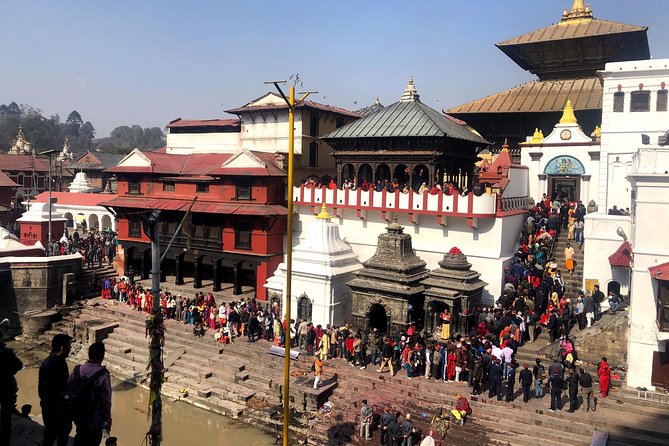
Now for the heart of the evening. The Aarati Pooja is the closing devotion—an offering ritual where light, flower, incense, and other objects are presented to Lord Shiva.
What you’ll likely notice is the rhythm. The ceremony is led by Hindu Brahmin priests and accompanied by live Bhajana (devotional songs). With hundreds of devotees present, the singing gives the ritual a steady emotional tone. It’s not just what the priests do; it’s also the soundscape and the crowd’s attention that makes the moment feel ceremonial.
If you enjoy learning while you watch, this is where you’ll get the most from a guided format. Without explanation, Aarati can look like a series of movements. With explanation, it becomes a set of symbols: light for devotion, incense as presence, offerings as respect, and chanting as shared belief.
One practical tip: stand where your guide tells you to stand for the main portions of the ritual. It can be tempting to move around for a better view, but shifting at the wrong moment can put you behind or block someone else.
Also, wear something comfortable. You’ll be around temple spaces and riverbank edges where you might stand longer than you expect, especially if you’re trying to watch the flame-focused portions clearly.
The surrounding monuments: small stops that add depth
Beyond the temple and the riverbank focus, the tour includes time to visit other monuments in the surrounding area. You may not get a long, museum-style experience at each one. Think of it as a guided evening walk that helps you connect the dots between the main ritual space and the broader temple complex.
These extra stops are valuable because they reduce that feeling of being dropped at a single event and then sent away. Instead, you’re seeing how the place is structured—how devotion is anchored in specific spaces and how the temple district functions as more than one single landmark.
If you enjoy context, these quick monument visits can make the whole evening feel more coherent. If you’re primarily there for the Aarati, you’ll still appreciate the way the tour fills time between the big moments.
Price and value: is $35 a fair deal?
At $35 per person, this tour isn’t just paying for transport. You’re paying for a coordinated evening plan: hotel pickup, an air-conditioned vehicle, and a guide to help you interpret what’s happening during both the Aarati and the riverbank cremation ceremony.
Is it the cheapest option in Kathmandu? Probably not, but it’s also not priced like a ticket-only event. For many visitors, the value comes from two things you can’t easily buy on your own:
- Time efficiency: you’re arriving in the correct window for a short, time-specific ceremony.
- Context: the guide helps you understand the ritual and what you’re seeing at the riverbank.
There’s also mobile ticketing and group discounts, which can improve the deal if you’re traveling with others. So if you’re a solo traveler, $35 may feel straightforward. If you have a small group, the price advantage can be stronger.
One more value point: the tour is designed for roughly 2 to 4 hours, so you’re not tying up your entire day. That makes it easier to combine with other Kathmandu plans.
Who this experience suits best (and who should think twice)
This tour fits you if you want an authentic cultural evening in Kathmandu that goes beyond temple photos. You’ll probably enjoy it most if you’re curious about Hindu ritual and you like learning by watching real ceremonies.
It’s also a good match if you appreciate guides who talk through what’s happening. Past guests singled out guides such as Mani, Mahesh Ji, and Amber for being accommodating, explaining clearly, and keeping the schedule running on time.
Think twice if you don’t handle sensitive topics well. The cremation ceremony viewing is included and can be intense. If you know you prefer a purely uplifting or purely sightseeing-style tour, this might not match your emotional comfort level.
Finally, consider your energy. It’s only 2–4 hours, but it’s still an evening event where you’ll stand, watch, and concentrate.
Should you book the Pashupatinath Evening Aarati tour?
If your goal is to see Kathmandu’s spirituality as a lived practice, I’d say book it. The Aarati Pooja at Pashupatinath, paired with the Bagmati River ceremony and guided context, is the kind of experience that’s hard to replicate on your own without stress.
Just go in prepared. Read a bit about funeral practices so you’re not blindsided. Keep your viewing respectful. And arrive ready for a real religious moment, not a curated performance.
If that sounds like your kind of travel, this tour is strong value at $35, especially because the pickup window and guided pacing protect your time. If you’re worried about emotional intensity, give yourself an honest check before you commit.
FAQ
What time does the Pashupatinath evening Aarati happen?
The Aarati is held every evening at around 6:00 PM to 7:00 PM, depending on the season, and it lasts about one hour.
How long is the tour?
The total duration is about 2 to 4 hours (approx.).
Do you offer hotel pickup in Kathmandu?
Yes. Your guide and driver meet you between 4:30 PM and 5:30 PM at your hotel, then you’re taken to the event and back.
What does the tour include?
You’ll have an air-conditioned vehicle as part of the experience, plus pickup and drop-off with your guide and driver. The mobile ticket is also part of the experience format.
Is the Pashupatinath entry fee included?
No. Entry fee to the Pashupati Temple premises is listed as not included.
What else do you see besides the Aarati at Pashupatinath?
Besides the temple ceremony, the tour includes observing the cremation ceremony on the Bagmati River bank and visiting other monuments in the surrounding area.
Are most people able to participate?
Most travelers can participate.
How does the mobile ticket work?
The experience includes a mobile ticket, meaning you’ll have the ticket available on your phone for the activity.
What cancellation options do I have?
You can cancel for free up to 24 hours in advance of the experience’s start time for a full refund.
Who provides the tour?
The tour provider is Three Jewels Adventures.