REVIEW · EVENING EXPERIENCES
Kathmandu: Pashupatinath Temple Evening Aarati Tour
Book on GetYourGuide →Operated by Aspiration Adventure Pvt Ltd · Bookable on GetYourGuide
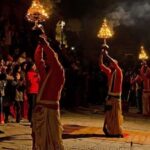
Night worship turns Kathmandu quiet and focused. This 3-hour Pashupatinath Temple evening aarti tour brings you to the Bagmati River’s eastern-bank ritual where priests chant Vedic mantras, bells ring, and oil lamps blaze before Lord Shiva’s idol. I love the on-site context from guides like Ramesh and Rajat, and I love that you get both a guided temple look and a front-row-style view of the ceremony. One possible drawback: it can feel crowded and fast-moving near the river, so photo time and your exact spot can depend on the moment and what your guide advises.
You start with a late-afternoon pickup, then arrive with enough daylight for temple orientation plus a photo stop before the main aarti begins around 6 p.m. It’s a private group, led by a licensed English-speaking guide, and it includes entry and transport, so you spend your energy where it counts: watching and understanding.
In This Review
- Key things to know before you go
- Why the Pashupatinath evening aarti works as more than a photo stop
- Getting there from Kathmandu: pickup, timing, and why late afternoon is smart
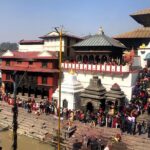
- First look at Pashupatinath: the guided temple complex visit
- The Bagmati River bank: where the aarti becomes the main event
- Being respectful and getting good photos on sacred ground
- Guides and drivers: the small details that make the night feel easy
- How the $45 price stacks up for a 3-hour private evening tour
- What the itinerary feels like, hour by hour (and what to watch for)
- Who should book this tour, and who might not love it
- Should you book the Kathmandu Pashupatinath Evening Aarati Tour?
- FAQ
- How long is the Pashupatinath evening aarti tour?
- What time does the aarti ceremony start?
- Does the tour include hotel pickup and drop-off?
- Is the Pashupatinath entry ticket included?
- Is a guide provided, and is the tour in English?
- Are food and drinks included?
Key things to know before you go
- Bagmati River eastern-bank viewing: the aarti happens on the temple side facing the river, so your timing matters.
- You’ll hear what’s happening: Vedic mantras, bells, incense, and a classical-instruments band are part of the show.
- A guided temple complex visit first: you get history and religious context before the lights and chanting start.
- Private group pace: you’re not stuck in a big crowd moving like a herd.
- Photography is possible, but not everywhere: you’ll be guided on permitted areas and best angles.
- All the “core logistics” are covered: pickup, drop-off, entry ticket, transport, and taxes are included.
Why the Pashupatinath evening aarti works as more than a photo stop
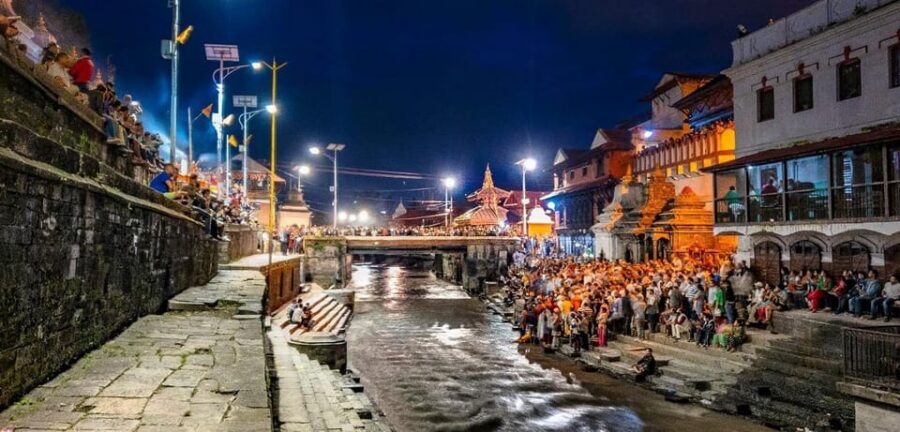
If you only see Pashupatinath Temple in daylight, you get the architecture and scale. If you see it at night, you get the reason it matters to people. This tour is built around that shift. You’re not just standing near impressive stonework. You’re watching a nightly Hindu worship ritual take place on the Bagmati River banks, with light, sound, and ceremony all tied together.
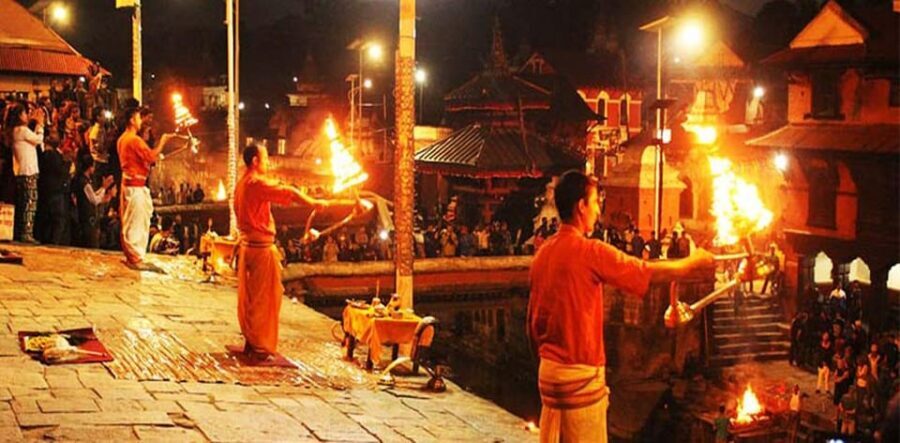
What I like most is the balance: you arrive before the evening worship peaks, so you can get oriented. Then you get the full experience of the aarti itself—priests chanting prayers, waving oil lamps, and moving through a sequence that feels both orderly and deeply emotional. The guide’s job is to translate the symbolism in plain language, so it doesn’t stay mysterious.
And yes, the views are real. You’re at a temple complex that’s visually dramatic by day, but at dusk and night the lights and incense create a different kind of scene—one that feels less like sightseeing and more like you’re witnessing a living tradition.
The tour is offered by Aspiration Adventure Pvt Ltd, and the format is straightforward: hotel pickup, temple visit with a licensed English-speaking guide, then the Bagmati River aarti, then back to Kathmandu.
You can also read our reviews of more evening experiences in Kathmandu



Getting there from Kathmandu: pickup, timing, and why late afternoon is smart
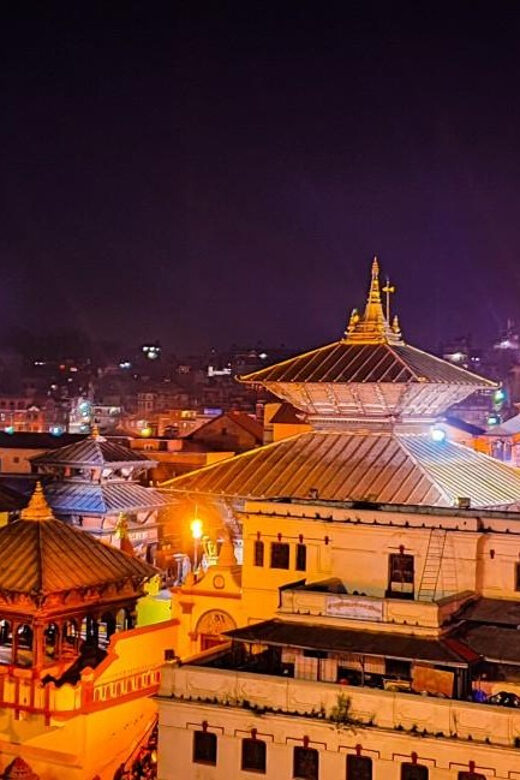
You’ll be picked up in Kathmandu in the late afternoon and driven to Pashupatinath Temple along the Bagmati River. This timing is the quiet genius here. You’re not rushing in right when the ceremony starts. You arrive with enough daylight to find your bearings, understand the layout, and get those early photo frames with less panic.
This matters because Pashupatinath is not just a single spot. It’s a temple complex. You’re going to move around a bit—first with your guide, then with a window for independent exploration before the aarti. Arriving early reduces stress and helps you actually enjoy what you’re seeing.
Transport is included, and it’s been highly rated, with a strong emphasis on comfort and smoothness. On a night tour, that’s not a small detail. You want a ride that gets you there safely and on time, because the ceremony timing is not something you can pause for.
First look at Pashupatinath: the guided temple complex visit
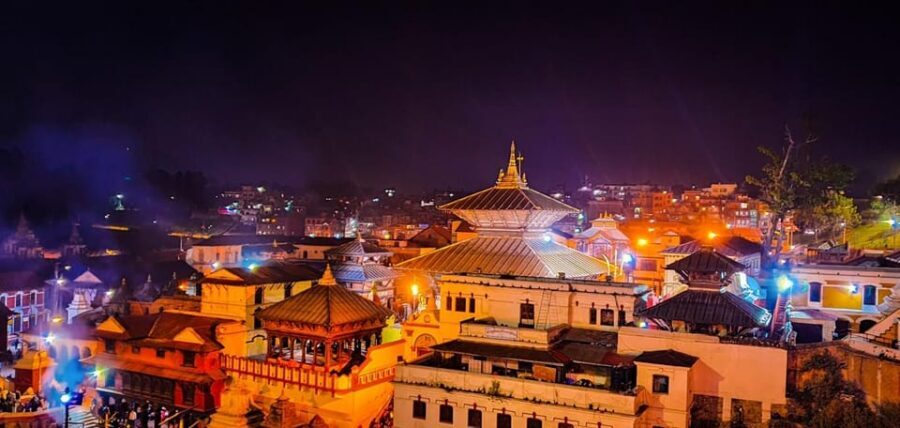
Once you arrive, the licensed English-speaking guide leads you through the temple complex. The aim isn’t to overwhelm you with dates or architecture jargon. It’s to give you a mental map and religious context so the aarti makes sense when it begins.
Here’s what you can expect from the temple portion:
- A guided tour of the complex: your guide explains historical and religious importance and helps connect what you’re seeing to the ritual.
- A photo stop: you get a chance to capture the temple with a view that works better in early light than after dark.
- Time to explore on your own: after the guided orientation, you can take a breath, look around, and decide what details you want to revisit.
A major theme from the best guide experiences on this type of tour is how the explanation changes your attention. With guides like Ramesh and Rajat, the ritual becomes more than a spectacle. You start noticing the structure: what leads up to the oil lamps, how chanting and sound shape the atmosphere, and why the Bagmati riverbank is the focal point for night worship.
Also, it helps that the guide is English-speaking and that the tour stays private. You can ask questions and get answers without waiting for a translation line.
The Bagmati River bank: where the aarti becomes the main event
Around 6 p.m., the focus shifts from temple complex to the Bagmati River banks on the eastern side of the temple. This is where the aarti happens—the nighttime worship festival scene that pulls people in close as the ceremony builds.
What you’re actually watching is a sequence of devotion:
- Priests chant Vedic mantras
- bells ring as part of the ritual rhythm
- oil lamps are lit and waved before Lord Shiva’s idol
- incense burns and adds that unmistakable night-spice smell
- a band plays classical instruments, while hymns are sung to the gods
Even if you know nothing about Hindu rituals, the structure is easy to follow. The sound signals what’s coming next. The lights give a visual cue. And the guide helps you connect the pieces so you’re not just reacting to noise and glow.
I also like the fact that your view isn’t random. The tour is designed for the river-bank ceremony. You’re not wandering around hoping you end up in the right place at the right second.
Being respectful and getting good photos on sacred ground
Photography is a big reason people book an evening tour like this. You’ll have time for photos, and the tour notes that photography is possible in permitted areas.
Still, this is a working religious space, not a theme park. The best way to get photos (and avoid frustration) is to treat your guide as your “permission system.” They’ll know where it’s allowed and how to position you without disrupting worship.
Practical tips that help:
- Ask where you can stand before the ceremony ramps up. Once the ritual starts, moving around can be hard.
- Watch the group flow. People gather, priests move, and the best angles can change quickly.
- Plan for lower light. Night photography means slower shutter speeds and higher chances of blur, so brace yourself and keep your movements calm.
One more thing: the aarti is emotional. I’ve seen the best travel moments happen when people put the camera down for 30 seconds and just watch. The guide explanations you get right before the ceremony make that pause feel meaningful, not like you missed the shot.





Guides and drivers: the small details that make the night feel easy
The tour is led by a licensed English-speaking guide, and the experiences people describe consistently focus on guide attitude and clarity. Guides such as Ramesh, Rajat, and Anjan are repeatedly praised for being friendly, patient, and able to explain the meaning of what you’re seeing.
That matters because the aarti includes several layers at once—chanting, bell sounds, lamp movements, incense, and music. Without context, it can blend into a blur. With a good guide, each piece becomes legible.
There’s also mention of a driver who is polite and safe, which is worth caring about on a night schedule. You’re dealing with Kathmandu traffic plus a nighttime return, so the “boring” parts—ride comfort, timing, smooth drop-off—are part of what makes the experience feel worth it.
How the $45 price stacks up for a 3-hour private evening tour
At $45 per person for about three hours, this tour isn’t trying to be cheap, and it’s not priced like a premium luxury outing either. The value comes from what’s included.
You get:
- hotel pickup and drop-off
- transport to and from Pashupatinath
- a licensed English-speaking guide
- entry ticket to Pashupatinath
- taxes and service charges
And you also get a practical time-saver: a “skip the ticket line” style advantage is noted. Even if the line isn’t huge, on an evening schedule, every minute counts.
The one cost you’ll likely add is food and drinks. Those aren’t included. So if you’re doing this after a day of walking around Kathmandu, eat beforehand or plan a light snack earlier. Bring water if that fits your style—just don’t expect this tour to handle meals.
For me, the price makes sense if you want:
- a guided explanation (so the ceremony means something)
- included entry and transport (so you don’t piece everything together)
- a private-group pace (so you’re not stuck waiting behind others)
If you’re the type who likes to go fully DIY and you’re comfortable navigating sacred spaces, you might spend less. But you’ll likely spend that saving in time and confusion.
What the itinerary feels like, hour by hour (and what to watch for)
Here’s how the flow tends to feel, based on the tour structure.
Late afternoon: pickup in Kathmandu, drive to the temple area. This is when you can relax—transport and coordination are handled.
Arrival at Pashupatinath: photo stop plus a guided walk through the complex. This is your orientation phase. Use it to ask questions while your guide can still control the pace.
Before the aarti: you get time for independent exploration. This is where you can slow down, look closely, and decide what you want to remember when the ceremony begins.
Around 6 p.m.: the main event at the Bagmati River bank on the eastern side. Expect chants, bells, oil lamps, incense, and classical instruments plus hymns. The scene is active and focused, so keep your movements quiet and follow your guide’s cues.
After the aarti: you return to Kathmandu by car.
The main “gotcha” is not the walking. It’s timing. Evening rituals are scheduled, and you’re building your night around that. If you hate waiting, you still get temple time with your guide and exploration time before the peak.
Who should book this tour, and who might not love it
This tour fits best if you want a spiritual-cultural experience that has a guide behind it. It’s especially good for:
- first-time visitors to Pashupatinath who want context, not just views
- people interested in Hindu traditions and ritual meaning
- anyone who wants night atmosphere plus clear explanations
- photographers who want help finding permitted areas and good angles
It might not be your favorite if:
- you dislike crowds or tight ceremony spaces
- you need a slow, flexible schedule with lots of extra free time
- you’re primarily looking for a long museum-style experience (this is about the ritual at the river)
Also, this is a night-heavy option. If you’re sensitive to late starts or you prefer day-only sightseeing, you might want a different format.
Should you book the Kathmandu Pashupatinath Evening Aarati Tour?
Yes—if you want to understand what you’re seeing and not just collect images. The combo of guided temple context plus the Bagmati River aarti is exactly what makes this more than a drive-by photo opportunity. With guides like Ramesh and Rajat highlighted in people’s experiences, the ritual tends to land in a way that feels clear and respectful, not random.
Book it if:
- you’re in Kathmandu for a limited time and want a high-impact evening
- you want entry and transport handled
- you value a licensed English-speaking guide who can answer questions
Skip it if:
- you’re not into sacred ceremonies at night
- you prefer food included and a less structured schedule
If you’re deciding between day and evening, the evening tour is the one that lets you experience the lights, the mantras, and the ritual energy in one focused 3-hour window—then go back to a hot shower in Kathmandu and call it a win.
FAQ
How long is the Pashupatinath evening aarti tour?
The duration is 3 hours.
What time does the aarti ceremony start?
The ceremony begins around 6 p.m., after late-afternoon pickup and temple orientation.
Does the tour include hotel pickup and drop-off?
Yes. Hotel pickup and drop-off in Kathmandu are included.
Is the Pashupatinath entry ticket included?
Yes. Entry ticket to Pashupatinath is included.
Is a guide provided, and is the tour in English?
Yes. You’ll have a licensed English-speaking guide, and the tour is conducted in English.
Are food and drinks included?
No. Food and drinks are not included.