REVIEW · UNESCO WORLD HERITAGE TOURS
Kathmandu : Swambhunath & Durbar Square Guided Half Day Tour
Book on GetYourGuide →Operated by Linkage Tour & Travel · Bookable on GetYourGuide
Kathmandu rewards slow wandering, even in four hours. This guided half-day links two top spiritual stops: Swambhunath with its hilltop stupa views, and Kathmandu Durbar Square, a UNESCO-listed maze of temples and palaces. I like how the tour stays focused—one climb, one classic square—so you don’t waste time chasing logistics, and you get explanations that turn landmarks into stories.
One watch-out: guide quality can make or break the experience. A past guest flagged an English comprehension and pacing issue (speaking too fast and very close), so it’s worth paying attention to how your guide communicates and asking questions if you want clarity.
In This Review
- Key Highlights You’ll Actually Notice
- Why Swambhunath and Durbar Square Work in One Half-Day
- The 4-Hour Timeline: What Those Minutes Add Up To
- Swambhunath: Hilltop Views, Prayer Flags, and the Monkey Temple Feel
- What you should expect on the ground
- The ritual layer that makes it feel real
- Quick practical note
- Kathmandu Durbar Square: Palaces, Temples, Courtyards, and King-Queen Stories
- What makes it special
- How the guide changes the experience
- Guide Quality: When English Clarity Is the Real Differentiator
- What you can do to protect your experience
- Price and What You’re Getting for $37
- Logistics: Pickup Areas, Timing, and the Car Ride
- Should You Book This Swambhunath and Durbar Square Half-Day Tour?
- FAQ
- How long is the Kathmandu Swambhunath and Durbar Square guided half-day tour?
- Where do pickup and drop-off happen?
- What’s included in the price?
- Are entry fees included?
- What sites does the tour cover?
- Is there free cancellation?
Key Highlights You’ll Actually Notice
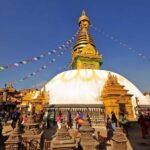
- Swambhunath hilltop ascent: steps up to a stupa framed by prayer flags, statues, and wide city views
- Durbar Square walking time: palaces, temples, and courtyards with enough room to pause for photos
- Rituals in action: you’ll see incense, chants, and worship practices that locals still do
- English-speaking guide with stories: mythology, symbolism, and palace-era background explained as you go
- Private-group pace: pickup and return by private car/Scorpio, timed to fit a short visit
Why Swambhunath and Durbar Square Work in One Half-Day
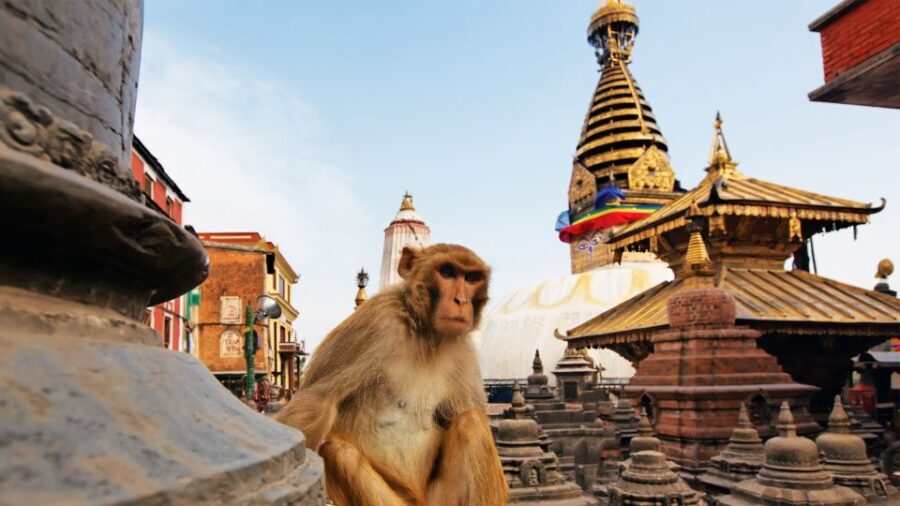
If you’re short on time in Kathmandu, this pairing is practical. Swambhunath gives you the spiritual skyline moment: you climb up to a stupa on a hilltop and take in Kathmandu from above. Then you head down to Kathmandu Durbar Square, where the focus shifts from Buddhist symbolism to royal-era architecture—temples, courtyards, and carved stone that reflect successive dynasties and artistic influences.
What makes this tour feel efficient is the way it’s structured around “meaning,” not just movement. You’re not simply shown where to stand; you’re given the background so the places connect. That matters at sites like these, where a short visit can otherwise feel like a blur of buildings.
You can also read our reviews of more guided tours in Kathmandu

The 4-Hour Timeline: What Those Minutes Add Up To
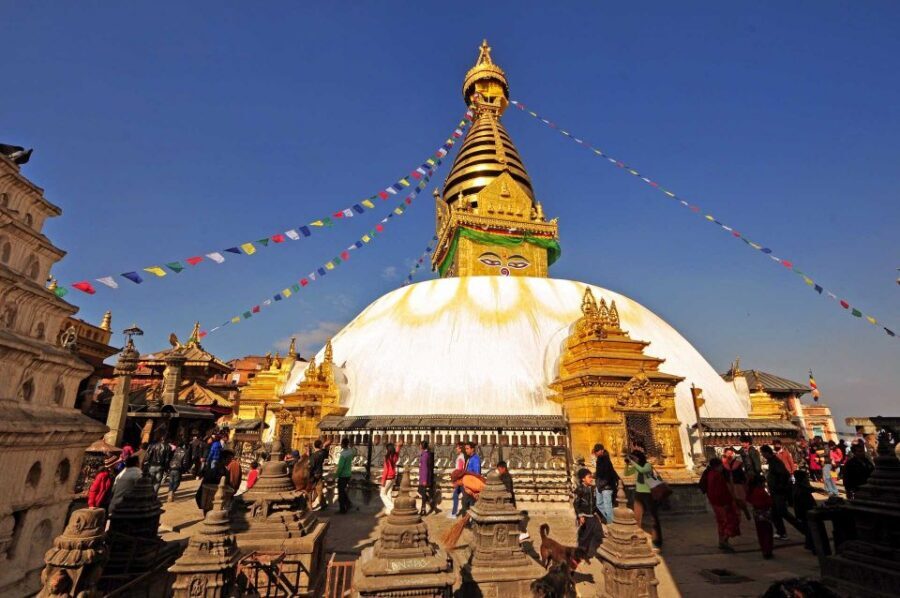
This is listed as a 4-hour experience, with two main stops and built-in breaks. You’ll start with hotel pickup from either Durbar Marg (Thamel area) or Thamel. From there, the tour splits time roughly like this:
- Swambhunath: about 80 minutes total, including a break/photo stop and some free time plus temple visiting and shopping
- Kathmandu Durbar Square: about 75 minutes total, with photo stops, time to explore, shopping, and walking
That pacing is good for first-timers. You get enough time to notice details—like prayer flags and statues up at Swambhunath—without feeling rushed through Durbar Square’s courtyards. The “free time” blocks also help you move at your own comfort level, whether that means lingering for a better photo angle or stepping aside to regroup.
The main consideration is that you’ll be walking. Swambhunath includes climbing steps to reach the stupa, so if you’re sensitive to stairs, plan for that part of the day.
Swambhunath: Hilltop Views, Prayer Flags, and the Monkey Temple Feel

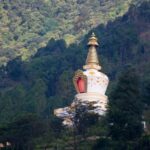
Swambhunath is often called the Monkey Temple, and even before you’re fully up there, you start picking up the atmosphere. The tour takes you through the ancient complex and then up to the hilltop stupa, where the scene is built for both photos and contemplation: fluttering prayer flags, statues, and a strong sense of place.
What you should expect on the ground
You’re given time for:
- a photo stop
- temple visiting
- free time to look around at your pace
- some shopping opportunities nearby
But the real value is the guided interpretation. Your guide is there to explain the history, mythology, and symbolism behind the stupa, which helps you connect what you’re seeing to why it matters. Without that, Swambhunath can turn into only a view and some striking religious imagery. With context, it becomes a living spiritual hub—one that you can read.
The ritual layer that makes it feel real
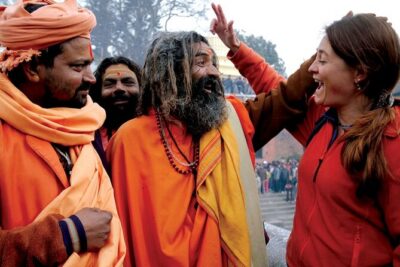
One of the strongest aspects of this tour is the attention to religious practice. As you move through the area, you’ll encounter the sound-and-smell side of worship: chants, incense, and devotion from locals. It’s not staged. It’s simply part of how people use these sites.





Quick practical note
If you’re the kind of person who likes photos, this stop is where you’ll want to slow down. The stupa and viewpoints are designed for a “stop and stare” moment, not just a quick snapshot.
Kathmandu Durbar Square: Palaces, Temples, Courtyards, and King-Queen Stories
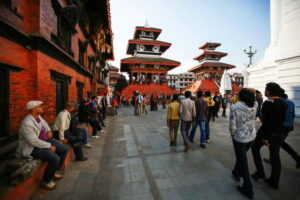
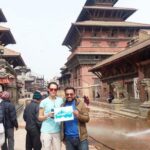
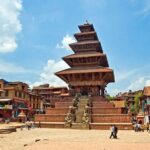
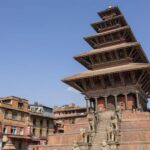
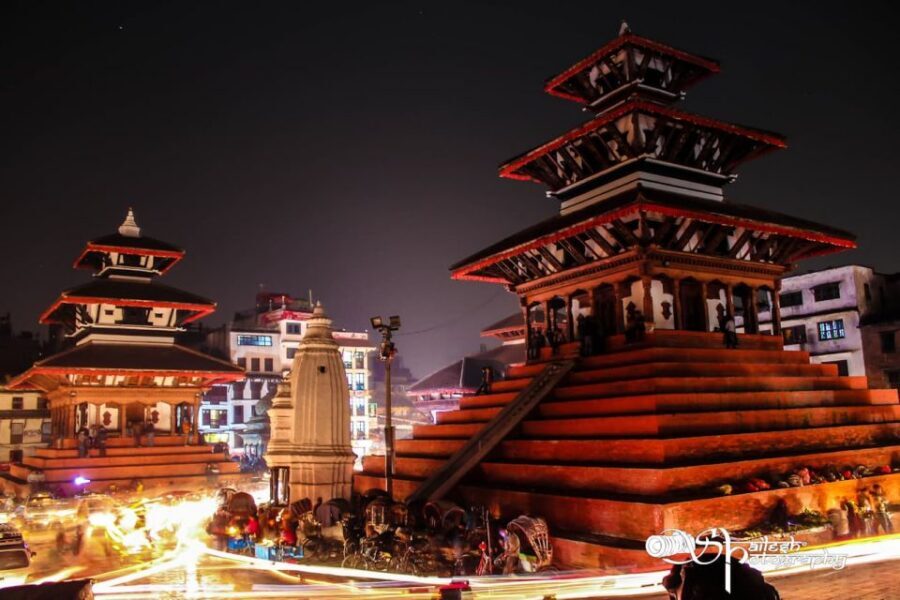
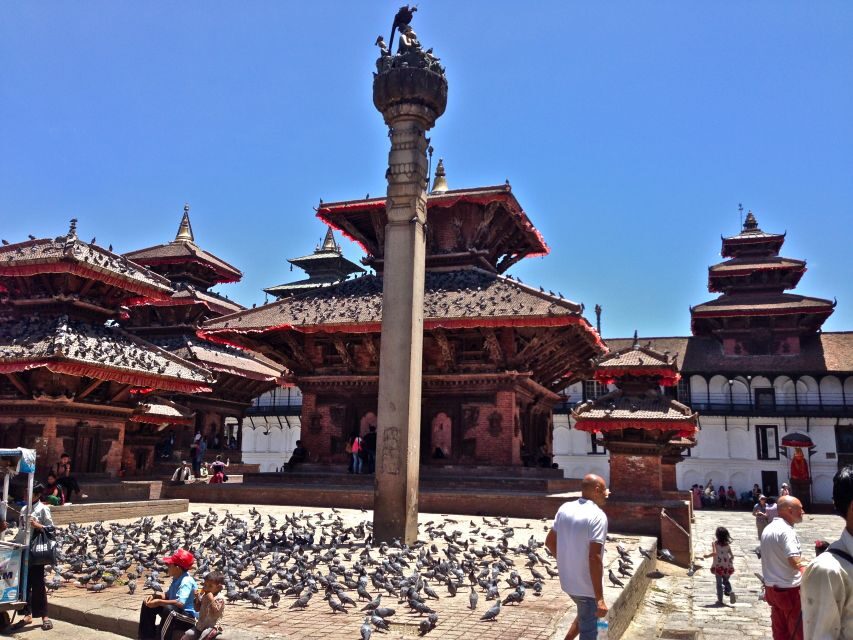
After Swambhunath, you shift to Kathmandu Durbar Square, a UNESCO World Heritage site. Here the tour becomes more architectural and historical. Instead of one signature hilltop stupa, you’re walking through a cluster of palaces, temples, and courtyards—spaces shaped by multiple dynasties and artistic traditions.
What makes it special
Durbar Square is the kind of place where carvings can look similar at first glance, but the details tell different stories. The guide’s job is to help you see those differences: the background on kings and queens, the presence of gods and goddesses in the symbolism, and the historical events tied to the area.
You get time for:
- a photo stop
- temple/palace visits
- free time
- shopping
- a walk through the main areas
That walking time is key. You can’t really appreciate a square like this by staying at the edges. Even within the shorter timeframe, you’re meant to move through courtyards and take in the mix of religious and royal architecture.
How the guide changes the experience
A big theme in this tour’s feedback is explanation style. One guide, Shanti, has been described as very nice and informative, with added context about Nepal that went beyond the obvious. Another guide, Ram, was praised for relaxed explanations and good company. When the guide is comfortable and clear, Durbar Square becomes easier to “read,” and you feel less like you’re just passing through rooms.
Guide Quality: When English Clarity Is the Real Differentiator
This tour runs with an English speaking guide, but English isn’t one-size-fits-all. I’d treat guide communication as part of the value equation, not a small detail.
There’s at least one reported downside: one guest felt the guide was difficult to understand, speaking too quickly and getting physically too close, which made things uncomfortable. That’s a reminder that even when a tour is priced well, the human factor matters.
What you can do to protect your experience
- Ask questions early, especially during the Swambhunath climb. If you’re not getting clear answers, you’ll know quickly.
- If your guide speaks fast, ask for a slower pace or for key points repeated at a simpler level.
- Use the free-time blocks to reset mentally and emotionally—your guide can’t fix sensory overload if the day feels too intense.
On the positive side, Ram and Shanti have both been described as giving a relaxed, informative flow—showing you the key places and explaining them without turning it into a lecture.
Price and What You’re Getting for $37
At $37 per person for a half-day, the biggest question isn’t just the cost—it’s what’s included.
Here’s what you do get:
- Hotel pickup and drop-off
- Round transfer by private car/Scorpio
- English speaking guide
- All taxes and service charge
Here’s what you don’t get:
- Entry fees
That last point is important. Entry fees can add up depending on current rates and which parts require payment. So budget a little extra beyond the tour price if you want a smooth, no-surprises day.
Still, this can be good value if:
- you want two major Kathmandu sights handled in one go
- you prefer a private group pace rather than joining a larger crowd
- you value guided explanation at sites where context changes how you experience the place
If you’re a total DIY traveler and you already know exactly what to look for at Swambhunath and Durbar Square, you might spend less by organizing separately. But if you want the “why” behind the stupa symbolism and the palace-era setting, paying for interpretation often saves time and confusion.
Logistics: Pickup Areas, Timing, and the Car Ride
Pickup options are listed as Durbar Marg (Thamel) and Thamel, and you’ll also be dropped back at Durbar Marg or Thamel. That’s helpful because it keeps your day centered in the most convenient tourist area.
Transportation is via private car/Scorpio, which usually means:
- less waiting than large group transfers
- a smoother route between hilltop Swambhunath and Durbar Square
The tour also builds in short break time sections before and during stops. That’s not glamorous, but it matters. After a climb and some time in dense temple streets, those pauses make it easier to keep your attention.
One more small behavioral note from feedback: a guide offering refreshments has been mentioned, and there were also safety reminders about wearing a mask during a period when COVID was still circulating. Even if the exact rules change by season, it’s smart to carry a mask and be ready to follow your guide’s local guidance.
Should You Book This Swambhunath and Durbar Square Half-Day Tour?
I think this is a strong choice if you have limited time and you want a guided, story-driven tour of two Kathmandu anchors. Swambhunath is your spiritual hilltop moment with views, prayer flags, statues, and ritual sounds. Durbar Square is where the city’s royal-and-religious architecture comes alive through explanations and walking time.
You might skip it if you:
- hate guided tours and prefer to wander without explanations
- are highly sensitive to English pacing and need a very slow, clear delivery (because one negative experience about language clarity has been reported)
My take: book it if you want structure, interpretation, and a short day that hits the core of Kathmandu. If you’re able to communicate with your guide early and get the style you need, this tour is the kind of half-day that makes your next full day in the city feel easier—because you’ll understand what you’re seeing.
FAQ
How long is the Kathmandu Swambhunath and Durbar Square guided half-day tour?
The tour duration is listed as 4 hours.
Where do pickup and drop-off happen?
Pickup and drop-off are available at two locations: Durbar Marg (Thamel) and Thamel.
What’s included in the price?
Hotel pickup and drop-off, round transfer by private car/Scorpio, an English speaking guide, and all taxes/service charge are included.
Are entry fees included?
No. Entry fees are not included.
What sites does the tour cover?
You visit Swambhunath (the Monkey Temple) and Kathmandu Durbar Square.
Is there free cancellation?
Yes, you can cancel up to 24 hours in advance for a full refund.