REVIEW · BHAKTAPUR & PATAN DAY TRIPS
Kathmandu and Bhaktapur Cities Guided Tour
Book on Viator →Operated by Sabbatical Explore Nepal · Bookable on Viator
Kathmandu Valley makes a strong first case for slow travel. This guided loop pairs Boudhanath Stupa (UNESCO) with lesser-visited temples in the broader Kathmandu-Bhaktapur mix, so you see both the headline attraction and the everyday sacred places people actually use.
Two things I really like about this experience: first, the pacing. You get specific time blocks at each stop (no rushing your way through stone after stone). Second, the tour feels built for local culture, not just photos, from religious details at Boudhanath to the old-town vibe around Nagadesh and Bhaktapur.
One drawback to think about: this is short—about 4 to 5 hours—so it won’t replace a full-day Kathmandu or Bhaktapur itinerary if you want a lot of monuments, museums, and viewpoints.
In This Review
- Key highlights worth your attention
- A fast way to see Kathmandu Valley’s standout spiritual sights
- Price and what’s included for a smooth 4–5 hour loop
- Stop by stop: Boudhanath Stupa and the big-eyed Buddha
- Less-visited Navatandham and Nagadesh Buddha Vihar in the old fabric
- Sankhamul Park by the Bagmati: where the tour slows down
- Pickup, private transport, and why the day feels low-stress
- Your guide team: how Shiva’s style makes the difference
- Timing, weather, and packing tips that actually help
- Who this tour fits best
- Should you book this Kathmandu and Bhaktapur tour?
- FAQ
- How long is the Kathmandu and Bhaktapur guided tour?
- What is the price of the tour?
- Is pickup available?
- Is this tour private?
- Are tickets or entrance fees needed?
- What’s included in the price?
- What is not included?
- What happens if the weather is poor?
Key highlights worth your attention
- UNESCO World Heritage at Boudhanath Stupa without the all-day commitment
- Free admission at the listed stops, so you can budget cleanly
- A private group setup that keeps the pace comfortable
- Coffee or tea plus bottled water, useful during a warm day
- Quieter local stops like Navatandham and Nagadesh instead of only the big names
- A riverside break at Sankhamul Park where you can slow down
A fast way to see Kathmandu Valley’s standout spiritual sights
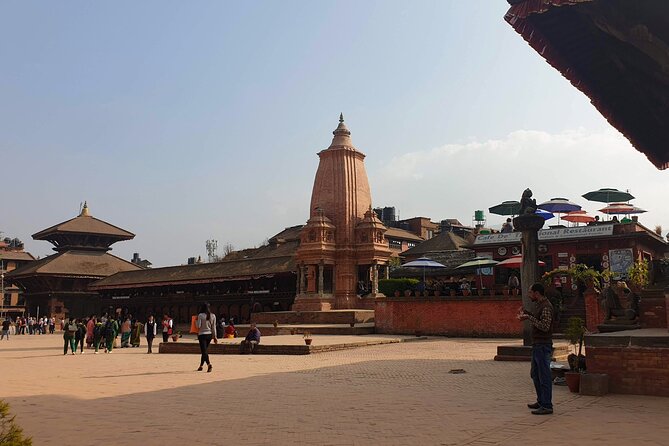
If you’re in Kathmandu for just a few days, this kind of tour can be a smart move. You’re not trying to conquer everything. Instead, you’re building context: how Kathmandu Valley works religiously, socially, and architecturally.
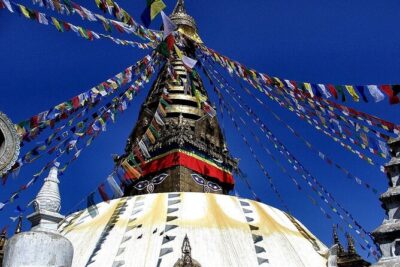
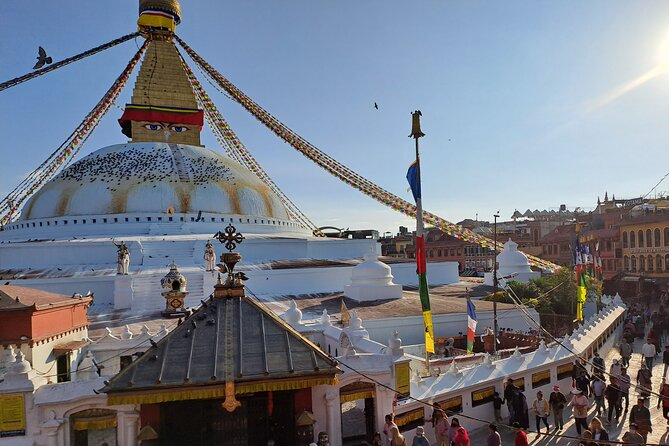
The route centers on Boudhanath, one of the largest stupas in South Asia. That scale matters. From a distance, it reads like a giant mandala shape. Close up, it’s the kind of place where your eyes naturally track details. Even the painted Buddha eyes on the stupa carry symbolic interpretations—often described with traits like mystery, impassiveness, empathy, and shrewdness. Whether you read those meanings literally or just treat them as a cultural lens, it gives you something to look for besides the obvious.
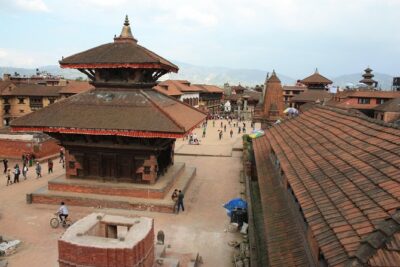
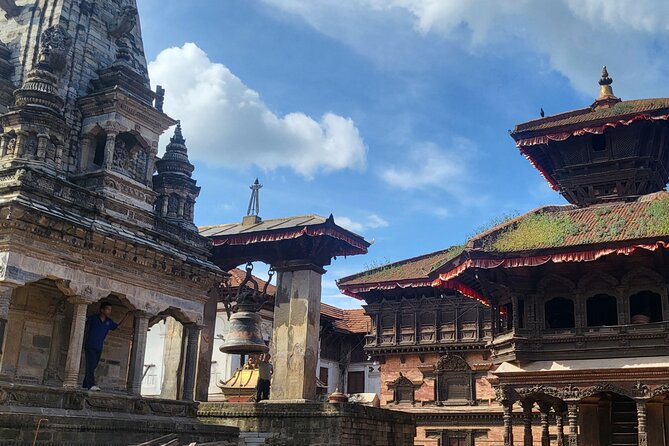
Then the tour shifts from the famous to the lived-in. You’ll step into smaller, less-explored religious spaces like Navatandham (Shree Krishna Pranami Temple) and Nagadesh Buddha Vihar. That contrast is the real payoff. It shows you that “Kathmandu” isn’t just one landmark. It’s a patchwork of daily faith.
You can also read our reviews of more guided tours in Kathmandu
Price and what’s included for a smooth 4–5 hour loop
This tour is priced at $70 and runs about 4 to 5 hours. That’s a good length for people who want meaningful sights but don’t want a long day of logistics.
Here’s what’s included:
- Private transportation
- Bottled water
- Coffee and/or tea
- All fees and taxes
And the listed stops show free admission for each segment on the schedule, including Boudhanath Stupa, Navatandham, Nagadesh Buddha Vihar, and Sankhamul Park. That combination—fixed time plus free entry—keeps spending predictable. You’re mostly paying for your guide time and getting moved efficiently between neighborhoods.
What’s not included:
- Lunch
- Travel insurance
- Personal expenses
Practical takeaway: because there’s no lunch included, you’ll want to plan food either before or after your tour. Also, bring a little cash for personal snacks, especially if you end up lingering longer at a stop than expected.
Stop by stop: Boudhanath Stupa and the big-eyed Buddha
Stop 1: Boudhanath Stupa (about 45 minutes) is the anchor of the whole experience. Built on 14th-century foundations, it’s a UNESCO World Heritage Site and a major pilgrimage place. Even if you’ve seen photos, standing in the area helps you understand why it’s such a magnet.
What you should do with your time here:
- Walk the stupa perimeter at an easy pace and notice how the space feels open but also intentionally focused.
- Look for the Buddha eyes. People interpret them differently, but they function as a visual “presence” that pulls you in.
- Observe how people behave—some come to pray, some pause in a reflective way, and some simply take in the atmosphere.
A note on expectations: you won’t get an hours-long, deep religious study session in 45 minutes. But you will get the foundation. You’ll leave knowing what Boudhanath is, why it matters, and how it connects to other sacred sites in the valley.
And if you’re photographing: the stupa’s broad form is forgiving, even if the light shifts. It’s one of those monuments where you can take satisfying pictures from multiple angles without needing perfect conditions.
Less-visited Navatandham and Nagadesh Buddha Vihar in the old fabric
After Boudhanath, the tour uses a smart trick: it changes from a landmark to smaller sites with a more local feel.
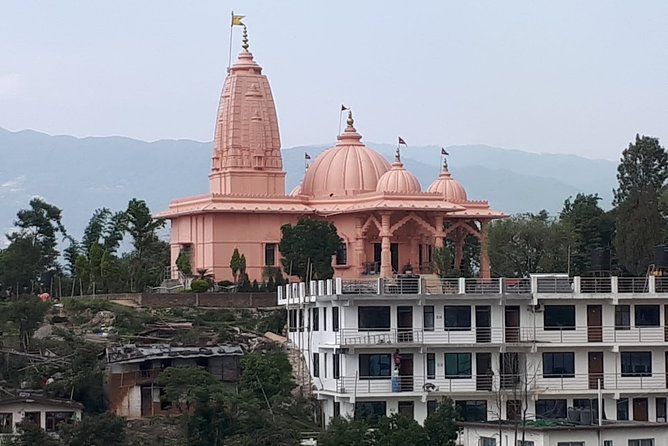
Stop 2: Navatandham (Shree Krishna Pranami Temple) (about 30 minutes)
This is described as very less explored. That matters because it’s not fighting for space with mass tourism. You get a better chance to slow down and actually pay attention to religious objects, surroundings, and the tone of how people gather.
Even if you’re not fluent in local religious details, you can still “read” a temple by watching:
- how visitors enter and move,
- what areas people focus on,
- and how the space supports quiet worship.
Stop 3: Nagadesh Buddha Vihar (about 30 minutes)
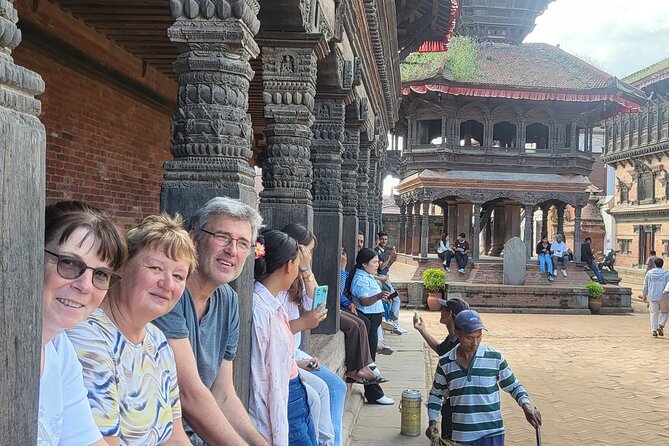
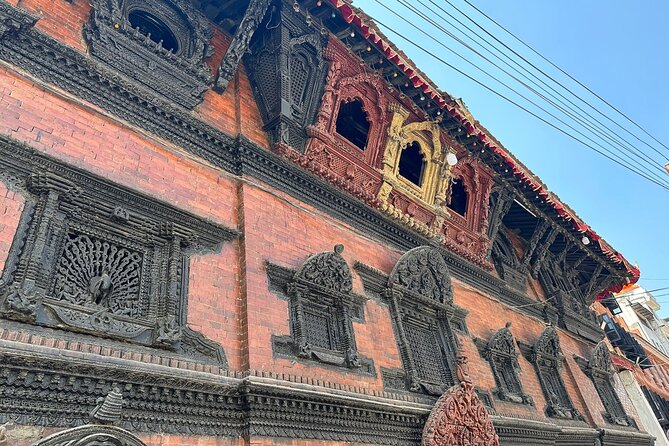
Nagadesh is tied to Bhaktapur’s old-town values. A Buddha vihar like this is often more about continuity than spectacle. You may notice fewer grand photo opportunities, but you’ll likely feel a stronger sense of daily religious rhythm.
In both Navatandham and Nagadesh, the main value is that you’re not just collecting sights. You’re seeing how Kathmandu Valley’s spirituality shows up in smaller-scale architecture and local neighborhoods. That’s the kind of context you’ll carry into the rest of your trip.
Potential consideration: because these stops are shorter, you’ll want to keep your expectations realistic. If you’re hoping for a long guided lecture or a deep dive into one temple’s theology, this format may feel brief.
Sankhamul Park by the Bagmati: where the tour slows down
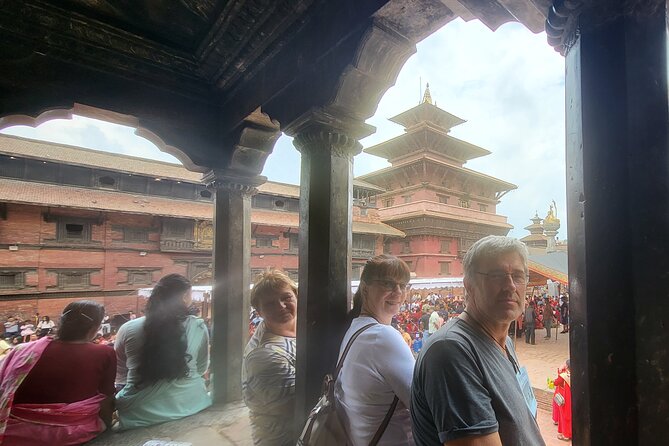
Stop 4: Sankhamul Park (about 1 hour) gives you space to breathe. You’re not climbing, you’re not queueing, and you’re not stuck in a tight monument corridor. It’s a riverside pause on the Bagmati River.
Sankhamul Park is described as peaceful and fun. That’s useful guidance, because after three temple stops, people sometimes start to feel “sight-fatigued.” This is the built-in reset. You can:
- sit and watch daily life near the river,
- enjoy a coffee or tea if you want a calmer moment,
- and take in a wider sense of Kathmandu beyond carved stone.
Practical tip: bring sun protection if you tend to burn easily. Parks near waterways can still feel bright and hot during daytime.
If the weather is rough, remember that the experience requires good weather. That’s not a small footnote. A riverside park day matters more than you might think.



Pickup, private transport, and why the day feels low-stress
A lot of guided tours fail at one thing: movement. Kathmandu traffic can turn a short day into a timed squeeze. This experience includes private transportation, so you’re not riding around with strangers while your guide tries to compress delays.
Because it’s private, only your group participates. That usually means:
- less waiting around,
- less adjusting your pace to other people,
- and more opportunity to ask questions without turning your conversation into a group event.
The tour also includes pickup offered and a mobile ticket, which helps you get your day started without hunting down paperwork. Small things, but they add up when you’re juggling jet lag or a tight schedule.
Your guide team: how Shiva’s style makes the difference
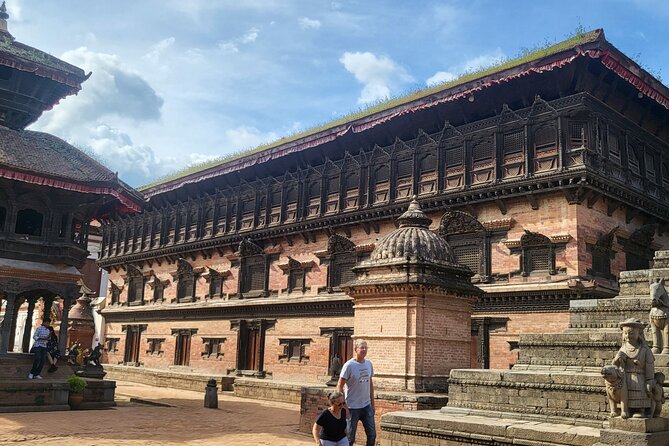
The experience provider is Sabbatical Explore Nepal. A lot of their communication style comes through in the way people describe the host and guides.
Shiva, the host and owner mentioned in feedback, stands out for being highly personable. People highlight that questions get answered thoroughly, and sometimes even before you realize you’re going to ask. That’s a real advantage in a place where religious meaning and local customs can be confusing at first glance.
Another name that shows up in the feedback is Kiran, tied to service and trip support. When a company gets praised for both planning help and on-the-ground guiding, it usually means you’re not left figuring things out alone once you arrive.
What you should look for during your tour:
- Ask simple questions early, like what to notice at each stop.
- Use the guide for context about what’s important to locals versus what’s just for visitors.
- If you have preferences—quiet spots, photo angles, or how much walking you want—speak up. Short tours run best when you guide the pace, not just follow it.
Timing, weather, and packing tips that actually help
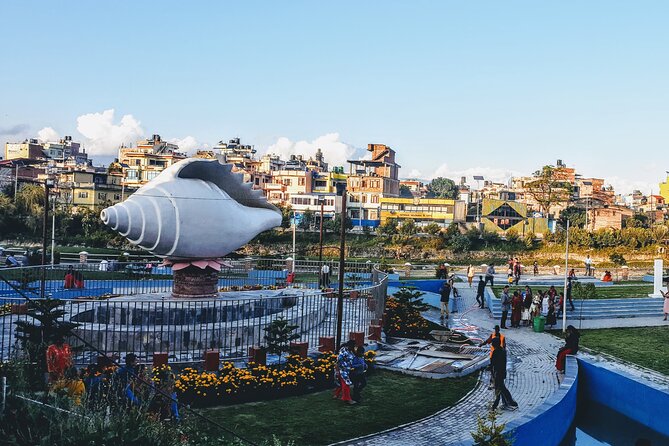
The schedule is built for a daytime loop. You’re out for about 4 to 5 hours, with stops ranging from 30 minutes at religious sites to 1 hour in a park.
Because the experience requires good weather, treat the tour as weather-sensitive, especially for Sankhamul Park by the Bagmati River. If rain or poor conditions hit, you may need a different date or a refund option.
What to pack:
- Comfortable walking shoes (temple areas and uneven ground can be common)
- A light layer for shade or evening chill
- Sun protection for the park segment
- Water bottle support is covered, but carrying a small extra snack can save you if lunch is hours away
Also, wear something respectful for temples. Even when an attraction feels open to visitors, it’s a good idea to dress in a way that matches the setting.
Who this tour fits best
This tour works especially well if:
- you’re short on time in Kathmandu Valley,
- you want one anchor UNESCO stop plus lesser-known religious places,
- you prefer a private, low-stress day over group wandering,
- and you like a mix of spirituality plus a calmer riverside break.
It may not be the best fit if:
- you’re looking for major museums or long temple circuits,
- you want an all-day immersion in Bhaktapur specifically,
- or you’re traveling with a very strict schedule that leaves no room for weather changes.
Should you book this Kathmandu and Bhaktapur tour?
Yes, if you want a focused snapshot of the valley that doesn’t feel like a checklist. The value comes from the mix: Boudhanath for UNESCO-scale impact, plus smaller stops that show you the quieter layers of Kathmandu and Bhaktapur, capped with Sankhamul Park for a reset.
Book it if $70 for a private, fee-covered, time-efficient half day feels right—and if your dates include weather stability. If you’re the type who loves discovering less-visited places and you’re okay with short stop times, this is a very practical use of your Kathmandu hours.
FAQ
How long is the Kathmandu and Bhaktapur guided tour?
The tour lasts about 4 to 5 hours.
What is the price of the tour?
The price is listed as $70.
Is pickup available?
Pickup is offered.
Is this tour private?
Yes. It’s a private tour/activity and only your group participates.
Are tickets or entrance fees needed?
The listed stops show admission tickets as free, and all fees and taxes are included.
What’s included in the price?
Private transportation, bottled water, coffee and/or tea, and all fees and taxes are included.
What is not included?
Travel insurance, lunch, and any other personal expenses are not included.
What happens if the weather is poor?
The experience requires good weather. If it’s canceled due to poor weather, you’ll be offered a different date or a full refund.