REVIEW · MULTI-DAY NEPAL TOURS
Buddhist Pilgrimage Tour In Nepal
Book on Viator →Operated by Third Rock Adventures · Bookable on Viator
Three holy stops, one calm day. This Kathmandu Buddhist pilgrimage tour is built around big feeling spaces: Boudhanath Stupa, chanting-style spirituality with monks, and a guided walk through three must-see sites that sit side by side with Nepal’s Hindu majority culture. I also like how the route makes it easy to understand the basics of Buddhism in Nepal without needing to study first.
My second favorite part is the human one. You get a fully trained, English-speaking professional tour guide who can answer your questions about culture and Buddhism, and the group stays small (max 10). That matters, because the temples make more sense when you can ask what you’re seeing and why.
One consideration: the price is mainly for transport, guide time, and site tickets. Meals and accommodations are not included, so you’ll still need to budget for food that day and your Kathmandu stay.
In This Review
- Key highlights you’ll feel fast
- A one-day Buddhist circuit that actually feels manageable in Kathmandu
- Boudhanath Stupa: why this giant stupa matters
- Kapan Monastery (Kopan) and Gelug chanting: learning the basics in real settings
- Swayambhunath Monkey Temple finish: views, symbolism, and a clear end point
- Guide power: why the commentary is the real attraction
- Price and value: what $150 really covers in practice
- Group size, vehicles, and the feel of a 9:15 start
- Cultural etiquette that keeps the day respectful
- Should you book this Buddhist pilgrimage tour in Kathmandu?
- FAQ
- How long is the Buddhist pilgrimage tour in Nepal?
- What time does the tour start?
- How many travelers are in the group?
- Does the tour include admission tickets?
- What’s included in the tour price?
- What isn’t included?
- Is there a mobile ticket?
- What’s the cancellation policy?
Key highlights you’ll feel fast
- Boudhanath Stupa visit with admission included for one hour of focused looking
- Chanting with monks to connect religious ideas to real practice, not just sightseeing
- Small group limit of 10 so questions don’t get swallowed by the crowd
- Kapan Monastery (Gelug tradition) for a clear start on Buddhist fundamentals
- Swayambhunath / Monkey Temple as a high-impact finish point for views and symbolism
- Private comfortable vehicles that reduce stress in Kathmandu traffic
A one-day Buddhist circuit that actually feels manageable in Kathmandu
Kathmandu can feel intense on your first day: temples, traffic, horns, and people moving everywhere. This tour gives you a simple plan—three major Buddhist pilgrimage stops in the Kathmandu Valley—so you’re not stuck trying to map it out while you’re still adjusting.
I like the pacing because it’s built for learning and emotion, not a marathon. You’re not just snapping photos. The experience is framed as an introduction to the rudiments of Buddhism in Nepal—how it shows up in daily life, how it connects to the landscape of Kathmandu, and why Buddhism feels so present even though most of the country is Hindu.
And there’s a spiritual element too. The tour describes chanting the mantra along with holy monks. Even if you’re not a chant person, it helps you understand Buddhism as something practiced, not only admired from the outside.
The day starts at 9:15 am and runs about one day. You’ll also get picked up and returned to the meeting point area, so you can plan the rest of your Kathmandu time without extra taxi juggling.
You can also read our reviews of more tours and experiences in Kathmandu.
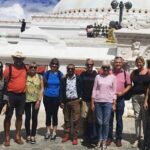
Boudhanath Stupa: why this giant stupa matters
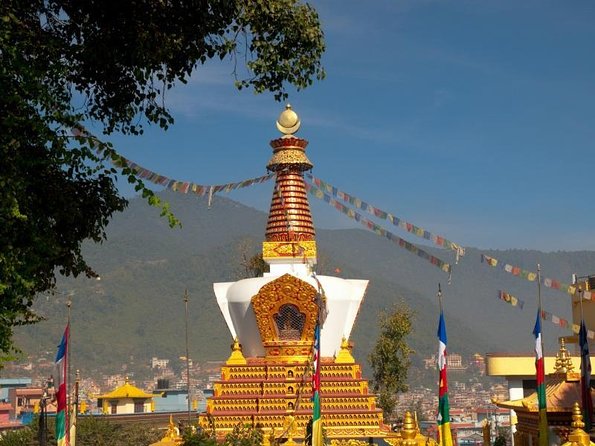
The day’s first stop is Boudhanath Stupa, about 4 miles from central Kathmandu. The tour frames it as one of the largest stupas in the world, and you’ll have around 1 hour here with admission included.
This is the kind of place where scale changes your mood. You notice symmetry and repetition—the form of the stupa, the space around it, and how people gather with purpose. It’s not quiet in a sleepy way. It’s more like quiet focus, with movement circling around the main structure.
What’s especially useful on a guided visit is how you connect what you see to what it means. A good guide can explain the symbolism behind stupas and why pilgrimage here is such a big deal for Tibetan Buddhist communities. Since this tour is designed to teach Buddhism basics, you’re not left guessing what you’re looking at.
Practical note: this stop includes admission ticket time, so you’re covered for entry costs as part of the tour. Plan to arrive ready to look slowly. One hour goes fast when you actually pay attention to details like posture, rituals, and the way people interact with the space.
Potential drawback for some people: if you prefer free-roaming at your own speed, the guided structure can feel a bit timed. But for a first Buddhist pilgrimage day, it’s an efficient way to get grounded fast.
Kapan Monastery (Kopan) and Gelug chanting: learning the basics in real settings
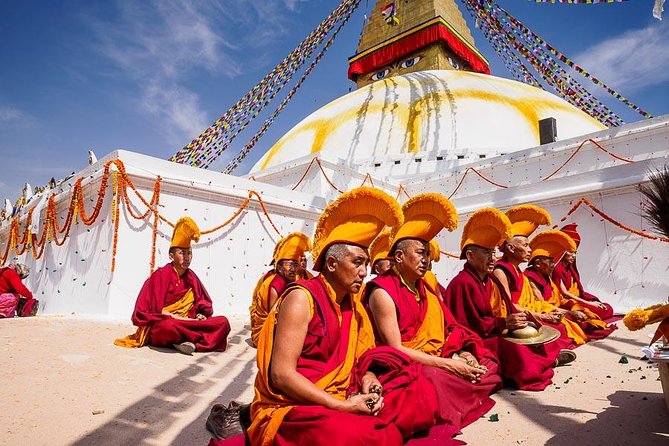
From Boudhanath, you head to the next major pilgrimage site, the Kopan / Kapan Monastery area, described as part of the Gelug tradition of Tibetan Buddhism. The tour is designed to cut across daytime traffic, then you arrive for another 1 hour visit, again with admission included.
The spiritual hook here is direct: the experience is described as chanting the mantra along with holy monks. That’s a big deal for understanding Buddhism in Kathmandu. You’re not studying concepts alone—you’re seeing how religious practice feels in a living setting.
This monastery stop is also where a guided day pays off. The tour’s goal includes helping you understand the rudiments of Buddhism in Nepal, and a Gelug monastery visit is a focused way to see how teachings and practice connect. Even if you only catch part of the explanation, you’ll leave with better mental hooks for what you’ll notice at the next stop.
For logistics, I like that this segment is protected by transport and routing. Kathmandu traffic can throw off timing, but the tour’s description specifically mentions working around daytime traffic, which helps keep the day from turning into long, uncertain waiting.
One more thought: monastery settings can be more sensitive to behavior than street temples. Keep your voice low, follow what the guide suggests, and treat the chanting moments as the main event—not a photo-op backdrop.
Swayambhunath Monkey Temple finish: views, symbolism, and a clear end point
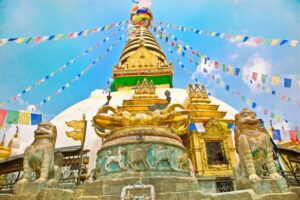
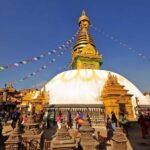
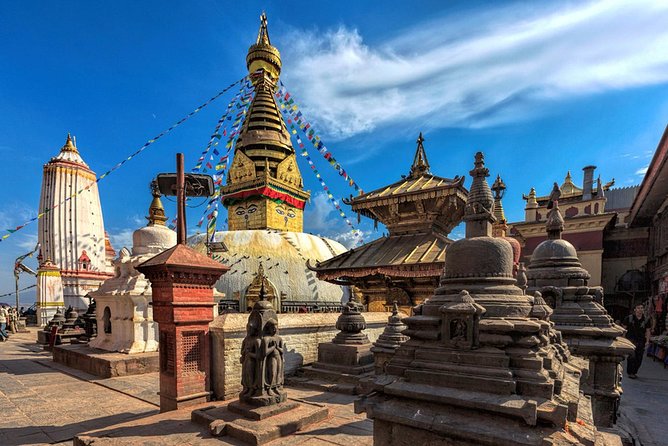
The third stop is Swayambhunath, popularly known as the Monkey Temple. From the monastery, the route heads toward Thamel for lunch, then continues to Swayambhunath as the final major site visit.
Swayambhunath usually hits people hard because it combines layered symbolism with a dramatic viewpoint effect. Even with just the time you’ll have on this tour, it’s the kind of stop where you feel the history and the religious energy in the same frame. And because it’s famous, it’s also a helpful anchor for first-time visitors—after this, Kathmandu landmarks start to feel easier to place.
This stop includes an admission ticket as well. That means you’re not stuck budgeting entry fees in the middle of the day. You’re also getting a clear structure: you finish the pilgrimage portion, then lunch, then the final site experience.
Lunch itself is a thoughtful touch in the overall flow. The tour reserves a table at The Ship Restaurant and bar in Thamel, and the meal mentioned is traditional Dal-Bhat. One caution, though: meals are listed as not included, so think of lunch as a reservation and recommendation, not a guaranteed included cost.
If you’re planning the rest of your Kathmandu afternoon or evening, this matters. The tour ends back at the meeting point, so you’re not stranded wondering how to get where you need to go next.
Guide power: why the commentary is the real attraction
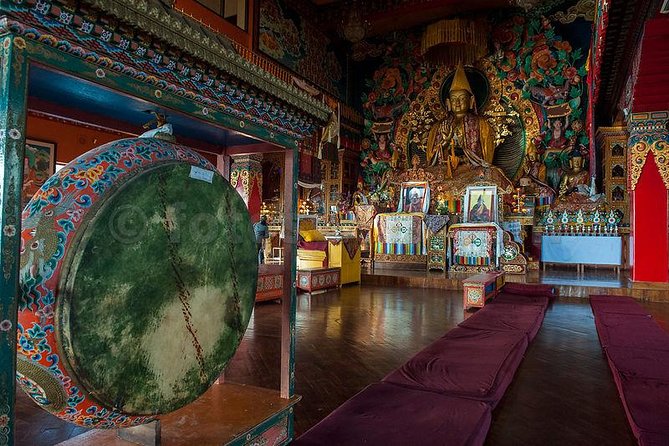
I’ve found that the difference between a decent temple tour and a memorable one is the guide’s ability to translate. Here, the tour is built around a fully trained English-speaking professional guide, and it’s repeatedly highlighted as the reason people recommend this day.
The standout theme: the guide can answer questions about culture and Buddhism. That’s the sort of service you can feel immediately. You’re not stuck with a script. You can ask what a ritual means, how Buddhism fits into Nepal’s wider religious mix, or what you should pay attention to as you walk.
Because the group size caps at 10 travelers, you also get a better chance of having real conversation instead of one-way explanations. That changes how the day feels. You’re not waiting your turn. You’re actively building understanding while you’re standing in the place where the meaning lives.
Also, the tour includes all government and local taxes plus staff salary and insurance. That doesn’t make a temple more beautiful, but it usually correlates with a smoother operation. Less hassle means you can spend more energy on the spiritual and cultural parts.
Price and value: what $150 really covers in practice
At $150 per person, this is not the cheapest way to see Kathmandu’s big Buddhist sites. But it’s also not pretending to be a budget tour. You’re paying for the “friction removal” that matters in a city like Kathmandu: private transport, timed stops, guide time, and admission tickets.
Here’s what the price includes: all ground transportation in private comfortable vehicles, a fully trained English-speaking professional tour guide, all government and local taxes, and the admission tickets for the major stops. You’re also getting a mobile ticket, which helps with on-the-day access.
What the price does not include is equally important. The tour doesn’t include meals or accommodations, and it doesn’t include the Nepal visa fee. Tips for staff are also not included. On top of that, any optional activities during free time aren’t covered.
So the real value question is simple: do you want a guided, ticketed day with transport handled? If yes, $150 can feel fair, especially if you’re coming in as a solo traveler or you don’t want to play logistics roulette.
If you’re comparing to a DIY plan, remember that your DIY savings usually get eaten by taxis, entry costs, and the time it takes to sort routes. This tour buys time and clarity, which is worth real money in a short trip.
Group size, vehicles, and the feel of a 9:15 start
This tour runs like a day plan, not an open-ended city hang. It starts at 9:15 am and ends back at the meeting point area. Pickup is described as coming from your hotel area for the first stop, which makes the morning easier to manage.
Transport is handled in private comfortable vehicles. In Kathmandu, that’s not a luxury mindset; it’s how you keep the day from turning into dead time. The itinerary even notes cutting across daytime traffic to reach Kopan/Kapan Monastery.
The tour caps at maximum 10 travelers, which changes everything about the pacing. Small groups mean fewer delays, and you’re more likely to get answers to your questions during the moments that actually matter—like right after a guide explains what you’re about to see.
One more value point: the tour is commonly booked about 18 days in advance on average. That suggests demand stays steady. If you’re visiting during a busy period, booking earlier is smart, so you don’t end up searching for alternatives late in the game.
Cultural etiquette that keeps the day respectful
Because this is a Buddhist pilgrimage-focused experience, you’ll get the best results by treating the sites like places of worship, not just landmarks.
During chanting or any moments with monks, keep your tone quiet and follow what your guide suggests. Don’t rush forward for photos. Give the ritual space to happen. Even if you’re only there for a day, you’ll feel the difference when you act like you understand this isn’t a performance.
Also, be mindful with how you move through sacred areas. Stupas and monasteries often have routines pilgrims follow. If people are walking a certain way, match the flow. If the guide gives you instructions, take them seriously. It’s the easiest way to stay comfortable and avoid awkward moments.
Lastly, keep your expectations realistic. This is about understanding Buddhism’s place in Nepal and seeing three major sites in one day. It’s not about spending all day in a single sacred space. If you go in ready to learn quickly and look slowly, the day will make sense.
Should you book this Buddhist pilgrimage tour in Kathmandu?
Book it if you want a structured, guided first taste of Kathmandu’s major Buddhist pilgrimage sites: Boudhanath Stupa, Kopan/Kapan Monastery, and Swayambhunath (Monkey Temple)—all in one day, with transport, tickets, and an English-speaking guide who can answer your questions.
Skip or rethink it if you mainly want total freedom to linger for hours at one location, or if you have a tight budget for extra items like meals, tips, and your visa. Also, if you’re the type who hates group pacing, you might find a small group schedule still feels scheduled.
If you do book, do one simple prep step: plan your Kathmandu day so you can eat on your own time at lunch. This tour sets up lunch in Thamel at The Ship Restaurant and bar, but meals aren’t listed as included, so have cash ready and keep your afternoon flexible.
Overall, this is one of the better “first day in Kathmandu” choices when your priority is cultural understanding, not just checking boxes.
FAQ
How long is the Buddhist pilgrimage tour in Nepal?
It runs for about 1 day.
What time does the tour start?
Start time is 9:15 am.
How many travelers are in the group?
The maximum group size is 10 travelers.
Does the tour include admission tickets?
Yes. Admission tickets are included for the major stops.
What’s included in the tour price?
You get private comfortable ground transportation, a fully trained English-speaking professional guide, staff salary and insurance, and all government and local taxes.
What isn’t included?
Meals and accommodations in Kathmandu aren’t included, and Nepal visa fees are not included. Tips for staff are also not included.
Is there a mobile ticket?
Yes, the tour includes a mobile ticket.
What’s the cancellation policy?
You can cancel for free up to 24 hours in advance of the experience start time for a full refund.