REVIEW · HINDU TEMPLE TOURS
Kathmandu Spiritual Sites: Bodhnath & Pashupatinath Tour
Book on Viator →Operated by Intrepid Urban Adventures - India · Bookable on Viator
One afternoon can turn spiritual fast. This Kathmandu tour strings together two UNESCO sites—Boudhanath Stupa and Pashupatinath Temple—plus the evening aarti lights ceremony, so you see Hindu and Tibetan Buddhist practice side-by-side without spending your whole day commuting.
I especially like the pacing: you get focused time at each site and a guide who keeps you from drifting off in heavy crowds. I also love the mix of planned moments (prayer wheels at Boudhanath, aarti at Pashupatinath) with the real-life, everyday context—people praying, monks in colorful robes, and cremations along the Bagmati River.
One drawback to plan for: Pashupatinath can be emotionally intense. You’ll see cremation ceremonies, and you’re asked not to take photos or watch in a way that disturbs mourning families.
In This Review
- Key things that make this tour work
- How the four hours actually feel in Kathmandu
- Boudhanath Stupa: Tibetan Buddhism you can feel in your hands
- The walk toward Pashupatinath: where the city changes gears
- Pashupatinath Temple: sadhu monks, palm reading, and river-side reality
- The aarti at sunset: what to watch for so you don’t get lost
- Transportation, group size, and why this is good value
- Who should book (and who should think twice)
- Should you book this Kathmandu spiritual sites tour?
- FAQ
- How much does the tour cost?
- What time does the tour start, and how long does it take?
- Where do we meet for the tour?
- Is the tour group large?
- What’s included in the ticket price?
- What isn’t included?
- Can I take photos during the cremation ceremonies?
- Is there free cancellation?
Key things that make this tour work
- Prayer wheels at Boudhanath: Rotate with locals around the huge white dome and feel how daily devotion looks in motion
- Pashupatinath is temple + river life: Sadhu monks, palm reading, and the Bagmati cremation area all happen close together
- Evening timing for the aarti: You arrive as the crowd gathers, then watch the offering of lights to Pashupatinath
- Small group means easier control: Max 12 people, and you’ll stay near your guide in the busier sections
- What you pay covers the basics: UNESCO admission and transportation are included, while optional spiritual add-ons cost extra
How the four hours actually feel in Kathmandu
This is an afternoon-to-evening format, starting at 3:00 pm in Thamel at Hotel Marshyangdi (Chaksibari Marg). Expect about 4 hours total, with a mobile ticket and a small group capped at 12 people.
In practical terms, this tour is ideal when you want Kathmandu’s spiritual core without building a whole day around it. You do a mix of vehicle travel and walking—about 2 km total walking—and the walking is mostly about moving between viewpoints and temple entrances. If you’re the type who likes to ask questions and hang back for photos, the short group time can still feel relaxed, mainly because the guide manages the flow.
You can also read our reviews of more tours and experiences in Kathmandu.


Boudhanath Stupa: Tibetan Buddhism you can feel in your hands
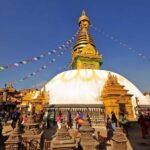
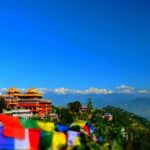
Boudhanath Stupa is the tour’s first big “wow,” and it’s not just because it’s famous. It’s because you participate. After you meet the guide and head out from Thamel, you spend about 1 hour 25 minutes here.
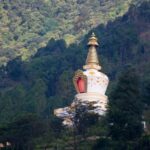
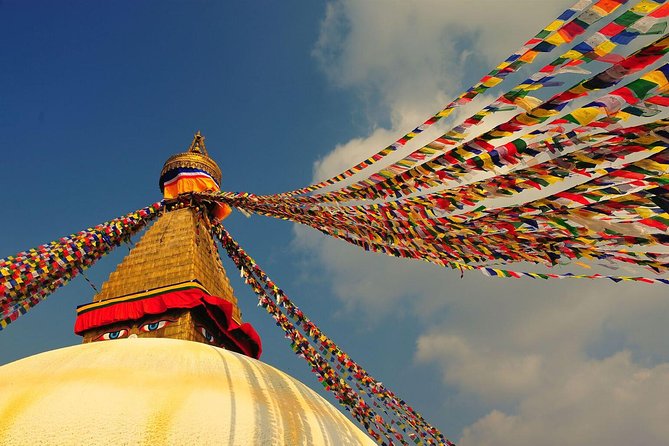
At Boudhanath, the heart of the experience is rotating the prayer wheels with locals as you circumnavigate the stupa. The stupa is described as the largest Buddhist stupa in Nepal, and it functions as a center of Tibetan Buddhism—so you don’t just look, you move with a daily ritual.
You also have an optional spiritual step: lighting a butter lamp to offer prayers to Buddha. If you want to do it, this is where extra costs can come in (butter lamps are listed as an option with fees). If you’re budget-minded, you can simply rotate, watch, and take in the atmosphere without buying anything.
The walk toward Pashupatinath: where the city changes gears
After Boudhanath, the tour shifts from stupa ritual to Hindu temple life. You’ll have a walk segment—about 15 minutes—before reaching Pashupatinath Temple.
This transition matters. Boudhanath shows devotion as a loop: repeat, pray, continue. Pashupatinath shows devotion as a sequence tied to the river—rituals, ceremonies, and the crowd that forms as the light changes.
Keep your eyes on your guide here. Even if you know where you are headed, the streets and temple approaches can get confusing when there are many people moving at once.
Pashupatinath Temple: sadhu monks, palm reading, and river-side reality
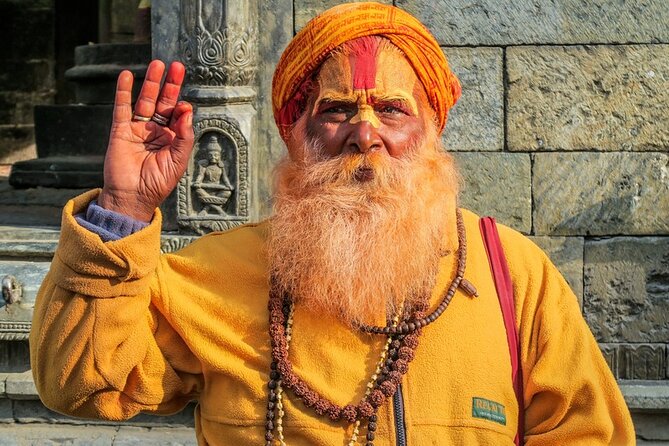
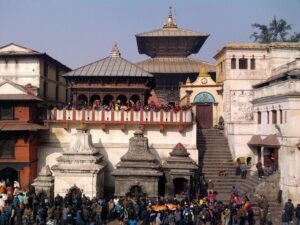
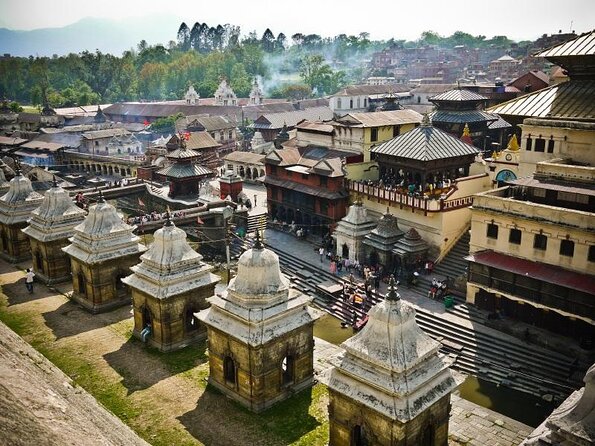
Pashupatinath is a UNESCO World Heritage Hindu shrine dedicated to Shiva, with a temple complex that dates to the 17th century. You get about 2 hours 20 minutes here, which is enough time to understand what you’re seeing and still have a moment to just stand back.
This stop has three distinct parts.
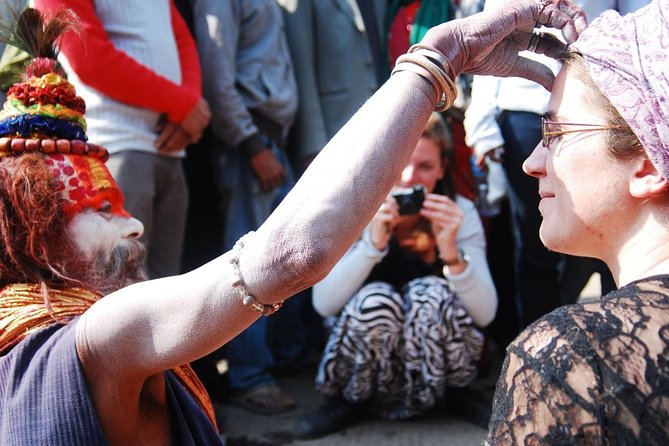
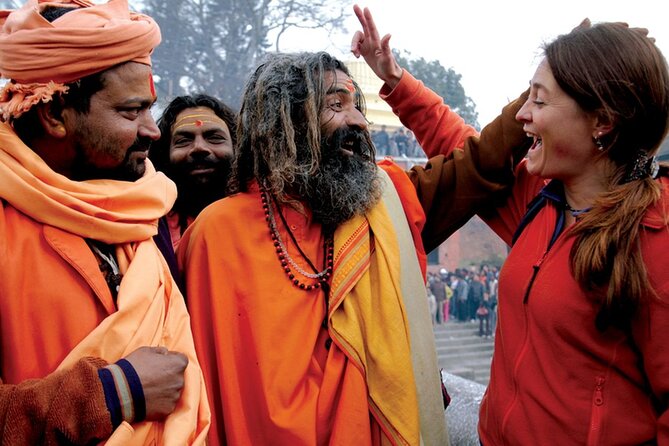
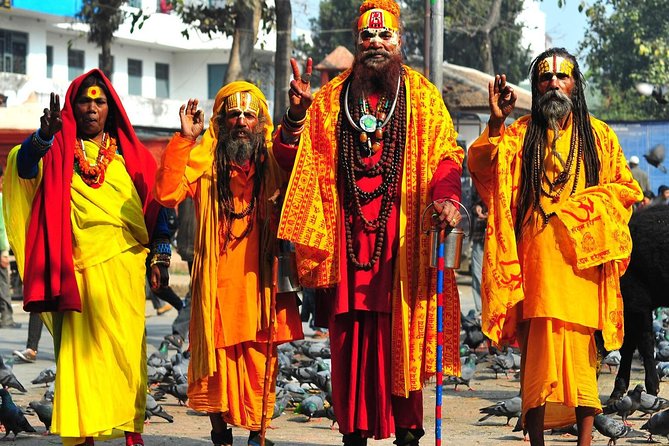
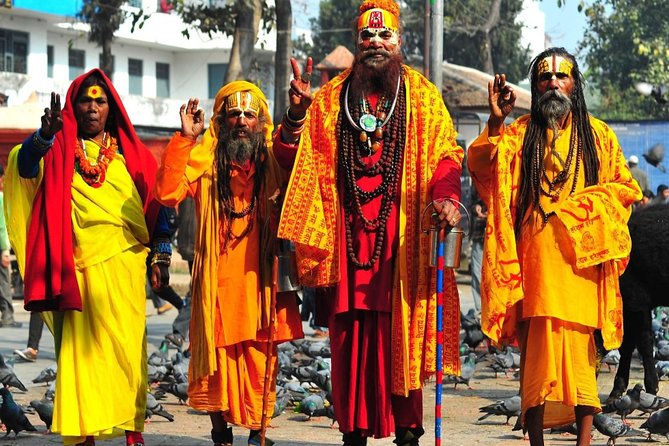
First are the sadhu holy men. You’ll see their presence around the temple area and get an explanation of their beliefs, including the idea of giving up material possessions as part of religious devotion. The clothing alone draws your eye, but the guide’s framing is what turns it from costume-watching into understanding.
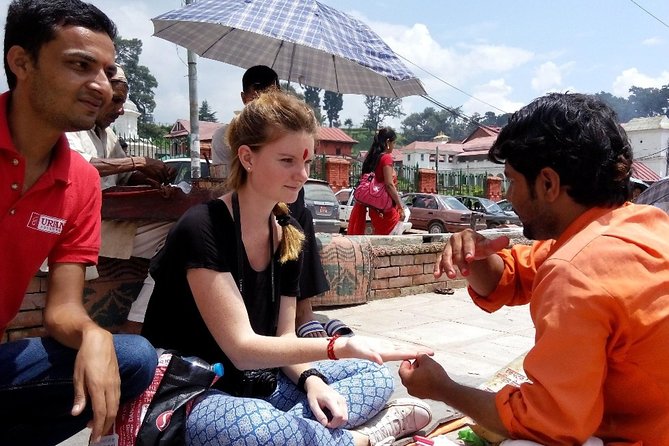
Second is the option of a local palm reader. Palm reading is included as an experience, but the reading fee is not. If you want it, your guide can help with the process and coordination so you aren’t trying to figure it out while the crowds swirl.
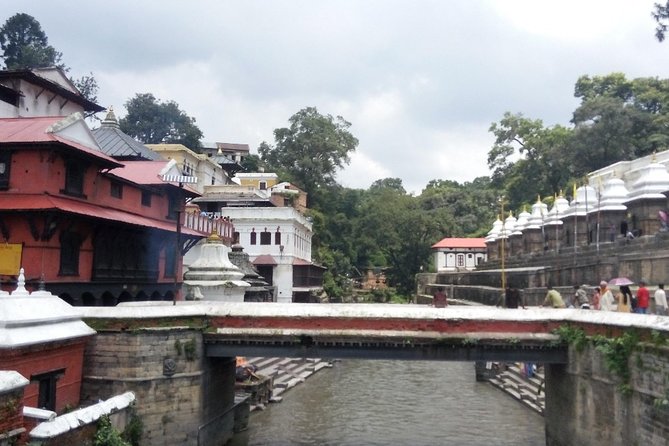
Third is the river-side setting at the Bagmati. Cremation ceremonies happen along the edge of the river on the eastern side of the Pashupatinath area. This is one of the most powerful parts of the tour, and also the part that requires the most sensitivity.
A key respect note: you’re asked to refrain from taking photos or watching in a way that disturbs mourning families. That may feel strict, but it’s also what makes your experience ethical and grounded. You’ll still see plenty—without turning it into a spectacle.
Also worth knowing: the tour notes that earthquakes caused damage to some sites in the past, and that the visited areas are renovated. That doesn’t remove the emotional weight of what you’ll witness, but it does give comfort about the condition of the monuments and access.
The aarti at sunset: what to watch for so you don’t get lost
As the evening approaches, crowds gather around the Bagmati River near Pashupatinath, especially on the eastern side. This is when the tour’s signature moment lands: the evening aarti, an offering of lights to Lord Pashupatinath.
The best way to experience it is simple: stay near your guide and your group. When the ceremony draws people in, the space gets tight and direction changes quickly. If you wander to get a better angle, you risk missing the timing and then having to backtrack through the crowd.
Your guide’s job here is practical—keeping the group together—plus interpretive. They help you understand what you’re seeing so the lights aren’t just pretty, they’re purposeful.
If you care about photos, remember: at Pashupatinath, you’re not in a sightseeing-only zone. Be respectful of boundaries around ceremonies, and use your phone camera only when it doesn’t conflict with the moment.


Transportation, group size, and why this is good value
The tour price is $60.56 per person, and that’s where value comes from. You’re not just paying for entry tickets. The package includes UNESCO site admission for Boudhanath and Pashupatinath, transportation costs from Thamel to the stupa and then back from Pashupatinath, and a local English-speaking Nepali guide.
There’s also a cultural “service” component that’s hard to price: someone helping you navigate spiritual spaces, manage timing, and explain what you’re seeing. In the reviews data, guides are repeatedly singled out for patience and attention (names that come up include Rita, Rozit, Amit, Subash, Bipin, and Ramhavi). That kind of consistency matters when you’re in crowd-heavy zones where getting separated is easy.
What costs extra? Optional offerings and interactions. Palm reader fees aren’t included. Butter lamp offerings at Boudhanath can have a fee. If you choose to interact with or take pictures with sadhu monks, there can be an additional cost. The tour also mentions that a guide can help you negotiate these requests appropriately, so you’re not stuck trying to sort out pricing on the spot.
Who should book (and who should think twice)
This tour fits you if:
- you’re short on time and still want two of Kathmandu’s most important spiritual sites
- you like cultural context, not just photos
- you’re comfortable with a crowd and can follow instructions about where to stand and when not to take pictures
It may feel less ideal if:
- you’re strongly uncomfortable with death rituals. Cremations at the Bagmati River are part of the experience, and the tour asks for respectful viewing rules
On the plus side, it’s child-friendly, with children under 6 joining free. It also notes that most travelers can participate.
If you’re coming to Kathmandu mainly for food and street scenes, this may still be worth it once—because it changes how you understand the city. If you’re here for a calm, quiet half-day, you might prefer a different style of tour, since both sites draw lots of people.
Should you book this Kathmandu spiritual sites tour?
I’d book it if you want a high-impact evening that combines participation (prayer wheel rotation, aarti) with explanation (Hindu and Buddhist practice, sadhu beliefs, and what’s happening by the river). The price-to-inclusions ratio is solid because admission and transportation are covered, and the small group size makes it easier to stay together in busy areas.
I’d think twice only if you know you’re not okay with seeing cremation ceremonies, even from a respectful distance. If you’re fine with that reality and you’ll follow the guidance on photos and behavior, this is exactly the kind of Kathmandu experience that sticks in your head long after you leave Thamel.
FAQ
How much does the tour cost?
The price is $60.56 per person.
What time does the tour start, and how long does it take?
It starts at 3:00 pm and runs for about 4 hours.
Where do we meet for the tour?
You meet at Hotel Marshyangdi, Chaksibari Marg, Kathmandu 44600, Nepal.
Is the tour group large?
It’s a small-group tour with a maximum of 12 travelers.
What’s included in the ticket price?
You get a local English-speaking guide, visits to Boudhanath and Pashupatinath (UNESCO sites), participation in the evening aarti at Pashupatinath, transportation between the sites, and admission tickets for the included sights. The experience also includes a palm-reader visit as part of the program (fees not included).
What isn’t included?
Lunch/dinner isn’t included. Palm reader fees aren’t included, and any optional offerings or payments for additional interactions (if you choose them) are also not included.
Can I take photos during the cremation ceremonies?
No. You’re asked to refrain from taking photos or watching the cremation rituals in a way that disrespects mourning families.
Is there free cancellation?
Yes. You can cancel for a full refund up to 24 hours before the experience start time.