REVIEW · 1-DAY TOURS
Kathmandu Sightseeing By Bus Day Trip
Book on GetYourGuide →Operated by Dream Noble Adventure Pvt. Ltd. · Bookable on GetYourGuide
Kathmandu in one bus day can work. This Kathmandu sightseeing by bus tour strings together five major sights in about 7 hours, so you get a strong first look at the valley without burning your budget. I especially liked the convenient hotel pickup in Thamel and near the airport and the chance to ride with an international group while still seeing serious landmarks. One thing to keep in mind: you’re also paying roughly $20 USD in monument/entrance fees on top of the tour price, and you’ll be on your feet at sacred sites.
The day starts early—meet your guide at your hotel at 9:40 AM—then you roll out for a full day of temple watching and city history. A local assistant rides along on the bus if you need help or questions, and the tour runs in English, Nepali, and Hindi with a host/greeter supporting the group. It’s not a slow, deep-dive kind of tour, but it’s a very practical way to cover Kathmandu’s highlights in one go.
In This Review
- Key things you’ll notice on this Kathmandu bus day
- Price and logistics: what you’re really paying for
- Starting at 9:40 AM: how the day flows from Thamel
- Pashupatinath Temple: the big ritual center of the Bagmati world
- Boudhanath Stupa: why this stupa stop is never just a photo stop
- Budhanilkantha: a different kind of sacred scene
- Swayambhunath Temple: the payoff is in the views
- Kathmandu Durbar Square: history you can walk through
- The guide setup: bus assistant + guide, not a one-person lecture
- What to bring (and what to skip)
- Is it worth $23? My take on value
- Who this Kathmandu bus tour suits best
- Should you book this Kathmandu sightseeing by bus day trip?
- FAQ
- What time does the Kathmandu sightseeing tour start?
- How long is the bus day trip?
- What sights are included on this Kathmandu day trip?
- Is hotel pickup included?
- What’s included in the tour price?
- Are meals included?
- Are entrance or monument fees included?
- What should I bring?
- Is the tour wheelchair accessible?
Key things you’ll notice on this Kathmandu bus day
- Hotel pickup in Thamel and near the airport cuts down stress and taxi math.
- Skip-the-line style entry help for ticketing (where available) helps keep the schedule moving.
- Full-day sightseeing with a bus route that hits major sites without you coordinating transport.
- A local assistant on the bus means quick questions don’t derail the day.
- Temple + stupa mix gives you both spiritual sites and the big cultural icons of the city.
- Group travel lets you compare notes with people from different countries while you ride.
Price and logistics: what you’re really paying for
This tour is $23 per person for a 7-hour group day trip in the Kathmandu Valley, starting from Thamel area and the nearby airport side. That price is low enough to feel like a smart move if you’re trying to keep costs under control while still seeing the must-dos.
Here’s the math you should plan for: monument and entrance fees are listed at around $20 USD per person, and meals are not included. So the all-in cost is closer to the tour price plus those fees. For me, that still feels reasonable because you’re getting transport by bus plus organized stops at major sights (and you’re not stuck figuring out routes on your own).
One more practical note: the tour includes a “normal guide” rather than a “professional guide.” That doesn’t mean it’s bad—just that you should treat this as an efficient sightseeing day with guidance, not a specialist-led history seminar at every stop.
You can also read our reviews of more tours and experiences in Kathmandu
Starting at 9:40 AM: how the day flows from Thamel
You’ll meet your guide at 9:40 AM at your hotel. If you’re staying in or near Thamel, you’re in the sweet spot for this kind of tour because pickup is included in that area. Even if you’re closer to the airport side, you should still get picked up, so the morning doesn’t become a scavenger hunt.
Once you’re on the bus, you’ll ride with a group and a local assistant who can help with questions. This matters more than it sounds. Kathmandu sightseeing can be confusing—signs, crowds, ticket points, changing conditions—so having someone to ask early and often helps you get your bearings fast.
The whole experience is designed to move. That’s why it works so well for budget travelers: fewer separate tickets for transport, fewer hours spent negotiating, and a clear sequence of stops.
Pashupatinath Temple: the big ritual center of the Bagmati world
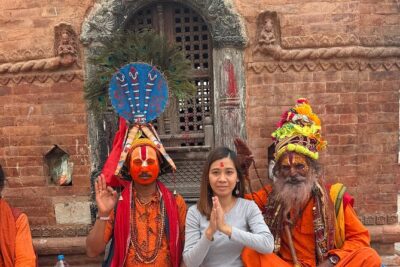
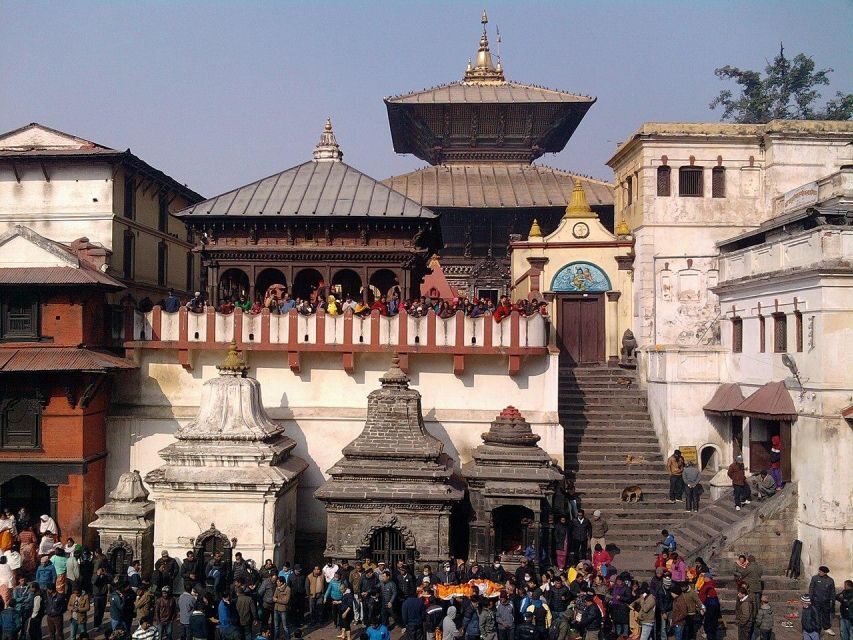
One of the first major stops is Pashupatinath Temple. This is the kind of place where you’re not just looking at architecture—you’re watching a living religious center in action. Even if you don’t speak the local languages, the atmosphere does the explaining: people come for worship, families gather, and the whole area feels deeply connected to daily life.
What I like about starting or visiting here during a bus day is timing and context. Early enough in the day, you have a better chance to enjoy the space without feeling completely steamrolled by crowds. Also, it anchors the whole itinerary. After you see Pashupatinath, other sacred sites in the city start to make more sense as part of one broader cultural map.
Possible consideration: this is a temple area, so expect rules and a need for respectful behavior. Wear comfortable clothes you can move in, and keep your camera ready, not reckless.
Boudhanath Stupa: why this stupa stop is never just a photo stop
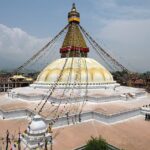
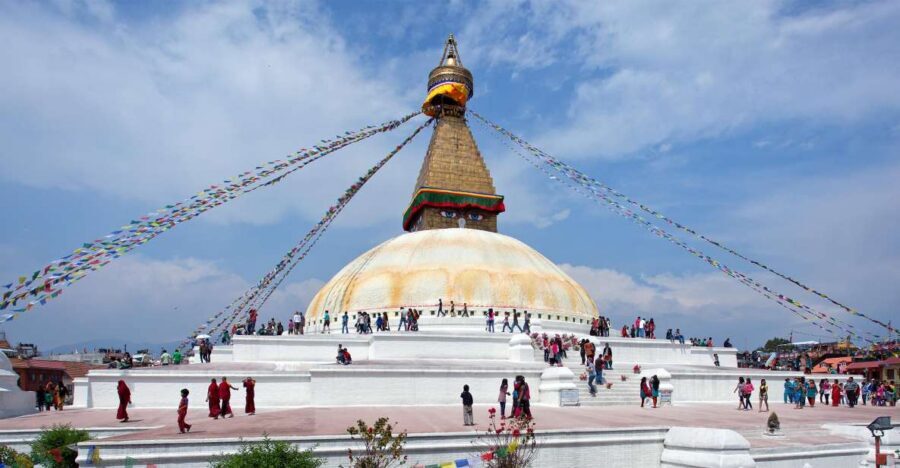
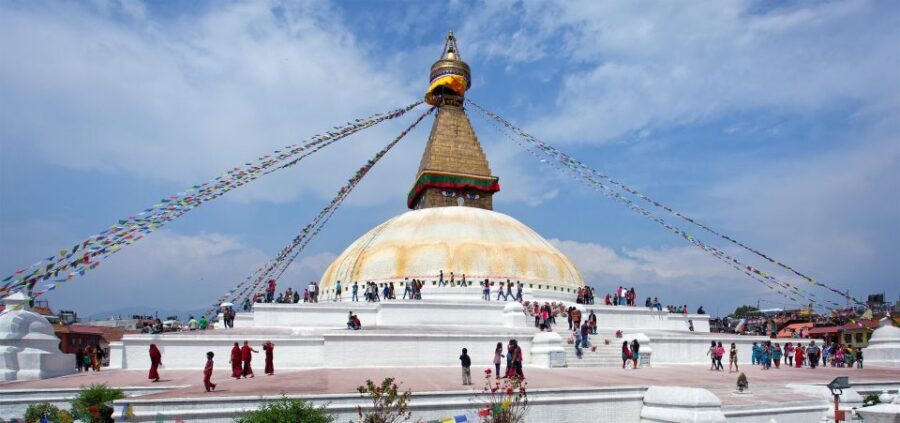
Next up is Boudhanath Stupa, one of the most iconic Buddhist landmarks in the Kathmandu Valley. If you’re the type who likes to understand what you’re seeing, this stop delivers because it’s not only visually striking—it’s also a place where people come to practice.
On a bus itinerary, Boudhanath works as a reset point. You go from one major religious focus to another, but the mood shifts. You can slow down, look carefully, and take in the stupa’s scale and the surrounding energy. It’s also an easy place to understand the rhythm of Kathmandu: devotion, conversation, movement, then devotion again.
Practical tip: give yourself a little time here even if the group keeps moving. If you rush, you miss the point of Boudhanath.
Budhanilkantha: a different kind of sacred scene
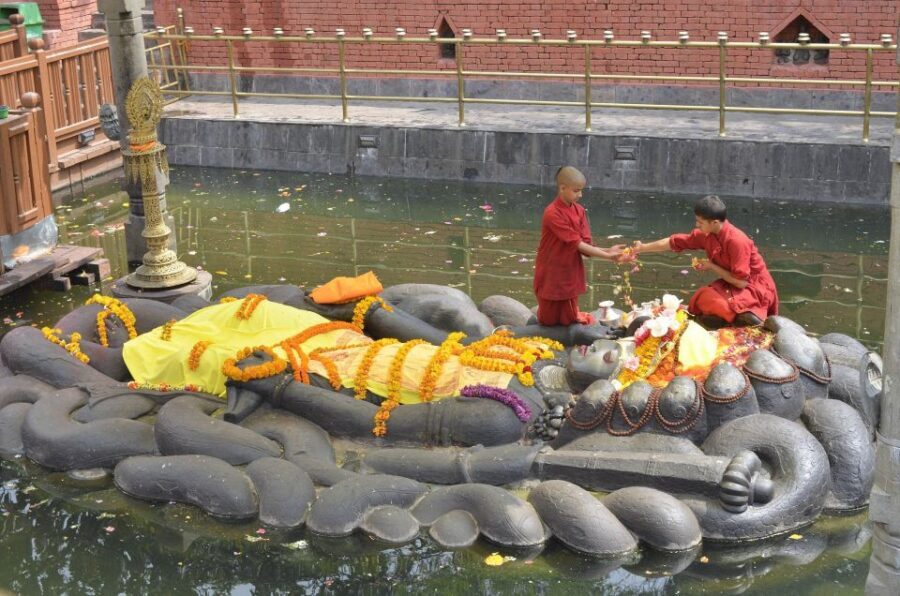
The itinerary includes Budhanilkantha as well. While the tour data doesn’t spell out exactly what you’ll see at the site beyond the name, the stop itself is a meaningful change from the heavier “city center” feel of other attractions. Think of it as another chapter in Kathmandu’s spiritual landscape: a named sacred place that adds variety to your day instead of repeating the same type of view.
Why this matters on a bus day: when you pack five big stops into one day, variety keeps your attention from going numb. Budhanilkantha helps your brain stay engaged—new surroundings, new details, new angles for photos.
If you’re sensitive to long periods walking or standing, pace yourself. Even on a tour with transportation, temple days can still mean time on foot.
Swayambhunath Temple: the payoff is in the views
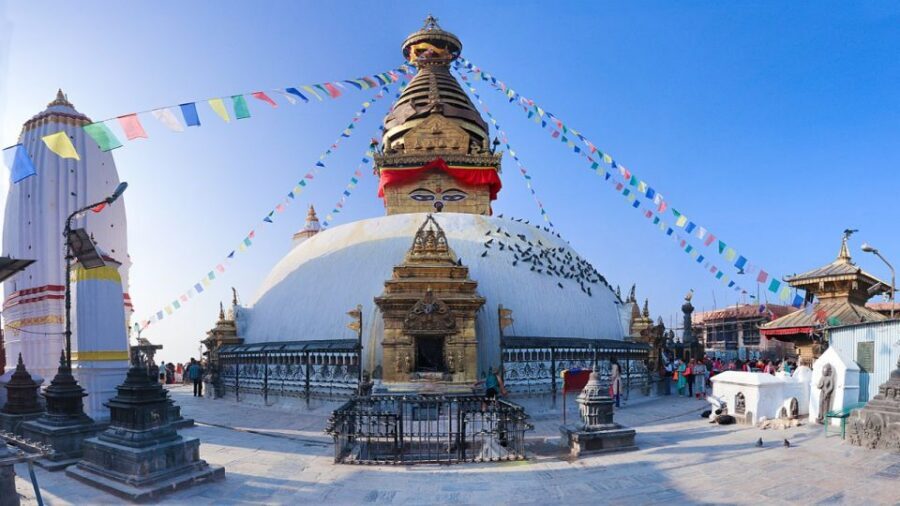
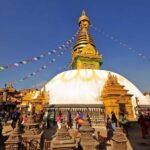
Another highlight is Swayambhunath Temple. This is the kind of Kathmandu stop where the location does some of the work for you. You get a sense of height, city layout, and valley perspective—plus the temple focus that makes it a key stop for first-time visitors.
Even if you’re not chasing panoramic shots, I like Swayambhunath because it changes how you see Kathmandu. From higher ground, the city becomes less of a street grid and more of a valley picture. That’s the moment you start connecting the dots between the stops you’ve already seen.
What to watch for: you’ll want comfortable clothes because sacred sites on hills can involve uneven paths and lots of moving around. And since the tour is scheduled, don’t plan on lingering so long that you fall behind the group.
Kathmandu Durbar Square: history you can walk through
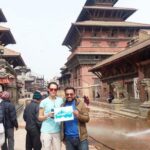
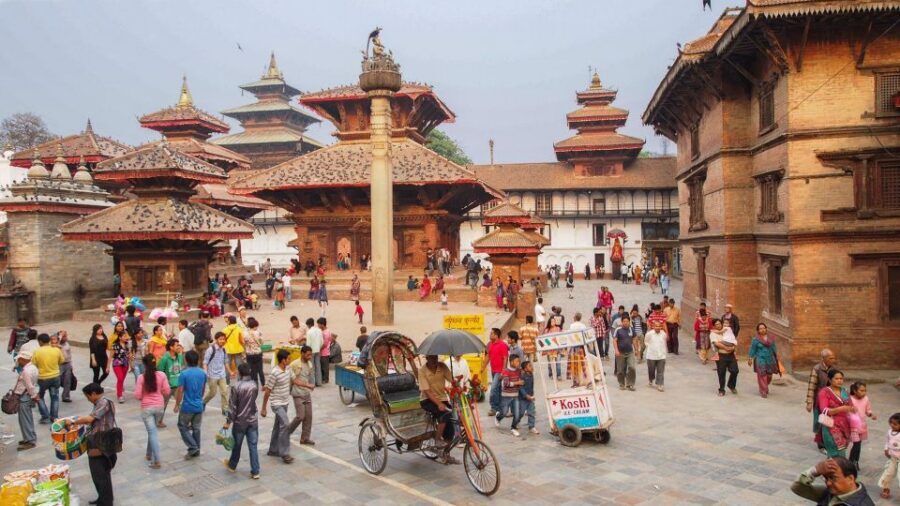
The tour ends with Kathmandu Durbar Square, a place built for slow attention even when you’re on a timetable. This is a classic spot for seeing Kathmandu’s historic center feel in a direct, human way—buildings, courtyards, and the sense of a city center where people have long gathered.
On a bus tour, I find Durbar Square is often the best “wrap-up” stop. By this point, you’ve already visited major spiritual landmarks. Durbar Square brings it back to civic history and local identity, so your day doesn’t feel like it’s only about temples.
Consideration: like many central heritage areas, it can get crowded. If you want photos without stress, watch for moments when groups shift and openings appear.
The guide setup: bus assistant + guide, not a one-person lecture
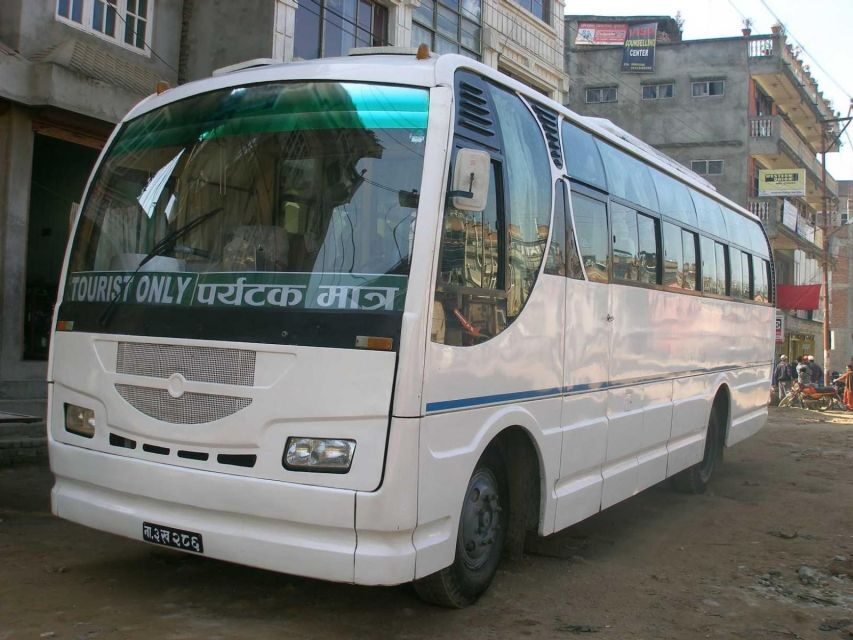
This tour includes a normal guide and also notes that a local assistant accompanies you on the bus. That pairing is practical. The guide can handle the sightseeing flow and context, while the assistant can help with bus-related questions—where to stand, what to do next, or how to handle something quickly without waiting.
Languages include English, Nepali, and Hindi, and there’s a host/greeter as well. So if you’re not fluent in Nepali, you shouldn’t feel totally on your own while moving between stops.
What you should expect in terms of style: because it’s a group bus day, the pace stays efficient. You’ll get meaningful context, but you won’t have a private, slow walk through every corner. That’s a tradeoff—one you’re making for the budget price and the fact you’re hitting five major sites.
What to bring (and what to skip)
Bring:
- Camera (you’ll want it at multiple stops)
- Comfortable clothes (temple-to-temple days are active days)
- Cash (helpful for any on-the-spot purchases and fees)
Not allowed:
- Drones
This matters because a “major sightseeing day” often means you’ll be in places with strict rules. Keep your filming equipment simple, and you’ll avoid annoying detours.
Is it worth $23? My take on value
For a $23 Kathmandu day trip, you’re paying for organization: pickup, bus transport, group routing, and guiding. Then you add about $20 for monument/entrance fees and you cover your own meals.
To me, the value is strongest if:
- You want a first-timer friendly highlights route.
- You don’t want to manage separate transport between far-flung stops.
- You’re okay with a group pace and want structure more than full private depth.
It’s less strong if:
- You’re looking for a highly specialized, long-form explanation at every single site.
- You hate group schedules or you need maximum free time at each stop.
- You’re budgeting tightly and prefer tours where fewer add-ons exist.
The best way to think about this one: it’s a cost-controlled route built for seeing a lot, not a luxury day designed for linger-and-learn at a single location.
Who this Kathmandu bus tour suits best
I think this works especially well for:
- Budget travelers staying in Thamel or near the airport pickup side
- People who like a clear itinerary and want to see the big names in one day
- Solo travelers who enjoy chatting on public-group tours (the bus is part of the experience)
- First-time visitors who want the Kathmandu Valley “greatest hits” without a day of logistics
If you’re traveling with limited mobility, pay attention to the note that it’s not suitable for wheelchair users. Also, this tour includes multiple sacred sites, so plan on respectful behavior and some physical effort even with the bus ride.
Should you book this Kathmandu sightseeing by bus day trip?
Yes—if your goal is a structured, budget-friendly Kathmandu highlights day with transport handled for you. The combination of hotel pickup, full-day route, and major stops like Pashupatinath, Boudhanath, Budhanilkantha, Swayambhunath, and Kathmandu Durbar Square gives you a lot of value per hour.
Book it if you want to get your bearings fast and feel like you truly saw Kathmandu’s key spiritual and historic landmarks. Skip it (or adjust your expectations) if you want lots of downtime, very slow sightseeing, or a professional-level deep lecture for every stop.
If you do book: bring cash, wear comfy clothes, and keep your camera charged. This is the kind of day where you’ll be glad you came prepared.
FAQ
What time does the Kathmandu sightseeing tour start?
You meet your tour guide at your hotel at 9:40 AM.
How long is the bus day trip?
The duration is 7 hours.
What sights are included on this Kathmandu day trip?
The stops listed are Pashupatinath Temple, Boudhanath Stupa, Budhanilkantha, Swayambhunath Temple, and Kathmandu Durbar Square.
Is hotel pickup included?
Yes. Pickup is included from the Thamel area and also the airport side area.
What’s included in the tour price?
Included items are hotel pickup, sightseeing by bus, group tour, and a normal guide.
Are meals included?
No. All meals are not included and are available for purchase.
Are entrance or monument fees included?
No. Monument fees and entrance fees are approximately $20 USD per person and are not included.
What should I bring?
Bring a camera, comfortable clothes, and cash.
Is the tour wheelchair accessible?
No, it is listed as not suitable for wheelchair users.