REVIEW · EVENING EXPERIENCES
Kathmandu: Pashupatinath Temple Aarti Night Tour
Book on GetYourGuide →Operated by Fewa Trail Treks and Expedition Pvt Ltd · Bookable on GetYourGuide
Pashupatinath at night feels quietly powerful. I love seeing the golden roof and silver doors up close while a guide explains what you’re looking at, not just what it is. I also like that the trip is built for ease: hotel pickup, a licensed English-speaking guide, and a tight 3-hour flow that gets you to the right place at the right time. One drawback to consider: a late driver can mean you miss the first moments of the ceremony, so be ready for pickup and watch the clock.
This is one of Nepal’s most important Hindu pilgrimage sites, and the Bagmati River setting changes the vibe after dark. You’ll hear stories that connect the temple’s pagoda-style architecture to centuries of worship, and you’ll have time to walk the complex at a slower pace than you’d get on a quick stop. If you’re sensitive to the reality of cremation on the riverbank, it helps to know that the tour area includes Arya Ghat, where cremation takes place.
If you want a respectful, well-timed introduction to Kathmandu’s devotion and temple life, this is a solid option. It’s also a good fit for solo visitors who prefer a private group and clear guidance—plus the transport is reported as comfortable.
In This Review
- Key Moments You’ll Remember
- Why Pashupatinath’s Night Aarti Feels Different
- Golden Roof, Silver Doors, and the Bagmati River Setting
- How the 3-Hour Tour Flows: Pickup, Temple Time, Drop-Off
- The Aarti Ceremony: What You Should Watch For
- Arya Ghat and Cremation on the Riverbank
- Your Guide Makes the Difference: Licensed English, Real Stories
- Price and Value: Is $71 for a 3-Hour Tour Fair?
- Practical Tips: How to Have a Smooth, Respectful Visit
- Who This Tour Fits Best
- Should You Book This Kathmandu Pashupatinath Aarti Night Tour?
- FAQ
- Where is the tour located?
- How long is the Pashupatinath Temple Aarti Night Tour?
- What is the price per person?
- Is hotel pickup included?
- Is there a guide, and what language do they speak?
- Does the price include entry tickets?
- Is food included?
- What should I bring for entry?
- Is the tour wheelchair accessible?
- Can I cancel for a refund?
- Is it a private group or shared group?
Key Moments You’ll Remember
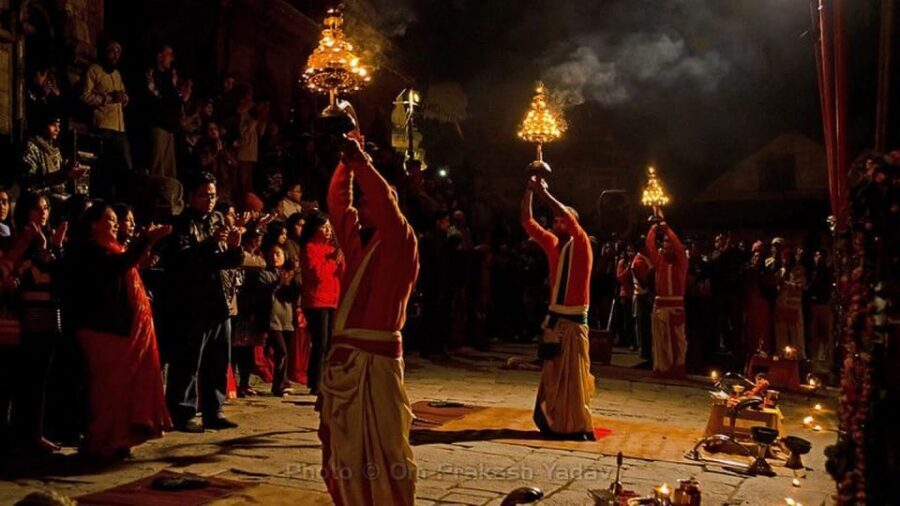
- Golden roof and silver doors at night: the main temple details look especially sharp under evening light.
- Bagmati River temple setting: the complex stretches along the riverbanks, so the water shapes the experience.
- Live-style ceremony viewing: you’re there for the aarti moments, with explanations as you watch.
- History explained by a real guide: you won’t just memorize dates; you’ll connect architecture to belief.
- Arya Ghat is part of the picture: you may see cremation activity during your visit window.
- Private-group pacing with hotel pickup: it feels efficient without being rushed.
Why Pashupatinath’s Night Aarti Feels Different
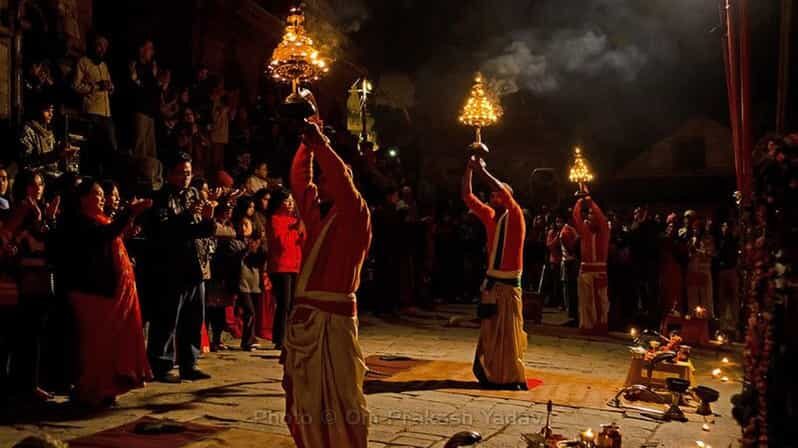
Pashupatinath is dedicated to Lord Pashupatinath, an incarnation of Lord Shiva, and it’s considered one of the holiest pilgrimage sites in the Hindu world. During the day, it can be busy for obvious reasons—pilgrims arrive, prayers happen, and the riverbank hums with activity. At night, the same sacred space takes on a calmer, more focused mood.
That difference matters because aarti is about attention. Candles, light, and ritual gestures are visual and timing-based. When you’re in a guided private group, you’re not stuck figuring out where to stand or when to look. You get a chance to understand what the ceremony is doing, and that makes the whole thing feel less like watching from the outside.
I also appreciate how the night setting highlights the temple’s signature features: the pagoda-style main structure topped with a golden roof and set off by intricately carved elements, including the well-known silver doors. Even if you’ve seen photos before, seeing these details in person after dark lands differently.
You can also read our reviews of more evening experiences in Kathmandu



Golden Roof, Silver Doors, and the Bagmati River Setting
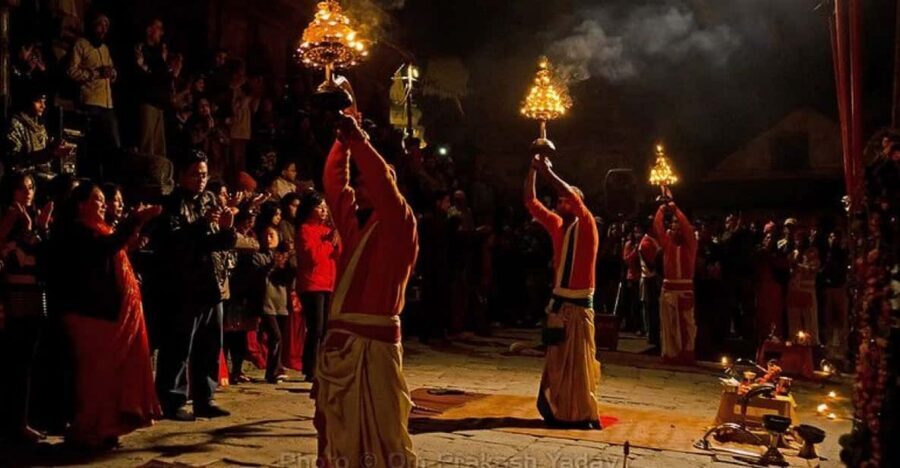
The temple complex is spread across both banks of the Bagmati River, which means you experience the site as a sequence of river views and temple edges, not just one building. The main temple is pagoda-style, and the iconic look comes from a combination of older religious significance and later reconstruction.
Here’s the useful context your guide will likely bring up: it’s believed the holy site dates back to the 5th century, but the current structure you’ll see reflects major reconstructions—especially the structure dating to the 17th century. That doesn’t make it feel “less old.” It makes it feel alive and maintained. This is a place that has kept its importance through rebuilding and renewal.
One more thing that’s practical: because the complex sits by the river and includes many smaller shrines, your route through the area can feel like a living map. You’ll have moments where you’re looking outward toward the water and moments where you’re facing temple carvings and ritual spaces. That mix is part of why this tour works well in the limited 3-hour time window.
How the 3-Hour Tour Flows: Pickup, Temple Time, Drop-Off
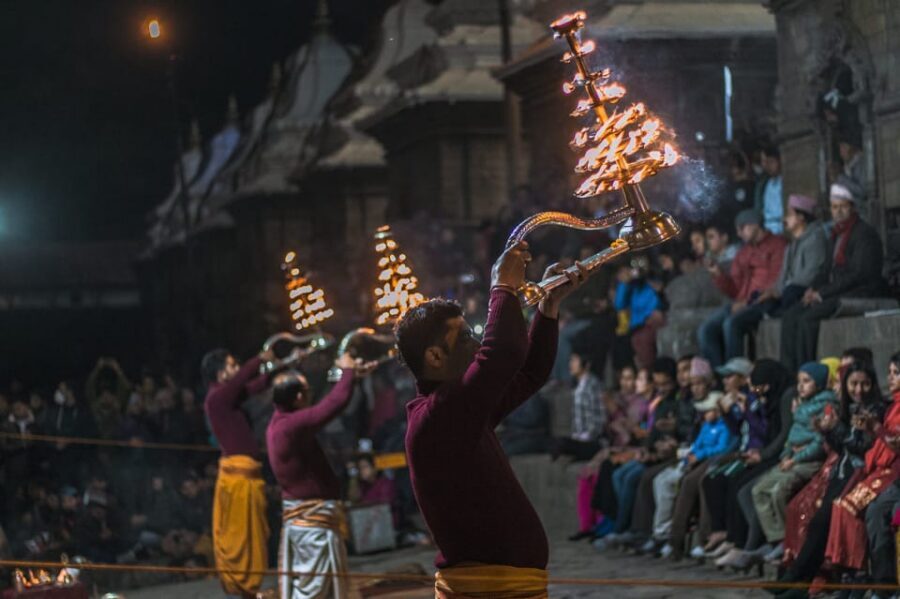
This tour is designed to be simple. You’re picked up from your hotel and taken by car to Pashupatinath. You’ll spend time with a licensed English-speaking guide, then you return to your hotel afterward.
A useful detail: you should wait in the hotel lobby 15 minutes before pickup. That small habit helps you avoid the exact problem one guest described—starting late and missing the beginning of the ceremony. Night rituals are time-sensitive, so punctual pickup really matters here.
In roughly three hours, you won’t have time to do a full self-paced exploration of every corner of the temple complex. Instead, the value is in focus. You get guided orientation, time to watch the aarti, and time to understand the layout around the riverbank—so you leave with a mental picture that makes future visits easier.
If you’re short on days in Kathmandu, this format makes sense: it’s long enough to feel meaningful, but short enough to fit without squeezing your whole evening plan.
The Aarti Ceremony: What You Should Watch For
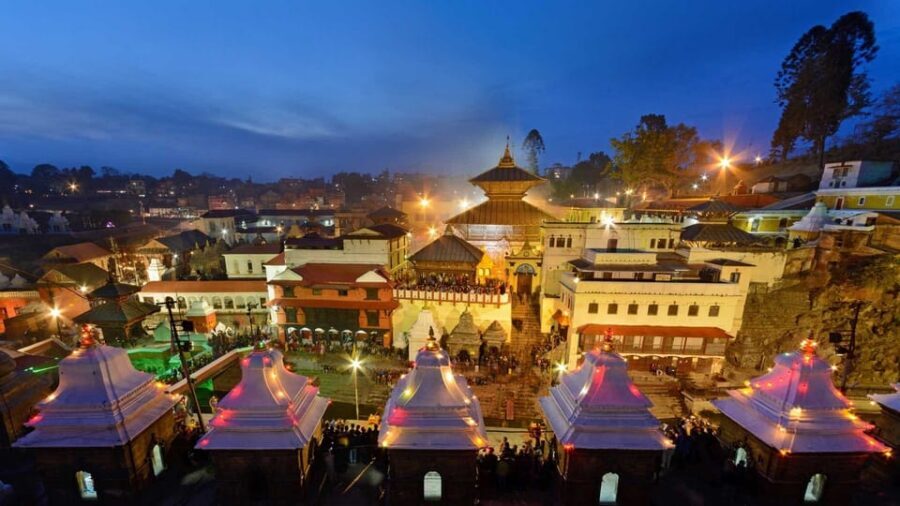
The heart of the experience is the special aarati ceremony held at Pashupatinath. Your guide’s job is to help you translate what you’re seeing—because ritual can look like motion until you know what the movement and offerings mean.
During your time at the temple, you’ll have a chance to watch the ceremony closely while also learning about Lord Shiva’s significance in this sacred place. Pashupatinath draws thousands of devotees, especially during major events like Maha Shivaratri, one of the biggest annual celebrations here. Even if you’re not visiting on that holiday, your guide can connect the everyday devotion you’re witnessing to why this site matters on a bigger scale.
One practical note: for the best experience, aim to arrive early enough that you’re not catching only the middle of the ritual. If your driver is late, you might miss the opening moments. Nothing about the experience turns bad if that happens, but it’s a lot more satisfying to see the full arc of the ceremony from the start.
Arya Ghat and Cremation on the Riverbank
One reason this tour feels authentic is that it doesn’t treat the temple complex as a museum. It includes a cremation site on the riverbank called Arya Ghat, which is important in Hindu cremation practice.
You might learn how Arya Ghat is associated with the belief that a soul can attain moksha—liberation from the cycle of rebirth—through cremation there. That’s not casual background. It’s the kind of idea that shapes how people behave, how they speak, and how they gather.
Some visitors find this part moving and not easy, depending on what they expected. If you’re uneasy about seeing cremation activity, it’s smart to go in with open eyes and a respectful mindset. Also, know that your exact view may depend on what’s happening during your visit window. The tour includes the area context, but you can’t guarantee what ceremonies or activities will be ongoing at the precise time you arrive.
A guest guide name that comes up in real-life experiences is Madhu—one traveler specifically praised how he shared information while also helping people understand the solemn reality of watching a cremation alongside aarti light moments.






Your Guide Makes the Difference: Licensed English, Real Stories
This is a guided experience with a licensed English-speaking guide, and that’s where your money starts to make sense. In places like Pashupatinath, you can stand near something impressive and still leave unsure what it all means. A good guide turns visual details into understanding.
From the experiences people shared, the strongest reactions came from guides who:
- explain temple and ceremony details in plain English
- connect architecture to what devotees believe
- keep the experience respectful while still allowing you to watch closely
One name you might see associated with this tour is Madhu. One guest noted his enthusiasm and the way he told historical stories along the way. Another guest highlighted that they felt safe and well informed as a solo female traveler, which is exactly what a clear guide should help with—especially at night.
Because this is a private group, you can also ask questions without feeling like you’re interrupting a big crowd. That doesn’t mean you’ll get an endless conversation, but it usually means the guide can pace you and adjust to your comfort level.
Price and Value: Is $71 for a 3-Hour Tour Fair?
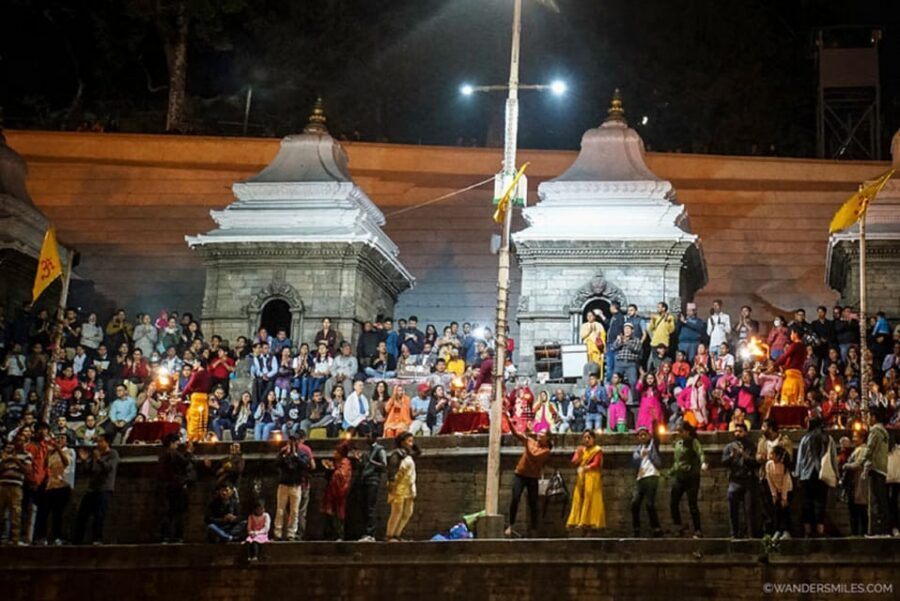
At $71 per person for a 3-hour private tour, the price is fair when you compare what’s included. Here’s what you’re paying for:
- hotel pickup and drop-off
- transportation to and from Pashupatinath
- a licensed English-speaking guide
- entry ticket to Pashupatinath
- all taxes
The big value is not just the ticket. It’s the access + guidance + timing. Aarti viewing and temple orientation are hard to do well without local context, and the riverbank layout can be confusing if you’re trying to self-navigate after dark.
Food and drinks are not included, so plan on handling your snack or dinner before or after. In a three-hour window, that’s normal. If you’re doing dinner beforehand, you’ll avoid spending money on rushed meals near the temple area.
Also, the transport quality is reported as high, with many reviewers giving perfect scores for the ride experience. Comfort matters when you’re doing a night tour—you want energy for walking and watching.
Practical Tips: How to Have a Smooth, Respectful Visit
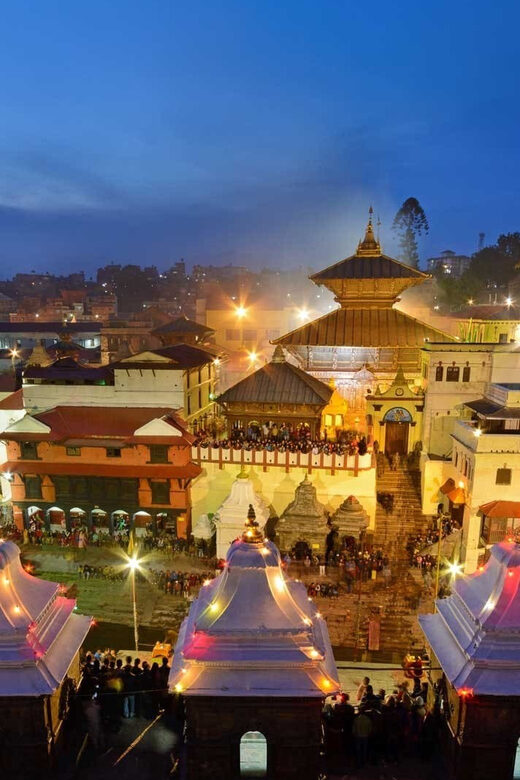
To get the best experience from this tour, focus on the small things that make a big difference at night.
- Be ready for pickup: wait in the lobby about 15 minutes early. If you’re easygoing, do that extra step.
- Bring a passport (copy accepted): you’ll need it for the entry requirement listed for the tour.
- Plan your evening food: food and drinks aren’t included, so eat beforehand if you can.
- Dress for temple respect: you’ll be moving around a religious complex. Comfortable, modest clothing helps.
- Keep a calm pace: this is a sacred place with active religious life, including Arya Ghat. Treat it like you’re visiting a working spiritual site, not just sight-seeing.
If your top priority is seeing the opening moments of aarti, make sure you’re not running late anywhere before pickup. That simple habit is the easiest way to protect your experience.
Who This Tour Fits Best
This tour is a great match if:
- you want a guided introduction to Pashupatinath that makes sense quickly
- you’re short on time in Kathmandu but still want an experience tied to real worship
- you prefer a private group and clear direction rather than roaming on your own
- you care about respectful context around ceremony and the riverbank cremation site
It may feel intense if you’re very sensitive to cremation-related sights and you expected a purely aesthetic temple visit. In that case, keep expectations realistic: Arya Ghat is part of the environment here, and the tour focuses on the spiritual setting as a whole.
Should You Book This Kathmandu Pashupatinath Aarti Night Tour?
I’d book it if you want a focused, guided night experience at one of Nepal’s most significant Hindu sites, and you value convenience without sacrificing understanding. The guide factor is the key: a licensed English-speaking guide, a private-group pace, and a route that’s built around the aarti moments make the experience feel coherent even within a tight 3-hour schedule.
Skip it or think twice if missing the very beginning of the ceremony would bother you a lot. One real note from experiences people shared was the risk of a late driver, so if timing is everything for you, be extra proactive with pickup readiness.
If you like meaningful cultural sites with real religious life happening around you, this tour is a strong bet.
FAQ
Where is the tour located?
The tour takes place in Kathmandu, Nepal, in the Bagmati Zone, at the Pashupatinath Temple complex.
How long is the Pashupatinath Temple Aarti Night Tour?
The duration is 3 hours.
What is the price per person?
The price is $71 per person.
Is hotel pickup included?
Yes. Hotel pickup and drop-off are included. You should wait in the hotel lobby about 15 minutes before pickup.
Is there a guide, and what language do they speak?
Yes. The tour includes a licensed English-speaking guide.
Does the price include entry tickets?
Yes. Entry ticket to Pashupatinath is included.
Is food included?
No. Food and drinks are not included.
What should I bring for entry?
A passport is required, and a copy is accepted.
Is the tour wheelchair accessible?
Yes, the tour is listed as wheelchair accessible.
Can I cancel for a refund?
Yes. Free cancellation is available up to 24 hours in advance for a full refund.
Is it a private group or shared group?
It is a private group.