REVIEW · HISTORICAL TOURS
Kathmandu Heritage Tour – Private Full-Day UNESCO Sites & Temples
Book on Viator →Operated by Himalayan Recreation Treks & Expedition Pvt.Ltd · Bookable on Viator
Kathmandu can feel like a puzzle at first glance. This private full-day tour helps you solve it fast with UNESCO temple stops, royal courtyards, and major Hindu and Buddhist landmarks packed into one efficient loop. You also get context on how the 2015 earthquake changed parts of Kathmandu Valley, not just the sights but the people and places behind them.
I love the way this day is built for first-timers: you start with big-picture views at Swayambhunath, then move into the dense story-world of the Kathmandu Durbar Square complex and the living traditions around it. I also really like the private-guide format—on tours like this, having guides such as Krishna, Jamuna, Janina, and SuJan means you’re not just looking at monuments; you’re getting meaning, plus a pace that feels human.
The main drawback is simple: entrance fees are not included, and some sites cost more than I expect once I’m standing there. Also, because the 2015 earthquake damaged parts of these areas, you may see restoration work or closures, which can slightly alter what you get to see.
In This Review
- Key highlights I’d plan around
- Getting your bearings with UNESCO sites in one focused day
- How the private guide shapes the whole experience
- Price and what your $60 really covers
- Stop 1: Swayambhunath (Monkey Temple) for instant views and instant energy
- Stop 2 onward: Kathmandu Durbar Square and the Kumari window moment
- The clan goddess story: Taleju Bhawani Temple (quick stop, big meaning)
- Hanuman Dhoka: real monkeys and a sacred corner
- Stop 7 onward: Pashupatinath Temple and the crematoria area
- Stop: Crematoria area etiquette and budgeting reality
- Stop 10: Boudhanath Stupa for Buddhist focus and the four eyes
- Garden of Dreams: a quieter finale after the temple pace
- Timing, pace, and the real meaning of a 5 to 8 hour day
- What to bring and how to handle “entrance fee shock”
- Who this tour is best for (and who should skip it)
- Should you book Kathmandu Heritage Tour – Private Full-Day UNESCO Sites & Temples?
- FAQ
- What sites are included in the Kathmandu Valley tour?
- How long is the tour?
- Is hotel pickup and drop-off included?
- Are entrance fees included?
- What about food and drinks?
- Is this a private tour?
- What’s the maximum group size?
- Will I see damage from the 2015 earthquake?
- Can I cancel for a full refund?
Key highlights I’d plan around
- Private guide and private vehicle with hotel pickup and drop-off, which saves hours in traffic
- Swayambhunath views plus the Monkey Temple atmosphere right at the start
- Kathmandu Durbar Square sights in one concentrated block, including the Kumari area
- Pashupatinath and the crematoria area for a close look at sacred Hindu practice (respectfully)
- Boudhanath Stupa and Buddhist devotion, including the stupa’s four pairs of Buddha eyes
- Built-in time for breaks (and the realism that lunch will be local, about $10)
Getting your bearings with UNESCO sites in one focused day
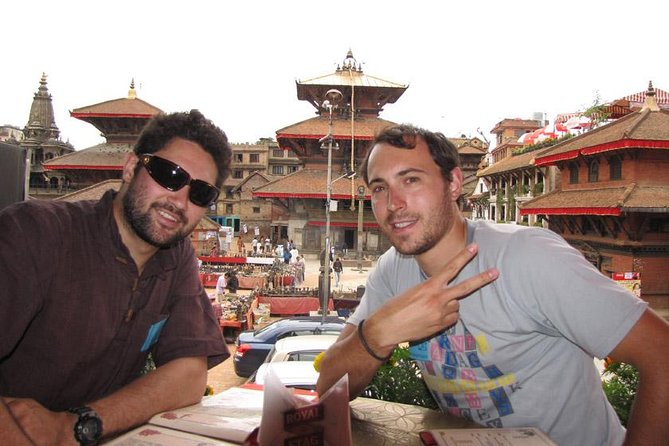
Kathmandu Valley’s UNESCO sites can be hard to wrap your head around if you’re trying to plan solo. This tour works because it’s not just a checklist. It strings together the places that teach the story: Buddhist pilgrimage and city panoramas, royal courtyards and living rituals, then the major Hindu shrine, and finally the big Buddhist stupa that anchors the valley’s spiritual map.
The private format matters more than it sounds. You’re not waiting on other groups or dragging your day into a slow-moving queue system. With a guide and vehicle to coordinate timing and routes, you’ll usually spend your energy on the sites, not on figuring out how to get between them.
And yes, the earthquake context is part of the day. The operator notes that some sites visited saw significant damage after April and May 2015. In practice, that means you might encounter damaged sections, repairs, or partial viewing. Your guide should be able to point out what’s changed and what you’re seeing now.
You can also read our reviews of more private tours in Kathmandu
How the private guide shapes the whole experience
This tour’s most consistent praise is about the guides. Names that came up in reviews include Krishna, Jamuna, Janina, and SuJan, and the pattern is clear: people felt the day ran smoothly because the guide explained what they were seeing and managed the pace well.
That’s a big deal at places like Kathmandu Durbar Square and Pashupatinath, where you could easily miss the meaning if you’re just taking photos. A good guide helps you notice details in context: why certain spaces matter, what specific symbols represent, and how living traditions intersect with old architecture.
You’ll also appreciate the practical side. Many reviewers highlighted that the guide and driver handled logistics and traffic with care, and several mentioned feeling comfortable and safe throughout the day. On a full-day temple route, that’s not a small thing.
Price and what your $60 really covers
At $60 per person, this tour is priced like a value-focused introduction to Kathmandu Valley. But here’s the math you should do before you go: entrance fees are at your expense.
The tour includes hotel pickup and drop-off, bottled water, a private guide, and transport by private vehicle. It also includes a mobile ticket. What’s not included is food and drinks and, importantly, entrance fees.
So what should you budget beyond the $60? The tour guide materials suggest expecting around $10 USD for lunch purchased locally. Then add entrance fees. One review reported roughly $60 total for entrances across multiple sites, with most around the $10–$15 range and one site at about $2.50. You should treat that as a real-world planning guide, not a guarantee, since fees can vary by site and policies.
Bottom line: if you want a fast, guided overview of the major UNESCO highlights, the base price can be fair. If you’re on a tight budget, the entrance fees are the part most likely to feel like a surprise unless you plan for them.
Stop 1: Swayambhunath (Monkey Temple) for instant views and instant energy
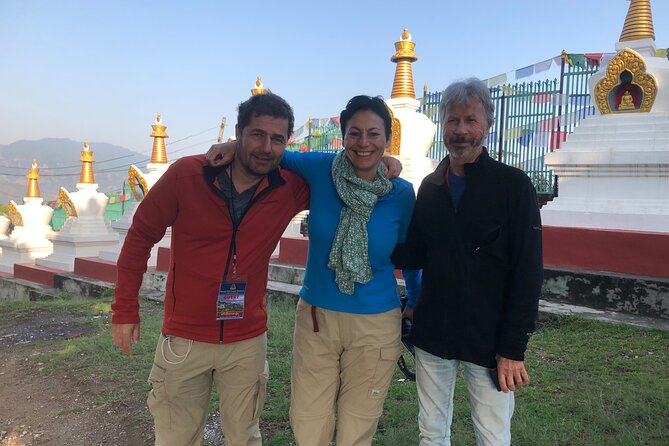
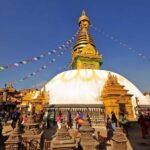
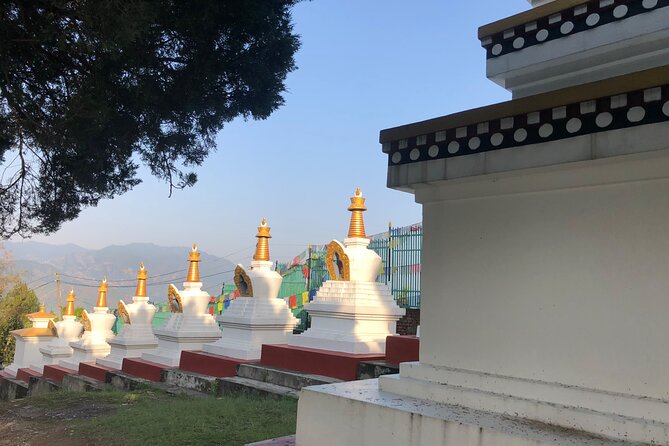
Swayambhunath is where Kathmandu clicks into place. You head to the hilltop stupa complex for panoramic city views and a classic introduction to Buddhist sacred space in Nepal. It’s a major destination with history stretching back over 3,000 years, and you’ll feel that age in the layout and the way pilgrims move through the area.
What to expect:
You’ll spend about an hour here. You’ll look out over the city first, then shift into the stupa-and-temple world where smaller shrines and prayer activity fill out the experience. Monkeys are part of the ambiance, and you’ll see why the nickname Monkey Temple stuck.
Why I think this stop is a smart start:
Starting at Swayambhunath gives you orientation. If later you feel turned around at Durbar Square or Pashupatinath, you’ll have already learned what “Kathmandu Valley” looks like from above.
Possible drawback:
Crowds and monkeys can mean you’ll spend some of your attention managing your surroundings rather than fully relaxing. Go in ready to be alert, keep valuables secure, and don’t expect the day to be quiet.
Stop 2 onward: Kathmandu Durbar Square and the Kumari window moment
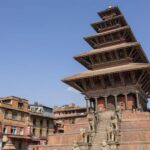
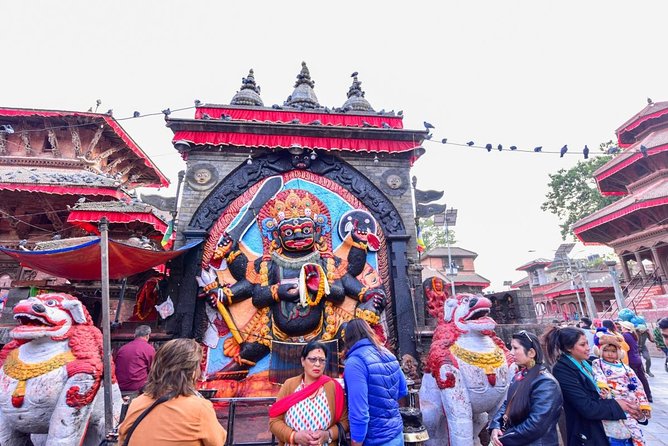
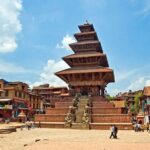
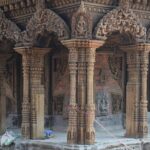
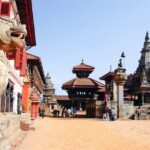
Kathmandu Durbar Square is one of those places where the architecture feels like it’s telling you the plot. You’re looking at a royal residence area that dates to the 16th century, and it’s tied to UNESCO heritage and Kathmandu’s own identity.
In this day’s route, you also get access to the Kumari area and nearby courtyards that make the living-goddess tradition part of the visit. The itinerary includes Kumari Chowk, where a virgin girl is worshipped in human form as Durga. On some days, you might glimpse her at the window.
What makes this section special:
- You’re not only seeing stone and carvings—you’re seeing a tradition that still has rules, roles, and reverence.
- It’s compact. You can understand how different parts of the complex relate without constantly changing neighborhoods.
Small stops that add texture:
The route also includes short stops like Basantpur Dabali, described as a very old tourist centre area with an older Hindu temple. It’s brief, but those 10-minute breaks can keep the day from feeling like a conveyor belt.
Possible drawback:
This part of Kathmandu can include intense foot traffic, and it’s also where plans can shift if certain areas are under repair due to earthquake impacts. The tour aims to cover a lot, so go with a flexible mindset.
You can also read our reviews of more historical tours in Kathmandu

The clan goddess story: Taleju Bhawani Temple (quick stop, big meaning)
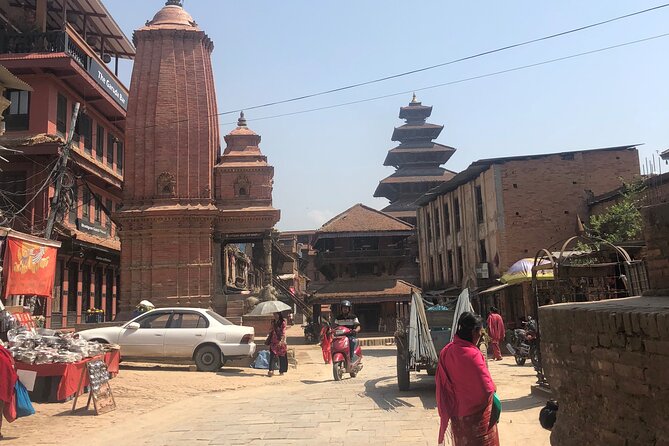
One of the shorter breaks is at the Taleju Bhawani Temple area, identified with the Malla kings who ruled Nepal from the 12th to the 18th century. Taleju Bhawani is described as a powerful goddess and also the clan goddess connected to those royal traditions.
Even though this is a short stop, it helps you connect the dots between royal power, religion, and architecture. Kathmandu’s Durbar Square areas weren’t built to be “just pretty.” They were built for status, worship, and authority—especially in eras when kings ruled through both politics and religion.
Possible drawback:
Because it’s quick, you won’t get a long, slow deep look here. If you’re the type who wants to sit and read stone carvings for an hour, you might feel a tiny bit rushed.
Hanuman Dhoka: real monkeys and a sacred corner
Hanuman Dhoka is included as part of the Durbar Square complex area. The route notes real monkeys live in the square, and the space honors Hanuman, the mischievous and courageous monkey god.
This stop is a fun contrast after the Kumari focus. It’s still sacred and symbolic, but it’s also playful in its atmosphere. You’ll see how Hanuman’s mythos fits right into the everyday sensory reality of the area.
Possible drawback:
Like Swayambhunath, this is not a place for careless phone-handling. You’ll want to be alert around monkeys and keep your personal belongings secure.
Stop 7 onward: Pashupatinath Temple and the crematoria area
Pashupatinath is the day’s heavy hitter. This is one of the most sacred Hindu shrines in the world, lying about 5 km east of the city centre. The complex includes the richly ornamented pagoda housing the sacred lingam symbol associated with Lord Shiva.
On this tour, you get time at Pashupatinath (about an hour), plus a separate look at the crematoria area. The itinerary notes the crematoria entrance fees apply to this area, and the crematoria section is described as constant action. One review compared it to India in tone, but with more reverence and less hype—again, a clue that the mood here is serious, not touristy.
What makes this stop worth your time:
- It’s a living religious landscape. People come here to mourn and to honor.
- With a guide, you’re more likely to understand what you’re seeing, instead of just feeling overwhelmed.
Possible drawback:
This is not a hands-off sightseeing stop. It can feel emotionally intense, even if you know what the site represents. If you’re sensitive to death-related rituals, prepare yourself mentally. Wear respectful attire and keep your behavior calm and unobtrusive.
Stop: Crematoria area etiquette and budgeting reality
Because the crematoria area involves its own entry fee, you’ll want to keep some cash aside and follow your guide’s cues on where to stand and what’s allowed. The tour notes that the crematoria portion itself is part of the Pashupatinath experience, and it’s described as active.
If you’re on a schedule and tempted to skip it to save time, don’t treat it as a checkbox. Even when you don’t fully understand the ritual details, the presence of families and the respectful atmosphere are the point. This is where the tour’s “heritage” theme becomes less decorative and more human.
Stop 10: Boudhanath Stupa for Buddhist focus and the four eyes
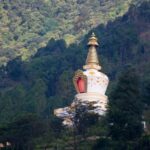
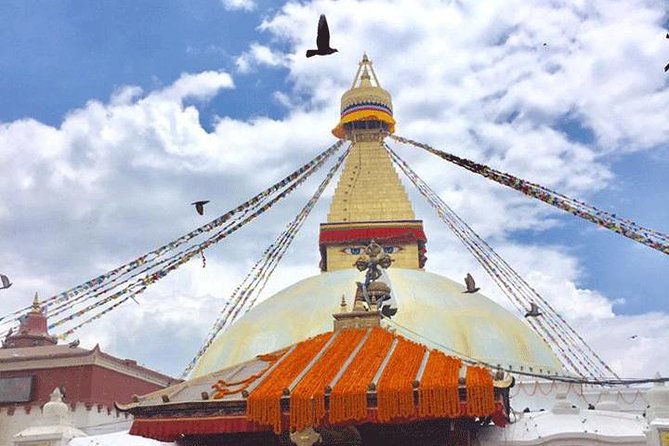
After the intensity of Pashupatinath, Boudhanath offers a different rhythm. Boudhanath is a 2500-year-old Buddhist stupa, built in the 5th century, and it includes four pairs of Buddha eyes in four cardinal directions, keeping watch over the faithful.
You’ll spend about an hour here. Expect a calmer mood than the Hindu temple complex, and more prayer-like movement around the stupa. Even if you’re not Buddhist, it’s one of those places where you can feel how sacred space organizes daily life.
What I like about including Boudhanath:
It balances the day. You get Hindu sacred focus earlier, then you shift to a stupa environment that’s still intensely spiritual but expressed differently.
Possible drawback:
If you come straight from Pashupatinath without a break, fatigue can catch up. You’ll still enjoy it, but you might move a little faster through the details than you’d like.
Garden of Dreams: a quieter finale after the temple pace
The itinerary includes the Garden of Dreams, described as a neo-classical historical garden in the middle of Kathmandu. It also notes design similarities to formal European gardens, including paved perimeter paths.
This stop works as a soft landing. After hours among temples and sacred complexes, a garden is a good way to reset your eyes and legs. It’s also an easy contrast to the dense stone-and-symbol world of the morning.
Possible drawback:
If you hoped for more UNESCO-UNESCO-UNESCO for the finale, a garden can feel like a “less serious” moment. But as a pace-management tool, it’s a smart choice.
Timing, pace, and the real meaning of a 5 to 8 hour day
The tour duration is listed as about 5 to 8 hours, which is a wide window. That matters because Kathmandu traffic can change your timing, and temple access can shift.
This tour seems built to be efficient: you get multiple major stops without feeling like you’re constantly sprinting. Several reviews specifically praised guides for pacing—one mentioned that the guide took time to make sure they were not rushed. Others said the day ran smoothly with excellent English and thoughtful attention.
My practical advice:
- Wear shoes you can handle on uneven ground and stairs.
- Bring a light layer. Temples and courtyards can shift in temperature.
- If you’re jet-lagged, consider starting your day earlier in your trip when possible, since a packed schedule can feel tiring.
What to bring and how to handle “entrance fee shock”
Here’s the part that can make or break your mood: entrance fees.
Entrance fees are not included. Some sites in the route are marked as free within the tour plan, while other stops are explicitly not included. That mix can create confusion if you don’t plan ahead.
Use this simple system:
- Budget for lunch (about $10 locally).
- Budget extra for entrances at the paid stops.
- Keep small bills ready for quick entry lines.
- If you prefer, ask your operator for an entrance fee estimate before you go so you’re not guessing.
Also, keep your expectations aligned. You’re paying for a guide and vehicle route that maximizes UNESCO coverage in a single day. If you skip the guide and drive yourself, you might save money on guide costs—but you’ll likely lose context and time. This is the trade.
Who this tour is best for (and who should skip it)
This is a strong fit if:
- You’re a first-time visitor and want a fast orientation across major UNESCO sites.
- You want explanations, not just photos.
- You like private guidance and hate negotiating timing and routes solo.
- You want both Hindu and Buddhist landmarks in one day.
Consider another option if:
- You’re on a tight budget and want a day with minimal on-site fees.
- You dislike emotionally intense rituals and don’t want crematoria-area exposure.
- You prefer slow, in-depth exploration with long stays at fewer places.
Should you book Kathmandu Heritage Tour – Private Full-Day UNESCO Sites & Temples?
I’d book it if you want a guided, efficient UNESCO overview that helps you understand what you’re looking at—especially if you’re the kind of traveler who appreciates stories behind symbols, not only architecture. The private setup, hotel pickup/drop-off, and the consistently praised guides (Krishna, Jamuna, Janina, SuJan are standout names from reviews) make the day feel organized rather than chaotic.
I would hesitate only if entrance fees will cause budget stress, or if crematoria-area scenes aren’t your thing. If either of those applies, ask about a realistic fee estimate first and consider a smaller, more focused temple tour.
FAQ
What sites are included in the Kathmandu Valley tour?
You’ll visit Swayambhunath (Monkey Temple), Kathmandu Durbar Square (including the Kumari area), Hanuman Dhoka, Pashupatinath Temple, the crematoria area, Boudhanath Stupa, and the Garden of Dreams, plus a couple of short temple stops along the way.
How long is the tour?
The tour runs about 5 to 8 hours.
Is hotel pickup and drop-off included?
Yes. The tour includes hotel pickup and drop-off in Kathmandu.
Are entrance fees included?
No. Entrance fees are at your expense, and some parts of the route may also be free while others are paid.
What about food and drinks?
Food and drinks are not included. The tour notes you should expect to spend around $10 USD for lunch purchased locally.
Is this a private tour?
Yes. It’s private, and only your group participates.
What’s the maximum group size?
The maximum is 10 people per booking.
Will I see damage from the 2015 earthquake?
The operator notes that significant damage occurred at some sites visited due to the earthquakes in April and May 2015, so you may notice repair work or altered access.
Can I cancel for a full refund?
Yes, free cancellation is available. You can cancel up to 24 hours in advance for a full refund.