REVIEW · BHAKTAPUR & PATAN DAY TRIPS
City tour of Bhaktapur and Patan Durbar Square
Book on Viator →Operated by Himalayan Planet Adventures · Bookable on Viator
Two UNESCO squares, one unforgettable day. You’ll spend a full 8 hours hopping between Bhaktapur and Patan’s royal cores, with hotel pickup and drop-off built in. Along the way, the route threads through famed temple squares like Dattatreya and Nyatpole, plus a focused visit to the Patan Museum.
What I like most is how this turns big-ticket sights into a smooth day. The private vehicle and pickup within the ring road (including Boudha area) save you from the usual Kathmandu logistics headache. I also like the guiding—multiple guides with names like Kabita and Shanti are praised for explaining what you’re looking at in a way that keeps the day moving, not confusing.
One drawback to plan for: you’ll still need to budget for entry fees (listed around USD 20/30 per person), and some buildings may show the effects of the 2015 earthquakes. That can mean repairs, limits, or sights that don’t feel as intact as the photos.
In This Review
- Key things to know before you go
- How this Bhaktapur and Patan day trip actually flows
- Patan Durbar Square: royal courtyards and the Krishna Mandir focus
- Patan Museum: Newari art you can understand in 15 minutes
- Bhaktapur Durbar Square: the medieval capital feel
- The Bhaktapur icons: 55-Window Palace and Nyatapola Temple
- 55-Window Palace (Pachpanna Jhyale Durbar)
- Nyatapola Temple
- Dattatreya Square and Nyatpole Temple Square: short stops with big meaning
- Price and value: what USD 110 buys you (and what you must add)
- What you’re paying for
- What you need to budget separately
- Comfort, pacing, and who this trip suits best
- Quick FAQ for planning your day
- FAQ
- How long is the Bhaktapur and Patan Durbar Square city tour?
- What does the tour price include?
- Do I need to pay entry fees for the sites?
- Is food included during the day?
- Does the tour have hotel pickup and drop-off?
- Are there any sites with earthquake damage to expect?
- Is this tour private or shared with other groups?
- What is the cancellation window?
- Should you book this Bhaktapur and Patan UNESCO tour?
Key things to know before you go
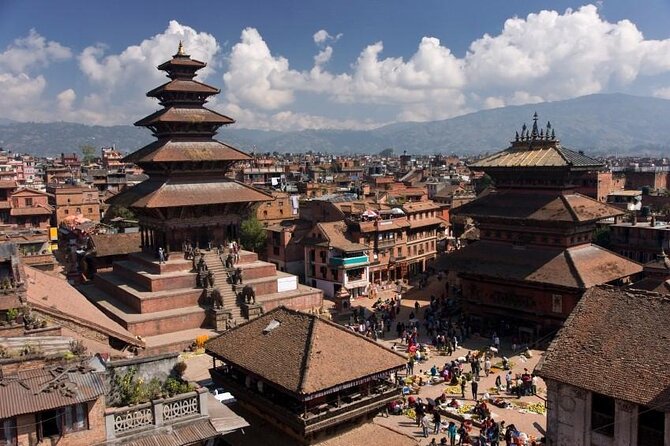
- Two UNESCO Durbar Squares in one day: Patan first, then Bhaktapur, so you can compare the two styles of Newari royal cities.
- Patan Museum is a real art stop: short, guided, and aimed at Newari craftsmanship rather than a long museum marathon.
- Icon photos are built into the route: Krishna Mandir, the 55-Window Palace, and Nyatapola Temple get their moment.
- Several key temple areas are free inside the itinerary (like Krishna Mandir, 55-Window Palace, Nyatapola, and Dattatreya Temple).
- Hotel transfers reduce friction: pickup/drop inside the ring road helps you actually enjoy the sights instead of wrestling transport.
- 2015 earthquake damage is a factor: expect some sites to show repairs or restrictions.
How this Bhaktapur and Patan day trip actually flows
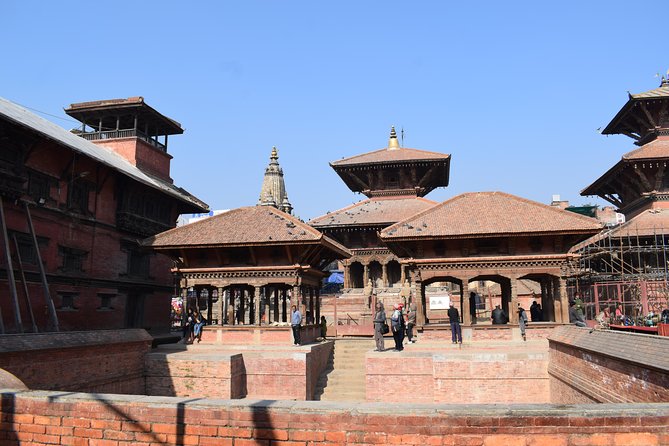
This is a private day trip (so it’s just your group) that packs a lot into one working day. You start in Patan (Lalitpur) with time in Patan Durbar Square, then head to Patan Museum. After that, you move toward Bhaktapur, picking up temple squares en route, and finish with the biggest hits of Bhaktapur Durbar Square.
The timing matters. You get roughly an hour in Patan Durbar Square, a short museum visit, then about an hour in Bhaktapur Durbar Square. That gives you enough time to see courtyards, pagodas, carvings, and palace architecture without feeling like you’re speed-walking your way through history.
And because it’s private, the day tends to feel less like a conveyor belt. One review highlighted how a guide like Shanti could adjust the pace so you could start and stop as you chose—useful when you want more time at a doorway carving or less time in a courtyard that’s crowded.
You can also read our reviews of more city tours in Kathmandu
Patan Durbar Square: royal courtyards and the Krishna Mandir focus
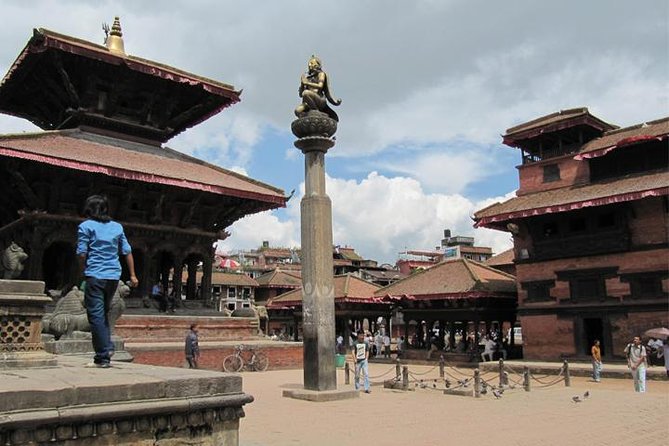
Patan Durbar Square is the first “big wow” of the day. It’s UNESCO-listed and worth approaching slowly, even if you only have an hour. The square is built around the idea of a royal center—palace areas, temples, and carved stone work grouped like a living outdoor museum.
Your stop plan keeps things practical:
- About 1 hour at Patan Durbar Square (admission not included)
- A short dedicated look at Krishna Mandir (Chayasim Deval)
That Krishna Mandir stop is quick (around 10 minutes) but it’s specifically called out as a must-see. This is the kind of temple detail you’ll appreciate more with a guide pointing out what makes it special—how the structure and carvings relate to the rest of the Durbar Square.
My practical advice: wear shoes you can trust. Durbar Squares are flat in some parts and uneven in others, and you’ll be moving between stone levels, stair edges, and open courtyards. If your feet hate you, your attention goes away.
A small planning note: since the Patan Durbar Square entry fee isn’t included, budget for it when you’re doing the math on the total day cost.
Patan Museum: Newari art you can understand in 15 minutes
After Patan Durbar Square, you’ll head into the Patan Museum for a short visit (about 15 minutes). Admission is not included, but this stop is designed as a focused add-on rather than a full museum day.
The goal here is clear: you’re looking at Newari artwork with an informative guide, so you don’t just see pieces—you get context for what they are and why they matter in the Kathmandu Valley world.
If you’re the type who gets museum fatigue, this is the right length. If you like museum breaks, you’ll be glad it’s short because it keeps your energy for Bhaktapur’s bigger outdoor highlights later.
What I like about fitting a museum into this itinerary: it gives you a decoding lens. When you later look at temple shapes and palace ornamentation in Bhaktapur, you’ll recognize the craft traditions more easily.
Bhaktapur Durbar Square: the medieval capital feel
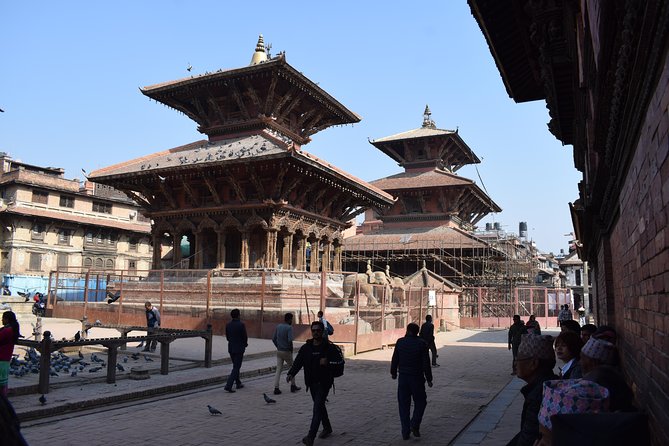
Then comes the shift. Bhaktapur Durbar Square is another UNESCO World Heritage Site, and many consider it the grandest and most beautiful of the Kathmandu Valley’s three royal cities. You’ll spend about 1 hour here as your next major stop (admission not included).
What makes Bhaktapur different is the atmosphere. The stone and woodwork aren’t just decorations; they feel like they’re part of how the city works. Even without getting lost, the area has that medieval-capital vibe—small streets leading between squares, and temples tucked into corners like they’ve always been there.
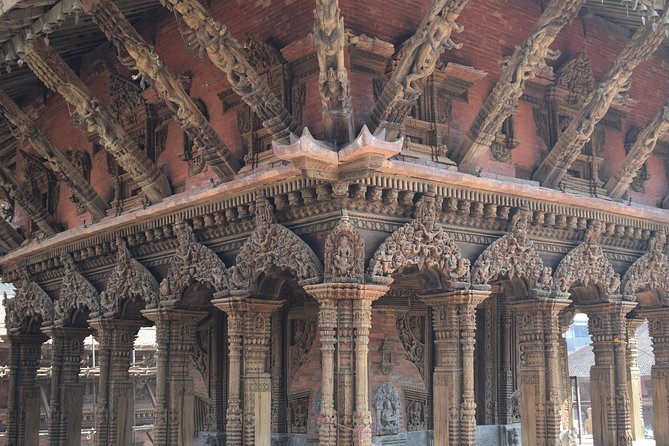
One review summed up the feeling as mind boggling that so much still exists. I’ll put it a bit more practically: Bhaktapur lets you see craftsmanship at human scale. It’s not only the biggest temple silhouette; it’s the carvings, the doorways, and the way palace and temple spaces share the same world.
Earthquake consideration: the tour notes that some sites have significant damage due to the April and May 2015 earthquakes. In plain terms, you may see repair work, changed sections, or areas that don’t look exactly like you expect. Try not to treat that as a problem. It’s part of the reality of visiting heritage sites.
The Bhaktapur icons: 55-Window Palace and Nyatapola Temple
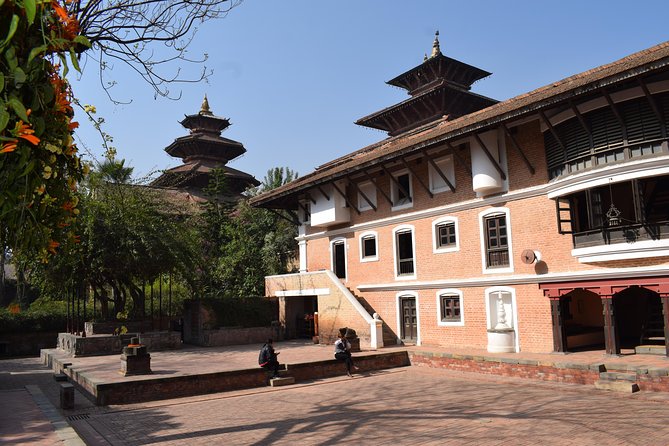
Within Bhaktapur Durbar Square, two icons get their own time blocks:



55-Window Palace (Pachpanna Jhyale Durbar)
You’ll spend about 15 minutes on the 55-Window Palace, and here’s a bonus for your budget: the itinerary lists it as free. This palace is one of Bhaktapur’s most famous symbols, and it’s the kind of place where the details reward closer looking.
The “55 windows” idea is already attention grabbing, but what you’ll really notice on site is repetition and pattern. A guide can help you read what you’re seeing—how the openings and decorative structure create the palace’s overall visual rhythm.
Nyatapola Temple
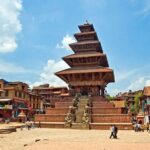
Next is the Nyatapola Temple, timed at around 10 minutes, and also listed as free during this itinerary. This is the famous “5-story temple” (the name points to its tiered structure) and it’s described as the tallest pagoda in Nepal.
Even with limited time, Nyatapola Temple is a photo magnet for good reason. The stacked tiers and height create instant impact, and the temple’s presence anchors the entire Bhaktapur Durbar Square experience. If you only have one or two temple stops, this is the one I’d prioritize.
Tip: take a second look from slightly different angles. Pagoda lines are easier to read once you’ve shifted your viewpoint a bit, not because you’re hunting for the perfect photo, but because architecture is easier to understand from two distances.
Dattatreya Square and Nyatpole Temple Square: short stops with big meaning
Between the Patan and Bhaktapur halves, the route includes stops that are famous in their own right, even if they don’t eat much time.
You’ll see:
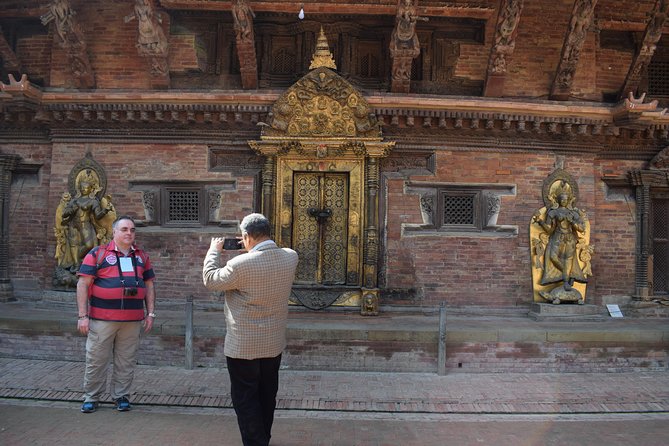
- Dattatreya Temple in Bhaktapur’s historic Dattatreya Square (about 15 minutes, listed as free)
- Nyatpole Temple Square as part of the temple-square route (time listed within the overall itinerary overview)
Dattatreya Temple is described as a massive 15th-century pagoda and one of the oldest in the valley, and it’s positioned as a craftsmanship highlight. Since it’s tied to an older layer of the region’s religious and cultural life, it’s a good pause that slows the day down without killing your schedule.
What these stops do well: they connect the royal-city architecture to the daily religious landscape around it. Without them, your day could feel like two museum-like squares separated by car time. With them, it feels like one connected cultural loop.
Price and value: what USD 110 buys you (and what you must add)
At USD 110 per person for about 8 hours, this sits in the “worth it if you hate hassles” category. Here’s the value logic:
What you’re paying for
- Professional guide
- Transport by private vehicle
- Pickup and drop from hotels inside the ring road, including Boudha area
- A mobile ticket
- The fact that it’s private for your group
In Kathmandu, that pickup and drop can be the difference between a relaxed day and a day spent coordinating rides. If you’re short on time, it’s a real convenience.
What you need to budget separately
- Food and drinks are not included
- Entry fees are not included, listed around USD 20/30 per person (and Patan Durbar Square and Patan Museum specifically show admission not included)
So your total cost is closer to “base tour price + entry fees,” plus whatever you spend for water and lunch. Since food isn’t included, you’ll want a simple plan: either eat something before pickup, grab a meal during a break, or keep cash handy for a quick lunch.
Practical math: if you’re someone who would already pay for guided entry and private transport, the USD 110 likely feels fair. If you’re a do-it-yourself walker who loves negotiating transit and reading sites on your own, you might compare it against your preferred pace.
Comfort, pacing, and who this trip suits best
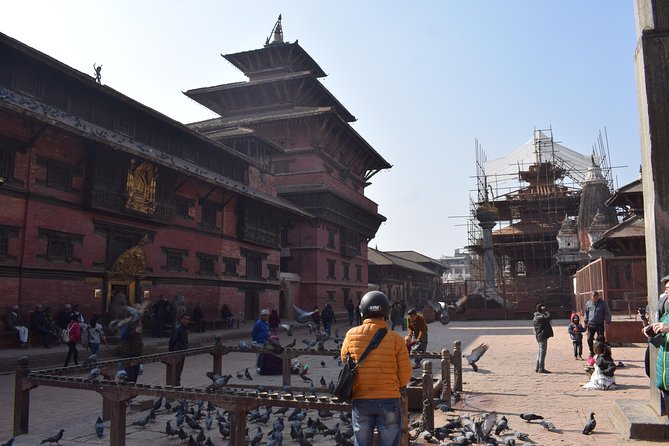
This is a temple-and-palace day. That means you’ll spend time outdoors, moving between squares, and looking at stone and wood details up close. It’s not described as a strenuous hike, but you should still plan for walking on uneven stone.
This trip is a strong match if:
- You want UNESCO Durbar Square time without splitting it across multiple days
- You like guided explanations that help you read architecture and art
- You value hotel transfers to reduce stress
- You want a day that mixes “big iconic monuments” with smaller craft-focused details like the Patan Museum
It may be less ideal if:
- You dislike walking around historical areas with lots of stairs and stone surfaces
- You’re very budget-sensitive and hate paying entry fees on top of the tour price
- You expect every building to look untouched, since the tour notes earthquake damage to some sites
Quick FAQ for planning your day
FAQ
How long is the Bhaktapur and Patan Durbar Square city tour?
The tour runs for about 8 hours (approx.).
What does the tour price include?
It includes a professional guide and transport by private vehicle, plus hotel pickup and drop-off from inside the ring road (including Boudha area). It also uses a mobile ticket and offers group discounts.
Do I need to pay entry fees for the sites?
Yes. Entry fees are not included, and the listed estimate is about USD 20/30 per person.
Is food included during the day?
No. Food and drinks are not included.
Does the tour have hotel pickup and drop-off?
Yes. Pickup and drop-off are offered from hotels inside the ring road, including the Boudha area.
Are there any sites with earthquake damage to expect?
The tour notes that some of the sites visited have significant damage due to the April and May 2015 earthquakes.
Is this tour private or shared with other groups?
It’s private. Only your group participates.
What is the cancellation window?
You can cancel for a full refund up to 24 hours in advance of the experience start time.
Should you book this Bhaktapur and Patan UNESCO tour?
Book it if you want a well-timed, guide-led day that hits two of the Kathmandu Valley’s biggest UNESCO targets in one go, without spending your energy on transport. The mix of Patan Durbar Square, Patan Museum, and the key Bhaktapur icons (55-Window Palace and Nyatapola Temple) gives you variety, not just repetition of temples.
Skip it only if you’re trying to minimize costs to the last dollar or you prefer DIY exploration where you control every stop. If that’s you, you might prefer to plan sites on your own.
If your priority is a smooth day with strong cultural focus—and you’re okay adding on entry fees—this is a solid choice.