REVIEW · CHANDRAGIRI CABLE CAR TOURS
Chandragiri to Taudaha Nature Day Hiking from Kathmandu
Book on Viator →Operated by Himalayan Planet Adventures · Bookable on Viator
A cable car, then a real hike.
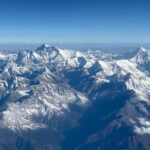
This day outing is one of the smartest ways to get big Himalayan views without signing up for a multi-day trek, and it’s made easier by a professional local guide who keeps you on track and explains what you’re seeing. The scenery stretches from the Annapurnas in the west to Everest in the east, with temples along the ridge and a jungle descent toward Taudaha Lake. The one drawback is simple: it’s still a long day on foot, so you’ll want good hydration, sunscreen, and steady walking legs.
What I like most is that the plan mixes viewpoints and practical stops—Bhaleshwor Mahadev Temple, tea at Jiban Safal Hotel, then Champa Devi—so it feels varied instead of one long grind. You also get a packed picnic lunch on the hike day, and you’re not left to figure out transport after the walk ends.
The third consideration is timing and distance. You’re looking at roughly a 9–10 hour full day with an extended descent, and it’s geared for moderate physical fitness, not a casual stroll.
In This Review
- Key highlights worth planning for
- Why Chandragiri to Taudaha fits when you have limited time
- 8:30 hotel pickup to the Chandragiri cable car: fast access to 2,520 meters
- Ridge walking with Bhaleshwor Mahadev Temple and Champa Devi
- The downhill toward Taudaha Lake through jungle trails
- Packed picnic lunch and what to bring for comfort
- Why the guide experience makes this hike feel safer
- Price check: is $90 good value?
- Who should book this hike (and who should rethink it)
- Should you book Chandragiri to Taudaha?
- FAQ
- What time does the hike start?
- How long is the hike?
- Are hotel transfers included?
- Is the cable car fee included?
- Is lunch included?
- What should I bring and what fitness level do I need?
Key highlights worth planning for
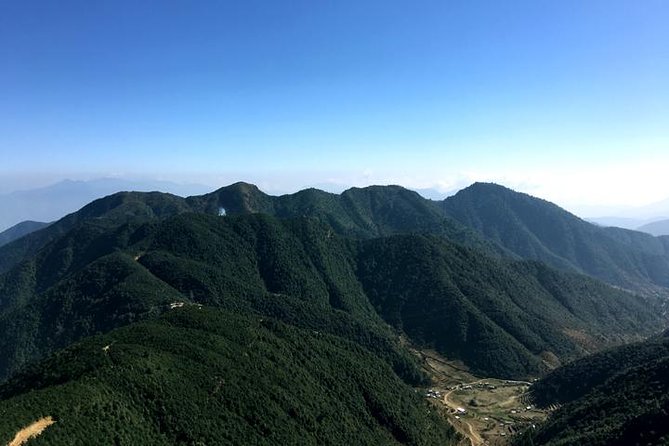
- Mount Chandragiri cable car saves time and buys you quick access to 2,520 meters
- Panoramas spanning Annapurnas to Everest on a clear day
- Guided ridge walking plus pilgrimage stops like Bhaleshwor Mahadev Temple and Champa Devi
- Tea stop at Jiban Safal Hotel to break the hike with a local pause
- Jungle descent toward Taudaha Lake with wildflowers in season
- Hotel pickup/drop-off and private transport make the day feel smooth and low-stress
Why Chandragiri to Taudaha fits when you have limited time
Kathmandu is loud and busy, but you don’t have to leave the region far behind to feel like you’re in the Himalayas. This route is designed for the traveler who wants fresh air, ridge views, and a nature hike that still finishes at a reasonable hour.
The big win is that you start with the Chandragiri cable car and then hike down to Taudaha. That one-two combo means you get altitude viewpoints fast, then earn the views with a descent through forests and foot trails. You’re not trapped on a steep ups-and-downs route for an all-day climb. Instead, you get variety: temple viewpoints on top, then a gradual change of scenery as you head toward the lake.
It’s also a nice option if you want something guided but not complicated. You won’t be spending hours studying routes, negotiating buses, or guessing where the trails start. Your guide’s job is to keep you moving and make the places you pass feel meaningful, not just scenic.
You can also read our reviews of more hiking tours in Kathmandu
8:30 hotel pickup to the Chandragiri cable car: fast access to 2,520 meters
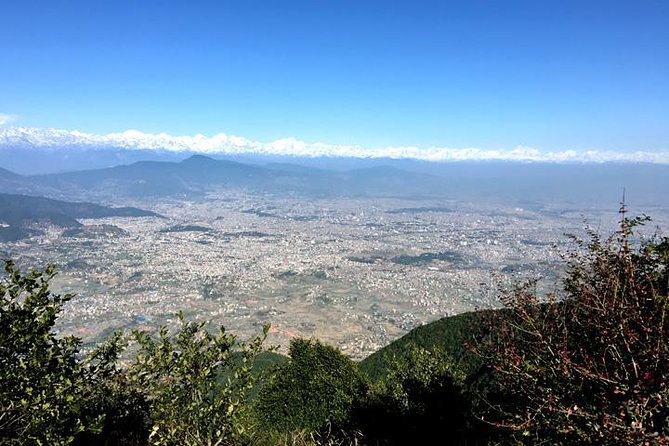
Your day typically starts around 8:30 am, when a representative picks you up from your hotel and drives you to the Chandragiri cable car start. The ride is private transport, and pickup/drop-off covers the inside ring road area, including Boudha. That matters, because Kathmandu traffic can turn a simple morning into a stressful one if you’re relying on public transport.
The cable car ride itself is short—about 10 minutes—and it climbs from the jungle below to Chandragiri Hill at 2,520 m. That’s a key part of the value. You’re gaining altitude quickly, which means more time for the views and the actual hike rather than just commuting.
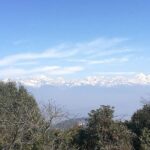
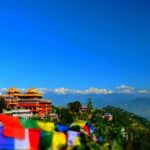
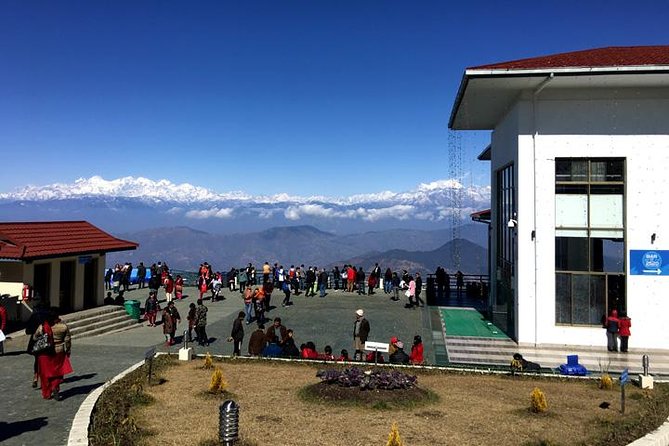
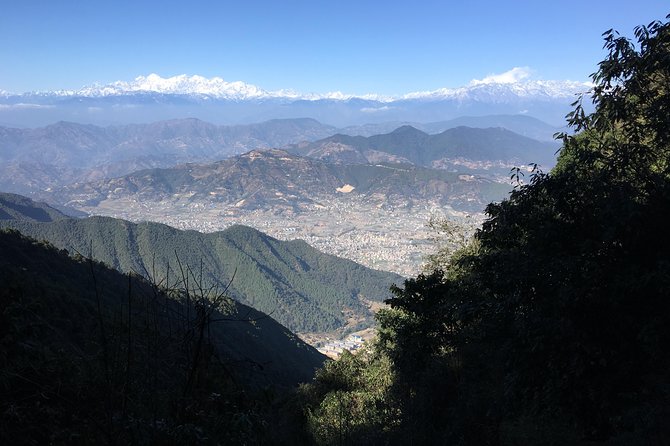
Once you’re at the top, you stand in a wide-open viewpoint zone. This is where the “I didn’t know you could see that much from here” feeling kicks in. From the summit, you can look across multiple ranges, including the Annapurnas to the west and Mt. Everest to the east (conditions matter, but the sightlines are the point). There’s also the Bhaleshwor Mahadev Temple, which gives the stop a cultural anchor instead of being only a photo platform.
Ridge walking with Bhaleshwor Mahadev Temple and Champa Devi
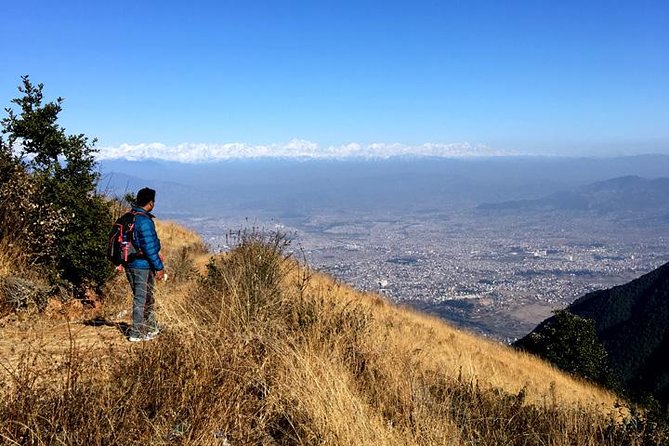
After you take in the views, you move along the ridge on foot. The walking phase is built to last, roughly two hours of ridge travel, where you get more opportunities to see how the valleys and neighboring peaks sit in relation to Kathmandu.
This is also where the hike becomes more than scenic trekking. Your route includes pilgrimage sites, and that changes the pace in a good way. You’re not rushing because you’re chasing views alone. You’re pausing because there’s something to look at, listen for, and understand.
One of the neat pauses is the tea stop at Jiban Safal Hotel. It’s a practical reset point: you catch your breath, rehydrate, and refuel before continuing. If you tend to get quiet when you’re working up a sweat, this is where you’ll likely feel the guide’s explanations click—because you can actually listen without hiking at the same time.
Next comes another pilgrimage stop at Champa Devi. After that, you start to turn toward the descent. This shift—views on the ridge to the trail heading downward—is where many people realize the hike is physically manageable but still real. You’ll want proper footwear and a calm pace.
The downhill toward Taudaha Lake through jungle trails
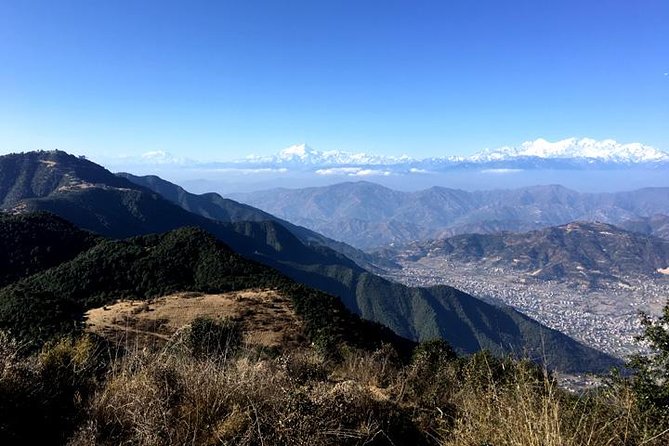
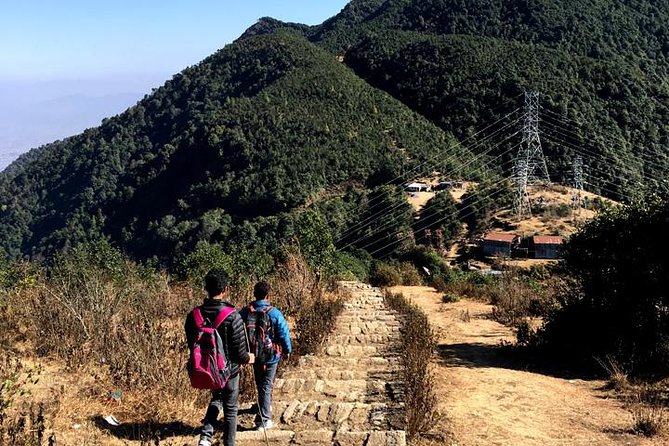
The descent is the longest-lasting change of scenery. After the ridge and pilgrimage stops, you gradually start down toward Taudaha Lake. The final segment is described as roughly the last hour descending through jungles, where wildflowers are common in season.
That jungle section is the payoff for anyone who likes more than just viewpoints. It’s cooler than the open summit areas, and it gives you that shaded, grounded feeling you don’t always get in day hikes near cities. If you’re the type who enjoys noticing small details—leaves, scent, light changes—this is where the route keeps things interesting without demanding technical climbing.
Once you reach the end of the hiking section, you’re met by the car and returned onward as part of the same organized plan. The overall day length lands around 9 hours of full-day hiking, with the rest of the time built around transfers, tea, and breaks.
The Taudaha Lake stop is a good final “destination moment” rather than a random viewpoint. It helps the day feel complete: you go from temple views and ridge air down into a quieter natural setting.
Packed picnic lunch and what to bring for comfort
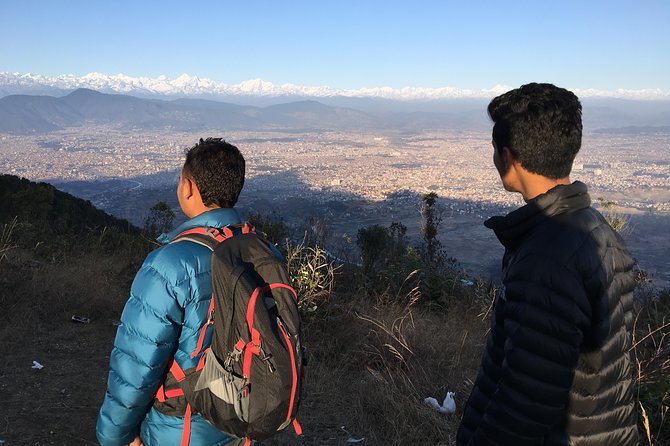
You’ll have a hygienic packed lunch included for the hike day. Having lunch handled matters more than people think. On hikes near cities, you often spend your energy hunting for food instead of enjoying the walk. Here, you can focus on pacing and taking breaks when it makes sense.
Still, don’t treat lunch as your only plan for hydration. The hike runs long enough that you should bring your own water and treat it like part of your kit. One of the clearest pieces of practical advice that comes up again and again is: bring sunscreen and plenty of water.
For clothing, you’ll want hiking gears even if the outfit starts out as smart casual. Layers are smart because you can move from cooler shaded forest sections back to sun-exposed viewpoints. Closed-toe footwear helps on uneven trails, especially during the downhill.
And yes, sun matters. Even if you start early, the ridges and summit areas are exposed. If you’re sensitive to sunburn, add a hat or sunglasses and plan for reapplication.

Why the guide experience makes this hike feel safer
This trip is built around a professional local guide, and that changes the whole experience. On a route like this, you’re mixing open ridges, temple areas, and trail segments through jungle. Without guidance, it’s easy to feel uncertain or miss small turnoffs.
Your guide’s role isn’t only “lead the way.” The plan includes teaching about life in the Himalayas along the route, so the time doesn’t feel like walking for walking’s sake. In particular, the guide Shishir stands out in the feedback for giving lots of information and helping people feel oriented. Even when you’re focused on the views, it’s comforting to know someone has the full picture and can answer questions without making you wait until the end.
If you’re someone who enjoys learning through storytelling while walking, you’ll likely appreciate the way the stops are spaced out. Tea at Jiban Safal Hotel, then Champa Devi, then the descent rhythm—those aren’t only schedule points. They create “conversation windows.”
Price check: is $90 good value?
At $90.00 per person, this day hike can be good value if you compare what’s included. You’re paying for a guide, private vehicle transport, and hotel pickup and drop-off (inside the ring road area, including Boudha). You’re also getting the packed lunch, and the process uses a mobile ticket.
The one pricing detail you should confirm before you go is the cable car fee. The experience summary describes one-way cable car entrance fees as included, but the fine print lists the one-way cable car entry fee as not included, around USD 13 per person. To avoid surprises, check your booking confirmation. If your confirmation doesn’t clearly cover the cable car, plan to pay that fee on arrival.
When that fee is clarified, the overall cost makes more sense. You’re essentially paying to turn a potentially confusing mountain day into a guided, timed, transport-backed experience that starts at your hotel and ends after the hike with a car waiting.
Also, bookings tend to happen ahead. If you know your dates, it’s smart to reserve early since this type of day trip can fill around peak travel periods.
Who should book this hike (and who should rethink it)
This is ideal for you if:
- You want Himalayan foothill hiking near Kathmandu without committing to a longer trek
- You like a guided day with safety and local context
- You want both temple stops and nature time, not just one or the other
- You can comfortably handle several hours of walking, including a descent
It’s less ideal if:
- You’re hoping for something short and easy. Even though it’s close to the city, it runs as a full-day effort.
- Your mobility is limited. The route includes ridge walking and a jungle downhill trail segment.
- You’re not prepared for sun exposure and long time outdoors, since sunscreen and hydration are strongly worth it.
The best fit is “active but not extreme.” Bring the energy of a day hike, not the expectations of a quick sightseeing circuit.
Should you book Chandragiri to Taudaha?
I’d book this if you’re after a practical Kathmandu-region nature day with big views, a clear route, and a guide who keeps things understandable. The combination of the cable car (fast altitude), the ridge viewpoints (with temples), and the downhill jungle section (with wildflowers in season) makes it feel like you got variety, not just one scene.
Before you commit, do two quick checks:
- Confirm whether the one-way cable car fee is truly included in your booking.
- Plan your day as a real hike. Pack water, sunscreen, and hiking-ready footwear.
If those boxes are covered, this is the kind of day trip that can make Kathmandu feel bigger than you expected, because you’re seeing the Himalayas in a time window that still leaves you with energy for your evening plans.
FAQ
What time does the hike start?
The pickup and start time is around 8:30 am.
How long is the hike?
Plan for about 10 hours total (approx.), including transfers and breaks.
Are hotel transfers included?
Yes. Hotel pickup and drop-off are included for locations inside the ring road, including Boudha.
Is the cable car fee included?
The information is a bit mixed: the experience description references cable car entrance fees, but the detailed notes list the one-way cable car entry fee (around USD 13 per person) as not included. Check your confirmation to be sure.
Is lunch included?
Yes. You get a hygienic packed lunch as part of the day.
What should I bring and what fitness level do I need?
Bring hiking gear (and plan for sun and long walking time), plus water and sunscreen. The trip is described as suitable for moderate physical fitness and also notes a dress code of smart casual/hiking gears. A valid passport is required on the travel day.