REVIEW · HISTORICAL TOURS
Kathmandu: Private UNESCO World Heritage Site Tour
Book on GetYourGuide →Operated by Outshine Adventure Pvt Ltd · Bookable on GetYourGuide
Temples and stupas come fast in Kathmandu. This private UNESCO World Heritage Site tour strings together the big religious hits with a guide who explains what you’re actually seeing.
I especially like the tight route for a 1-day trip: Swayambhunath, Kathmandu Durbar Square, Boudhanath, and Pashupatinath all in one day, plus scenic Kathmandu Valley views along the way. I also appreciate the human touch—guides such as Ramesh and Rajendra Manandhar are described as caring, flexible with your pace, and ready with clear answers when you ask questions.
The main catch is simply that it’s a full day with a lot of walking and city-time, and meals plus monument entrance fees aren’t included—so plan for snacks and budget for entry costs once you’re on the ground.
In This Review
- Key things to know before you go
- How a 1-day UNESCO circuit works in Kathmandu Valley
- Swayambhunath Temple: the Monkey Temple viewpoint and its stories
- Kathmandu Valley time: scenery, city rhythm, and context
- Kathmandu Durbar Square: temples dating back as far as the third century
- Boudhanath Stupa: the largest in South Asia and a serious spiritual atmosphere
- Pashupatinath Temple: Hindu ceremony energy and the guide-led meaning
- Price and value: what $50 per person gets you (and why it’s fair)
- Getting the day right: shoes, ID, and small on-the-ground tips
- Who this tour suits best (and who should pick something else)
- Should you book the Kathmandu Private UNESCO World Heritage Site Tour?
- FAQ
- What UNESCO sites does this tour include?
- How long is the tour?
- What is the price?
- Is the tour private?
- Where do they pick you up?
- Where do you get dropped off?
- What languages is the live guide available in?
- Are meals included?
- Are monument entrance fees included?
- What should I bring?
- Is free cancellation available?
Key things to know before you go
- Private transportation, hotel pickup/drop-off: easier logistics in chaotic traffic, especially if you’re short on time.
- Multiple sacred stops, not a rushed checklist: you get guided time at Swayambhunath, Boudha Stupa, Kathmandu Durbar Square, and Pashupatinath.
- Monkey Temple energy at Swayambhunath: bring your patience for monkeys, stairs, and crowds.
- Long middle block in the Kathmandu Valley: it’s built for maximum seeing, so bring comfortable shoes.
- Guides can adapt to your interests: some groups report extra time where it mattered to them, like around the cremation area at Pashupatinath.
- English and Spanish support: live interpretation is included with the tour guide.
How a 1-day UNESCO circuit works in Kathmandu Valley
Kathmandu Valley is the kind of place where culture isn’t locked behind museum glass. It’s right there on temple steps, in courtyards, on stupa terraces, and in the street life between sites. This tour takes that idea seriously by packing four major heritage landmarks into one day, then using the Kathmandu Valley drive/walk time to connect the dots.
What makes this format practical is that you’re not left to figure out routes and timing. You get hotel pickup, a private car, and a guide who keeps the day moving—without turning every stop into a photo sprint. The walk times listed for each segment add up to a real walking day, though, so you’ll want to go in with energy (or at least good shoes).
If you’re trying to understand Nepal beyond the headlines, this route is a strong first taste: Hindu temples (Pashupatinath), Buddhist architecture (Boudhanath and Swayambhunath), and the heritage core of Kathmandu itself (Kathmandu Durbar Square).
You can also read our reviews of more private tours in Kathmandu
Swayambhunath Temple: the Monkey Temple viewpoint and its stories
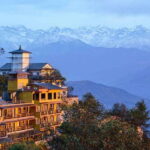
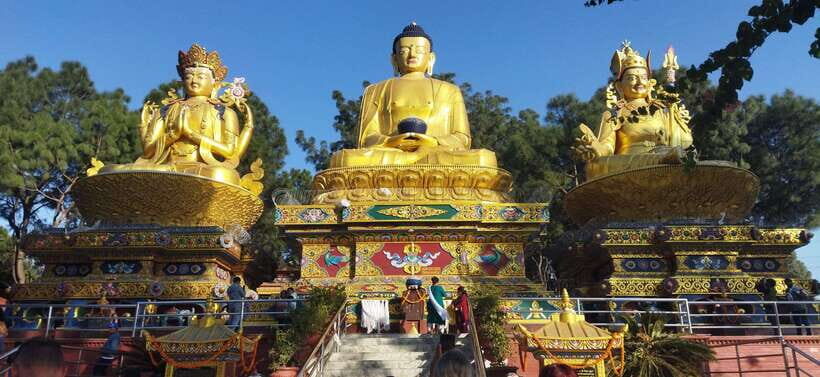
Swayambhunath is famous for two things: its high-position views and its cheeky monkey residents. The tour gives you about 2 hours here with guided context and time to walk around at your own pace.
Why this stop matters: Swayambhunath is more than a viewpoint. Your guide explains the religious significance behind the architecture and symbolism so you’re not just looking at a hill full of structures. When you understand what you’re seeing, the whole place feels more alive—especially because it sits above the city and connects visually to the rest of the valley.
Practical reality check: expect stairs, uneven paths, and people coming from different directions. Monkeys are part of the experience—so keep small items secure and stay aware while you’re walking. If you’re the type who likes to linger, you’ll appreciate that you’re not being yanked away the second you stop looking.
Kathmandu Valley time: scenery, city rhythm, and context
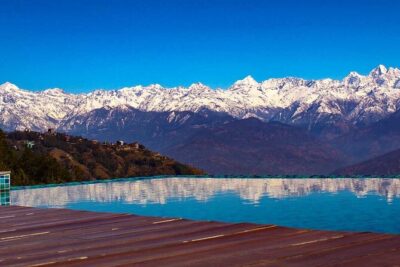
After Swayambhunath, the tour shifts into a longer Kathmandu Valley sightseeing block (listed as about 6 hours of visit and walk time). This is the heart-of-the-day stretch where you get both motion through the valley and a guided interpretation of how these heritage sites relate to each other.
I like this segment because it helps you see Kathmandu as a system, not isolated points on a map. Your guide frames the sites as part of a broader cultural landscape—art, religion, and history working together across centuries. You’ll also get that everyday Kathmandu feeling: street noise, local routines, and the sense that people live alongside the monuments.
There’s one important consideration: this is the longest time window on the schedule. If you’re sensitive to heat or fatigue, you may want to pace your breaks. A private car helps here—your guide can keep you moving while still allowing short pauses when you need them.
One small bonus from past groups: someone even caught a view of the Kumari through the window while riding—proof that the route sometimes offers more than just named monuments.
Kathmandu Durbar Square: temples dating back as far as the third century
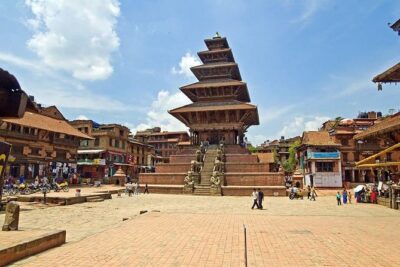
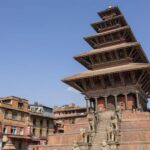
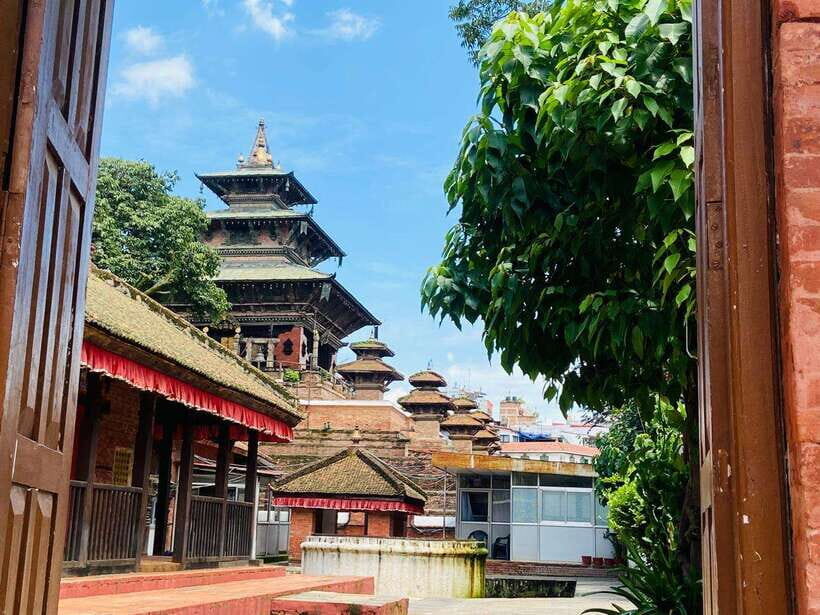
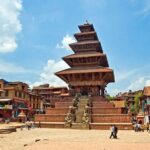
Then you shift to Kathmandu Durbar Square, with about 2 hours on site for guided touring and sightseeing. The draw here is how compact the heritage feels. Instead of thinking of temples as single buildings, Durbar Square shows you how Hindu and local architectural traditions cluster around courtyards and sacred spaces.
A key detail you’ll hear from your guide is that the square includes temples dating back as far as the third century. That time depth is part of what makes this stop so grounding: you’re not just visiting a pretty district—you’re stepping into a place that has been important for a very long time.
How to make the most of it: ask your guide to point out the small clues in the stonework and layout. You’ll see intricate designs and craftsmanship on the temples, and your guide can explain what those details mean in the religious and cultural context. It turns sightseeing into interpretation, which is the difference between seeing temples and understanding why they matter.
The drawback: Durbar Square can feel busy, and there’s a lot to look at. If you’re the type who gets overwhelmed easily, tell your guide you want a slower walkthrough—this is a good moment to request extra attention to fewer corners.
Boudhanath Stupa: the largest in South Asia and a serious spiritual atmosphere
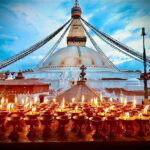
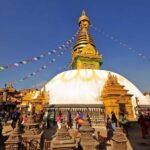
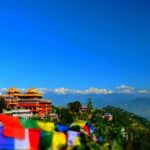
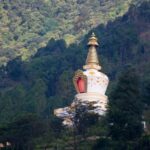
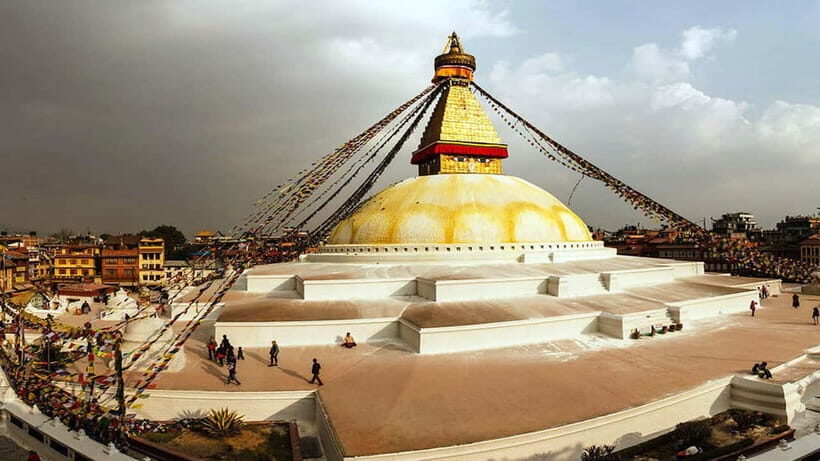
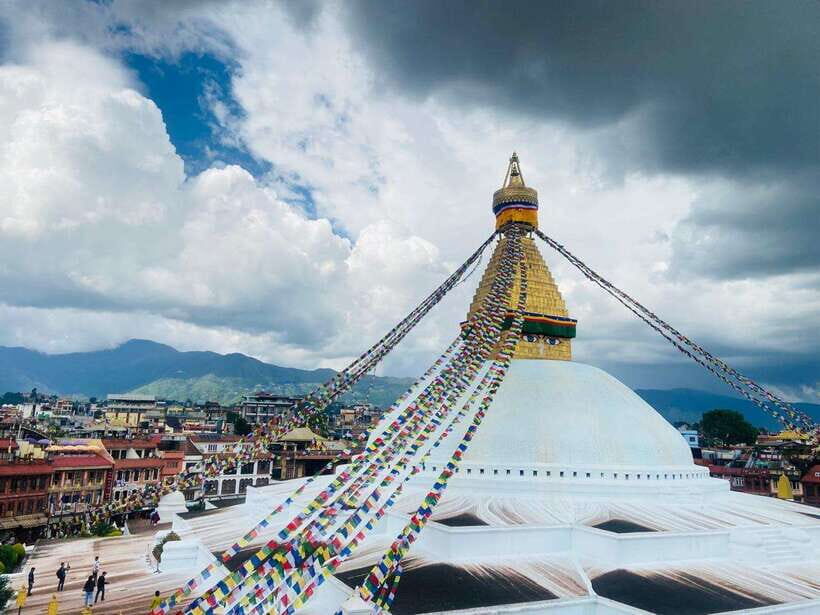
Boudhanath Stupa is the tour’s biggest “wow” architecture stop, with about 1 hour here for guided time plus free moments. Your guide sets up why it’s special: it’s known as the largest stupa in South Asia, and you’ll feel that scale once you’re on the terrace level.
This is also the point where you’ll notice how Buddhism shows up differently than Hindu temples. At Boudhanath, the focus is on the stupa itself—its form, the ways people move around it, and the religious meaning carried through repeated practice.
If you like photography, you’ll have good chances, but don’t treat it like a theme park. The best experience comes from watching how people behave: pilgrims, prayer, and the routines that keep the site alive. Your guide will explain what you’re seeing so your photos don’t turn into random objects with no story.
You can also read our reviews of more historical tours in Kathmandu

Pashupatinath Temple: Hindu ceremony energy and the guide-led meaning
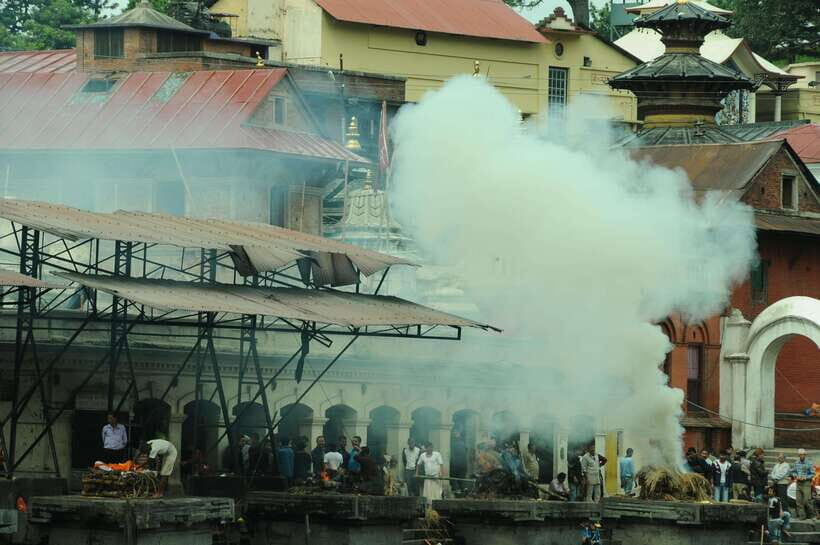
The last major heritage stop is Pashupatinath Temple, with about 2 hours for guided touring plus free time. This is one of the most sacred Hindu sites in Nepal, and your guide will help you connect the dots between architecture, ritual life, and why Kathmandu has that constant spiritual hum.
One cultural detail worth knowing before you arrive: Kathmandu mornings are often associated with the chime of bells from Pashupatinath. Even if your timing isn’t early morning, understanding that background makes the atmosphere click—this is a living religious center, not a staged landmark.
A practical note: Pashupatinath can involve areas where you’ll see aspects of funeral traditions. If you’re sensitive to that, you can still enjoy the temple complex and views while keeping your comfort level in mind. Past groups reported that guides can be flexible about where you spend time—one guide accommodated a request to stay longer near the cremation area.
Price and value: what $50 per person gets you (and why it’s fair)
This tour is listed at $50 per person for 1 day. For Kathmandu, that’s the kind of price that tends to make sense only if you’re getting more than a driver and a map. Here, you get an expert tour guide, hotel pickup and drop-off, private transportation, and all taxes.
So the real comparison is not just price—it’s what you avoid:
- You avoid spending your limited time figuring out routes between heritage sites.
- You avoid paying for multiple independent guides or piecing together the day yourself.
- You get context that’s hard to recreate on your own, especially at places like Pashupatinath and the stupas.
What’s not included matters too:
- Meals and drinks aren’t included, so you’ll want to plan simple snack breaks.
- Monuments entrance fees aren’t included, so budget for entry costs once you’re there.
One more value signal: reviews mention punctuality and smooth navigation through traffic. That’s not glamorous, but it’s exactly what protects your day from getting chewed up by delays.
Getting the day right: shoes, ID, and small on-the-ground tips
This is a walking-heavy cultural day, so you’ll enjoy it more with basic prep:
- Wear comfortable shoes with grip. Kathmandu sites can have stairs and uneven surfaces.
- Bring passport or an ID card, since you’ll be asked for it.
- Keep your daypack light—Swayambhunath especially can involve monkey attention.
- Plan for water and small snacks since meals aren’t included.
If you’re hoping to shop for cultural souvenirs, you might find your guide helpful. One group mentioned guidance on local items like mala, bracelet, and thangka paintings with Badri Nepal—so if that’s on your wishlist, ask politely for a moment when you’re not rushed.
Who this tour suits best (and who should pick something else)
This private UNESCO tour is a strong fit if:
- You have limited time and want the major Kathmandu heritage anchors in one day.
- You prefer a guide who can explain symbolism and practice, not just point at buildings.
- You value comfort from hotel pickup and a private car through traffic.
It may be less ideal if:
- You’re not up for a full day of walking and movement between sites.
- You’re expecting meals included or all costs wrapped up. Entrance fees and food are on you.
If you’re traveling with kids, one review mentioned a guide being accommodating with a 4-year-old. That’s encouraging, but your best bet is to talk with the provider in advance about your pace and comfort needs.
Should you book the Kathmandu Private UNESCO World Heritage Site Tour?
If your goal is a first solid day in Kathmandu that meaningfully connects Hindu temples, major stupas, and the heritage core of the valley, I think this booking makes sense. The value is strongest when you want interpretation (guided explanations at each stop) plus the convenience of pickup, private transport, and guided timing.
Book it if you can handle an active day and you’re ready to cover meals and entrance fees yourself. Skip or adjust if you want a slower, deeper stay at just one or two sites—because this itinerary is designed to show you a lot, not to stretch one place into a long afternoon.
If you want a smooth introduction to Kathmandu’s sacred geography, this is a practical way to start.
FAQ
What UNESCO sites does this tour include?
It includes Pashupatinath Temple, Boudhanath Stupa, Swayambhunath Stupa, and Kathmandu Durbar Square.
How long is the tour?
The duration is 1 day.
What is the price?
The price is $50 per person.
Is the tour private?
It includes private transportation, and the tour is described as a private UNESCO World Heritage Site tour.
Where do they pick you up?
Pickup is included from your hotel in Kathmandu or Outshine Adventure in Thamel, and there are also pickup options listed at Kathmandu, Paknajol Marg.
Where do you get dropped off?
Drop-off is included back at your hotel in Kathmandu or Outshine Adventure, and there are also drop-off options listed at Kathmandu, Paknajol Marg.
What languages is the live guide available in?
The live tour guide is available in English and Spanish.
Are meals included?
No. Meals and drinks are not included.
Are monument entrance fees included?
No. Monument entrance fees are not included.
What should I bring?
Bring your passport or an ID card.
Is free cancellation available?
Yes. You can cancel up to 24 hours in advance for a full refund.