REVIEW · KHUKURI KNIFE WORKSHOPS
Knife (Khukuri) Making Workshop- Forge of the Gurkhas
Book on Viator →Operated by I. Experience Nepal · Bookable on Viator
You leave with a blade you helped forge. In Kathmandu, this hands-on khukuri workshop turns a lump of iron into a sharp, traditional Gurkha knife, with lots of time at the forge.
I especially liked the authentic setting—a real blacksmith’s home and work area, not a staged craft floor. I also like that you get real participation: hammering the metal and doing the final buffing and polishing so the knife feels truly yours.
One thing to plan for: the process is partly supervised for safety, so the hottest, spark-filled grinding work is handled by the host, and quality issues like cracks can show up later in the shaping.
In This Review
- Key highlights before you go
- Why the Khukuri Matters (It’s a lot more than a souvenir)
- Meeting Indra in his forge: Kathmandu’s most real kind of workshop
- The 4-hour rhythm: from hammering iron to a finished 6-inch khukuri
- 1) Start with the raw metal and your first hands-on moments
- 2) Grinding steps, with supervision and a clear safety line
- 3) The final finishing: buffing and polishing
- What you’ll actually do vs. what the host handles
- The design lessons: the blade shape, the nick, and traditional handle/scabbard choices
- Blade shape and steel tempering
- The symbolic nick near the handle
- Handle and scabbard materials
- Personal touches
- Transport, timing, and small-group feel in Kathmandu
- Safety and comfort: sparks happen, so follow the host
- When things go wrong: cracks can appear later
- Caring for your new khukuri after you leave
- Who should book this workshop in Kathmandu
- Value for the price: is $68 worth it?
- Should you book Forge of the Gurkhas in Kathmandu?
- FAQ
- How long is the Knife (Khukuri) Making Workshop in Kathmandu?
- How much does it cost?
- What size khukuri blade will I make?
- Do they provide pickup in Kathmandu?
- How big is the group?
- Will I do any grinding at the forge?
- What parts of the process will I participate in?
- Do most people get to participate, even without blacksmith experience?
- Can I make a larger knife instead of the 6-inch blade?
- Is the workshop refundable if plans change?
- What do I take home at the end?
Key highlights before you go
- Small group size (max 5) keeps it conversational, not factory-tour loud
- Indra’s decades of craft: many participants mention 40+ years of blacksmithing experience
- You make a real 6-inch blade and take it home as a souvenir you’ll actually use
- Hands-on, with safety controls: hammering and finishing are yours, while the host manages spark-heavy steps
- Gurkha cultural meaning built into the knife: from the nick near the handle to traditional materials
Why the Khukuri Matters (It’s a lot more than a souvenir)
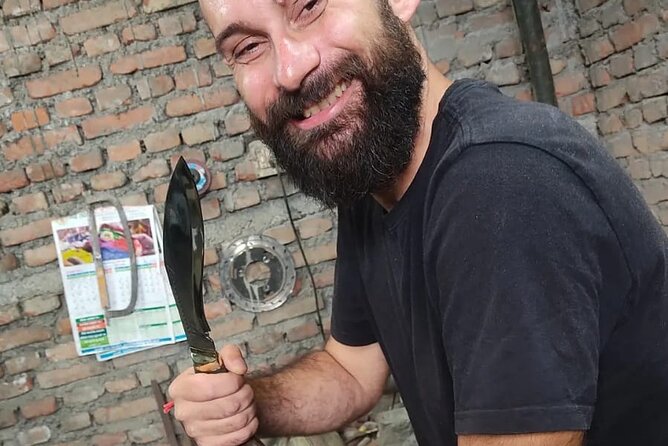
The khukuri isn’t just a sharp tool. It’s a symbol tied to loyalty and Gurkha identity, and it’s also regarded as traditional across Nepal’s hill communities. When you’re standing near the forge, that meaning makes the work feel heavier—in a good way—because you’re not copying a design from a shop display.
The classic look is part function, part tradition: a slightly curved blade made from tempered steel, and a handle often crafted from wood or buffalo horn. There’s also a purposeful nick in the blade close to the handle. That nick is meant to prevent blood from reaching the handle, and it’s also linked to Hindu symbolism tied to Brahma, Vishnu, and Shiva. Even if you never plan to use your knife for anything dramatic, learning how form and meaning get woven together gives you a deeper appreciation for the craft.
If you’re the type who buys regional objects—things with a story—this workshop is built for you. You’re not buying a mass-produced “Nepal knife.” You’re learning why people in this region still care about how the blade is made.
You can also read our reviews of more tours and experiences in Kathmandu

Meeting Indra in his forge: Kathmandu’s most real kind of workshop
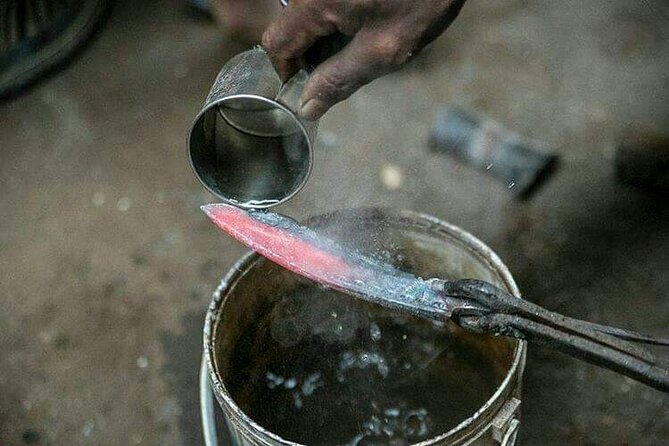
This is the part I’d call the “switch” moment. You start in Kathmandu, then you’re driven out toward a more remote, rustic village-style setting where the smith’s workshop lives as part of everyday life. The vibe is casual. People are chatty. You might be offered green tea, and you’ll likely spend time talking about Nepal while the work happens.
The blacksmith at the center of the day is Indra (often described as having decades of experience). Guides who support the language and flow include Swoyam and Namrata in different schedules. When the guide is strong in English and easygoing, you’ll get more than hand motions—you’ll understand the why behind each stage.
What makes this experience feel “real” is that the workshop isn’t trying to perform for you. The forge looks like a tool-based workspace, not a showroom. And you can feel the pride in the final piece: you’re not just watching someone build an object; you’re participating in the making of your blade.
The 4-hour rhythm: from hammering iron to a finished 6-inch khukuri
The workshop runs about 4 hours (some schedules feel closer to 4.5), and it’s built around one goal: you leave with a small khukuri with a 6-inch blade. That size matters. It’s big enough to feel like a real blade in your hands, but small enough to fit the time you’re given and the pace of a practical hands-on class.
Here’s the flow you can expect:
1) Start with the raw metal and your first hands-on moments
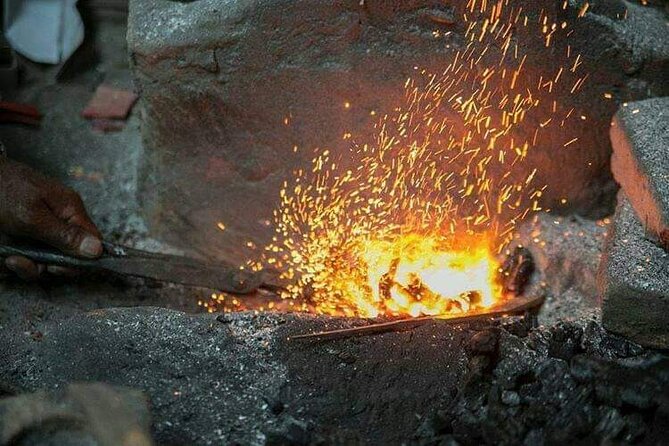
The day begins with shaping a raw piece of iron into the basic form of the blade. This is where your participation starts. You’ll be hammering the metal—repeated work, but satisfying. You quickly see that blacksmithing is less about one magic strike and more about steady adjustments.
A cool detail: some knives are made using recycled scrap steel. One participant specifically mentioned materials like truck suspension springs and the workshop’s approach to repurposing older metal.
2) Grinding steps, with supervision and a clear safety line
After the early shaping comes grinding. Because this stage can create lots of sparks and heat, the host manages the most dangerous grinding work. You might still get time at the wheel during the shaping/grinding process, but you should treat it as supervised work—follow the host’s instructions closely and stay where they tell you.



3) The final finishing: buffing and polishing
This is where your knife starts looking like a real khukuri rather than a rough blade. The “last touch” steps—buffing and polishing—are where you can see the transformation fast. Finish work is also forgiving in the sense that it lets you personalize the feel of the blade without taking the biggest safety risks.
What you’ll actually do vs. what the host handles
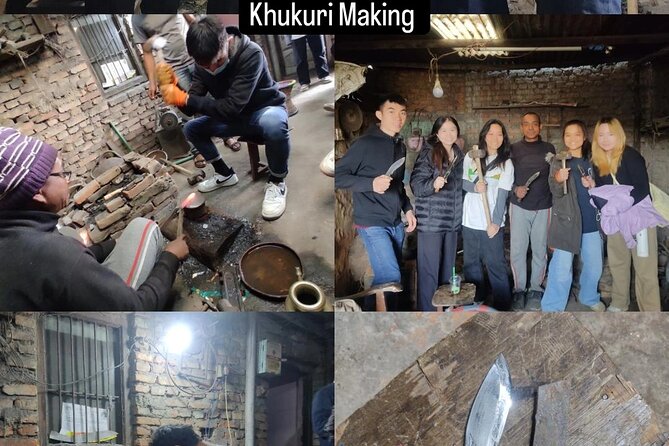
This workshop is hands-on, but it’s also realistic about skill and safety. Khukuri making takes years to do well, and the host keeps you involved in the important steps without turning the class into a high-risk situation.
From the structure of the workshop, these are the steps that are typically part of your participation:
- Hammering the iron to begin shaping the blade
- Taking part in the first grinding stage (under supervision)
- Doing buffing and polishing at the end so you finish your knife
And here’s what you should assume is mostly host-run:
- The spark-heavy, blade-grinding parts—because sparks are part of the process and safety matters
If you want maximum hands-on action, you’ll likely feel satisfied anyway, because hammering and finishing take real effort. Still, it’s fair to say you won’t be doing every single forge step. You’re helping make the knife, not running a solo blacksmith shop for the day.
The design lessons: the blade shape, the nick, and traditional handle/scabbard choices
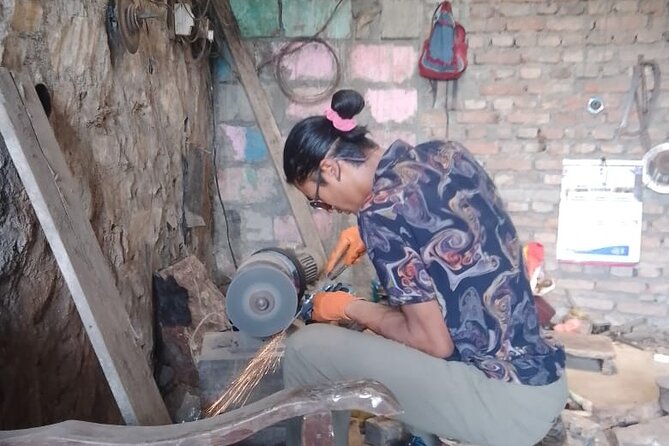
A lot of craft classes stop at making. This one also helps you understand the design logic, which is what turns a souvenir into a memory.
Blade shape and steel tempering
You’ll learn that the blade is typically tempered steel with that signature gentle curve. The curve isn’t just style—it affects how the blade sits and how it behaves as a tool. Even if you never use it for woodworking or food prep, it helps you appreciate why khukuris show up as multipurpose knives in the region.
The symbolic nick near the handle
You’ll hear about the nick in the blade near the handle. Practically, it’s meant to help prevent blood reaching the handle. Symbolically, it’s also tied to Hindu Trinity references. That blend of function and meaning is one of the reasons the khukuri feels culturally important rather than just “a knife.”
Handle and scabbard materials
Traditional khukuri handles are often wood or buffalo horn, and the blade typically comes with a scabbard made from wood and leather. Your specific kit may vary based on what materials are available and the workshop’s standard approach, but the key point is that the finished set stays within the traditional look and feel.
Personal touches
Some people finish the workshop with personalization on their knife. If that option is available on your day, it’s worth taking it, because it makes your final piece feel less like a standardized product and more like a personal craft.
Transport, timing, and small-group feel in Kathmandu
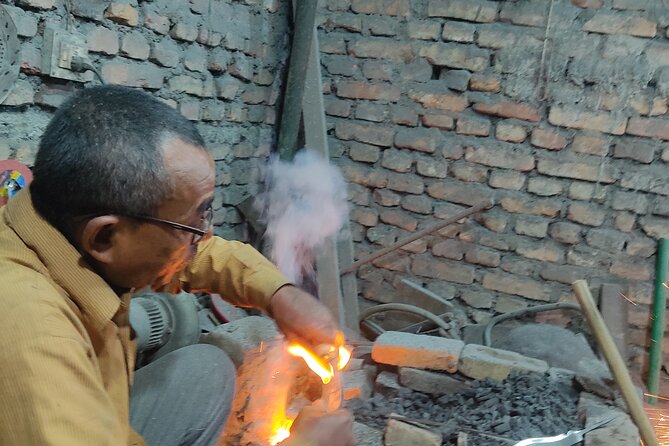
Location is part of why this workshop works. It’s based in Kathmandu, but the real action is outside the city center. Most days include pickup from your accommodation, and the process usually involves a short ride up toward the hills.
This matters more than it sounds. If you’ve only got a few hours in Kathmandu, you don’t want to spend that time sorting out directions and public transport. Having pickup and drop-off keeps the day on track, and it also means you can focus on the experience instead of logistics.
Timing is another key point. You’re there about 4 hours, and that includes travel time and the work steps. A few participants noted the day can stretch to about 4–5 hours depending on the group pace. If you’re going with children, it can test patience because the process takes time and repetition.
The group size stays small (maximum 5 people), which is why you can ask questions and actually talk with the guide and smith. In a bigger group, you’d miss a lot of context. Here, conversation feels normal.
Safety and comfort: sparks happen, so follow the host
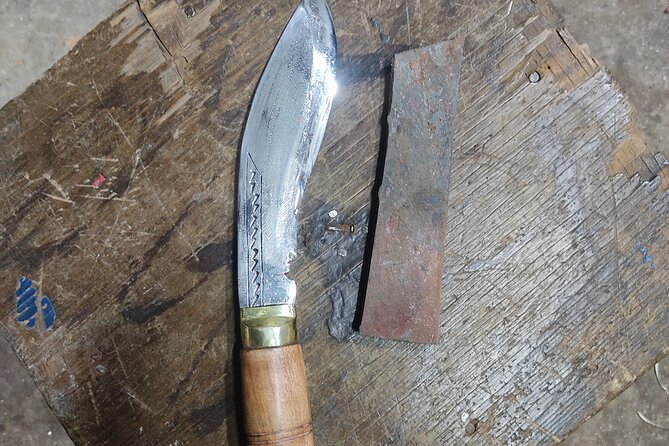
Let’s be practical. Knife forging has real heat. Sparks aren’t a gimmick; they’re part of grinding and shaping.
The workshop clearly builds in safety rules:
- The host handles the blade grinding for safety reasons
- You’re advised to stay away from sparks during that part
In other words, don’t treat this as a “DIY knife video” you can freestyle. Listen to the host. Stand where they tell you. If you get nervous around hot metal, that’s normal—just don’t ignore instructions.
Also remember that even “small” khukuris are sharp metal tools at the end of the day. Your knife is part souvenir, part real blade, so handle it responsibly when you leave and take your time packing it.
When things go wrong: cracks can appear later
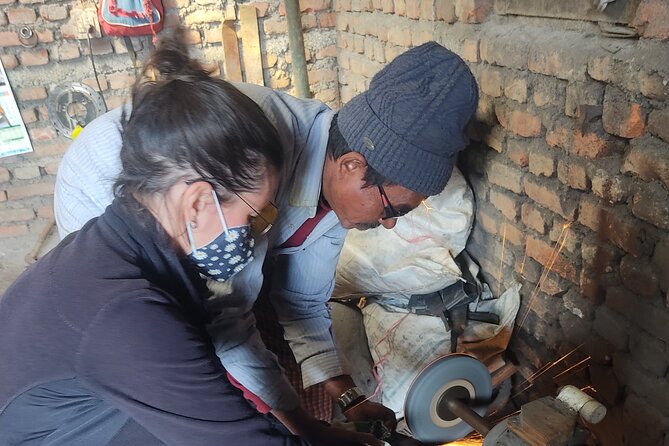
This workshop seems to deliver high satisfaction overall, but you should know one realistic detail. Metal can develop issues later in the forging and shaping, and cracks sometimes don’t show immediately at the start.
At least one group noted that some finished knives ended up with cracks, even though the experience itself was strong. The important part: the workshop team offered to address it by making a new knife and delivering it when possible. That’s the sign of a service that cares about quality outcomes, not just collecting the workshop fee.
So if you’re buying this as a gift, consider it as a “made by hand” item. The rare imperfections are part of working with metal rather than factory blanks. In most cases, everything comes out clean—but it’s wise to keep your expectations grounded.
Caring for your new khukuri after you leave
The workshop promises you’ll take home a finished blade, and many people highlight that the edge ends up very sharp.
To keep that sharpness:
- Treat it like a real cutting tool, not a decorative piece
- Pack and carry it carefully to avoid nicks and damage
- If the maker offers any care advice, follow it exactly—especially around storage and how to protect the blade and handle
Because the workshop includes polishing and finishing, your knife should already look great when you pick it up. The bigger job after that is protecting the edge during travel and daily handling.
If you’re thinking of bringing it home internationally, plan your packing around the scabbard and protection. The workshop gives you a traditional scabbard setup (wood and leather), which is helpful for keeping things safe.
Who should book this workshop in Kathmandu
This is a strong fit if you:
- Want a hands-on cultural activity that isn’t just looking and photographing
- Care about craft and want the story behind the object
- Like small-group experiences with real conversation
- Want a takeaway that feels personal, not mass-produced
It might be less ideal if:
- You hate waiting around for long processes with hot tools
- You expect full “smith-level” control of every step (the host manages key safety steps)
- You’re going with very young kids who may lose patience during the length of forging
One more thought: people often compare this kind of workshop to buying khukuris from tourist shops. When you’ve made the blade yourself, the quality and meaning tend to feel much stronger—even if you don’t care about metallurgy in normal life.
Value for the price: is $68 worth it?
At $68 per person, this workshop is priced like an affordable activity that still gives you a high-value souvenir: a handmade 6-inch khukuri. The value equation isn’t just the knife. It’s the fact that you get:
- A real blacksmith setting and a small-group class
- Guided participation at multiple steps (hammering and finishing)
- A take-home object that has traditional features: tempered steel, curved blade shape, and a scabbard setup
Also, many schedules offer pickup and drop-off, which can quietly make a big difference in total cost and stress. When transportation is included or coordinated, you’re paying for time saved.
So yes, this looks like a solid value for people who want an authentic, hands-on Kathmandu experience that ends with something you keep and use.
Should you book Forge of the Gurkhas in Kathmandu?
If you’re choosing one craft-style activity in Kathmandu and you want it to feel authentic, I’d lean yes. The combination of a real smith like Indra, a small group size, and hands-on steps like hammering and polishing makes it more than a performance. It’s a day where you learn why the khukuri looks the way it does and what people attach to it culturally.
I’d book it especially if you want a souvenir that carries meaning—something you made, not something you bought off a street rack. Just go with the right expectations: safety supervision is part of the design, and the forging process can take time.
If you’re still deciding, ask yourself one question: do you want a story to tell, or an object to own? This workshop gives you both.
FAQ
How long is the Knife (Khukuri) Making Workshop in Kathmandu?
It lasts about 4 hours (approximately).
How much does it cost?
The price is $68.00 per person.
What size khukuri blade will I make?
For this workshop, you make a small 6-inch blade.
Do they provide pickup in Kathmandu?
Pickup is offered, and the experience uses a mobile ticket.
How big is the group?
The workshop has a maximum of 5 travelers (so it stays small).
Will I do any grinding at the forge?
Khukuri making includes grinding steps, and the host handles grinding for safety reasons. You may take part in the first grinding stage under supervision.
What parts of the process will I participate in?
You’ll participate in steps that include hammering the iron and the final buffing and polishing. Grinding is supervised for safety.
Do most people get to participate, even without blacksmith experience?
Most people can participate, and the host provides the necessary safety and skill coverage so the experience stays safe.
Can I make a larger knife instead of the 6-inch blade?
Some participants reported an option to make a larger 10-inch khukuri for an additional fee.
Is the workshop refundable if plans change?
Cancellation is free if you cancel up to 24 hours in advance for a full refund.
What do I take home at the end?
You take home a finished khukuri knife made during the workshop, along with its traditional scabbard setup.