REVIEW · KATHMANDU CITY & WALKING TOURS
From Kathmandu: 3 Major Durbar Square Guided Tour
Book on GetYourGuide →Operated by Nepal Adventure Guide · Bookable on GetYourGuide
Three squares, one strong Nepal story. In five hours, you’ll move through UNESCO-listed royal spaces and meet the ideas behind Kumari and Durbar Square life. I especially like how the day connects major sights with clear, human explanations, not just dates and names. You also get a practical loop through Kathmandu, Bhaktapur, and Patan without having to piece anything together yourself.
The best part is how each stop highlights a different style of Newari-era power and belief, from Hanuman Dhoka Palace in Kathmandu to Nyatapola Temple in Bhaktapur. One watch-out: the schedule is tight and entrance fees aren’t included, so you’ll want a little extra cash for any paid entries at the sites.
In This Review
- Key highlights worth planning for
- Three UNESCO Durbar Squares in one efficient 5-hour plan
- Kathmandu Durbar Square: Hanuman Dhoka Palace and Kumari’s residence
- What I’d watch for during this stop
- Bhaktapur Durbar Square: Nyatapola Temple and the 55-window palace style
- The main “planning thought” for Bhaktapur
- Patan Durbar Square: Krishna Mandir and the Patan Museum stop
- Where Patan can trip you up
- What the guide adds (and why Pranav and Aneel come up)
- How to use your guide effectively
- Price and value: is $86 per person fair for 3 Durbar Squares?
- Timing, movement, and photo strategy for Durbar Squares
- Who should book this Kathmandu Valley Durbar Square tour?
- Should you book this tour or DIY it?
- FAQ
- How long is the From Kathmandu: 3 Major Durbar Square Guided Tour?
- How much does the tour cost?
- Where do you get picked up, and where do you return?
- Are the tours guided, and what language is the guide?
- Is this a private group tour?
- Does the price include entrance fees?
- Does the tour help you avoid ticket lines?
- Is hotel pickup and drop-off included?
- Is the tour wheelchair accessible?
- What’s the cancellation policy?
Key highlights worth planning for
- UNESCO World Heritage sites across Kathmandu, Bhaktapur, and Patan in one guided route
- Kathmandu Durbar Square: Hanuman Dhoka Palace and the living goddess, Kumari
- Bhaktapur Durbar Square: Nyatapola Temple and classic palace-courtyard layout
- Patan Durbar Square: Krishna Mandir and the Patan Museum inside the palace complex
- Professional English guide who tells history through real details you can see
Three UNESCO Durbar Squares in one efficient 5-hour plan
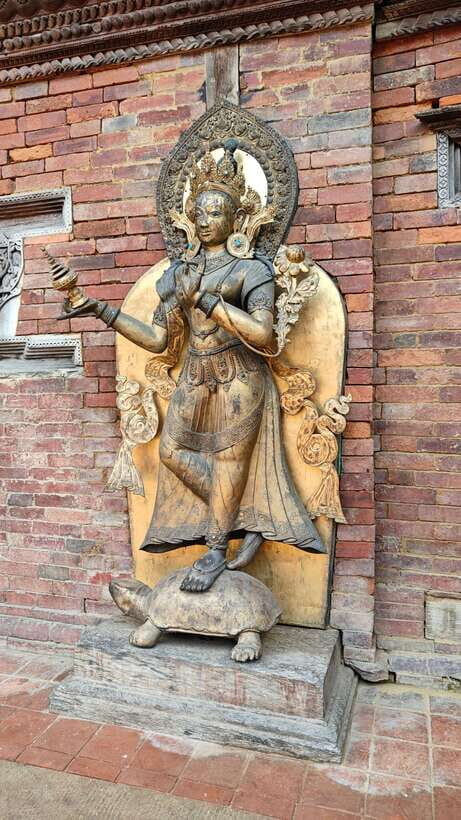
This tour is built for people who want the Kathmandu Valley’s royal “centerpieces” without turning the whole day into logistics work. You start in Thamel, then head out by private transport to each Durbar Square with a guide doing the heavy lifting—what you’re looking at, why it matters, and what to notice first.
The big value here is the pacing. Instead of spending two separate days bouncing between cities, you get a guided sample platter of three UNESCO World Heritage sites. Kathmandu shows the royal and spiritual core of the valley’s past. Patan leans harder into craftsmanship and stone temple artistry. Bhaktapur feels more like a preserved time capsule of old-city life and architecture.
Because it’s a private group experience, you’re not stuck listening through a crowd. You can ask questions and adjust your pace to your own comfort level. That matters in places like these, where temples, courtyards, and palace gates can be visually complex even when you’re just trying to follow the guide’s route.
You can also read our reviews of more guided tours in Kathmandu
Kathmandu Durbar Square: Hanuman Dhoka Palace and Kumari’s residence
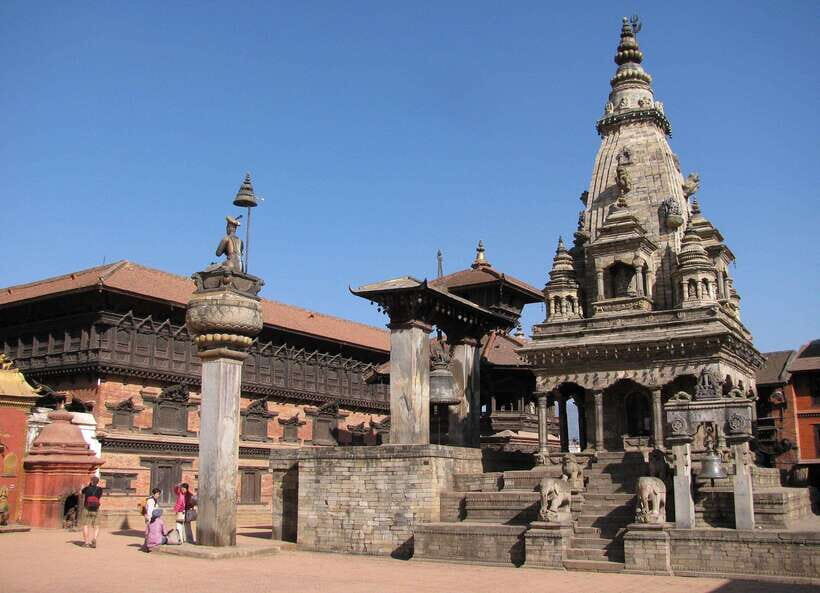
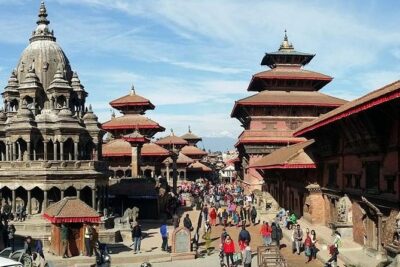
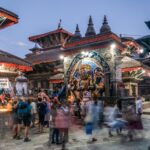
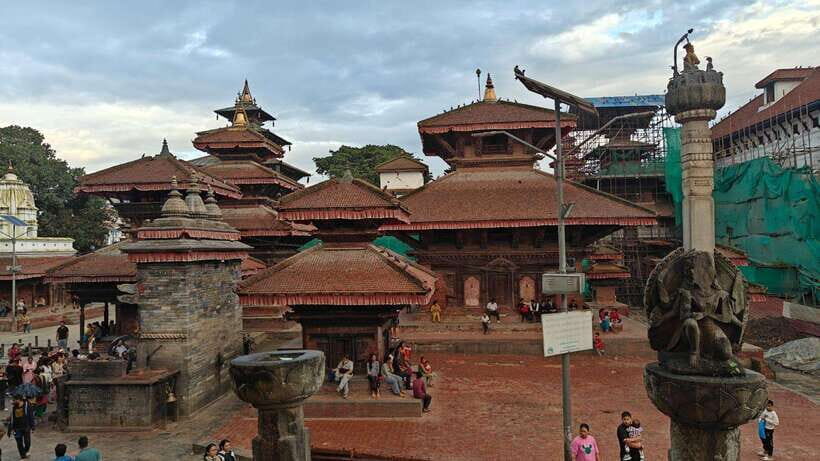
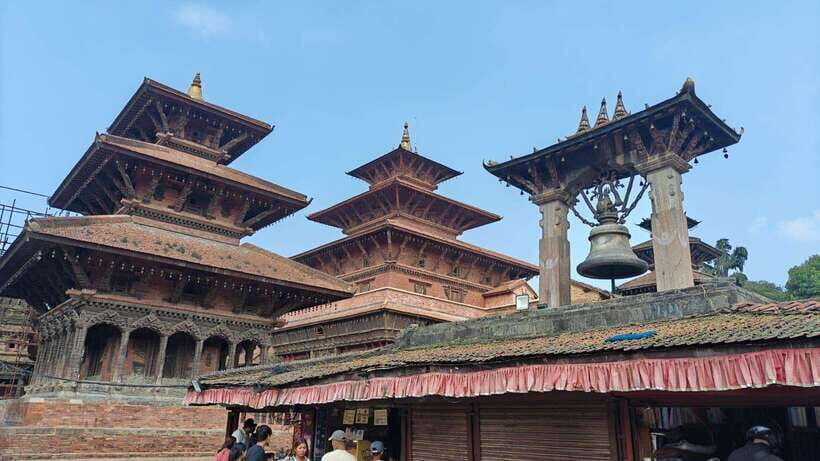
Kathmandu Durbar Square is the gateway to old royal Kathmandu. In the space of a 90-minute guided visit, you’re in a dense mix of palace courtyards, temples, and carved details that all help explain how power and religion worked together here.
A must-focus stop is the Hanuman Dhoka Palace area, tied to the Hindu monkey god Hanuman. The palace setting gives you a feel for the historic seat of Nepalese royalty—then the guide connects that to what you can still see today: courtyards, temple structures, and ornate carvings that don’t look like they were meant for rushing.
Then there’s Kumari, the living goddess. Seeing her residence within the flow of the square helps you understand why this place isn’t just architecture-as-tourism. It’s a functioning cultural idea that has lived alongside the city’s everyday movement for generations. If your guide is strong with storytelling, Kumari becomes a lens that makes the surrounding temples and symbols easier to interpret.
What I’d watch for during this stop
You’ll get the most out of Kathmandu Durbar Square if you keep your eyes moving between three things:
1) the palace courtyards and how they frame views,
2) the temple fronts and their carvings, and
3) the way Kumari is woven into the space rather than treated as a separate spectacle.
The only drawback is practical: if you like to linger, 1.5 hours can feel like a “hit the key points” visit. You’ll still come away with a good map of the square, but you may want extra free time later if you’re a slow photographer or you love reading every plaque.
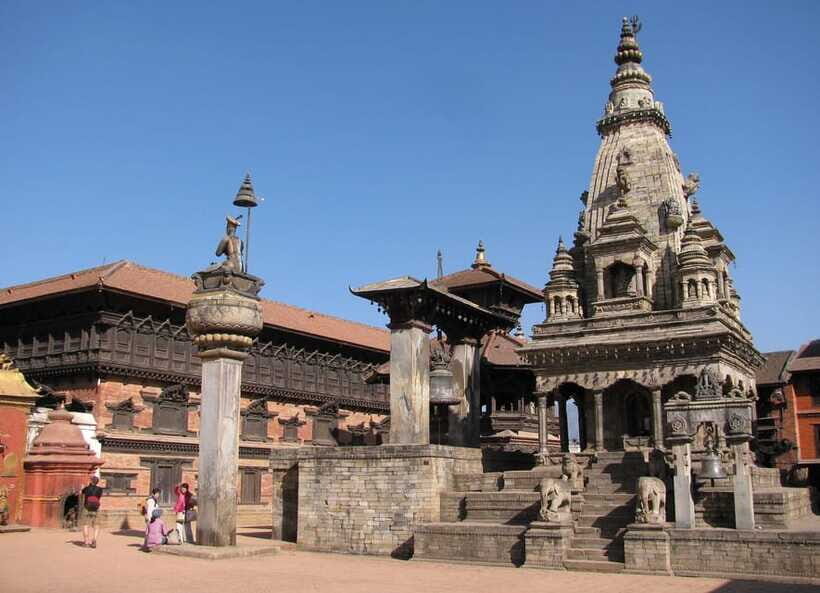
Bhaktapur Durbar Square: Nyatapola Temple and the 55-window palace style
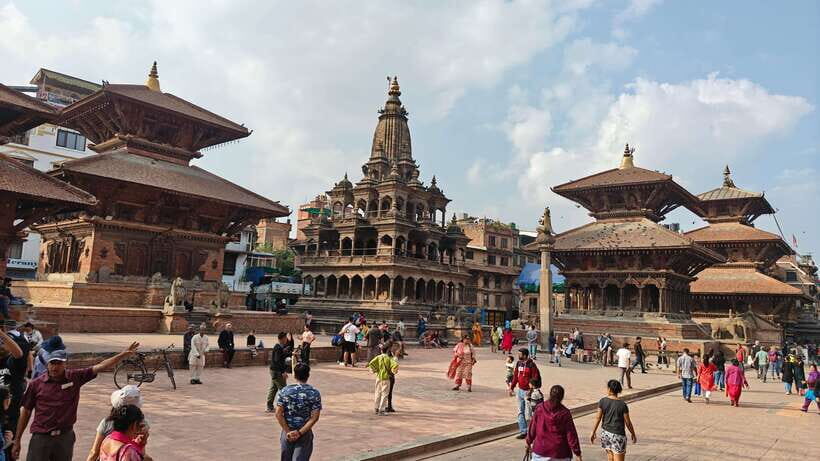
Bhaktapur Durbar Square has a different mood than Kathmandu. It feels more preserved, and that’s a big reason it works so well on a short itinerary. You come from Kathmandu’s royal-center intensity, then Bhaktapur gives you a clearer sense of how old-city design shaped daily life.
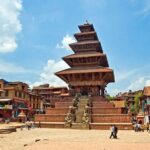
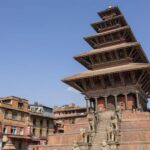
This is also where the big vertical landmark hits: Nyatapola Temple, described as Nepal’s tallest pagoda. A temple like this isn’t only about height. It signals status, religious devotion, and craftsmanship—so when your guide points out the temple’s role in the square, it changes what you think you’re seeing. Instead of “a tall building,” it becomes a statement written in stone.
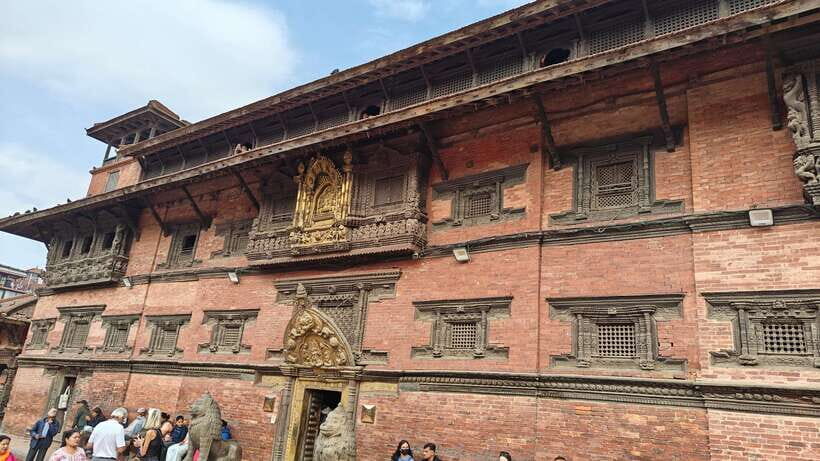
In the palace-and-temple cluster around the square, you’ll also hear about major heritage works like the 55-Window Palace, the Vatsala Temple, and the Golden Gate. Even without memorizing every Newari-era term, the layout helps you see patterns: royal power expressed through gates, windows, courtyards, and temple niches that guide your movement through the space.
Bhaktapur is also known for traditional crafts, including pottery. If you’re paying attention, that cultural thread fits the architecture. The square doesn’t feel like it’s been stripped for visitors—it feels like you’re standing inside the kind of city that produced the objects and skills people still want today.
The main “planning thought” for Bhaktapur
You’re given 2 hours here, which is enough to get oriented and see the big named features, but not enough to wander every lane without staying on your guide’s route. If you know you want photos plus slow shopping, decide what matters most: the temples first, or the streets first.




Patan Durbar Square: Krishna Mandir and the Patan Museum stop
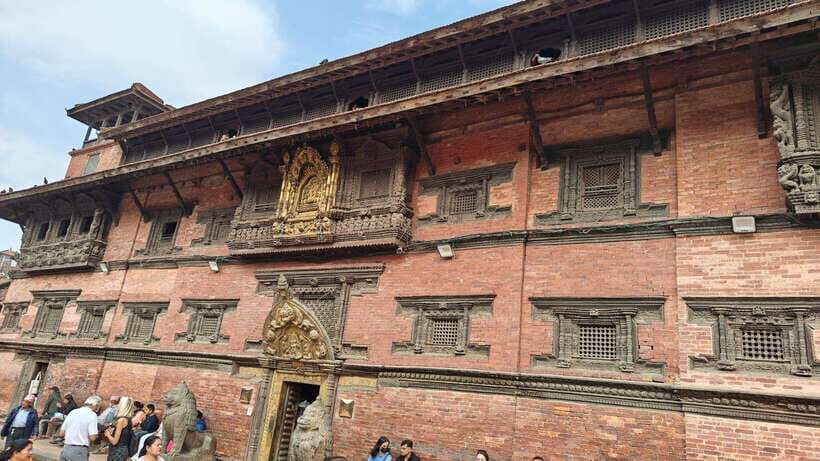
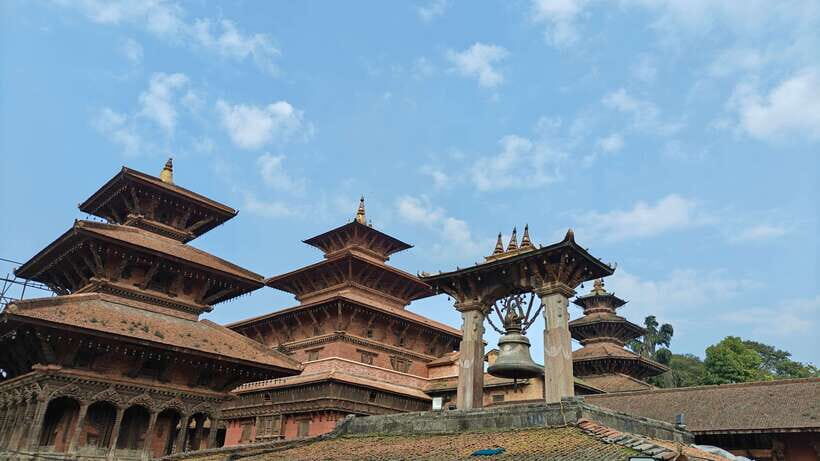
Patan (Lalitpur) Durbar Square adds a distinct flavor: fine arts, stone temple craftsmanship, and a dense cluster of temples, statues, and courtyards. It’s the kind of place where the details reward you if your eyes are calm and you don’t rush.
The centerpiece most people remember is the Krishna Mandir, a major stone temple dedicated to Lord Krishna. A guide’s job here is crucial, because the temple’s importance becomes clearer when you understand its place in the broader religious and artistic world of Patan. Without that context, you can still enjoy the structure—but with it, the whole square makes more sense as a system of belief and design.
Also worth your time is the Patan Museum, located within the palace complex. Even if museums aren’t your usual thing, this one helps stitch together what you saw on the stone outside. It’s one of those stopovers that turns architecture into meaning: you’re no longer just reading shapes; you’re picking up the cultural logic behind them.
Because this stop is guided for 2 hours, it’s usually the easiest square to balance: enough time to see the named highlights and also slow down if the art grabs you.
Where Patan can trip you up
The only real risk is expectations. If you’re hoping for “one perfect photo spot,” Patan can feel like several equally impressive mini-moments. That’s good news if you like variety; it’s just not as “single monument” focused as some other travel stops.
What the guide adds (and why Pranav and Aneel come up)
When these tours work well, it’s almost always because of the guide. The strongest feedback is about how guides explain what you’re seeing in plain English, with story-driven context that connects architecture to culture.
Two guide names come through repeatedly in shared experiences: Pranav and Aneel (Karma). Both are described as fluent and warm, with a passion for Nepal’s history that makes the stops feel like more than a checklist. You can also tell that the best guides aim to be useful rather than theatrical—clear explanations, helpful pacing, and the kind of attention that keeps you from getting lost in the courtyards.
How to use your guide effectively
Ask at least two questions while you’re in each square. For example:
- What should I notice first on this temple frontage?
- How does the role of royalty or religion show up in the layout here?
This is especially helpful in Durbar Squares, where carvings, gates, and temple forms can look similar at a glance. Your guide can point out the differences that actually matter.
Price and value: is $86 per person fair for 3 Durbar Squares?
At $86 per person for a 5-hour private tour, the value mostly comes from three things: the guided time, the private transport between sites, and the fact that you start and end in Thamel with hotel pickup and drop-off within Kathmandu.
Here’s the honest math in practical terms:
- You’re paying for a professional English guide across three separate heritage areas.
- You’re paying to avoid figuring out between-city movement on your own.
- You’re paying for a structured route so you don’t waste time deciding what to see first.
What’s not included matters too. Entrance fees and meals aren’t included, so you should budget for extra costs if any of the sites you want to enter have ticketed areas. The good news: the tour does mention skipping the ticket line, which can save time once you arrive at paid entry points.
If you’re traveling with friends or family, a private group usually feels like strong value because you’re not splitting the cost across strangers while you’re paying for expert guidance. If you’re traveling solo and you love learning, it can still feel worth it because you get a clear story thread that ties the valley together.
Timing, movement, and photo strategy for Durbar Squares

With three guided stops in about five hours, your main job is to stay mentally flexible. Think of this as a guided orientation through major heritage. You’ll see highlights like Kumari’s residence area, Nyatapola Temple, and Krishna Mandir—but you won’t be able to treat it like three separate full-day visits.
Plan your day like this:
- Wear comfortable shoes and be ready for uneven stone surfaces typical of old squares.
- Keep water handy, especially if you’ll be outside between stops. (Meals aren’t included.)
- Decide in advance which two photo moments you care about most per square so you don’t lose the whole visit chasing one perfect angle.
Photography can also be timing-sensitive. Temples and palaces often have areas where people gather. A guide can help you choose angles that respect local flow—so your photos improve and your schedule stays on track.
Who should book this Kathmandu Valley Durbar Square tour?
This tour fits you best if you want:
- a private, English-guided heritage day with minimal planning,
- a guided route through Kathmandu, Patan, and Bhaktapur rather than piecing it together alone, and
- a story-first approach that connects architecture to living cultural roles like Kumari.
It may not be ideal if you’re a “go slow, read everything, and linger forever” type, because the guided time at each square is limited. For that style, you’d want more hours in one city rather than a three-city loop.
Also note the suitability boundaries: it’s listed as wheelchair accessible, but it’s marked as not suitable for people over 95 years. If that age range might matter for you, double-check before booking.
Should you book this tour or DIY it?
If you want the Kathmandu Valley’s major Durbar Squares with a clear explanation of what you’re seeing, I’d book this. The biggest reason is the guide: strong, English-speaking storytelling turns stone and symbols into something you can actually understand in real time.
You might consider DIY only if you’re already comfortable navigating historical sites on your own and you don’t need help interpreting what’s in front of you. But for most people, the combination of guided time + private transport + structured route is what makes the $86 price feel sensible.
If you do book, show up ready to move, but also ready to ask questions. Durbar Squares reward curiosity. When you ask good ones, the day gets better fast.
FAQ
How long is the From Kathmandu: 3 Major Durbar Square Guided Tour?
The tour lasts 5 hours.
How much does the tour cost?
It costs $86 per person.
Where do you get picked up, and where do you return?
Pickup is from Thamel, and you return to Thamel.
Are the tours guided, and what language is the guide?
Yes. It includes a professional English-speaking guide.
Is this a private group tour?
Yes. It’s listed as a private group, with private transportation between sites.
Does the price include entrance fees?
No. Entrance fees are not included.
Does the tour help you avoid ticket lines?
Yes. It notes skipping the ticket line.
Is hotel pickup and drop-off included?
Yes. Hotel pick-up and drop-off within Kathmandu are included.
Is the tour wheelchair accessible?
Yes, it’s listed as wheelchair accessible.
What’s the cancellation policy?
Free cancellation is available up to 24 hours in advance for a full refund.