REVIEW · EVENING EXPERIENCES
Kathmandu: Pashupatinath Aarati & Cremation Evening Tour
Book on GetYourGuide →Operated by Hari Dhakal · Bookable on GetYourGuide
Night at Pashupatinath hits hard. This tour gives you the evening Aarti at the Bagmati River and pairs it with an up-close look at open-air cremation practices—plus a local guide who helps you understand what you’re seeing. I especially loved the respectful framing from Santosh and the way the temple’s carved details and lamps look after dark.
One thing to consider: watching cremation rituals in real time can be emotionally heavy, even if you’re prepared for the cultural reality.
In This Review
- Key highlights you’ll notice
- Pashupatinath at night: why this tour timing matters
- Your pickup, your driver, your guide (and how meeting works)
- Exploring the UNESCO temple complex with a local lens
- The evening Aarti ritual: what you’ll experience step by step
- Open-air cremation viewing on the Bagmati River (and how to handle it)
- What’s included for $43 per person (and what you should expect to pay extra)
- Dress code, camera rules, and what to bring for a night visit
- How to get the most out of the Aarti and cremation parts
- Who should book this Pashupatinath night tour (and who might skip)
- Price and logistics: is $43 worth it?
- Quick FAQ for Kathmandu: Pashupatinath Aarati & Cremation Evening Tour
- FAQ
- What is included in the tour price?
- Is the Aarti included?
- Do I need to buy temple entrance tickets?
- Will I also see open-air cremation?
- What’s the dress code?
- Are there rules about photography?
- Where do we meet the guide?
- Is it suitable for wheelchair users?
- Can I pay later or book now?
- Should you book this tour?
Key highlights you’ll notice
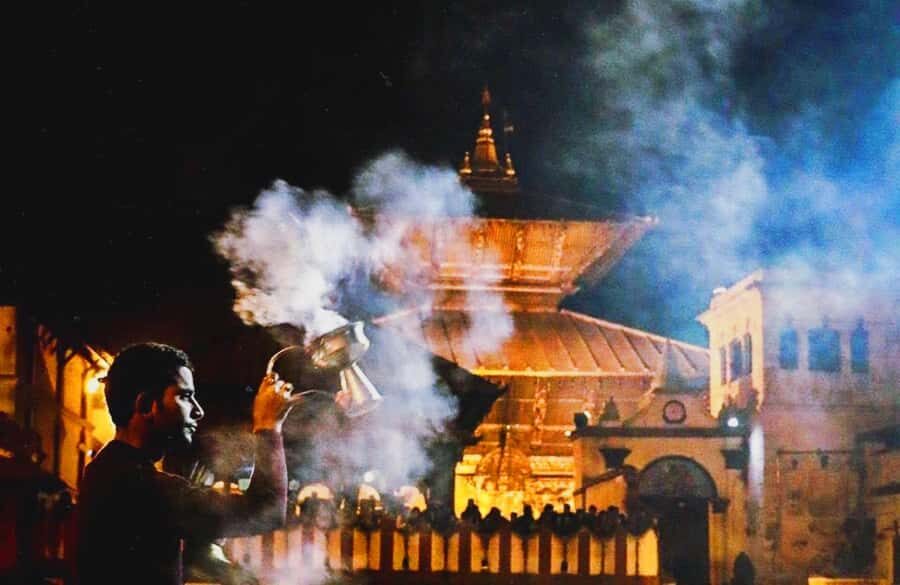
- Evening Aarti at Pashupatinath with priests, chanting, and glowing lamps as night settles in
- Open-air cremation viewing along the Bagmati River, explained with care and context
- UNESCO-level sacred complex exploration with a local English-speaking guide
- Temple details you can actually spot such as the golden roof, intricate carvings, and silver doors
- Private round-trip transport so you spend less time figuring out logistics in Kathmandu
Pashupatinath at night: why this tour timing matters
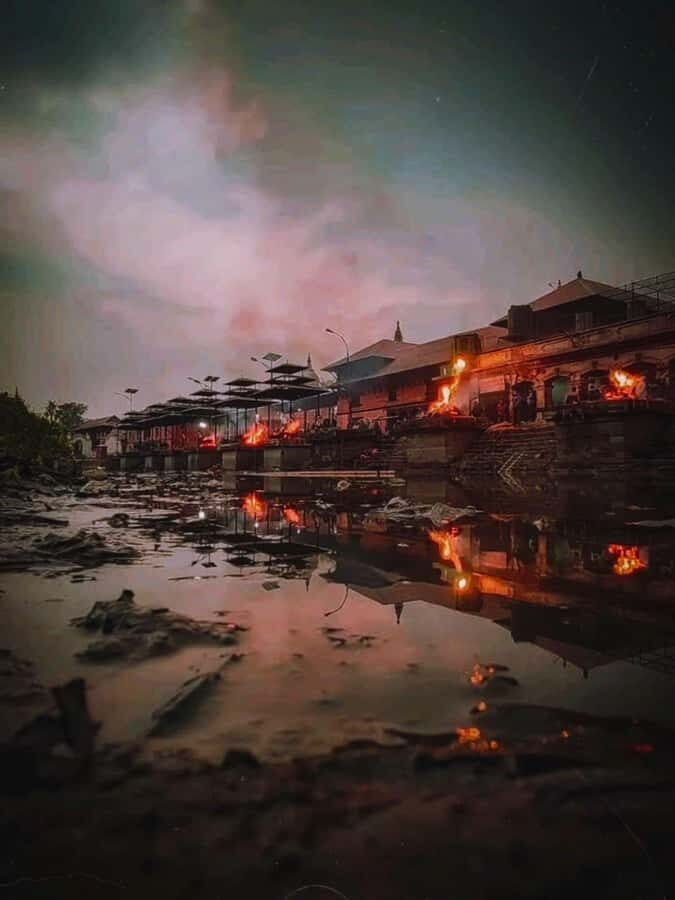
Pashupatinath is impressive any time. But the evening has a different rhythm. As dusk turns to night, the lamps (diyas) and incense create a scene that feels more like a living ritual than a photo stop. That matters, because this is not just about architecture. It’s about how Hindu worship is performed in the moment—chanting, movement, and offerings that keep going even when tourists want still frames.
I also like that the tour doesn’t treat the cremation area like a circus of shock. Instead, your guide helps you connect it to the spiritual beliefs and daily practices around the temple and the Bagmati River. That context shifts your experience from I’m watching something strange to I’m understanding something meaningful. You may still feel uncomfortable at times—that’s normal—but you’ll have tools to handle it with respect.
The other reason timing matters is practical. You go with private transport and an organized guide, so you’re not trying to navigate Kathmandu and arrive with the wrong level of awareness or the wrong clothes. Night tours can be chaotic without structure. Here, the structure is part of the value.
You can also read our reviews of more evening experiences in Kathmandu



Your pickup, your driver, your guide (and how meeting works)
This is a door-to-door experience from your hotel with private round-trip transportation. That’s a big deal in Kathmandu. Traffic, route confusion, and finding the right gate can eat up your attention. Here, you show up, meet your guide, and move with less stress.
Meeting is simple but not hands-off. Your guide will contact you using a Nepali phone number or WhatsApp once you arrive near Pashupatinath. If you need it, you can wait near the main gate, and the guide will direct you from there. Sometimes you may get directions in advance, depending on what the team sends you.
The tour then ends back at the meeting point. No wandering required at the end, and no last-minute “Where do I go now?” moment while it’s dark.
Language support is solid: you’ll get an English-speaking guide, with Hindi also available. That matters when you’re trying to understand religious meaning, not just hear basic facts.
Exploring the UNESCO temple complex with a local lens
Pashupatinath isn’t just a temple. It’s a UNESCO World Heritage site tied to Nepalese religious life and Hindu tradition. You’ll see the temple’s outer presence and the key architectural elements, guided in a way that helps you interpret what you’re looking at.
A few specifics I’d expect you to notice (and your guide should point out):
- The golden roof
- Intricate carvings on the temple structures
- Silver doors and the way the entrance looks and frames worship areas
But the bigger win is what your guide adds around those details: the temple’s history, its religious importance, and the legends and daily practices tied to Pashupatinath. When you understand why something is placed where it is—why certain areas are approached a certain way, why the Bagmati River is central—your photos stop being random pixels.
I also appreciate that the explanations are built for real visitors, not academic lectures. If your aim is to be respectful and get it right, a guide who tells you what to watch for helps you avoid accidental disrespect. One review specifically praised Santosh for giving clear information and guidance that helped the visitor respect other cultures.
The evening Aarti ritual: what you’ll experience step by step
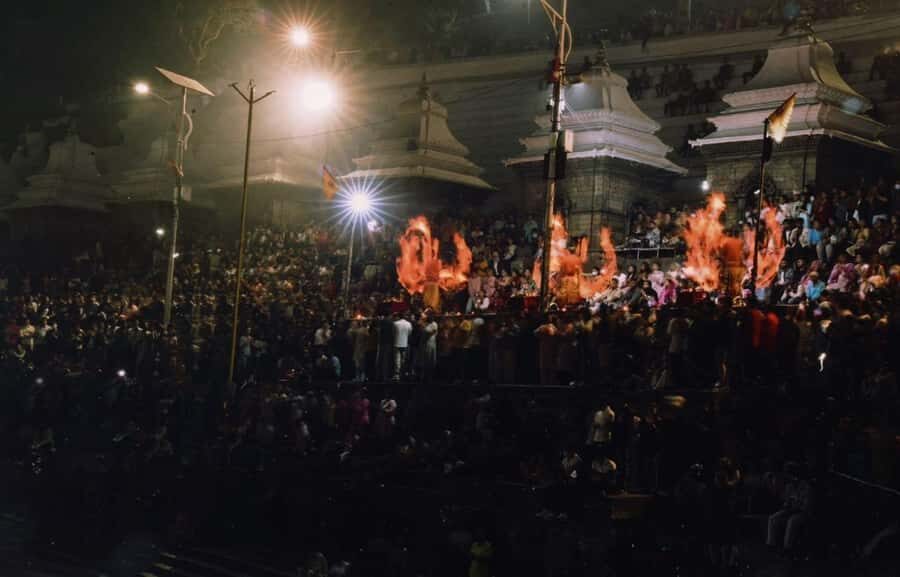
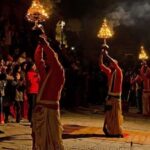
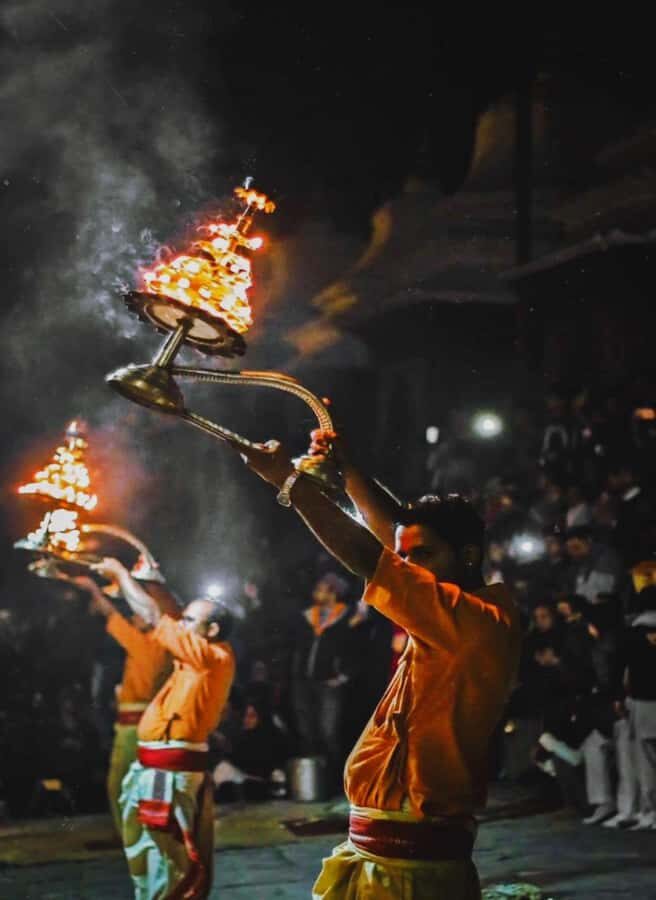
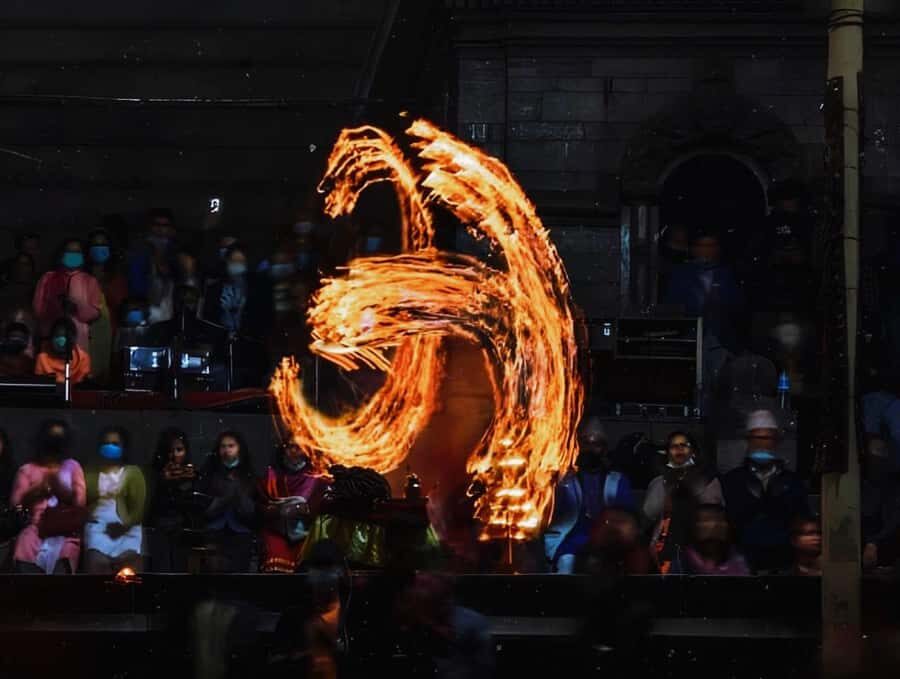
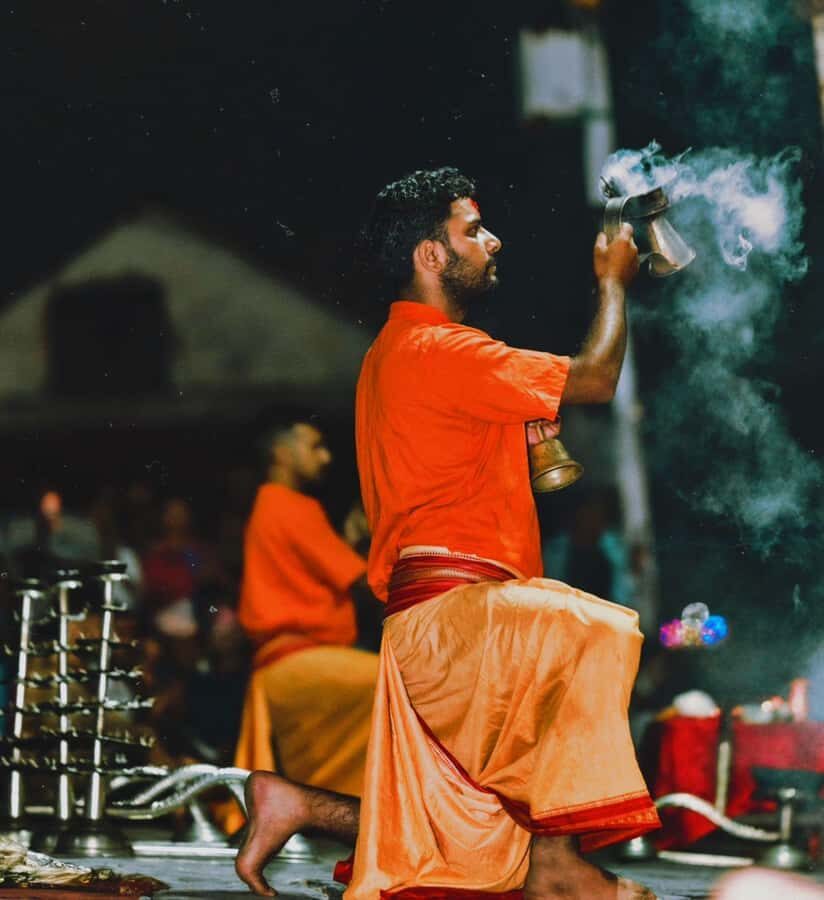
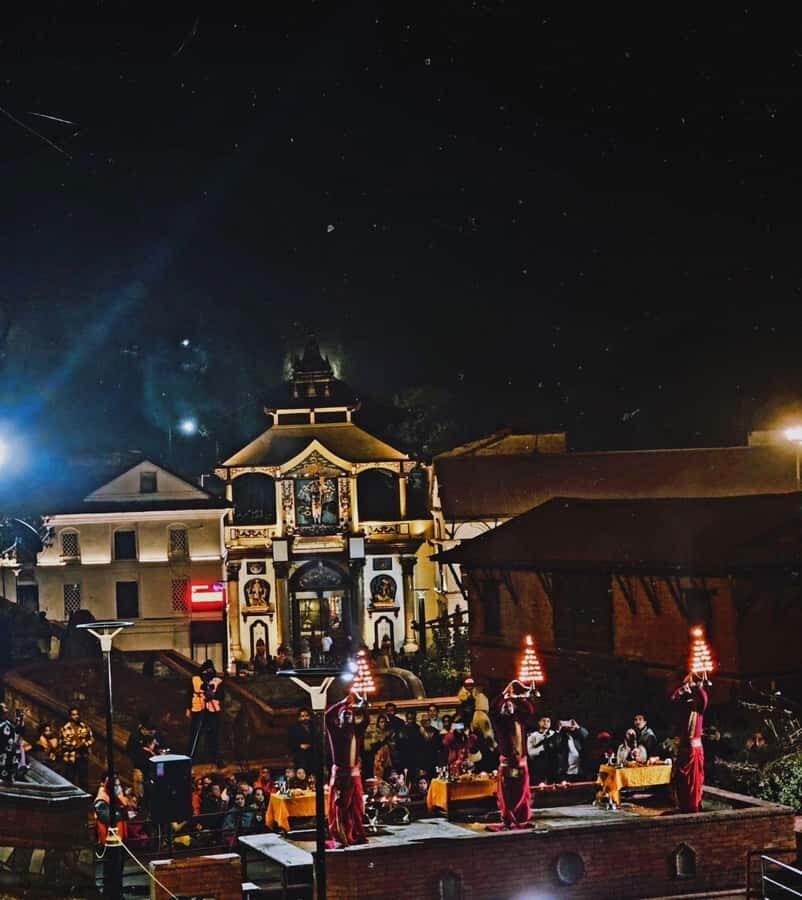
As night falls, Pashupatinath comes alive. This is where the tour earns its name. You’ll witness the Aarti at the evening/night service—priests performing the ritual as chanting fills the air, lamps glow, and incense hangs around the temple area.
Here’s what to expect in the feel of it:
- You’ll see priests in action, not just a static ceremony
- The lighting changes the entire mood: lamps and firelight read differently at night than in daylight
- The chants create a steady rhythm, so you notice the ritual’s pacing
The Aarti itself is a visual language. Even if you don’t know every term, you can grasp the structure: preparation, offerings, synchronized movement, and the way worship continues around the sacred space. The guide’s job is to translate the meaning so you’re not guessing.
One more practical note: you’ll be photographing and looking constantly, but don’t forget you’re also in a working religious environment. The best viewing comes when you stay aware of your position and let the ritual flow.
Open-air cremation viewing on the Bagmati River (and how to handle it)
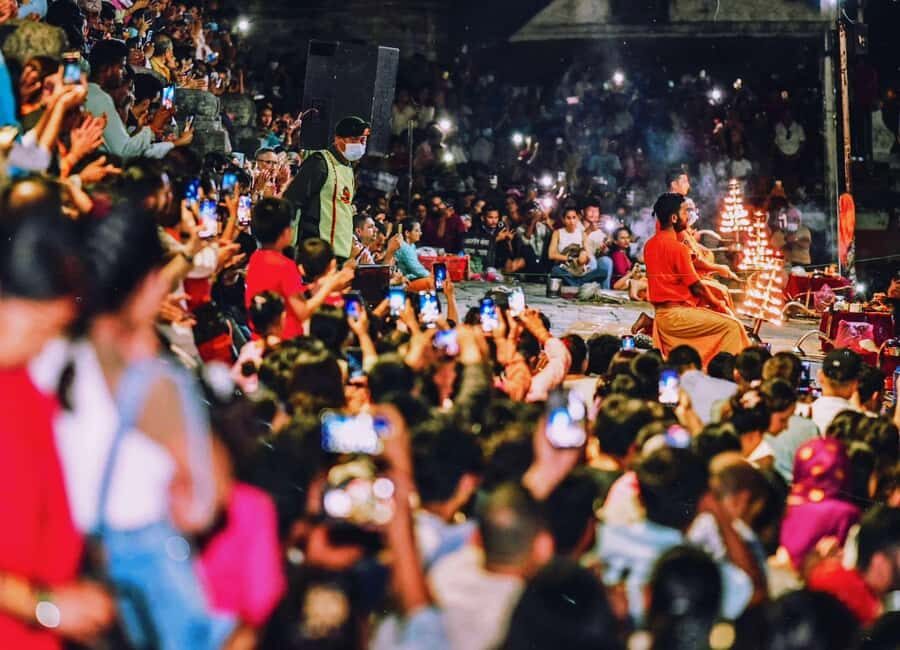
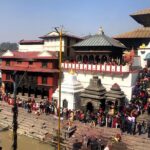
This is the part most people remember, for good and for hard reasons. The tour includes witnessing open-air human cremation in the evening. The setting is the Bagmati River area around Pashupatinath, which is part of why the rituals carry such weight.
I want to be honest: this can feel intense. Even if you travel for culture, seeing cremation practices is not the same as watching a documentary. Your body reacts first—your stomach, your breathing, your urge to look away. That doesn’t mean you did anything wrong. It means you’re human.
What makes this tour workable is guidance and framing. Your guide should explain the religious importance of what you’re observing, helping you understand why this practice happens there and what it symbolizes within Hindu belief. With that context, you’re less likely to treat the scene like spectacle.
You also need to follow behavior expectations out of respect. The tour data is clear about rules:
- Smoking is not allowed
- Flash photography is not allowed
Those restrictions aren’t just for convenience. They help you keep the space calm for worshippers and for people directly involved.
If you know you’re very sensitive to death-related ceremonies, consider whether you’re ready. This tour is for people who can handle spiritual reality with maturity.





What’s included for $43 per person (and what you should expect to pay extra)
At $43 per person, the value comes from what’s bundled. You’re not just paying for entry or a guide walking beside you. You get:
- Private round-trip transport from your hotel
- A professional English-speaking guide
- Entrance fees to Pashupatinath Temple
- Bottled water
That combination matters in Kathmandu. A private driver plus a guide plus entrance fees can easily add up if you piece it together yourself. Here, the package keeps you from wasting time bargaining or figuring out where the fees are paid.
What’s not included:
- Meals (dinner can be arranged upon request)
- Personal expenses like souvenirs or extra snacks
So plan around food. Evenings can run longer than you expect when a ceremony is involved, and you’ll likely want calm energy for the moment. If you want dinner after, ask ahead so the timing fits your day.
Dress code, camera rules, and what to bring for a night visit
This is one of those tours where what you wear affects your whole experience. The dress code is modest: cover shoulders and knees out of respect for the sacred space. If you show up in shorts or a tank top, you risk delays or being unable to move comfortably.
Bring:
- Comfortable shoes (you’ll be standing and walking on uneven areas)
- Warm clothing (evenings can cool down)
- A camera (this is strongly encouraged)
A few strict rules you must follow:
- No smoking
- No flash photography
Also remember wheelchair access is limited because the temple is ancient and the structure is not set up for smooth accessibility.
If you’re thinking, I’ll just wear something quick—don’t. Take 30 seconds before you leave the hotel and adjust your outfit. It’s the easiest way to be respectful and avoid a stressful scramble.
How to get the most out of the Aarti and cremation parts
If you want this to feel meaningful (not chaotic), do three things:
First, slow down during the Aarti. It’s tempting to rush for the best angle, but the best viewing usually comes from watching the flow and letting the ritual come to you.
Second, ask your guide one or two focused questions. This is where an English-speaking guide earns their pay. Use them for meaning, not trivia. Why here? Why now? What should I notice in the chanting or the lamps?
Third, keep your camera settings simple. Flash is banned, and you’ll be dealing with low light. If you don’t handle low-light photos well, you might spend energy fiddling with settings. Better to capture a few solid frames than to shoot nonstop and miss the actual moment.
If your guide is Santosh, you’ll likely appreciate the kind of clarity and guidance highlighted in one of the top reviews. Clear guidance helps you behave correctly in a space where small mistakes can feel big.
Who should book this Pashupatinath night tour (and who might skip)
I’d recommend this tour for you if:
- You want a spiritual and cultural experience, not a casual sightseeing circuit
- You value context from a local guide
- You’re comfortable with serious religious practices, including cremation rituals
- You prefer private transport so your evening isn’t derailed by city logistics
I’d be cautious if:
- You’re sensitive to death rituals or strong visuals
- You need wheelchair-friendly access, since access is limited
- You strongly dislike restrictions around photography or behavior in sacred spaces
This is not a tour for people who only want temples as backdrops. It’s about witnessing ceremonies and understanding what they mean.
Price and logistics: is $43 worth it?
For $43 per person, you’re paying for four concrete things: private transport, a professional English guide, entrance fees, and bottled water. That’s a fair structure for a night experience where timing and coordination matter.
The main hidden cost isn’t money. It’s emotional readiness. You may feel uneasy seeing open-air cremation, even with respectful framing. If you’re okay with that reality, the rest is well handled by the guide and the private logistics.
If your plan is to do Pashupatinath at night anyway, buying it as a guided package can be the easiest way to save stress and get proper context. If you only want a quick look at a landmark during daylight, you might decide this isn’t your best match.
Quick FAQ for Kathmandu: Pashupatinath Aarati & Cremation Evening Tour
FAQ
What is included in the tour price?
The tour includes private round-trip transportation, an English-speaking guide, entrance fees to Pashupatinath Temple, and bottled water.
Is the Aarti included?
Yes. You’ll witness the Pashupatinath Aarti in the evening/night as part of the tour.
Do I need to buy temple entrance tickets?
No. Entrance fees to Pashupatinath Temple are included.
Will I also see open-air cremation?
Yes. The experience includes witnessing open-air human cremation in the evening.
What’s the dress code?
Dress modestly. Cover shoulders and knees to respect the sacred space.
Are there rules about photography?
Flash photography is not allowed. Smoking is also not allowed.
Where do we meet the guide?
You start at Pashupatinath Temple. The guide contacts you via Nepali phone number or WhatsApp. You can wait near the main gate if needed.
Is it suitable for wheelchair users?
No. It is not suitable for people with mobility impairments or wheelchair users, because access is limited due to the ancient structure.
Can I pay later or book now?
Yes. Reserve & Pay Later is offered, so you can reserve your spot and pay nothing today.
Should you book this tour?
If you’re the type of traveler who wants the real rhythm of Nepalese Hindu practice—lamps, chanting, sacred architecture, and even the difficult part of cremation—then yes, book it. The private transport and included entrance fees make it easy, and the guide experience (including praise for Santosh’s clear guidance) is exactly what helps you stay respectful in a place where respect matters.
If you’d rather keep things lighter, or if cremation rituals would be too much for you emotionally, consider another Kathmandu option. This one is authentic—and it doesn’t try to soften the reality of the Bagmati River’s role in worship.