REVIEW · HISTORICAL TOURS
Historical Kathmandu
Book on Viator →Operated by Nepal Holiday Makers Tours and Travels · Bookable on Viator
Sacred sights, tight logistics, good timing. This Historical Kathmandu tour strings together major Hindu stops in and around Kathmandu—starting from Thamel—so you’re not wasting your day figuring out how to cross town. I really like the private AC vehicle with hotel pickup/drop, and I like that the schedule hits iconic temples like Pashupatinath while you’re still within the day’s opening windows. One drawback to keep in mind: at least one past booking reported a pickup/guide mix-up and waiting time, so I’d confirm the exact meeting instructions the day before.
What makes this day work for most people is the stop-by-stop pacing. You get a clear sequence (Pashupatinath, Budhanilakantha, Guhyeshwari, Doleshwor Mahadev, then Patan Durbar Square) with a driver handling the road time. I also appreciate that water is included (1000 ml per person), because temple days in Kathmandu can get warm fast—especially if you’re stopping often for photos and details. The only real “watch-out” is that entrance fees are not included at some stops, so bring a bit of cash or plan ahead.
I also like the human side of this operator. In the feedback I read, one driver named Nethra got called out for being helpful, and a tour contact named Dipak was thanked for making the journey smoother. Still, if your wider package involves specific hotels, there’s at least one mention of issues at Hotel Samsara and a coordination problem tied to Kantipur—so double-check anything beyond the tour itself.
In This Review
- Key points to know before you go
- Why This Kathmandu Hindu Temple Circuit Works So Well
- Getting Started in Thamel: The Real-World Logistics
- Stop 1: Pashupatinath Temple Near the Bagmati River
- Stop 2: Budhanilakantha Temple and the Reclining Vishnu
- Stop 3: Guhyeshwari Shaktipeeth Right Beside Pashupatinath
- Stop 4: Doleshwor Mahadeva Temple and the Bhaktapur Connection
- Stop 5: Patan Durbar Square and Krishna Mandir’s Stone Details
- Price and Value: What $160 Really Buys You
- Timing, Comfort, and Temple Etiquette (Without Guesswork)
- The Best Fit: Who Should Book This?
- A Quick Note on Service: What to Watch
- Should You Book Nepal Holiday Makers Historical Kathmandu?
- FAQ
- How long is the Historical Kathmandu tour?
- What does the tour price include?
- Are entrance fees included for the temples?
- Where do I meet for the tour?
- Is this a private tour?
- Can I cancel and get a full refund?
Key points to know before you go
- A private, point-to-point day: hotel pickup/drop plus a private AC vehicle for the full route
- Temple timing matters at Pashupatinath: opening hours are listed (morning and late afternoon)
- Not every stop includes admission: some temples are marked ticket-free, others not included
- Guhyeshwari is close by: it’s situated beside Pashupatinath, so the short stop still feels efficient
- You’ll stretch into Bhaktapur briefly: Doleshwor Mahadeva is located there, adding variety
- One logistical complaint exists: a guide/pickup no-show was reported once, so confirm details in advance
Why This Kathmandu Hindu Temple Circuit Works So Well
Kathmandu can be a maze of streets, crowds, and sudden road changes. This tour cuts through that by keeping things in a practical order, with a private driver and a vehicle that handles the distances. The value here isn’t just the sites—it’s the reduced friction. When you’re trying to see multiple major temples in one day, transport headaches can eat the whole schedule.
I also like that the day is designed around Hindu sightseeing that people actually prioritize: Pashupatinath Temple, Budhanilkantha Temple, Guhyeshwari Shaktipeeth, Doleshwor Mahadeva, and Patan Durbar Square. Even if you’re not a hardcore ritual-person, you’ll notice the different architectural styles and the way each place pulls you into a different mood—river-side Shiva energy at Pashupatinath, Vishnu imagery at Budhanilakantha, Shakti symbolism at Guhyeshwari, and then the Bhaktapur-Patan mix.
The route also helps you pace your walking. You’re not doing one-mile hikes between temples. Some stops are short by design (like the 30-minute Guhyeshwari), while others give you time to linger (Pashupatinath and Doleshwor Mahadeva are allocated longer).
You can also read our reviews of more historical tours in Kathmandu

Getting Started in Thamel: The Real-World Logistics
You’ll meet in Thamel, Kathmandu (44600). The start time is 9:45 am, and the activity ends back at the meeting point. That timing matters. Pashupatinath has listed opening windows—5:00 am to 12:00 pm, and then 4:00 pm to 7:00 pm—so a 9:45 start puts you in the morning session. It’s one of the reasons this itinerary works: you’re arriving in a time window that’s built for sightseeing.
This is also a private tour/activity, meaning it’s only your group. That’s a big deal if you want control over your pace—stop for a photo, take five minutes to step back, ask questions—without feeling rushed to keep up with strangers.
One more practical perk: you get a mobile ticket. That can save you time standing around, especially if the operator’s setup is smoother than the typical “where do I stand?” chaos.
Stop 1: Pashupatinath Temple Near the Bagmati River
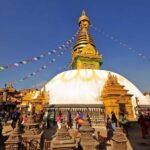
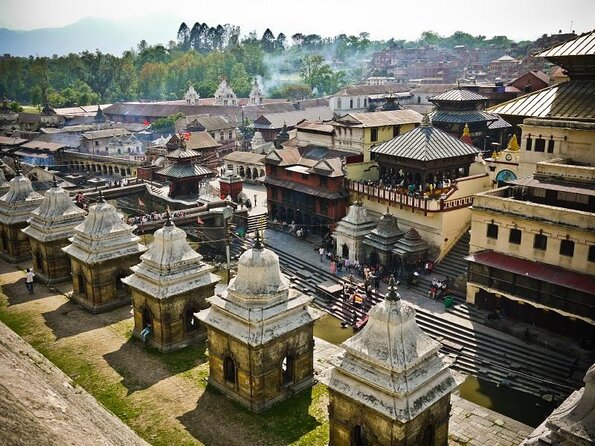
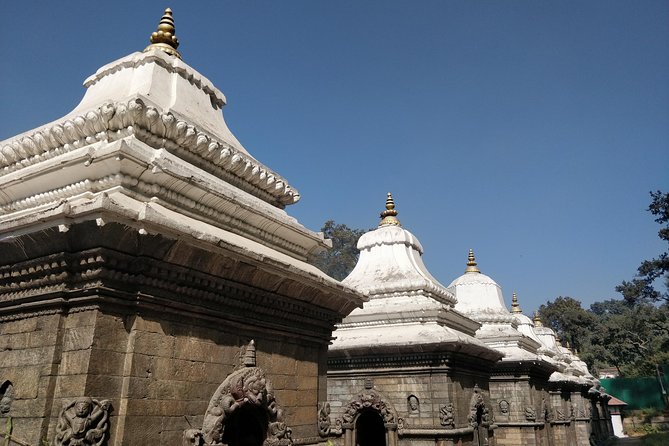
Pashupatinath is one of the biggest Hindu temples dedicated to Lord Shiva, and the location is part of the experience. It’s set along the Bagmati River and near Bankali Forest, so the scene isn’t just stone and flags—it’s river edge, sacred atmosphere, and a lot of people moving for different reasons.
The tour gives you about 2 hours, and it clearly notes that admission ticket is not included. Plan for that. Also plan your energy, because this is the kind of place where you’ll naturally slow down. You may want to take time simply watching how people approach different areas, how devotees behave, and how the space is arranged for worship.
A key timing detail: the temple is listed as open 5:00 am–12:00 pm, then 4:00 pm–7:00 pm. Since you’re starting at 9:45 am, you’re in the first window. That’s ideal because you avoid the need to cram everything into the late-day hours when the crowds (and your patience) can feel different.
Etiquette-wise, this is a Shiva temple in active religious use. You’ll want to dress appropriately and be mindful of where you’re allowed to stand, photograph, or linger. The tour doesn’t list dress code rules, so assume standard respect: shoulders covered when needed, calm behavior, and ask your driver if you’re unsure about what’s allowed.
Stop 2: Budhanilakantha Temple and the Reclining Vishnu
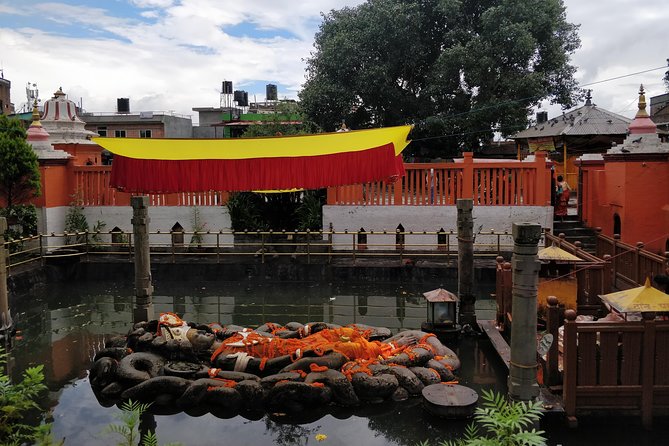
Next comes Budhanilakantha Temple, an open-air Hindu temple dedicated to God Vishnu. This stop is about 1 hour, and it’s listed as admission ticket free, which is a nice value add.
What makes Budhanilakantha memorable is the pool and the reclining statue of Vishnu. Even if you don’t read the symbolism deeply, the visuals are distinctive: a still, monumental figure resting in a water setting. The temple is also known as Narayanthan, and it’s believed to be among the oldest temples of Kathmandu. That age detail matters less as a trivia point and more as a reason the site feels established, not like a modern “tour stop.”
Because this is open air, wear shoes you can walk in comfortably. You’ll want freedom to move around and see the pool area from different angles.
Stop 3: Guhyeshwari Shaktipeeth Right Beside Pashupatinath
Then you move to Guhyeshwari Shaktipeeth Temple, and the itinerary keeps it efficient: about 30 minutes, admission ticket free. The big advantage here is location—this temple is just beside Pashupatinath—so you’re not losing the day to transport.
Guhyeshwari is dedicated to Goddess Parwati (with a Shaktipeeth focus). The temple is said to have been built by Pratap Malla around the 17th century, and it’s believed to be the spot where Sati’s hips or hind part appeared in the Shakti mythology. You don’t need to memorize the legends to appreciate the site. You’ll likely feel it in the attention people give to the sacred space.
Because the time is short, I’d treat this as a “hit the key points” stop. Look, observe, and if you want a deeper explanation, ask your driver if they know what matters most to explain on-site. (The tour listing doesn’t include a guide, so this may be limited to what your driver can share.)

Stop 4: Doleshwor Mahadeva Temple and the Bhaktapur Connection
Doleshwor Mahadeva is the itinerary’s longer mid-afternoon stop, with about 2 hours allocated. It’s also listed as admission ticket free. Here’s the useful detail: it’s situated in Bhaktapur. So even though this is branded as a Kathmandu historical tour, you’re getting an added layer by leaving the Kathmandu city core for a bit.
The temple matters to devotees of Lord Shiva, and the description includes a specific myth link to Kedarnath. It says Kedarnath has the body of a bull, while Doleshwor Mahadev has the head of a bull, which is why people consider the Kedarnath trip incomplete without visiting Doleshwor Mahadev. Whether you see it as legend, devotion, or both, it gives you a mental hook while you’re there.
This is also a good pause in the schedule. By now, you’ve already seen the intense Shiva focus at Pashupatinath, the Vishnu image at Budhanilakantha, and the Shakti focus at Guhyeshwari. Doleshwor brings you back to Shiva devotion, but with a different geographic and cultural flavor thanks to Bhaktapur.
For this stop, give yourself time to just sit briefly and watch the flow of people. Two hours can be more than enough if you’re taking photos quickly, but it can also disappear if you want to read every detail—so I’d pace yourself.
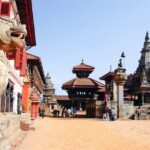
Stop 5: Patan Durbar Square and Krishna Mandir’s Stone Details
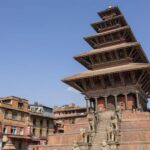
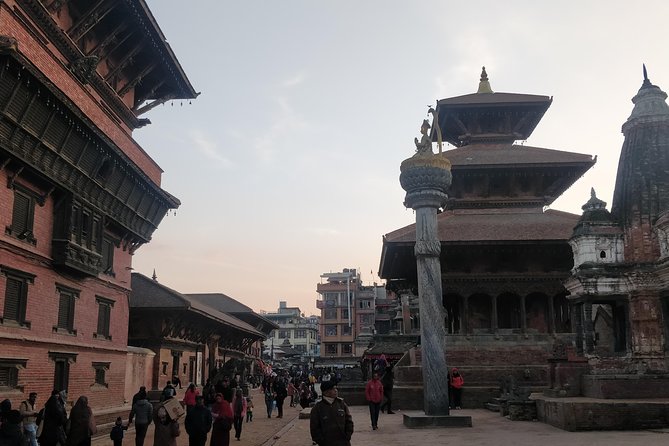
Finish with Patan Durbar Square, and specifically Krishna Mandir. This is the second stop marked as admission ticket not included. You’ll have about 2 hours here.
Krishna Mandir is described as a famous center of attraction for Hindu devotees and tourists, and it’s noted as one of the finest stone monuments. The key date is 1637 A.D., built by Siddhi Narsinha Malla. That builder name is worth keeping in mind because it turns a “pretty temple” into something more grounded: you’re looking at work from a specific ruler’s era.
Patan Durbar Square often rewards slow attention. Even with limited time, you can still get value by noticing stonework patterns, shrine layouts, and how the temple space interacts with the square around it. Since admission fees aren’t included, you’ll want to budget for the site ticket if one is required.
Price and Value: What $160 Really Buys You
At $160, this is a solid deal for a private, full-day temple circuit—assuming you’re okay managing entrance fees at certain stops. Here’s why the pricing can make sense:
- You get a private AC vehicle with a private driver rather than shoehorning yourself into public transit.
- You also get hotel pickup and drop, and a vehicle used for point-to-point sightseeing.
- You receive 1000 ml of bottled mineral water per person per day.
- The package includes all fees and taxes (but it explicitly says entrance fees for the sightseeing points are not included).
In other words: transport, vehicle logistics, and the operating overhead are covered. The only costs you should expect to pay extra are the site entrances where admission ticket isn’t included, plus your own lunch/snacks.
If you’re trying to compare value, think about what you’d pay for a private car plus a day’s worth of time. Then add the fact that the itinerary already selects major religious sites in one line. That’s the practical win.
Timing, Comfort, and Temple Etiquette (Without Guesswork)
This is a day that mixes short stops and longer ones, so plan your body for walking on temple grounds. It’s not a trekking itinerary, but you’ll move more than you might expect. Wear comfortable shoes you can keep on for hours.
Food is the other planning item. Lunch and snacks are not included, so you’ll want to eat before you start, or have a plan for a midday meal near your last stops. Since the tour ends back at Thamel, it’s often easiest to handle food earlier in the day and then come back for dinner afterward.
Entrance fees are the big financial variable. Two stops are listed as admission not included: Pashupatinath and Krishna Mandir/Patan Durbar Square. The other stops (Budhanilakantha, Guhyeshwari, Doleshwor Mahadeva) are listed as ticket free. That structure helps you estimate your extra costs without surprises.
Finally: since you’re visiting active religious sites, keep your behavior respectful and follow any on-site directions. If you’re unsure about photography rules, pause and look for cues from the people around you. When in doubt, ask your driver.
The Best Fit: Who Should Book This?
This tour is best if you want:
- Major Hindu temple sightseeing in one day without puzzle-solving transport
- A schedule that starts in the morning and includes enough time to see key places like Pashupatinath
- Private comfort (AC vehicle, your group only) and predictable pacing
- A route that includes Patan and also reaches Bhaktapur via Doleshwor Mahadeva
It’s likely less ideal if you dislike temples, want lots of free time to wander independently for hours, or you want every single stop’s entrance fees included.
A Quick Note on Service: What to Watch
The overall feedback you can see from the operator’s pattern is strongly positive: good vehicles, cooperative drivers, and smooth planning. A driver named Nethra was specifically mentioned as helpful, which lines up with the kind of day you want—one where someone else handles the turns and you focus on seeing.
But there is one clear operational caution: one booking complained that the guide never came and they waited an hour. That’s rare, but it’s enough to take seriously. If you book, confirm the exact pickup point and time details, and be ready at the meeting location early. Temple mornings leave zero room for chaos.
Also, since this tour includes hotel pickup/drop, keep an eye on your hotel experience if your broader trip package includes it. One review mentioned water problems at Hotel Samsara and a coordination issue connected to Kantipur. That’s not a tour-site issue, but it can affect your comfort before and after a long temple day.
Should You Book Nepal Holiday Makers Historical Kathmandu?
Yes—if your goal is a practical, private Kathmandu Hindu temples route that includes the big names and also gives you time to actually look, not just transit.
I’d book this when:
- You’re staying near Thamel and want a morning start at 9:45 am
- You’re comfortable paying entrance fees at sites where admission isn’t included
- You value having a driver handle logistics more than you value a guided lecture
I’d think twice if:
- You’re the type who needs absolutely perfect pickup reliability and zero chance of waiting (because one past complaint exists)
- You want lunch/snacks included, since those are on you
Bottom line: for a single-day temple focus with private transport and sensible stop planning, this is a good match—and it’s priced like you’re buying convenience as much as sights.
FAQ
How long is the Historical Kathmandu tour?
The duration is listed as 1 to 7 hours (approx.), depending on how the day is paced across the stops.
What does the tour price include?
It includes a private AC vehicle with private driver, hotel pick up and drop, 1000 ml mineral water per person, and all fees and taxes related to the tour operations. It also includes a sightseeing vehicle on point to point basis.
Are entrance fees included for the temples?
No. Entrance fees are not included for sightseeing points where admission is specifically listed as not included. In the itinerary, Pashupatinath and Patan Durbar Square (Krishna Mandir) are marked as admission not included. Other stops are marked as ticket free.
Where do I meet for the tour?
You start at Thamel, Kathmandu 44600, Nepal. The tour ends back at the meeting point.
Is this a private tour?
Yes. It’s a private tour/activity, and only your group participates.
Can I cancel and get a full refund?
Yes. Free cancellation is offered if you cancel up to 24 hours in advance of the experience’s start time for a full refund.