REVIEW · HISTORICAL TOURS
Seven World Heritage Day Tour in Kathmandu Nepal
Book on Viator →Operated by Himalayan Planet Adventures · Bookable on Viator
Seven UNESCO stops in one day? Smart planning wins. This Kathmandu Valley tour strings together major sights and the less-famous ones, using a private vehicle and a local guide so the day feels connected, not like a checklist. I especially like that you cover all seven UNESCO World Heritage Sites in one long push, which saves you from researching transport and sequencing on your own. The main consideration: the tour price does not include food or most site entrance fees, so you’ll want a realistic extra budget and an appetite for a full day.
I also like the human side of this setup: you’re not stuck with a rigid pace. Guides can adjust for comfort, and one guide named Pankaj was praised for going slower and minimizing stair climbing. Another guide, Shanti Karki, is highlighted for clear, detailed explanations that help you understand what you’re seeing instead of just snapping photos.
You’ll pick from multiple morning start times, then ride between sites in a private car for a total of about 10–12 hours. That schedule works best if you start early, wear grippy shoes, and plan to buy snacks or meals between stops rather than expecting everything to be handled for you.
In This Review
- Key things I’d focus on before you go
- Kathmandu Valley’s 7-UNESCO Day Tour: what this rhythm really means
- Morning start and pickup: making the day feel easy
- Stop 1: Swayambhunath Stupa—two entrances, one viewpoint payoff
- Stop 2: Amideva Buddha Park—short stop, strong statue focus
- Stop 3: Kathmandu Durbar Square—history, then the reality of renovation
- Stop 4: Kumari Chowk—meeting the living goddess concept
- Stop 5 and nearby moments in Patan: Durbar Square, Krishna Temple, and bronze-and-brick details
- Stop 6: Golden Temple (Hiranya Varna Mahavihar)—pagoda form with metallic details
- Stop 7: Patan Museum—making the stone make sense
- Stop 8 onward: Bhaktapur Durbar Square and the temple circuit
- Nyatapola Temple—five levels and serious height
- Dattatraya Temple—tree-stem construction detail
- 55 Window Palace and the pocket of calm
- Stop 13: Changu Narayan—often quieter, still UNESCO important
- Stop 14 and 15: Pashupatinath and Boudhanath—closing with major pilgrimage energy
- Pashupatinath Temple—500+ shrines in a large complex
- Boudhanath Stupa—36 meters and a Buddhist mandala center
- Price and what $65 buys you in real life
- How to get the best day out of it (without burning out)
- Should you book the Seven World Heritage Day Tour?
- FAQ
- How long is the Seven World Heritage Day Tour in Kathmandu?
- What is the price per person?
- Are hotel pickup and drop-off included?
- Is this a private tour?
- Which UNESCO sites are included in the route?
- Are food and drinks included?
- Are entrance fees included?
- What tour times are available?
- Can I cancel and get a refund?
- What do I get besides the guide and transport?
Key things I’d focus on before you go
- You get a full “7 UNESCO sites” route in one day, with transport handled
- Private hotel pickup inside the Ring road keeps the morning simple
- Guides can adjust pace, including help with stair climbing
- You’ll cover both big names and smaller temples (not just the popular photo stops)
- Some stops are listed as free, but many entrance fees are not included
- Multiple morning start times help you match the day to your plans
Kathmandu Valley’s 7-UNESCO Day Tour: what this rhythm really means
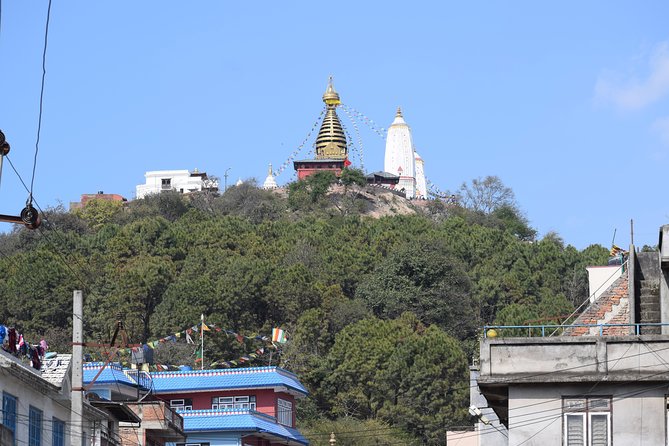
This tour is built for people who want depth without the planning headache. You’re not hopping between separate tickets and bus schedules. Instead, you’re in a private vehicle from place to place, guided by someone who can point out details while you’re still close enough to see them clearly.
The “7-in-one” promise matters because Kathmandu Valley’s UNESCO sites are spread out in a way that can turn a self-guided day into a logistics puzzle. Here, the sequencing is arranged for one-day flow: temples in the western hills area, then the historic squares of Kathmandu and Patan, then the Newari city of Bhaktapur, and finally the Hindu and Buddhist anchor sites toward Pashupatinath and Boudhanath.
The one downside is physical reality. Ten to twelve hours with several heritage stops means walking, uneven stone, and stairs at at least a few locations. If you know you’ll need slower movement, shoes with good traction and a calm pace are your best tools, and this tour’s guides have shown flexibility.
You can also read our reviews of more historical tours in Kathmandu

Morning start and pickup: making the day feel easy
Hotel pickup and drop-off are included as long as you’re inside the Ring road. That detail is small but important: it reduces the “where do we meet?” stress that can eat time on day tours.
You’ll also have multiple morning start times, which can be a lifesaver if you’re planning around jet lag, prior sightseeing, or morning plans like breakfast with your group. The tour runs around 10 to 12 hours, so the earlier you start, the less you feel you’re racing the clock when you’re tired.
One practical note: the tour uses a mobile ticket, which usually means fewer printed documents to keep track of during a busy day. Still, keep an eye on your phone battery and data habits—don’t count on power outlets at temples.
Stop 1: Swayambhunath Stupa—two entrances, one viewpoint payoff
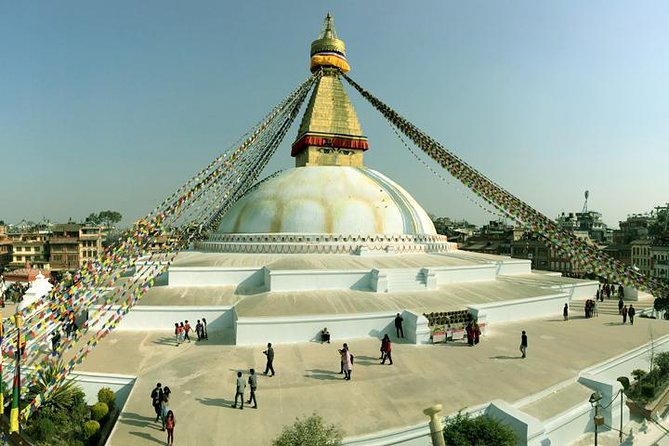
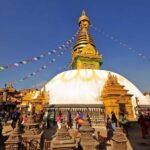
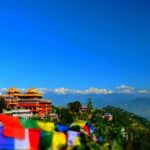
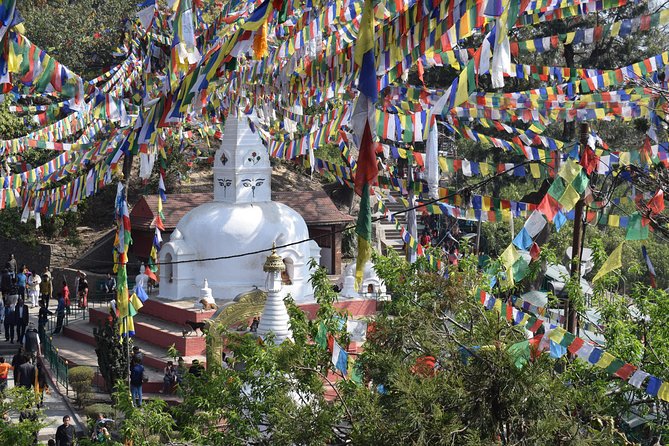
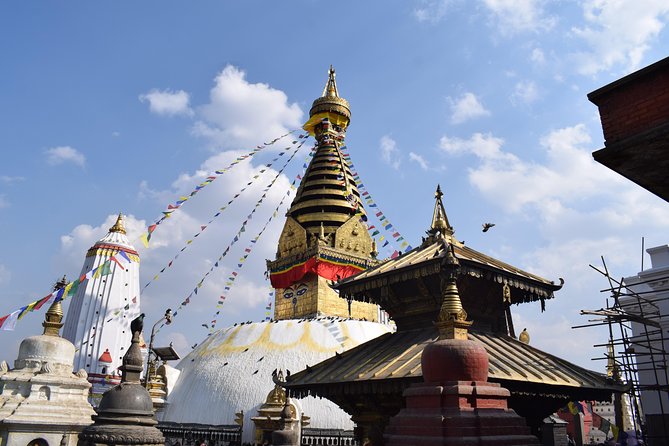
Swayambhunath (often spelled Swayambhunath) is a Buddhist pilgrimage site on the UNESCO list, and the first stop is a strong opener. You’re given a choice of entrances: one is an inclined walk up toward the top, and the other is an alternative route.
That matters if you’re trying to manage energy. The inclined approach is great if you’re feeling steady and want a gradual climb. If you’re conserving stamina, you can use the other entrance option to reduce the steep feeling.
Expect a lot of religious symbolism, plus classic Kathmandu Valley views from higher up. Even if you’ve seen photos before, standing near the stupa complex tends to reset your sense of scale.
Admission here is not included, so budget for entry if you plan to go inside areas that require a ticket.
Stop 2: Amideva Buddha Park—short stop, strong statue focus
After Swayambhunath, the route moves to Amideva Buddha Park. This is a shorter visit, about 30 minutes, and it focuses on big Shakyamuni Buddha statues alongside smaller religious and architectural pieces.
I like this kind of stop because it breaks the “big square, big crowd” rhythm. It’s also a good palate cleanser after the first major heritage site, letting your brain reset before you hit Kathmandu Durbar Square.
This stop is listed as free, so you get more time for looking and less time thinking about tickets.
Stop 3: Kathmandu Durbar Square—history, then the reality of renovation
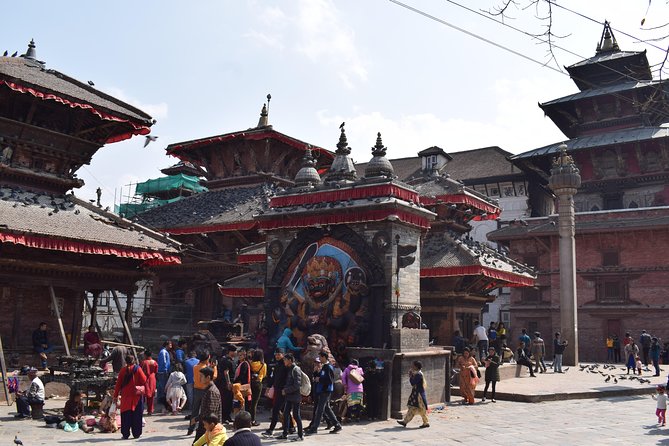
Next comes Kathmandu Durbar Square, another UNESCO World Heritage Site. You’ll see historical and architectural buildings, and the area includes structures that are under construction.
That’s worth knowing before you go. Heritage sites aren’t static museums—they’re living places with ongoing restoration. If you expect everything to look perfectly frozen in time, you may feel a bit disappointed. If you’re okay with seeing heritage in progress, this stop becomes more meaningful because you can better appreciate how preservation actually works.
Admission is not included, and the visit is about an hour. Use that hour wisely: look for architectural details and ask your guide to connect what you’re seeing to the broader Newari urban tradition.


Stop 4: Kumari Chowk—meeting the living goddess concept
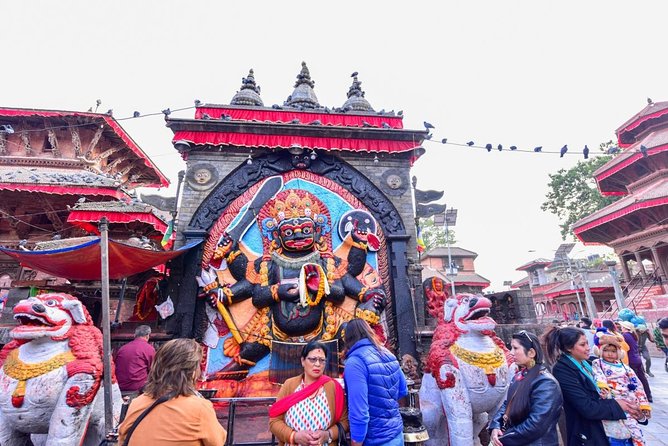
At Kumari Chowk, you’re in a red-bricked courtyard described as three-level in structure. This is where the living goddess resides.
The Kumari tradition is a Newari practice: a girl is selected as the living form of the goddess until she reaches puberty. It’s a real and socially important part of Kathmandu’s cultural and religious life, not just a tourist concept.
The visit here is brief—about five minutes—and it’s listed as free. Even so, it can be one of the most memorable moments on the day because it ties the city’s heritage to an ongoing living institution.
Stop 5 and nearby moments in Patan: Durbar Square, Krishna Temple, and bronze-and-brick details
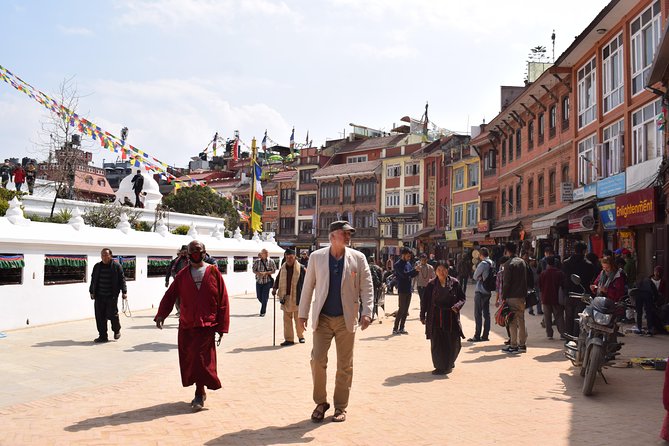
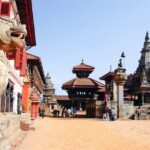
From Kathmandu you move to Patan Durbar Square in Lalitpur. This place is described as the courtyard of the historic Malla palace and a treasure chest of Newari architecture. The square features crimson-brick flooring and a dense layout of temples and stone features.
This stop is about an hour, and admission is not included. I suggest you treat this like an architecture walk: slow down, look at carvings, and let your guide point out what’s decorative versus what’s meaningful in layout.
The itinerary also includes a look at Krishna Temple stone architecture, including mention of 21 shrines and carvings connected to the Ramayana and Mahabharat. That combination—temple plan plus storytelling carvings—is exactly the kind of “why this matters” connection a guide helps you notice.
Stop 6: Golden Temple (Hiranya Varna Mahavihar)—pagoda form with metallic details
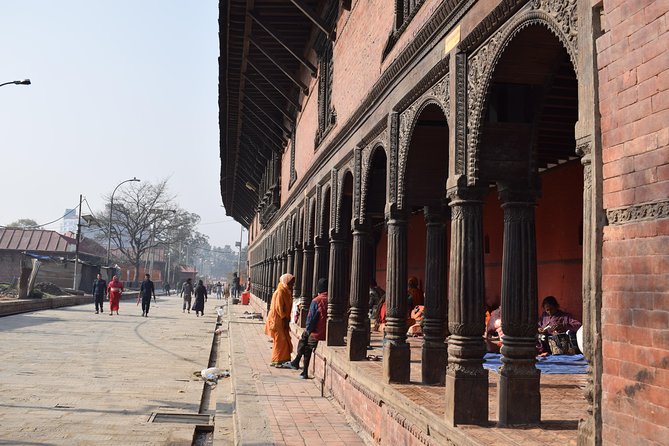
Next is Golden Temple, also called Hiranya Varna Mahavihar. It’s described as a 12th-century pagoda-style temple with bronze statues and silver and gold decorations.
The visit is short—about 15 minutes—and admission is listed as not included. Still, don’t rush this one. Metallic ornamentation looks best when light hits it cleanly, and your guide can help you interpret what you’re seeing.
If you’re tired, this quick stop can actually feel good: it keeps you from losing the thread of the day’s sightseeing while still adding variety.
Stop 7: Patan Museum—making the stone make sense
After the temples, you get a museum break at Patan Museum, located at Keshav Narayan Chowk within the Patan Durbar Square area. The museum includes records about ancestors’ lifestyles and artifacts.
This stop is about 30 minutes and admission is not included. I like this as a mid-day brain reset. Museums can feel like an add-on, but here it often helps you understand what the carvings and architecture were meant to communicate.
If you only have energy for one “sit and learn” moment in the day, make it this one. It can turn a pile of sights into a connected story.
Stop 8 onward: Bhaktapur Durbar Square and the temple circuit
Bhaktapur is where the day starts to feel like a different world, because Bhaktapur Durbar Square is described as the City of Devotees and a strong Newari culture and architecture hub.
The visit is long—about two hours—and admission is not included. This is your chance to really absorb how Newari urban design works in practice: courtyards, aligned buildings, and temple presence integrated into everyday space.
Nyatapola Temple—five levels and serious height
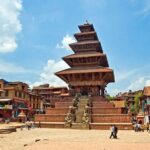
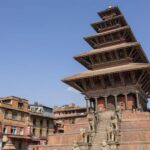
You’ll then visit Nyatapola Temple, a five-level pagoda-style temple described as over 30 meters tall. The stop time is around 10 minutes, and it’s listed as free.
This is a great spot for a quick “shape and scale” moment. Even in a short visit, it’s hard not to notice the dramatic vertical composition.
Dattatraya Temple—tree-stem construction detail
Next is Dattatraya Temple at Dattatreya Square. The description says it was constructed using the stem of a single tree, and the temple is described as massive. Admission is free and the visit is about 15 minutes.
This is the kind of detail that’s worth listening for. Structure stories like this help you see the temple as a crafted engineering and religious work, not just a photograph.
55 Window Palace and the pocket of calm
Back at Bhaktapur’s 55 Window Palace, you’ll find a structure with exactly 55 carved windows and multiple courtyards connected together. Admission is listed as free, and the time is around 15 minutes.
Shortly after, there’s Siddha Pokhari, a human-made pond measuring 171 meters long and 3 meters deep. This is listed as free and about 15 minutes, and it’s described as a hangout place with a good ambiance.
I like this addition because it gives you an honest pause in the middle of heavy heritage sightseeing. It’s not a temple stop—it’s a chance to rest your legs, drink water, and watch daily life happening alongside UNESCO structures.
Stop 13: Changu Narayan—often quieter, still UNESCO important
The tour continues to Changu Narayan Temple, described as the least visited of the UNESCO World Heritage Sites. It’s also framed as a gem waiting to be discovered, with Newari craftsmen doing traditional carvings.
The visit is about 30 minutes, and admission is not included. The “least visited” angle matters here: if you’re the kind of person who cares about being able to actually look closely, this stop can feel more relaxed than the more famous sites.
Changu Narayan is a good match for travelers who like craftsmanship and detail work, since the description centers on traditional carving work.
Stop 14 and 15: Pashupatinath and Boudhanath—closing with major pilgrimage energy
Pashupatinath Temple—500+ shrines in a large complex
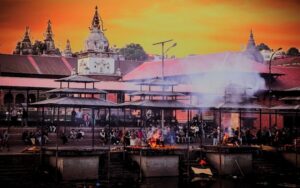
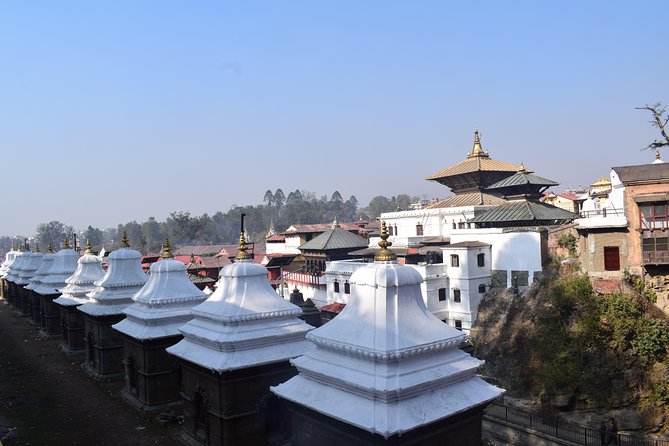
Next is Pashupatinath Temple, described as the greatest temple complex in Nepal. The complex is said to house over 500 temples and shrines across 0.64 hectares.
The stop here is about an hour, and admission is not included. This is one of those sites where the sheer density of sacred spaces can be overwhelming. Let your guide orient you: if you know what to look for, you’ll feel less like you’re walking through noise and more like you’re understanding a sacred geography.
Boudhanath Stupa—36 meters and a Buddhist mandala center
Finally you end at Boudhanath Stupa, described as one of Nepal’s greatest mandalas. It’s listed as 36 meters tall, with over 50 gompas around it, and it’s an integral Buddhist pilgrimage destination.
The visit is about an hour and admission is not included. This closing stop is powerful because it shifts your attention from Hindu temple density into a Buddhist architectural focus where circles, prayer, and surrounding monasteries work together as one visual unit.
If you’re still energized at the end of the day, Boudhanath is where you’ll likely feel the best sense of time slowing down.
Price and what $65 buys you in real life
The tour price is $65 per person, and on average it’s booked around 67 days in advance. That long lead time can matter if your trip dates are fixed and you want a specific morning start window.
What you get for the money is straightforward and worth comparing:
- Hotel pickup and drop-off inside the Ring road
- Private vehicle transport between all seven UNESCO sites
- A professional tour guide
- Mobile ticket
What you don’t get is equally important:
- Food and drinks (you can buy at each site)
- Entrance fees for heritage sites according to your choices, and many stops explicitly list admission as not included
So the real value equation is this: if you’d otherwise spend your day figuring out transport, ticketing, and sequencing, the guided private day can be a bargain. If you already plan to hire a guide separately and handle your own rides, then $65 may feel like you’re paying for logistics more than learning. Either way, the “seven sites in one day” structure is the core payoff.
How to get the best day out of it (without burning out)
This tour can be intense, but you can keep it enjoyable.
- Wear grippy shoes for stone stairs and temple steps.
- Bring a small plan for meals since food isn’t included—there are opportunities to buy at sites.
- If you’re sensitive to stairs or long climbs, tell your guide early. The tour has shown it can adjust pace, including minimizing stair climbing.
- Expect to spend energy at the sites, not just while riding. You’ll still have meaningful time at each UNESCO stop, like Bhaktapur’s longer two-hour block and Kathmandu/Patan’s hour visits.
If you’re traveling with limited stamina, consider prioritizing just one part of the valley instead of trying to do it all. One common approach is focusing on Kathmandu-area UNESCO sites only, which can still give you a strong sense of the city’s heritage without the full-day fatigue.
Should you book the Seven World Heritage Day Tour?
Book it if:
- You want all seven Kathmandu Valley UNESCO sites in one day without building a route yourself
- You like guided context—architecture, carvings, and religious traditions explained clearly
- You appreciate the option for multiple morning start times and door-to-door pickup within the Ring road
- Your group is okay with a long day that includes walking and some stairs
Consider skipping (or trimming your plan) if:
- You don’t want to manage additional costs for entrance fees and meals
- You know you struggle with long sightseeing days and multiple temple stairs
- You’d rather move slowly with fewer stops instead of squeezing a lot into 10–12 hours
FAQ
How long is the Seven World Heritage Day Tour in Kathmandu?
The tour typically runs 10 to 12 hours.
What is the price per person?
The price is $65.00 per person.
Are hotel pickup and drop-off included?
Yes. Pickup and drop-off are included for locations inside the Ring road.
Is this a private tour?
Yes. It’s listed as private, meaning only your group participates.
Which UNESCO sites are included in the route?
The tour includes seven UNESCO sites: Swayambhunath, Kathmandu Durbar Square, Patan Durbar Square, Bhaktapur Durbar Square, Changu Narayan, Pashupatinath Temple, and Boudhanath Stupa.
Are food and drinks included?
No. Food and drinks are not included, and you can buy them at each site.
Are entrance fees included?
No. Entrance fees are listed as not included for heritage sites according to your choices (some stops are marked free, others are not).
What tour times are available?
You can choose from multiple morning start times to match your schedule.
Can I cancel and get a refund?
Yes. Cancellation is free if you cancel up to 24 hours in advance for a full refund.
What do I get besides the guide and transport?
The tour includes transport by private vehicle, a professional tour guide, and a mobile ticket.