REVIEW · TEMPLES & STUPAS TOURS
Temples and Stupas Tour in Kathmandu Valley
Book on Viator →Operated by Royal Mountain Travel · Bookable on Viator
Three world-heritage sights, one efficient day. This Kathmandu Valley tour strings together Hindu and Buddhist landmarks with a real guide explaining what you’re looking at, not just where to stand. You’ll visit royal-era courtyards at Durbar Square, the Shiva-focused Pashupatinath complex, and the big Buddhist gravity point of Boudhanath Stupa—with transport and guiding included.
What I like most is the mix of faiths. You’ll see Hindu devotion at Pashupatinath (including the possibility of watching cremation rites if timing lines up), then switch gears to the Buddhist world around Boudhanath. I also really value the English-speaking guide element; people like Ms. Deepa and Kalpana are the difference between photos and understanding.
One thing to think about: entrance fees are not included in the tour price. On one day, a recent guest reported paying 2,000 NPR total (1,000 at two stops), so budget for site entry on top of the $34.
In This Review
- Key things you’ll appreciate
- A 9:00 am Kathmandu loop that saves you from taxi math
- Pashupatinath: Shiva, holy men, and cremation rites you might catch
- Durbar Square in the Lalitpur side: royal courts and Newari detail
- Boudhanath Stupa: Buddhist devotion with Hindu respect nearby
- Price and logistics: what $34 really covers
- The guide factor: Ms. Deepa and Kalpana bring it to life
- How to use the two-hour stops to your advantage
- Who this tour suits best
- Should you book this Temples and Stupas Tour?
- FAQ
- What sites does this tour visit?
- How long is the tour?
- Is the tour price all-inclusive?
- What time does the tour start?
- Where do I meet the tour?
- How big is the group?
- Can I cancel for a refund?
- Do I need to worry about accessibility?
Key things you’ll appreciate
- UNESCO World Heritage stops in a tight, guided loop
- Small group (max 10) with air-conditioned vehicle transport
- Pashupatinath’s Hindu setting with the chance to witness cremation activity
- Durbar Square’s royal-era Newari details tied to the Malla kings
- Boudhanath Stupa’s cross-faith respect, not just for Buddhists
A 9:00 am Kathmandu loop that saves you from taxi math
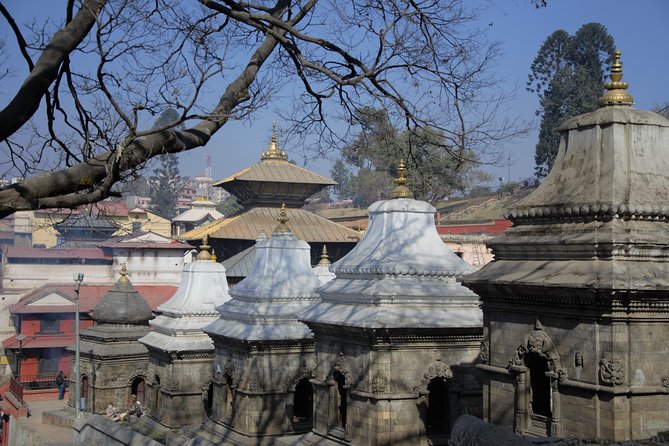
This tour is built for people who want a smart hit of Kathmandu Valley without turning the day into a bargaining exercise. You meet at Royal Mountain Travel on Lal Durbar Marg, and you’re back at the same spot when it ends. The start time is 9:00 am, and the whole thing runs about 7 hours, which generally means steady movement and short, focused stops.
The company keeps the group small—up to 10 people—and uses an air-conditioned vehicle based on group size. That matters in Kathmandu, where traffic can be unpredictable. A small group also makes it easier for your guide to answer questions and keep the timing on track.
If you like to wander, this tour does not ask you to sit still for hours. Each stop is roughly two hours, which is enough time to see the main action and listen, but not enough to fully linger like you would with a private guide. Think of it as a guided orientation day: you get the context first, then you can go deeper on your own later.
You can also read our reviews of more tours and experiences in Kathmandu.
Pashupatinath: Shiva, holy men, and cremation rites you might catch
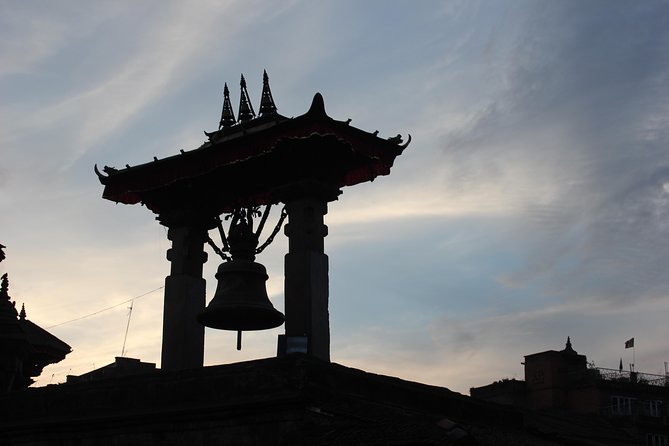
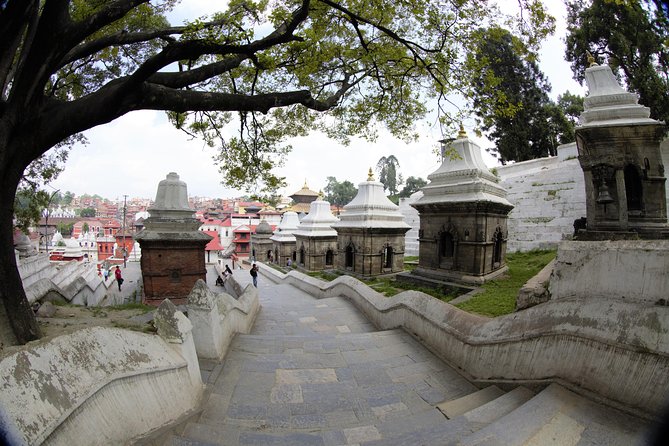
Pashupatinath Temple is dedicated to Shiva, known here as Pashupatinath (the Lord of Animals). It’s one of those places where religion is not a museum label—it’s part of daily life, with devotees and holy men flowing through the complex. The tour focuses on what the site means, not just what it looks like.
You’ll likely notice the mix right away: Hindu visitors offering prayers, priests and attendants doing their work, and a solemn atmosphere that feels very specific to this riverside setting. The day’s description includes the possibility of seeing a cremation, and that’s the main reason many people come here. If timing lines up, you may witness cremation activity at the ghats; if not, you’ll still get the strong context of why this temple is treated as a final destination for Hindu devotees.
Two practical notes:
- This is a functioning religious site, so photography rules and movement patterns can vary. I’d treat the space with extra patience and watch what others are doing.
- Because the tour gives you about two hours here, you’ll want to decide early whether you want more time for prayer activity or more time for the river/ghat area.
Durbar Square in the Lalitpur side: royal courts and Newari detail
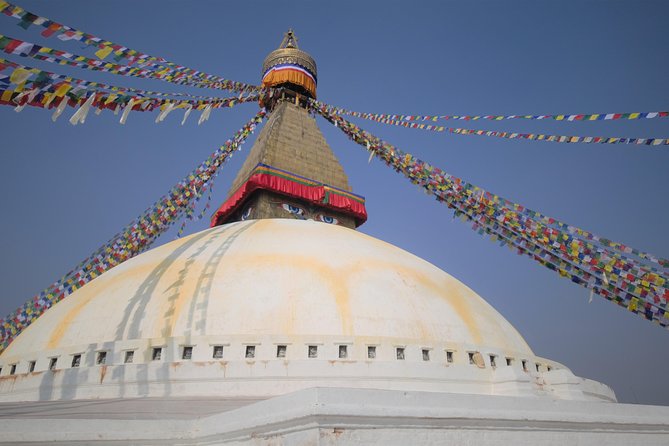
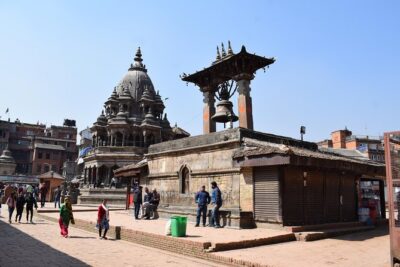
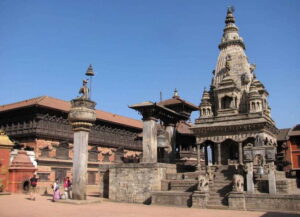
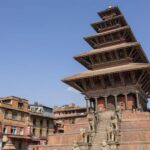
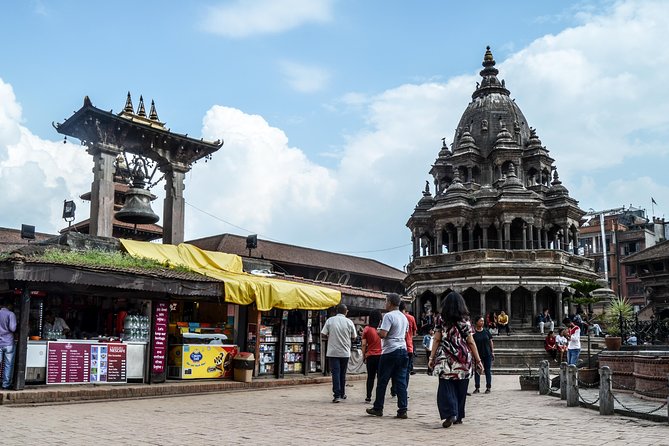
Next comes Durbar Square. The wording for this stop points you to the Patan Durbar Square area, described as a UNESCO World Heritage site in Lalitpur with Newari architecture and deep historical ties. You’ll hear how these courtyards once functioned as royal palace spaces for the Malla kings.
This is the stop where the “it’s all just temples” mindset falls apart. The value of a guided visit here is that you start seeing patterns: carvings, temple forms, the way the courtyards connect, and why certain spaces mattered to royal life. Without a guide, you might walk through beautiful architecture and still miss the point of it.
The trade-off is time. Two hours goes fast in a complex like this. If you’re the type who wants to read every plaque or photograph every doorway, you’ll feel the pressure. But if you’re happy with a “see the main layout + learn what you’re looking at” approach, this is a strong match.
Also, this stop is a reminder that Kathmandu Valley is not only about big sights. It’s about the craft and civic identity of the Newari tradition—something you’ll notice more when someone explains what the palace-era spaces were designed to do.
Boudhanath Stupa: Buddhist devotion with Hindu respect nearby
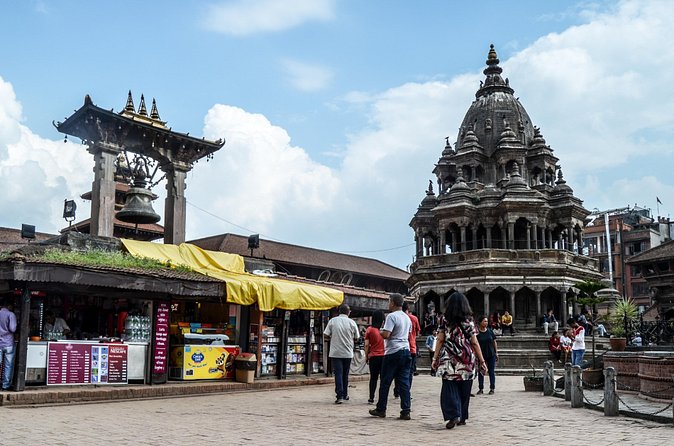
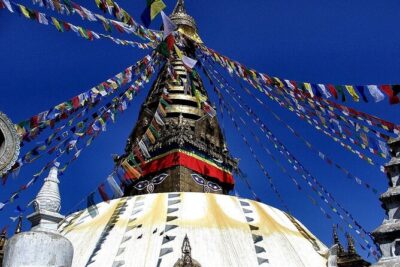
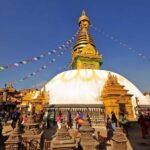
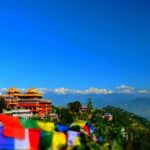
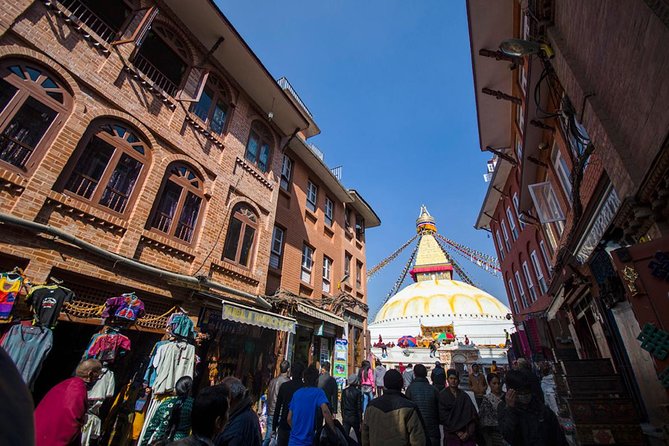
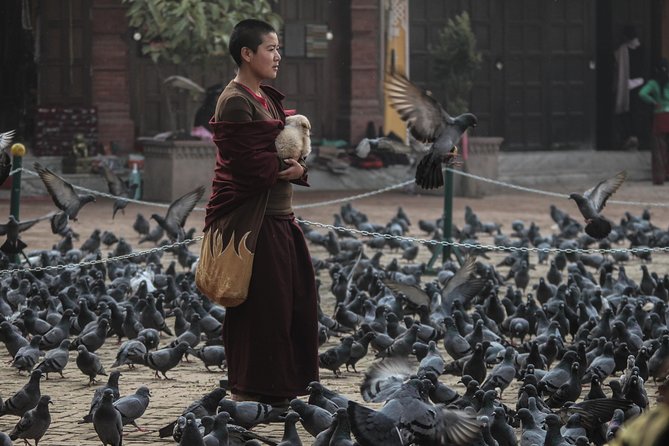
Then you move to Boudhanath Stupa, one of Nepal’s holiest Buddhist sites. The tour frames it as a place with admiration and faith from Buddhists, and it also notes that Hindus in Nepal pay equal respect here. That cross-faith respect is the theme to watch for as you stand around the stupa.
This stop is a different mood from Pashupatinath. Instead of a cremation-and-devotion intensity, Boudhanath feels like a long, steady rhythm: worship, conversation, prayers, and the visible devotion that gathers around a major spiritual landmark.
Boudhanath is also a great “processing” stop. After you’ve gone through the heavy symbolism at Pashupatinath and the royal/cultural layer at Durbar Square, the stupa helps you reset. Two hours gives you time to walk the area, observe how people show respect, and absorb your guide’s explanations—especially the part about why this stupa carries weight beyond just one tradition.
One small caution: Boudhanath can get busy. If you want photos without crowds, don’t assume you’ll get empty angles. Instead, aim for the moment when you can watch the flow of pilgrims and still frame the stupa in your shots.
Price and logistics: what $34 really covers
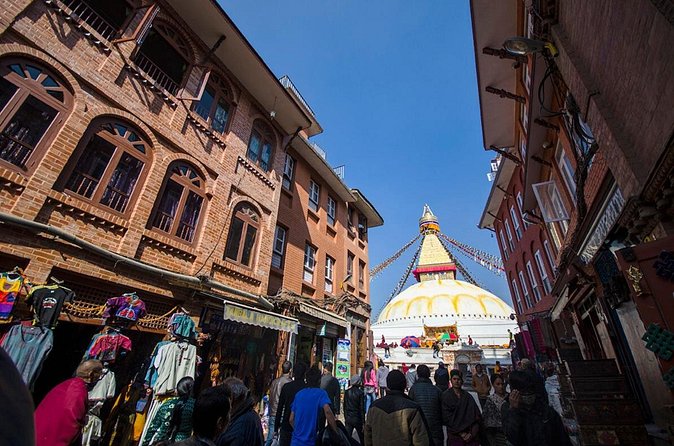
The tour price is $34.00 per person, and it typically gets booked about 15 days in advance. That’s a good sign of steady demand, likely because it’s simple: you get a guided loop through three major sites without negotiating rides all day.
What’s included:
- An English-speaking tour guide
- Air-conditioned transport in a vehicle sized to your group
- Mobile ticket (useful for a smooth check-in)
What’s not included:
- Food and drinks
- Hotel pickup and drop-off
- All fees and taxes
- Entrance tickets at the sites
That last part matters. Even though the tour includes guiding and transport, you still pay for entry where required. One guest reported entrance fees totaling 2,000 NPR, with 1,000 at two stops. Your exact totals can vary by day and by which entrances are charged, but the key takeaway is simple: budget a little extra so you’re not surprised.
At this price, the value is mostly in the guided context and the convenience of having a vehicle do the driving. If you’re the sort of traveler who enjoys reading signs and self-guiding, you could probably piece it together cheaper on your own. But if you want the day to run without taxi math, this is often the cleaner deal.

The guide factor: Ms. Deepa and Kalpana bring it to life
The best part of this tour is not the temples. It’s how the guide turns them into understanding.
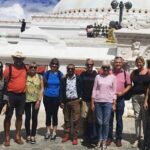
Some guides shine in a way you can feel immediately. In this case, Ms. Deepa was praised for being well organized and teaching history and context in a pleasant way. Another guide, Kalpana, received strong praise for extensive knowledge about local culture and for being happy to answer questions.
That difference shows up in small moments:
- When you can ask what a structure is, and you get an answer that actually connects it to religion and daily life
- When the guide gives you enough background to understand why a cremation area is treated with such significance
- When you walk away from architecture thinking, now I know what those details meant
Are there times when the day can feel quiet between stops? One review noted that the guide and driver spoke in Nepalese during travel, and the commentary didn’t always run nonstop. That doesn’t mean the tour is bad—it just means you should view it as stop-based learning. You’ll get the teaching where it counts, not a constant lecture in the van.
How to use the two-hour stops to your advantage
A 7-hour tour across three major sites is a balancing act. Here’s how I’d make it work best for you.
First, decide your priorities for each stop as soon as you arrive:
- At Pashupatinath, decide whether you want more time on the devotional scenes or on the ghats/cremation area.
- At Durbar Square, focus on the palace-courtyard layout and the Newari architecture details the guide points out.
- At Boudhanath, aim to watch how people move around the stupa and how worship is practiced in this space.
Second, pace yourself. Two hours feels long until you’re surrounded by narrow lanes, crowds, and meaning in every direction. If you’re prone to rushing, plan one slower circuit at the stupa or one longer look at the architecture at Durbar Square.
Third, be ready for extra payments. Since entrances are not included, you want money and a calm attitude when you get to ticket points. It’s much easier to enjoy the sights when you’re not doing math in your head.
And if you get offered a lot of history quickly, don’t panic. Let it land in chunks. You can always take notes on your phone, then revisit the big themes later in the day.
Who this tour suits best
This tour is a good match if you:
- Want a guided introduction to major Kathmandu Valley sites that are UNESCO-listed
- Prefer small-group comfort over large bus chaos
- Are okay with spending about two hours per stop and moving on to the next layer
- Like the idea of seeing both Hindu and Buddhist spiritual life in one day
It’s also a strong choice for your first Kathmandu Valley day. You get bearings fast, and then you can choose whether to return to one site for longer or pair it with nearby neighborhoods.
If you’re the type who wants a slow, personal, spend-all-day kind of visit, this might feel a bit tight. But you’ll still come away with context that’s hard to replicate without a guide.
Should you book this Temples and Stupas Tour?
I think it’s worth booking if your goal is clarity and convenience. For $34, you’re buying transport + an English-speaking guide + a compact UNESCO circuit, and that’s a practical way to handle Kathmandu’s traffic and planning hassle. The strongest signal is the guide impact, with people like Ms. Deepa and Kalpana singled out for organization, teaching, and answering questions.
I’d book with eyes open if entrance fees surprise you. They’re not included, and at least one guest’s day came to 2,000 NPR in total. If you keep that in mind, it won’t spoil the day.
Overall: it’s a solid first-day orientation tour. You’ll leave knowing what you saw, not just that you saw it.
FAQ
What sites does this tour visit?
It visits three Kathmandu Valley sights: Pashupatinath Temple, Durbar Square (as described for the Patan Durbar Square area), and Boudhanath Stupa.
How long is the tour?
The tour runs for about 7 hours.
Is the tour price all-inclusive?
No. The tour price includes the guide and air-conditioned transport, but it does not include entrance fees, food, or drinks.
What time does the tour start?
It starts at 9:00 am.
Where do I meet the tour?
You meet at Royal Mountain Travel, Lal Durbar Marg, Kathmandu 44601, Nepal, and the tour ends back at the same meeting point.
How big is the group?
The group has a maximum of 10 travelers.
Can I cancel for a refund?
Yes. You can cancel up to 24 hours in advance for a full refund.
Do I need to worry about accessibility?
The information says most travelers can participate.