REVIEW · EVEREST BASE CAMP TREKS
Everest Base Camp Trek with Helicopter Flight Back
Book on Viator →Operated by Bold Himalaya Treks and Travels Pvt Ltd · Bookable on Viator
A short trek can still feel huge. This Everest Base Camp plan pairs the classic Khumbu route with a helicopter return so you’re not doing the long hike back down. You get the big-mountain milestones—Namche, Dingboche, Gorak Shep, and that steep final push toward Kala Patthar.
I especially like the care-first guiding approach, and the human details show up in the way the trip is run. In fact, guide Surendra and porter Uncle Doma Ghale get named for keeping people safe and focused when the altitude starts talking.
One thing to think about: the helicopter flight may depend on weather and, confusingly, it’s listed in both the plan and in the not-included notes. I’d confirm the helicopter transfer for your exact booking before you pay.
In This Review
- Key things I’d clock before you go
- A smart way to do Everest: the helicopter trade
- Kathmandu start: pick-up, hotel night, and the briefing that keeps you sane
- Lukla day: your first altitude lesson starts with a plane ticket
- Phakding to Namche: bridges, Sherpa villages, and a first real wow
- Namche day and Everest View Hotel: altitude control with a payoff
- Tyangboche: where the air feels colder and the views feel closer
- Dingboche and the Imja Khola bridge: rhododendron trails and a real acclimatization setup
- The dedicated acclimatization day: Nagarjun Peak isn’t optional on this plan
- Lobuche: Thukla Pass memorials and glacier country at 4,900m+
- Everest Base Camp day: leaving gear, then chasing the Khumbu Icefall views
- Kala Patthar at sunrise: the hardest beauty in the plan, then helicopter back
- A quick heads-up on the helicopter detail
- Price and what you’re really getting for $446.50
- Comfort level: lodges, hot water, and care from the top
- Who this Everest Base Camp trek makes the most sense for
- Should you book Bold Himalaya’s Everest Base Camp trek with helicopter return?
- FAQ
- FAQ
- How long is the Everest Base Camp trek with helicopter return?
- Where does the tour start in Kathmandu?
- How do you get to Lukla?
- What are the main trekking highlights during the route?
- Is the helicopter flight included for the return to Kathmandu?
- What permits and fees are included?
- What kind of gear is provided?
- What meals are included?
- Is international travel insurance included?
- What is the cancellation policy if weather affects the trip?
Key things I’d clock before you go
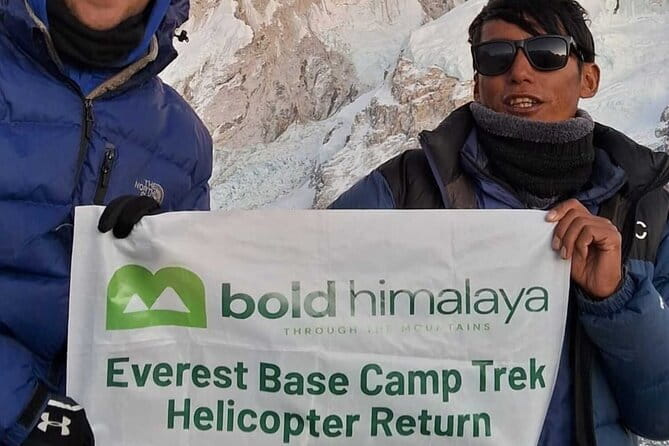
- Helicopter return after Kala Patthar: you trade extra trekking hours for a fast, scenic pull back to Kathmandu.
- Short, classic altitude sequence: Namche → Dingboche → Lobuche → Everest Base Camp, with a dedicated acclimatization day.
- Permits and park fees included: Sagarmatha National Park, plus TIMS and local municipality entry.
- Gear support: sleeping bag, down jacket, and trekking poles if you need them.
- Kathmandu care matters: hot water and comfortable lodge stays were highlighted after rougher conditions, plus attentive trip management from Sobit.
A smart way to do Everest: the helicopter trade
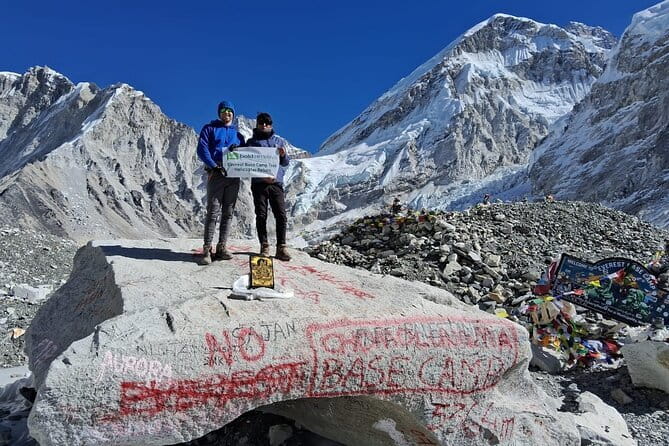
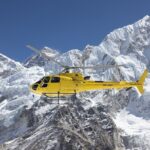
Everest Base Camp treks usually come with a trade: you earn the views by walking a lot—especially on the descent. This version keeps the “go high, go far” drama, then removes the last big slog by giving you a helicopter flight back to Kathmandu after the summit-style sunrise hike.
That means two practical things for your body and your schedule. First, you still climb to the important altitude landmarks—Everest Base Camp at 5,364m and Kala Patthar at 5,550m. Second, you’re not stacking extra days of downhill hiking, which is when fatigue turns into slow, creaky legs for a lot of people.
You do give up something too: the final trekking rhythm. There’s a satisfaction to walking down under your own power, watching villages get bigger again. But if your priority is finishing strong and getting back with energy, this shortcut is a real value.
You can also read our reviews of more hiking tours in Kathmandu
Kathmandu start: pick-up, hotel night, and the briefing that keeps you sane
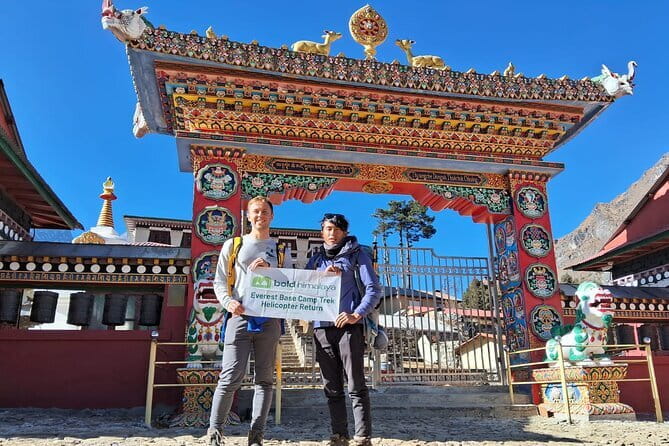
Your adventure begins in Kathmandu, starting at Tribhuvan Airport. The trip offers pickup and transfer to your hotel, then you’ll get an evening briefing before daybreak starts. That briefing isn’t just “here’s the route.” It’s the moment you learn how the crew expects you to handle pace, clothing, and the general altitude logic so you don’t waste time later figuring it out.
You also get one night in Kathmandu in a twin-sharing room (hotel Thrive or similar) with breakfast. Comfortable lodging matters here because you’ll be tired from arrival logistics and the mental load of getting set for high altitude.
One more detail I like: there’s a cultural show and dinner program in Kathmandu. It’s not the same as spending weeks in Nepal, but it’s a good way to ease into the trip without bouncing straight from airport to gear chaos.
Lukla day: your first altitude lesson starts with a plane ticket
The core of an Everest trek is the jump from Kathmandu to the Khumbu, and that happens fast. You’ll fly to Lukla (sometimes via Ramechap to Lukla, depending on what the plan uses). Landing at Lukla Airport is part of the legend for a reason: the Himalaya views start early, and the air is already feeling thinner.
Once you land, you don’t immediately “climb into suffering.” You start with a downhill trek to Phakding, passing through alpine forest scenery. The main value of this day is not mileage—it’s time to adjust to trekking boots on Nepal’s trails. You’re moving, but you’re not burning your lungs in the first 24 hours.
Expect around 4 hours on that segment. It’s long enough to get in rhythm, short enough to keep things sensible.
Phakding to Namche: bridges, Sherpa villages, and a first real wow
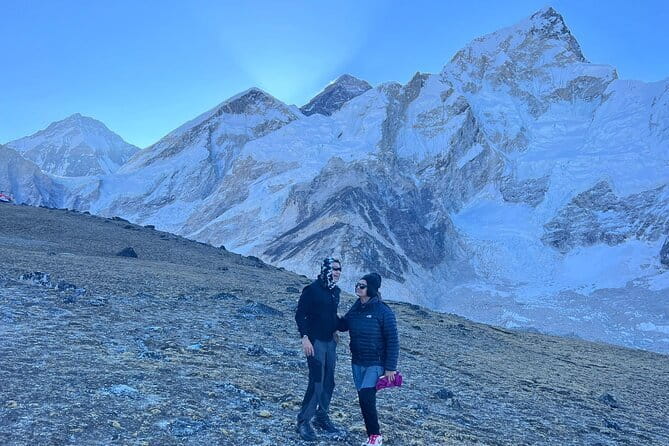
Day three takes you from Phakding to Namche Bazaar over roughly 6 hours, including the river-crossing moments that make the Khumbu route feel alive. One highlight is crossing the Dudhkoshi River on suspension bridges, with big views popping between villages.
You’ll also pass through Sherpa villages. This is where the trek stops being just physical and starts becoming cultural. You see how communities live with extreme weather, how trails connect jobs and homes, and why the Sherpa story matters to Everest tourism.
When you reach Namche, you’re no longer “approaching” the mountains. You’re living in their shadow. That’s why the next day includes both rest and sightseeing.
Namche day and Everest View Hotel: altitude control with a payoff
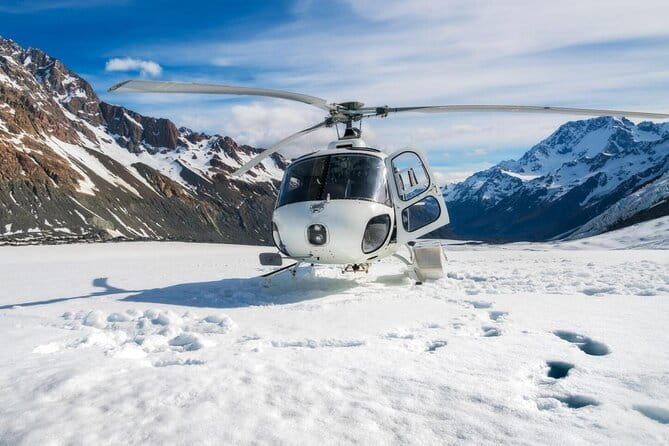
Instead of pushing higher every single day, you get a rest and explore day in Namche. This is a key reason this trip works well for many people. You’ll visit the Sherpa Museum to understand local culture and history—useful context when you later see memorials and the names of climbers along the route.
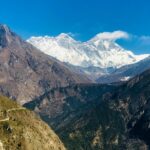
Then in the afternoon you hike to the Everest View Hotel for panoramic views of Mount Everest. It’s an easy win: you get a major sightline without trying to “tough it out” to higher elevations.
From a practical standpoint, this day helps you do two things: (1) recover from the first altitude bump, and (2) build confidence. When your body knows you’re not always sprinting up, you’re more likely to trek steady later.
You can also read our reviews of more tours and experiences in Kathmandu
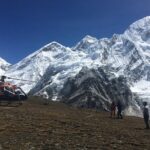
Tyangboche: where the air feels colder and the views feel closer
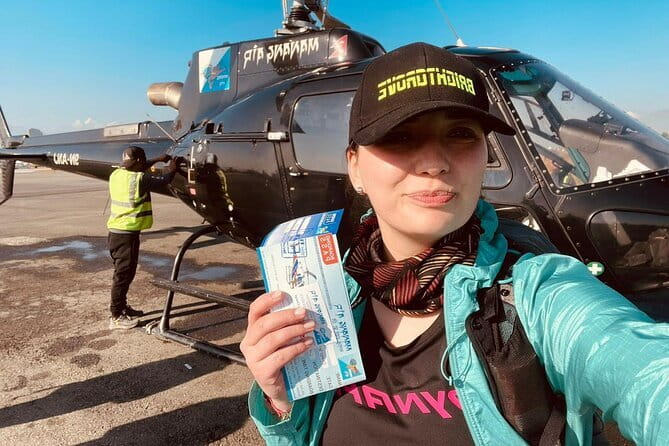
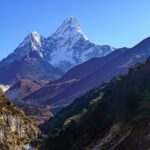
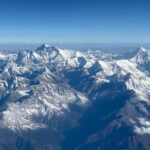
Day five goes from Namche to Tyangboche, about 6 hours. You get magnificent views of Everest, Lhotse, and the surrounding mountains—classic Khumbu scenery, but here it tends to feel more immediate as you gain elevation.
The day also includes an organized lunch stop at Phungi Thanga, then you continue onward to Tyangboche. Tyangboche is a spiritual and scenic anchor on the route, and it’s the kind of place where your pacing usually matters more than your speed.
If you’re the type who hates “waiting around,” you might want to keep your mindset ready: temple areas and lodge time can make the day feel slower, but it’s often because you’re collecting the right moments, not rushing past them.
Dingboche and the Imja Khola bridge: rhododendron trails and a real acclimatization setup
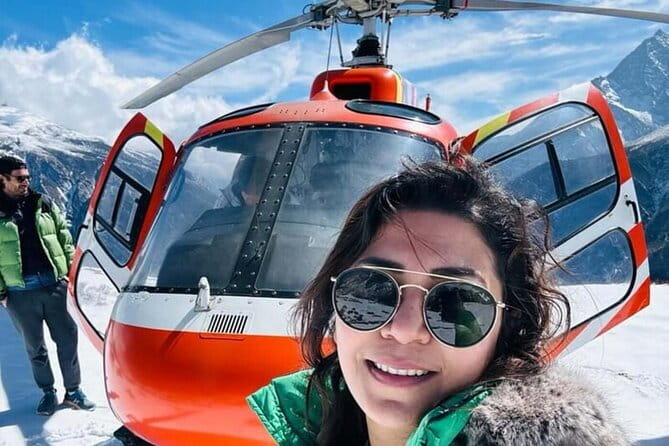
Day six brings you to Dingboche, also about 6 hours, trekking through rhododendron forests and passing smaller villages such as Pangboche and Somare along the way. You’ll cross a suspension bridge over the Imja Khola, another memorable “rope-and-river” moment in a trek full of them.
Dingboche is where you start living at serious elevation. The town is set up for trekkers, but the thin air is still a factor. This is why the next day is built as a preparation day instead of a push.
The dedicated acclimatization day: Nagarjun Peak isn’t optional on this plan
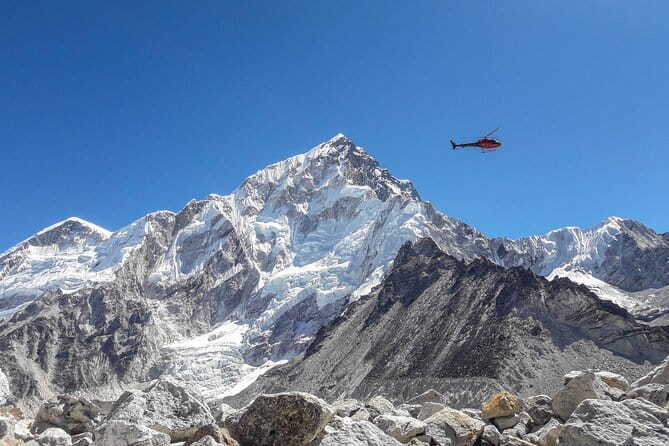
Day seven is an altitude-prep day in Dingboche. You explore the valley and hike up to Nagarjun Peak for about 5 hours. The point is not just views; it’s helping your body adjust.
That acclimatization logic is practical: you can’t out-will altitude. A measured hike like this helps reduce the chance of you feeling wrecked on the higher days ahead.
This day also gives you time to learn what your altitude routine should be. For many people, it’s when they figure out how often to sip water, what pace feels sustainable, and what your breathing sounds like when it isn’t fighting you.
Lobuche: Thukla Pass memorials and glacier country at 4,900m+
Day eight takes you from Dingboche to Lobuche (about 4,940m). You pass through Thukla Pass, where memorials to climbers mark the cost of Everest ambition.
This is where the trek’s tone turns more serious. The walking can feel simpler—less village life, more stone, more wind—but the emotional weight of those memorials changes how you experience the route.
You’ll reach Lobuche after roughly 6 hours, and you’ll get close-up views of glaciers around that area. It’s the kind of scenery that makes the word Everest feel small.
Everest Base Camp day: leaving gear, then chasing the Khumbu Icefall views
Day nine is the big target: trek to Everest Base Camp (5,364m), with an overnight around Gorak Shep (5,170m). The day is about 7 hours and includes a gear strategy—you trek to Gorak Shep, leave what you don’t need, then continue onward to Base Camp.
The payoff is the view of the Khumbu Icefall. Even if you don’t follow mountaineering in detail, you can’t help but recognize the scale and motion of that glacial system. It looks both fragile and unstoppable.
One practical note: this day is mentally intense. You’ll be close to your goal, but you’ll also be at high altitude, so pace and hydration still matter more than photo stops.
Kala Patthar at sunrise: the hardest beauty in the plan, then helicopter back
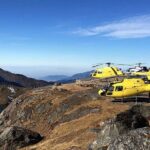
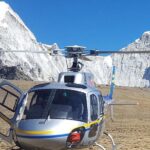
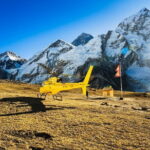
Day ten starts early with the hike to Kala Patthar (5,550m) for sunrise views. Expect about 3 hours for the early push, then you return to Gorak Shep and board the helicopter to Kathmandu.
This is the heart of the “Everest with convenience” concept. You get the iconic high viewpoint moment—then you leave the altitude behind without a long descent day.
Transfer back in Kathmandu follows, wrapping up the trek experience with the kind of finish that feels like you’ve kept the best parts and removed the fatigue tax.
A quick heads-up on the helicopter detail
The trip description says the helicopter flight is part of the return plan, but the not-included section lists helicopter flight from Gorakshep to Kathmandu. Before you book, confirm what’s actually guaranteed in your final package. If the helicopter is weather-canceled, the plan notes that you’ll be offered a different date or a full refund, but details can vary.
Price and what you’re really getting for $446.50
At $446.50 per person, the value comes from what’s built in, not from the trek “being cheap.”
You’re covering major costs that many DIY treks put on your shoulders:
- Domestic flights (Kathmandu to Lukla, sometimes via Ramechap)
- A private transportation transfer setup
- Permits (Sagarmatha National Park, TIMS, and local municipality entry)
- Guide support, including salary and insurance (and food and accommodation are part of the included support system)
- Some trek fuel for your stomach (seasonal fruit and dry nuts during the trek)
- Gear support like sleeping bag, down jacket, and trekking poles if you need them
So what’s not included? International flights and travel insurance are not covered. Tips for the trekking crew aren’t included, and the not-included list also says porters are not included.
That’s the trade space: you’re paying for the skeleton of the trip (flights, permits, guiding, and some gear), but you may still need to budget for personal logistics like tips and possibly a porter system depending on what you want.
Comfort level: lodges, hot water, and care from the top
This trek isn’t “five-star Everest,” but it aims for comfort where it counts. One review highlighted that Kathmandu lodging choices delivered hot water and comfort, and that the company handled changes due to unexpected circumstances (like rough weather) without dropping people into chaos.
It also matters that the management tone came through in communication. Sobit, the manager, is mentioned as attentive from the first email. That kind of responsiveness matters on Everest trips, where weather and flight timing can change your day.
On the trail, you still sleep in mountain lodges. Think warm layers, basic rooms, and the reality that bathrooms are what they are at altitude. But the crew’s job is to make those basics functional.
Who this Everest Base Camp trek makes the most sense for
This is a strong fit if you:
- Want the classic Everest milestones without adding extra days of walking back down
- Prefer a structured acclimatization plan with a dedicated day in Dingboche
- Like having a guide who’s part logistics, part safety brain
It’s also a decent match for people with moderate physical fitness who can commit to the altitude challenge. You’re going to walk each day, but the days are organized in a way that tries to keep you functional rather than destroyed.
If you hate early starts, the sunrise hike to Kala Patthar will still be your alarm clock reality. And if you’re extremely sensitive to uncertainty, you’ll want to confirm helicopter details because weather drives everything up there.
Should you book Bold Himalaya’s Everest Base Camp trek with helicopter return?
I’d book it if your priority is the Everest dream—Base Camp and Kala Patthar—while keeping the overall trip from dragging into a long, exhausting descent. The included guide support, permits, and flight logistics make it easier than piecing everything together yourself.
I wouldn’t book it blindly if the helicopter inclusion is unclear in your final invoice. Ask the company to confirm that the Gorak Shep to Kathmandu helicopter flight is included and locked for your travel date.
If you handle details and want the smart shortcut back, this is one of those itineraries that feels like good planning, not just marketing.
FAQ
FAQ
How long is the Everest Base Camp trek with helicopter return?
The tour is listed as 10 days (approx.).
Where does the tour start in Kathmandu?
The start point is Tribhuvan Airport in Kathmandu, Nepal. Pickup is offered.
How do you get to Lukla?
You take a domestic flight from Kathmandu to Lukla. The notes also mention it can be Kathmandu to Ramechap to Lukla depending on the itinerary.
What are the main trekking highlights during the route?
You trek to Everest Base Camp, hike to Kala Patthar for sunrise, and pass through key stops such as Namche Bazaar, Dingboche, and Lobuche.
Is the helicopter flight included for the return to Kathmandu?
The plan includes a helicopter return from Gorakshep to Kathmandu, but the not-included section separately lists the helicopter flight from Gorakshep to Kathmandu. You should confirm what’s included in your booking before you pay.
What permits and fees are included?
The included items list the Sagarmatha National Park entrance fee, Pasang Lhamu Rural Municipality entrance fee, and TIMS.
What kind of gear is provided?
The package lists sleeping bag, down jacket, and trekking poles if you need them. You may also need to return the gear after trekking (as noted).
What meals are included?
The included meals list breakfast (9), lunch (8), and dinner (8), plus some seasonal fruit and dry nuts items during the trek.
Is international travel insurance included?
No. International air ticket and travel insurance are not included.
What is the cancellation policy if weather affects the trip?
Cancellation is free up to 24 hours in advance for a full refund. The experience requires good weather; if canceled due to poor weather, you’ll be offered a different date or a full refund.