REVIEW · EVEREST BASE CAMP TREKS
Everest Base Camp Trek | Deluxe Lodges | Both Way Helicopter Ride
Book on Viator →Operated by Life Himalaya Trekking · Bookable on Viator
Everest Base Camp in 10 days sounds almost too good. What makes this trip interesting is the mix of classic high-mountain trekking with helicopter help—so you spend more time on the trail, not in transit stress.
I like two things right away. First, the trekking route is set up with smart acclimatization days in Namche, Syangboche, and Dingboche so you’re not just guessing at altitude. Second, the operation feels tight: airport pickup, lodge stays, permits, guides and porters, even oxygen-meter coverage for the team.
One possible drawback: this package uses sharing helicopters, and high country flight schedules can be weather-sensitive. You’re also carrying a real trek workload for multiple days, even if the flight covers the big chunk of time.
In This Review
- Key highlights to know before you go
- Why this Everest Base Camp trek feels built for time-crunched travelers
- The helicopter plan: fast views, big altitude, real weather risk
- Kathmandu arrival and the slow-start Day 1
- Day 2: Lukla flight, then an acclimatizing walk to Phakding
- Day 3: Dudh Koshi river trails, pine forests, and your first real Everest peek
- Day 4: Syangboche acclimatization and the Coffee-with-a-View stop
- Day 5: Tengboche Gompa, suspension bridges, and the Imja Khola Valley
- Day 6: Pangboche Buddhist monastery day and sharper mountain focus
- Day 7: Dingboche acclimatization with climb-high, sleep-low rhythm
- Day 8: Lobuche’s lighter trek that still packs altitude gain
- Day 9: Gorakshep, Everest Base Camp access, and the helicopter home
- Day 10: Kala Patthar before sunrise for Everest face views
- Where the comfort details really matter: lodges, gear, and trained staff
- Price and value: $3,332 for speed, support, and less backtracking
- Who this trek suits best (and who should reconsider)
- Should you book this Everest Base Camp package?
- FAQ
- What does the trek package include?
- Are helicopters included both ways?
- How long is the itinerary?
- What gear do you provide?
- What permits are covered?
- Is travel insurance included for evacuation?
Key highlights to know before you go
- Helicopter out and back: Kathmandu to Lukla (about 45 minutes), plus a return flight from Everest Base Camp area (Gorakshep) to Lukla.
- Acclimatization built into the schedule: two designated acclimatization days (Syangboche and Dingboche), with climb-high/sleep-low style timing.
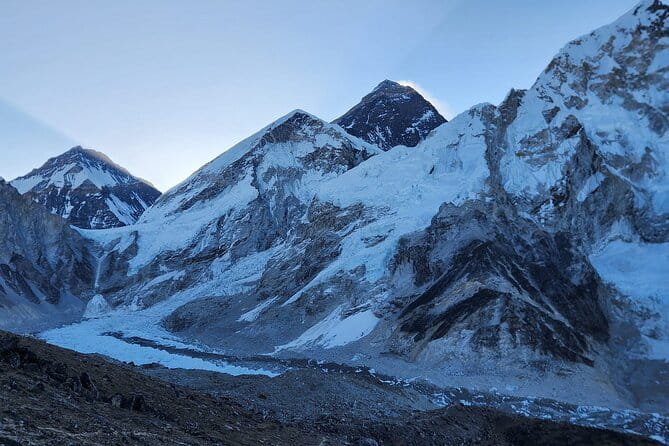
- Kala Patthar sunrise option: an early pre-sunrise hike for wide views of Everest and the surrounding peaks.
- Deluxe-lodge style comfort: twin-share “best available” lodges plus warm gear like a -20°C sleeping bag and down jacket.
- On-the-ground guidance with real people: government-licensed guide and a porter setup of about 1 porter per 2 people.
- Covers the paperwork: Sagarmatha National Park permit and Pasang Lhamu Rural Municipality permit fees are included.
Why this Everest Base Camp trek feels built for time-crunched travelers
If you only have about 10 days, a full “walk the whole way” Everest Base Camp plan can feel like it’s rushing you—either that, or you shorten the acclimatization, which is not the gamble you want at altitude. This itinerary keeps the classic route and key milestones, but it reduces the grind with helicopters on both ends of the trek.
The overall pacing is the main value. You still trek through Sherpa villages and iconic stops, but the schedule gives you actual breathing room on two acclimatization days. That matters because Everest Base Camp isn’t just “tough hiking.” It’s also about your body learning the altitude while you’re moving forward.
And yes, the logistics are handled. You’re picked up in Kathmandu, transported to and from the airport, moved between key points, and placed in lodges along the trail. That frees you up to focus on the experience instead of arguing with maps and timetables.
You can also read our reviews of more hiking tours in Kathmandu
The helicopter plan: fast views, big altitude, real weather risk
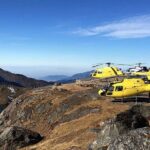
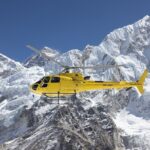
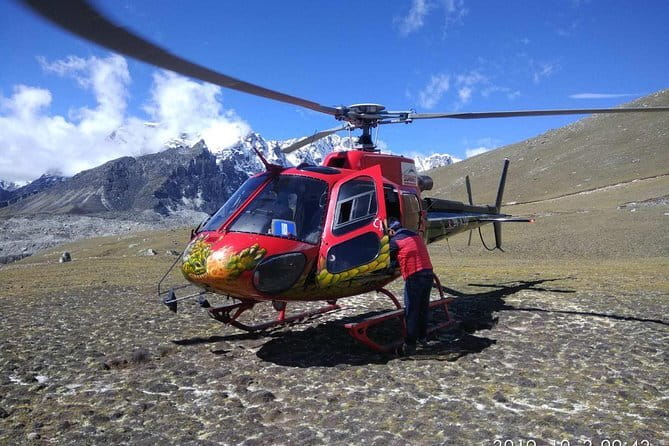
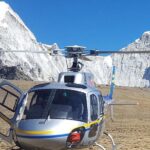
This trip includes two sharing helicopter rides:
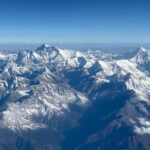
- Day 2: Kathmandu to Lukla, about 45 minutes, with scenic flying over Everest and Kanchenjunga.
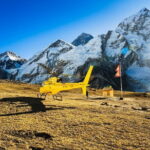
- Day 9: Gorakshep/Everest Base Camp area to Lukla, also on a sharing basis.
What I like about this setup is that it removes the longest “getting there” segments that can eat days. You’re not spending your holiday hours bouncing around in transit. Instead, you land at Lukla and start the trek right away.
What to consider: helicopter flights in the Himalaya can shift with weather. Since it’s sharing, you’re also coordinating with other schedules in the region. You should plan your mental state around flexibility, especially for Day 2 and Day 9.
Kathmandu arrival and the slow-start Day 1
Your first day is mostly about resetting after the flight. You land at Tribhuvan International Airport, meet the team leader, and get transferred by car or van to your Kathmandu hotel.
You get two nights in a 3-star hotel with breakfast—one night before and one after the trek. Practically, that means you can sleep somewhere familiar, shower properly, and eat food that won’t test your stomach.
Thamel is the start point for most Everest-bound plans, and it makes sense here too. You’ll be in the right area for gear checks, last-minute questions, and dropping your bags. If you want a low-stress beginning, this kind of setup does the job.
Day 2: Lukla flight, then an acclimatizing walk to Phakding
The early start comes fast. You meet your guide at the hotel and head to TIA airport for the helicopter flight to Lukla. After you land, you take in the surroundings and then begin trekking.
The day includes a gentler hike designed to help with acclimatization. You walk along the trail toward Phakding, and the itinerary notes it’s a shorter day so you have time to settle in. This is important. If you land by air, your body doesn’t magically agree with altitude. The first day’s goal is to start moving without draining yourself.
Day 3: Dudh Koshi river trails, pine forests, and your first real Everest peek
Day 3 starts with breakfast and then heads into the Dudh Koshi River corridor. The plan mentions pine forests and walking along the river route toward places like Benkar, Monjo, and then onward to Namche Bazaar.
You also pass the Hillary Bridge, which is one of those moments where the trail hits a “classic Everest” vibe. Big bridge views, river motion, and that sense you’re truly in the high country now.
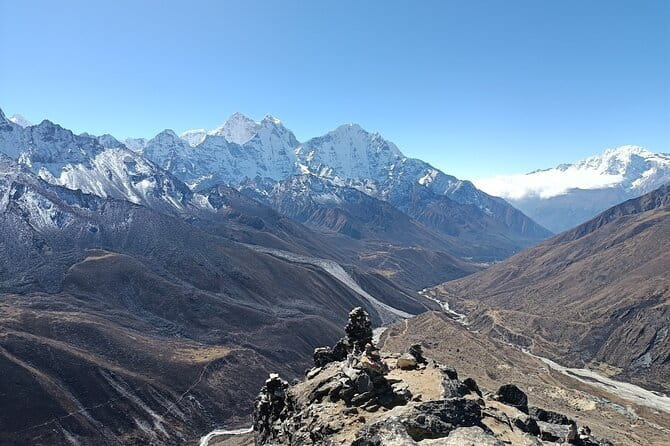
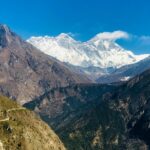
By the time you near Namche, the itinerary points out the first stronger views—Everest peeking over the Lhotse-Nuptse mountain range. You don’t need it to be perfect weather to enjoy this. You need it to be the first moment your brain goes: yes, this is the real thing.
You can also read our reviews of more tours and experiences in Kathmandu
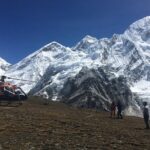
Day 4: Syangboche acclimatization and the Coffee-with-a-View stop
Day 4 is your first acclimatization day. The plan hikes to Syangboche, which sits near Khumbila Peak, and the route is described as a more gradual climb.
Why this stop works: you’re going higher, but you’re not just sprinting to the next camp. It’s a “give your body time” day.
A key detail here is the Hotel Everest View around 3,880 meters in Sagarmatha National Park. The itinerary frames it as a stop where you can grab coffee with massive views of Everest and surrounding peaks. Even if you just do a short visit, this is one of those altitude moments where you understand why people fall in love with the Himalaya.
Then you head back down to Namche Bazaar for rest and exploring. The itinerary includes time for the market and even options like massage centers and spas. In plain terms: Namche is where you recharge like a human, not like a battery.
Day 5: Tengboche Gompa, suspension bridges, and the Imja Khola Valley
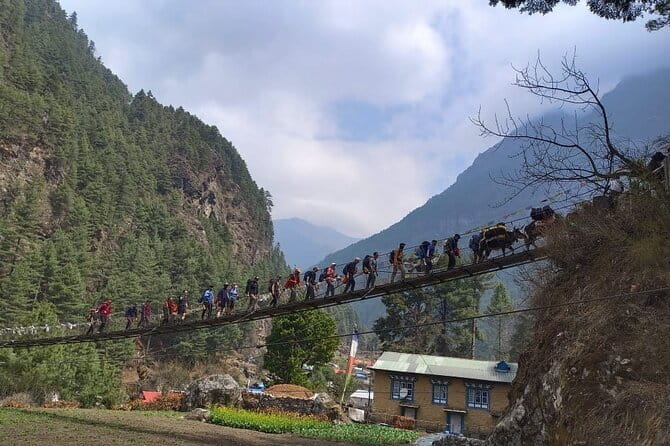
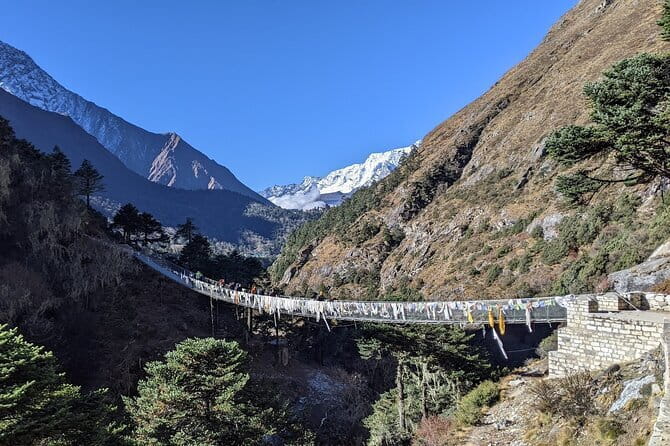
Day 5 resumes trekking along the Dudh Koshi River corridor and includes a long suspension bridge crossing. After that, you’re directed toward the Imja Khola Valley area and onward to Tengboche Gompa.
Tengboche is one of those stops that has two sides: the serene monastery atmosphere, and the practical reality of being at a major viewpoint along the route. If you care about cultural context as well as scenery, this is where you get it—without needing a lecture.
The potential drawback: this day can still feel like work. Even with a “deluxe lodge” level of comfort at night, you’re still hiking at high elevation. Take your pace cues from your guide and don’t rush just because the views look close.
Day 6: Pangboche Buddhist monastery day and sharper mountain focus
Day 6 heads to Pangboche and the पाङ्बोचे बौद्ध बिहार (Pangboche Buddhist Monastery). The itinerary emphasizes that early starts help reduce the chance of altitude sickness compared with higher-intensity days.
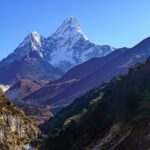
You also get named views like Ama Dablam (the itinerary mentions it clearly). This is the type of day where the mountains “read” better. In good visibility, you can see why Ama Dablam becomes a favorite for so many hikers.
The trekking itself is described as around five hours. That’s long enough to feel it in your legs but not so long that it burns your whole day. Lodges at night mean you’re not stuck with rough camping—comfort matters when you’re trying to sleep at altitude.
Day 7: Dingboche acclimatization with climb-high, sleep-low rhythm
Day 7 is the second acclimatization day. You’ll reach Dingboche and follow a plan that matches the classic acclimatization rule: climb high, sleep low.
The itinerary notes you climb to a top point and then return lower to sleep. This is a smart way to reduce risk while still letting your body adapt.
Also, Dingboche is typically where people start feeling the altitude more clearly. That’s not a reason to panic. It’s a reason to listen to your guide, take it easy on exertion, and focus on steady breathing.
If you’ve worked with guides like Tika or Pramod (both names appear in the team feedback), you’ll likely find that they push sensible pace and safety—especially on acclimatization days when your ego wants to move faster than your lungs.
Day 8: Lobuche’s lighter trek that still packs altitude gain
Day 8 is described as relatively light, but you still gain significant altitude. The route heads toward Lobuche and includes a pass-area feel with the memorial over the Thukla mentioned in the itinerary.
Why this matters: even when the hours don’t look extreme, your body is still climbing. That’s why “light day” should never mean “easy day.” I like that the itinerary acknowledges that contradiction directly.
Expect long views and a sense that Everest Base Camp is now close enough to feel real. You’ll be thinking about tomorrow’s glacier terrain and the Gorakshep area.
Day 9: Gorakshep, Everest Base Camp access, and the helicopter home
Day 9 is the big day. You trek for about 4 hours along glacier terrain to reach Gorakshep, which the itinerary calls the last stop before the Base Camp approach. Then you make it to Everest Base Camp and finish with the helicopter return.
This is the day where the structure of the whole package pays off. You get the classic “reach the goal” moment, but you don’t spend two extra days crawling back down.
The helicopter return from the Base Camp area to Lukla is a major comfort factor. It’s also a mental reset: you stop fighting altitude at a time when you may already be tired.
Practical note: glacier terrain can feel slow and technical. Your guide’s direction matters—especially with footing, pacing, and layering.
Day 10: Kala Patthar before sunrise for Everest face views
Your final morning is a pre-sunrise push to Kala Patthar. The itinerary frames it as an early hike before sunrise to catch amazing panoramas and a view of Everest’s face.
This is the classic payoff: you’ve done the long days, you’ve dealt with altitude, and now you get the “look at that” moment when the light shifts.
Day 10 ends with the trek’s close-out back to the meeting point in Kathmandu (via the provider’s transfer plan). It’s not just an ending. It’s a gentle landing after a serious effort.
Where the comfort details really matter: lodges, gear, and trained staff
This isn’t a “rough it and suffer” style trek. You’re in twin-share lodge accommodation described as “best available,” with meals included along the trekking days (lunch and dinner listed for 8 days; breakfasts for 10 days).
Then there’s the gear approach, and it’s more meaningful than it sounds:
- Warm down jacket and sleeping bags (-20°C) are provided to you and returned afterward.
- Your luggage allowance is spelled out: 10 kg big bag and 5 kg handbag.
That matters because you don’t have to bring bulky winter gear or gamble on what’s available in Kathmandu at the last minute.
Also, the team includes first aid kits with an oxi-meter. That doesn’t prevent altitude issues, but it does signal a safety mindset. Combine that with a government-licensed guide and the porter support (about 1 porter per 2 people), and you get a trek that’s easier to manage day-to-day.
In the feedback, the coordination and communication stood out—people praised the way guides like Shiba (communication) and guides like Tika and Pramod kept the pace sensible and focused on safety.
Price and value: $3,332 for speed, support, and less backtracking
At $3,332 per person (with a roughly 10-day timeline), you’re paying for more than the trekking itself. You’re paying for:
- Helicopter flights to Lukla and back from the Base Camp area
- Lodges rather than camping
- Transfers in Kathmandu
- Permits (Sagarmatha National Park and Pasang Lhamu Rural Municipality)
- Guide, porter team, and included equipment
- Emergency coordination support (the itinerary mentions services for emergency and rescue operations)
- A Kathmandu hotel stay before and after
If you were doing a fully self-supported plan, your costs might look lower on paper—but the risk and friction go up fast: permits, guide/porter logistics, gear decisions, and timing around high-altitude travel. Here, much of that is handled for you.
Two things you should still budget separately: the listing notes international airfare and the Nepal entry visa, and it also notes that travel insurance for rescue and evacuation up to 5,500m is not included. So, don’t assume the “insurance” line is your full safety net.
Who this trek suits best (and who should reconsider)
This fits you if:
- You want Everest Base Camp in about 10 days
- You prefer deluxe-lodge comfort and included meals
- You value structured acclimatization days
- You’d rather spend money on time-savers (helicopters) than add extra trekking days
It may not be the best fit if:
- You hate schedule changes if helicopter weather shifts
- You’re looking for a totally low-effort trek (this still includes multiple long hiking days and altitude gain)
- You want to strictly control every day’s meal choice beyond what’s included
Should you book this Everest Base Camp package?
I’d say it’s a smart booking when you want the classic Everest feeling but can’t afford a long leave. The biggest reason: you get Base Camp and Kala Patthar, plus acclimatization structure, while helicopters shorten the toughest transit parts.
If you can handle the reality of altitude trekking and you pick solid travel insurance, this plan is built for practical success. Just go in with flexibility for sharing helicopter timing, and treat acclimatization days like they matter—because they do.
FAQ
What does the trek package include?
It includes sharing helicopters (Kathmandu to Lukla and from the Everest Base Camp area/Gorakshep to Lukla), Kathmandu airport pickup and drop-off, twin-share lodge accommodation during the trek, a government-licensed trek guide, porters (about 1 porter for 2 people), meals during the trek (listed breakfasts plus lunch and dinner), permits (Sagarmatha National Park and Pasang Lhamu Rural Municipality), provided warm down jacket and sleeping bag, and a farewell dinner in Kathmandu.
Are helicopters included both ways?
Yes. You fly from Kathmandu to Lukla by helicopter, and you also fly from Gorakshep (Everest Base Camp area) back to Lukla.
How long is the itinerary?
The itinerary is listed as 10 days (approx.), with a Day 1 arrival in Kathmandu and a final Day 10 around Kala Patthar sunrise.
What gear do you provide?
You get a warm down jacket and a sleeping bag rated for about -20°C. You also get luggage allowances (10 kg big bag and 5 kg handbag), plus a trekking bag/duffel and a t-shirt are listed as included.
What permits are covered?
The package includes Sagarmatha National Park (Mt. Everest) trek permit fees and the Pasang Lhamu Rural Municipality permit fee.
Is travel insurance included for evacuation?
Travel insurance up to 5,500m rescue and evacuation is listed as not included, so you should arrange your own coverage for that.