REVIEW · HIKING & TREKKING
Manaslu Circuit Trek (15 Days)
Book on Viator →Operated by Sole Encounters Adventures · Bookable on Viator
Few hikes feel this remote.
The Manaslu Circuit Trek is a quieter alternative to Nepal’s big-name routes, with Tibetan-influenced villages and dramatic mountain days that ramp up toward Larkya La Pass. I love how the plan focuses on real trek prep and permit handling, and I like that you get a built-in support team (guide plus porters) rather than a hand-wavy itinerary. One thing to consider: the hardest days demand a steady pace and real altitude respect, especially around the big pass segment.
What makes this trek work for most people is the way logistics are handled in advance. In past trips, guides like Raj Rai and Tshering have been praised for keeping the group moving safely, while the operations team (including Prashant and Prem) helped hikers feel ready before they ever left home. You also keep the group small (maximum 15), so you’re not lost in a crowd when the trail narrows.
In This Review
- Key things that matter on this Manaslu Circuit Trek
- Manaslu Circuit Trek in plain terms: remote, cultural, and not a walk in the park
- Price and what $1,657.50 really buys you
- Kathmandu prep: Thamel base camp and permit paperwork you can’t ignore
- Day-by-day on the trail: what each stretch feels like (and what to watch)
- Days 3 to 5: Machha Khola → Jagat → Deng
- Days 6 to 7: Deng → Namrung → Lihi
- Days 8 to 10: Shyala → Samagaon → Pungyen Gompa → Samdo
- Days 11 to 13: Dharamsala → Bimthang (tough day) → Dharapani
- Days 14 to 15: Dharapani → Besisahar → Kathmandu (back to Thamel)
- Guides and support: where small details reduce stress
- Teahouses, meals, and water: plan your budget and keep it simple
- Who this Manaslu Circuit trek suits best (and who should think twice)
- Should you book this Manaslu Circuit Trek?
- FAQ
- What permits are included on the Manaslu Circuit Trek?
- Do I need to bring my original passport?
- What does the trek price include, besides the guide?
- Are meals included during the trek?
- Is travel insurance included?
- What’s the group size and porter support ratio?
Key things that matter on this Manaslu Circuit Trek
- Permits and passport handling are managed early, including the original passport requirement for immigration processing
- A real support ratio: porters at 2 trekkers per porter, plus an assistant guide per 5 trekkers
- Licensed, first-aid trained leadership with safety planning built around altitude risk
- A quieter circuit route with Budhi Gandaki river valleys and Nubri/Manaslu-area culture
- Teahouse trekking with practical budgeting since meals during the trek aren’t included
- A demanding high day built around starting before dawn and glacier-era terrain near Larke Pass
Manaslu Circuit Trek in plain terms: remote, cultural, and not a walk in the park
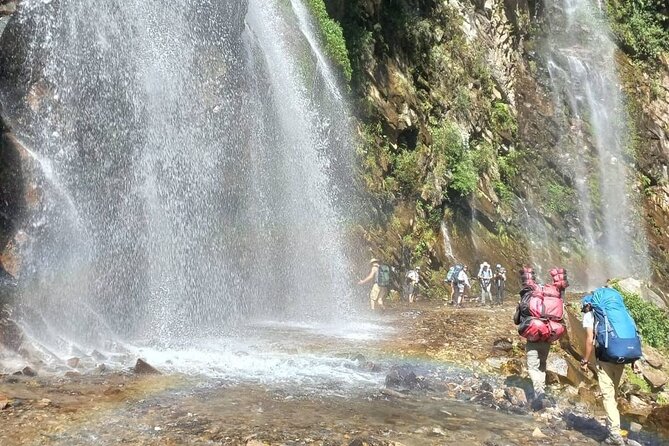
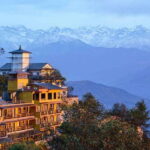
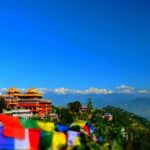
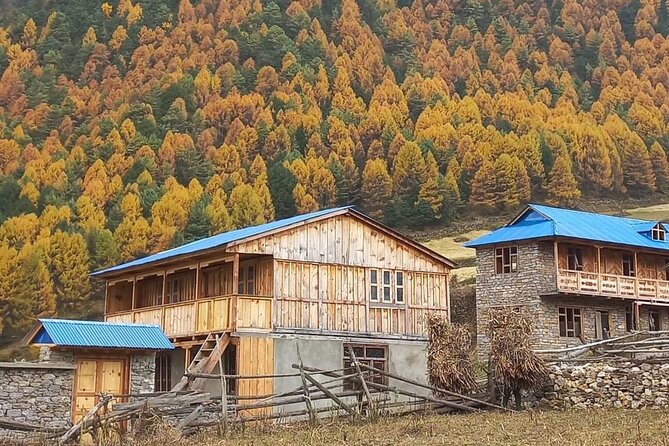
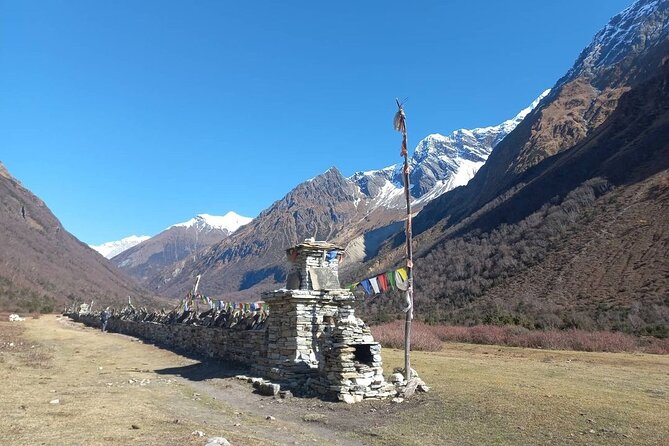
Manaslu Circuit is the kind of trek that feels like you’re stepping out of the loud parts of Nepal and into quieter valleys shaped by the Budhi Gandaki River. You’ll move through villages where Tibetan-influenced stone houses, mani walls, and monastery stops show up in the everyday rhythm of trekking life.
The best part is the pacing. The circuit takes you from foothill walking through forests and terraced farmland up into high-altitude settlements like Shyala and Samagaon. Then, once your body has had time to adjust, you hit the serious segment that ends with crossing Larkya La Pass.
You’re still signing up for mountain walking with long days and altitude. If your plan is built around short, easy hikes every day, this won’t match that. But if you want a serious circuit with a good support system and clear preparation, this is a strong fit.
You can also read our reviews of more hiking tours in Kathmandu
Price and what $1,657.50 really buys you
At $1,657.50 per person, the value comes from what’s included—not just the trekking itself.
What you get built in:
- Government fees and permits (Manaslu Conservation Area Permit, Annapurna Conservation Area Permit, and a Special Restricted Area Permit)
- Kathmandu lodging: a 3-star hotel in Thamel with breakfast (and airport transfers)
- Standard teahouse accommodation during the trek
- Transport for key legs (private transfers for airport arrival/departure and drops to Machha Khola and back from Besisahar to Kathmandu, plus a shared jeep from Dharapani to Besisahar)
- A licensed first-aid trained trek guide, with porters (2 trekkers to 1 porter ratio) and an assistant guide per 5 trekkers
- Insurance coverage for the trekking crew (guides and porters)
- Selected meals: 2 breakfasts in Kathmandu and 2 dinners (welcome and farewell)
What you should budget separately:
- International airfare
- Nepal visa fee (listed as USD 30 per person)
- Travel insurance (you need coverage that includes emergency evacuation/heli evacuation up to 5200 m)
- Meals during the trek: they’re not included, so plan on paying for lunch/dinner at teahouses
- Drinking water: not included, so bring a filter bottle or purification tablets
- Tips/gratuities (not mandatory, but expected)
For most people, the biggest “value check” is that permits + guide/porter logistics + teahouse beds are handled. Your extra costs are mostly visa/insurance/food/water. If you already know you’ll budget for those, the package price feels fair for a remote circuit.
Kathmandu prep: Thamel base camp and permit paperwork you can’t ignore
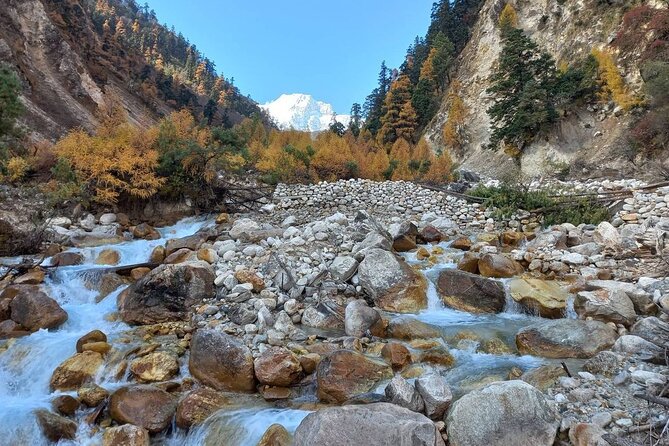
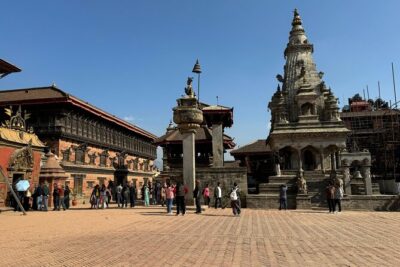
Your trek starts in Kathmandu (meeting point is Thamel). Day 1 is your arrival and transfer to a hotel, and then you’re on your own for the rest of the day.
Day 2 is the reality check: permits. Your team will wait for the Manaslu permits to be officially issued, and they’ll collect:
- your physical passport
- two passport-sized photos
That matters because your original passport is required for Nepal’s immigration department to issue the permits. Translation: don’t plan to toss your passport into a random day bag and forget it.
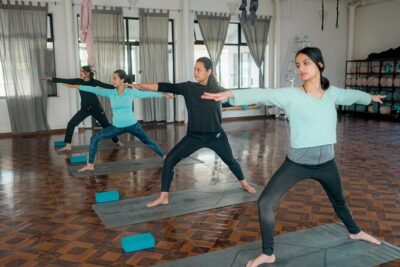
My practical take: use Day 2 to get your gear in order, test how you’ll carry essentials (headlamp, water plan, warm layers), and rest. You’re about to trade city convenience for a circuit where the timetable is mostly “walk, eat, sleep, repeat.”
Day-by-day on the trail: what each stretch feels like (and what to watch)
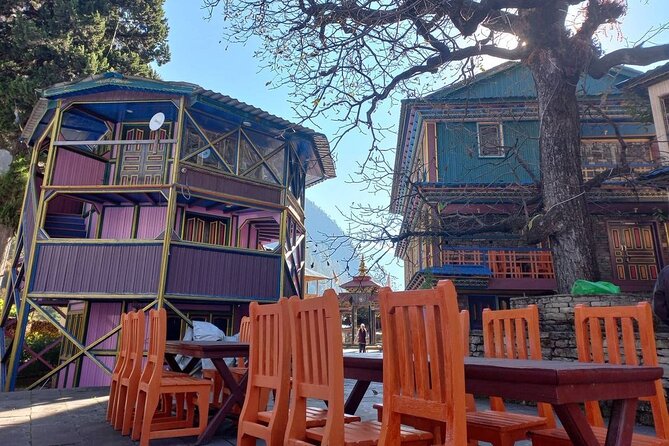
Days 3 to 5: Machha Khola → Jagat → Deng
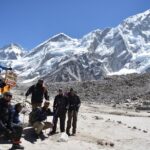
After the long drive from Kathmandu to Machha Khola, the trek starts alongside the Budi Gandaki River. This early section is ideal for getting into rhythm without feeling like you’re thrown into steep altitude right away.
- Machha Khola area: you’ll pass quiet river scenery and start threading along narrow routes.
- You’ll pass Tatopani, known for natural hot springs near the riverbank. The plan notes you won’t stop to soak on the trek, so think of it as a landmark rather than your spa day.
- You’ll move through Dobhan, near where streams meet, with dramatic gorge views.
Then it’s on to Jagat (about 15 km, 6–7 hours, roughly 600 m ascent). The trail runs narrow in places and stays close to riversides, so footing matters even when the day feels “manageable.”
Day 5 goes to Deng (about 18 km, 7–8 hours). This is a bigger climb day (about 1,050 m ascent). You’ll pass through the larger Gurung village of Phili, and the route includes a stretch of subtropical forest after Jagat. Expect your pace to slow as elevation rises, even if the air feels fine early on.
Days 6 to 7: Deng → Namrung → Lihi
Day 6 reaches Namrung after a roughly 19 km day (7–8 hours, about 1,100 m ascent). The hike includes mixed pine and rhododendron forest and several small settlements with Tibetan-influenced stone houses. This is where the trek really starts to feel like a cultural circuit, not just exercise.
Day 7 climbs to Lihi: about 700 m up and 100 m down, with terraced fields, forested switchbacks, and yak pastures. It’s a good “training day” for the psychological side of high trekking—push steadily, stop when you need to, and don’t treat every uphill like a personal race.
What to watch: your lungs. If you feel breathless faster than your effort level, slow down immediately. The best outcome is arriving calm, not arriving proud.
Days 8 to 10: Shyala → Samagaon → Pungyen Gompa → Samdo
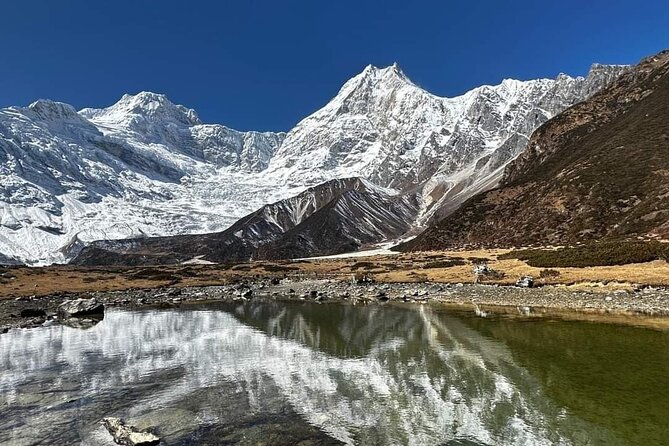
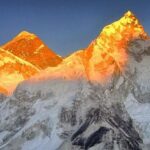
Day 8 brings Shyala, a high-altitude village with big mountain neighbors like Manaslu, Himalchuli, Peak 29, and Ngadi Chuli. The route to Shyala passes mani walls and through pine and rhododendron forests. This is also a “views plus altitude” combo—one of those days where the scenery is doing emotional work while your body does physical work.
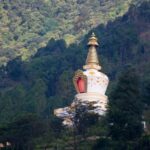
After Shyala you head to Samagaon (about 17 km, around 500 m ascent). Then you get an acclimatization outing to Pungyen Gompa, a ridgeline monastery with sweeping views. The hike is listed as a 3–4 hour roundtrip. You return to Samagaon for the night.
Day 10 heads to Samdo. The trek begins with a gentle descent to a wooden bridge over the Budhi Gandaki River, then climbs past dry yak pastures and mani walls—signaling the move into higher Himalayan terrain. This is where the air gets sharper and the walking feels more “alpine.”
Days 11 to 13: Dharamsala → Bimthang (tough day) → Dharapani
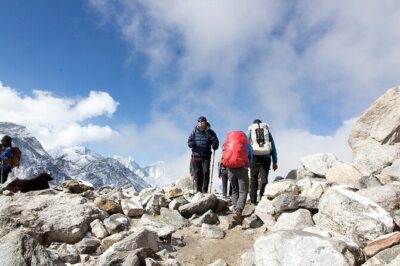
Day 11 is described as short but crucial: Samdo to Dharamsala as an acclimatization hike before tackling Larkya Pass. The terrain turns rocky and sparse, with wide views. Don’t underestimate the “short” part—at this height, a few extra meters can feel like more than it would back home.
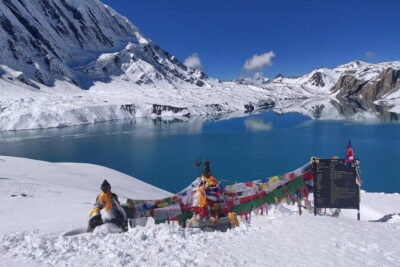
Day 12 is the key challenge: Dharamsala to Bimthang. You start before dawn, and the trek moves over rocky moraine and glacier-draped terrain. This day is labeled as the most demanding and rewarding. For you, the reward is not just reaching the next village. It’s arriving knowing you handled the hardest altitude and terrain piece with a plan.
Day 13 takes you to Dharapani, descending through varied terrain—alpine scrub down into dense pine, rhododendron, and oak forests. You pass Yak Kharka, a seasonal grazing area where herders bring live yaks. It’s a reminder that this circuit isn’t just about hikers; it’s also a working mountain corridor.
Days 14 to 15: Dharapani → Besisahar → Kathmandu (back to Thamel)
Day 14 switches gears from trail to road. You board a shared jeep from Dharapani to Besisahar. Expect a bumpy ride, but also some scenic moments along the Marsyangdi River. The route includes cliff-side roads and passes Tal village with cascading waterfalls (not exactly a spa stop either, but still pretty).
Day 15 returns to Kathmandu and gives you time around Thamel. If you want last-minute souvenirs or just a quiet café moment, this is the day.
Guides and support: where small details reduce stress
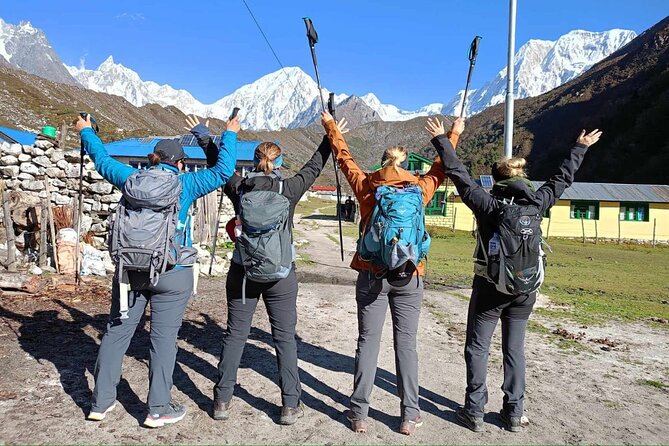
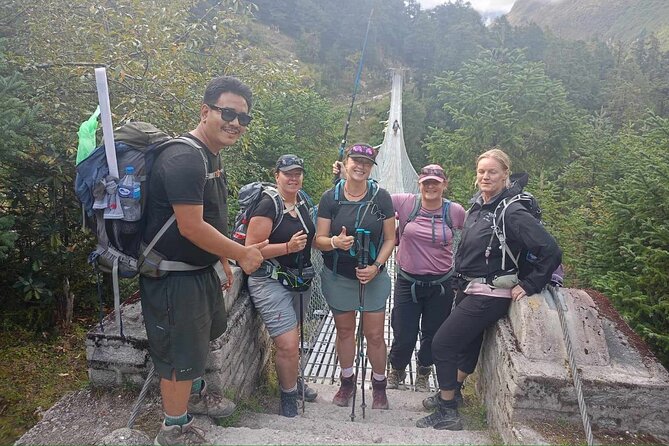
This trek leans heavily on smooth crew support: a government-licensed trek guide (first-aid trained), porters (overnight bag carrying), and an assistant guide per 5 trekkers.
I like this structure because it solves real problems:
- The porters at a 2 trekkers to 1 porter ratio help keep the pack weight reasonable.
- The assistant guide supports safety and pacing—especially useful when altitude turns “fine” days into slower days.
- Past trips highlighted guides like Raj Rai and Tshering for being attentive and safety-focused, which is what you want on a pass day and not just on easy forest mornings.
Also, the operation includes safety planning like altitude briefings and emergency protocols. And crew insurance is included.
Your personal obligation is travel insurance with helicopter evacuation coverage up to 5200 m. That’s not trivia—it’s the line between a hike gone wrong and a serious emergency handled correctly.
Teahouses, meals, and water: plan your budget and keep it simple
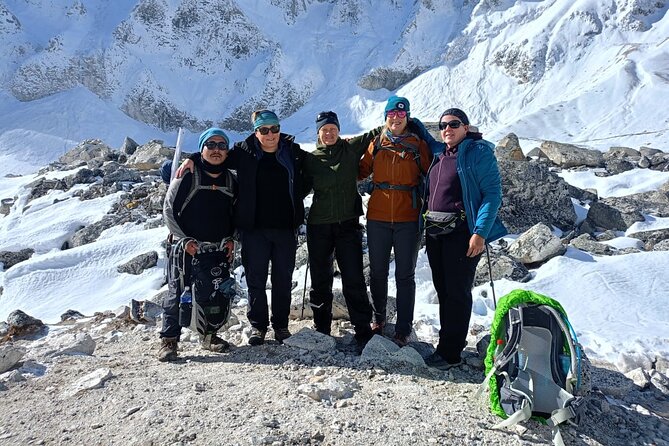
You stay in standard teahouses during the trek. That’s the normal rhythm for a circuit like this: hot drinks, basic rooms, and a dinner/lunch system that keeps you moving.
Here’s the honest budgeting part: meals during the trek are not included. You’ll pay for food along the way, and it’s worth carrying a bit of cash and being ready to eat what the tea house can offer.
Drinking water isn’t included either. The practical advice is clear: bring a filter bottle or purification tablets so you’re not stuck gambling with “safe enough” water choices when you’re tired.
Hot showers, battery charging, and Wi-Fi are available at most teahouses for an extra fee. Don’t build your trip around constant charging. In the mountains, battery power is a limited resource and the circuit doesn’t slow down for it.
Who this Manaslu Circuit trek suits best (and who should think twice)
This trek is a strong match if you want:
- a remote, quieter Himalayan circuit compared with Nepal’s more crowded classic routes
- Tibetan-influenced culture and villages like Shyala and Samagaon
- the challenge of Larkya Pass, with a plan that includes acclimatization hikes and structured pacing
- a group size capped at 15 with guide and porter support
Think twice if you:
- hate long walking days or aren’t comfortable with altitude pacing
- don’t want to manage meals/water costs during the trek
- aren’t ready to plan personal gear and travel insurance
If you’re willing to do the prep work—photos for permits, passport kept secure, solid trekking layers, and an insurance plan—then the experience is built to be both adventurous and well run.
Should you book this Manaslu Circuit Trek?
If your goal is to experience the Manaslu area with organized permits, licensed guide leadership, and real support on the trail, this package makes sense. The value is strongest for people who want the hard parts handled: paperwork, transport legs, teahouse beds, and a team that can manage safety near altitude.
Book it if you’ll budget for trek meals, water treatment, visa, and your own insurance. Pass if you want fully included meals and zero thinking during the trek—because you’ll still be in the mountains, where you pay at the teahouse and you manage your own water system.
FAQ
What permits are included on the Manaslu Circuit Trek?
The trek includes the Manaslu Conservation Area Permit, the Annapurna Conservation Area Permit, and a Special Restricted Area Permit from Nepal’s immigration department.
Do I need to bring my original passport?
Yes. The team will require your physical passport because the original document is needed for the Nepal immigration department to issue the trek permits. You’ll also provide two passport-sized photos.
What does the trek price include, besides the guide?
Included costs cover Kathmandu hotel accommodation in Thamel (3-star with breakfast), standard teahouse accommodation, private transportation for airport arrival/departure and specific transfers, a shared jeep for the Dharapani to Besisahar leg, a licensed first-aid trained trek guide, porters (2 trekkers to 1 porter ratio), and insurance coverage for the trekking crew, plus permits and selected meals (2 breakfasts and 2 dinners).
Are meals included during the trek?
No. Meals during the trek are not included. Kathmandu includes hotel breakfast plus a welcome dinner and farewell dinner.
Is travel insurance included?
No. The package doesn’t include your travel insurance. You’re expected to have coverage that includes accidental, medical, and helicopter evacuation up to 5200 m.
What’s the group size and porter support ratio?
This tour has a maximum of 15 travelers. Porter support is listed at a 2 trekkers to 1 porter ratio, and there is 1 assistant guide per 5 trekkers for added safety and personalized attention.