REVIEW · EVEREST BASE CAMP TREKS
Everest Base Camp Tour & View Point by Helicopter from Katmandu
Book on Viator →Operated by Himalayan Mentor · Bookable on Viator
This is one of the fastest ways to see Everest up close, with a helicopter flight built around the views from Kalapatthar and Everest Base Camp. I like that you’re not just looking at Everest from far away; the route is designed for aerial passes over glaciers and the Khumbu Region. I also like the human side of the planning from Himalayan Mentor, especially the careful, proactive communication shown by Kesh when arranging the experience for real groups and real schedules.
One thing to keep in mind: this tour is weather-dependent and involves big altitude changes, so you’ll need flexibility and good judgment on the day, especially with the operator potentially splitting the group at Pheriche due to thin air and capacity limits.
In This Review
- Quick hits before you go
- Kathmandu to Everest: why this helicopter tour is worth the money
- The 6:15 AM domestic-terminal start (and why it matters)
- Flight plan basics: the Kathmandu to Lukla fuel stop
- Kalapatthar landing: the classic Everest viewpoint in helicopter form
- Pheriche’s group split: how thin air affects what you actually get
- Everest Base Camp and the Syangboche/Everest View Hotel stop
- Price and logistics: what you pay for beyond the helicopter
- Included in the price
- Not included (and easy to miss)
- Who this fits best (and who should skip it)
- Weather day reality: why you need flexibility
- My booking advice: should you book this Everest helicopter tour?
- FAQ
- Where does the Everest Base Camp helicopter tour start in Kathmandu?
- What time does the tour begin?
- How long is the tour?
- Do you land at Kala Patthar and Everest View Hotel?
- How many people are on the helicopter?
- What’s included in the price?
- Is breakfast included?
- What is not included in the tour price?
- What is the weight limit per passenger?
Quick hits before you go
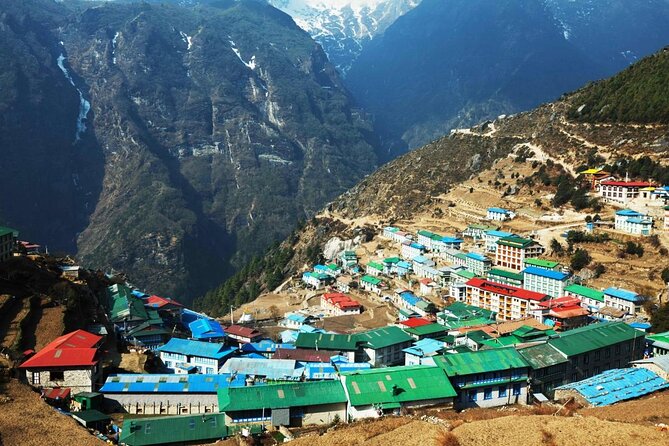
- Kalapatthar (5,545m.) landing focus for the classic Everest sightlines
- Everest Base Camp flyover plus glacier and Khumbu aerial views
- Small group size with a max of 5 travelers, shared seating with the pilot
- Pheriche split plan may limit how many people reach certain landing segments
- Optional breakfast at Everest View Hotel (Syangboche at 3,870m.)
Kathmandu to Everest: why this helicopter tour is worth the money
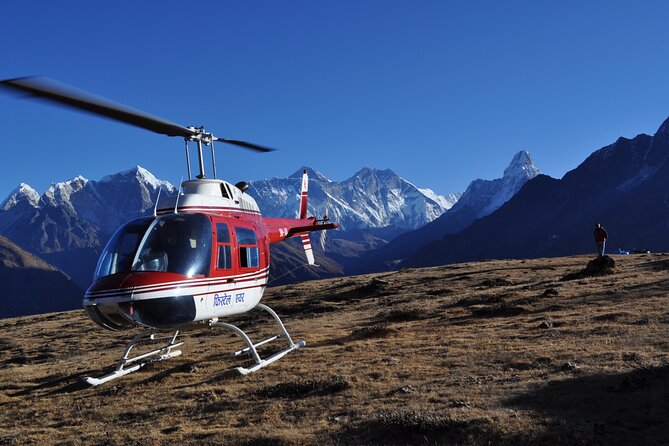
The price tag is serious at $1,800 per person, but the value is the time and access. You’re buying a controlled, professional ride to extreme elevations that would take weeks of trekking to see in person. If you want the Everest moment and don’t want the full grind, this format makes sense.
You’re also buying a specific kind of experience: a mix of flying, landing, and limited on-the-ground time at high altitude. The route is built around seeing Everest from the angles that matter most, including the best view zone at Kala Patthar (5,545m.) and the Everest Base Camp area at 5,364m. That’s a different goal than a standard scenic helicopter flight.
The planning by Himalayan Mentor, through Kesh, comes through in the way they handle logistics and keep you informed. In the real world, the Everest region punishes sloppy coordination. You want an operator that stays organized when conditions change.
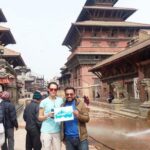
You can also read our reviews of more tours and experiences in Kathmandu
The 6:15 AM domestic-terminal start (and why it matters)
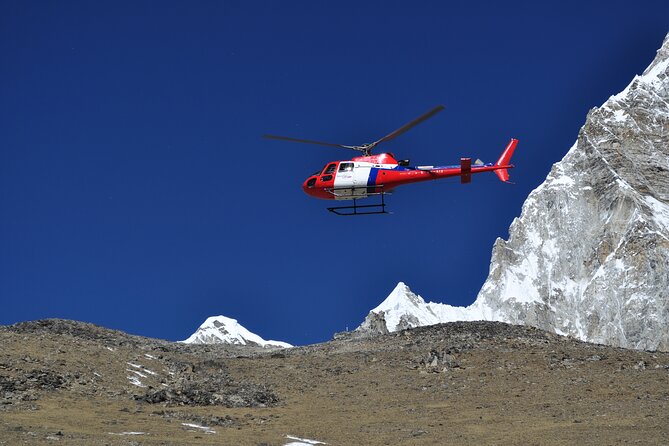
Your day begins early. The start time is 6:15 am, meeting at the TIA Domestic Terminal parking lot in Kathmandu. Early departures help because you’re trying to catch a better weather window and get airborne before visibility drops or winds get worse.
Also, helicopter days run on tight timing. You’ll be moving through the domestic flight workflow, then into a route with fuel stops and potential regrouping. If you sleep late or treat the schedule casually, you’ll feel it fast. Come ready to go.
A practical tip: pack light but smart. You’ll want layers for cold air at altitude, and you’ll want to keep key items simple to access. The tour includes hotel pickup and drop-off, which helps, but you still need to handle your own essentials.
Flight plan basics: the Kathmandu to Lukla fuel stop
One of the most overlooked parts of any Himalayan flight is fuel planning. Your itinerary includes a first stop at Lukla to drop the fuel needed for the return flight to Kathmandu. That’s listed as a 10-minute stop.
Why you should care: this is exactly the kind of thing that makes the day feel “real” instead of fantasy. It also explains why the timing is precise and why the operator can’t just keep flying to the next view whenever you want. The mountains aren’t only about scenery; they’re about engineering and logistics.
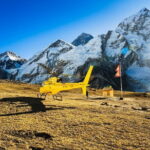
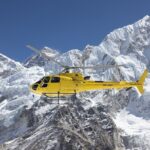
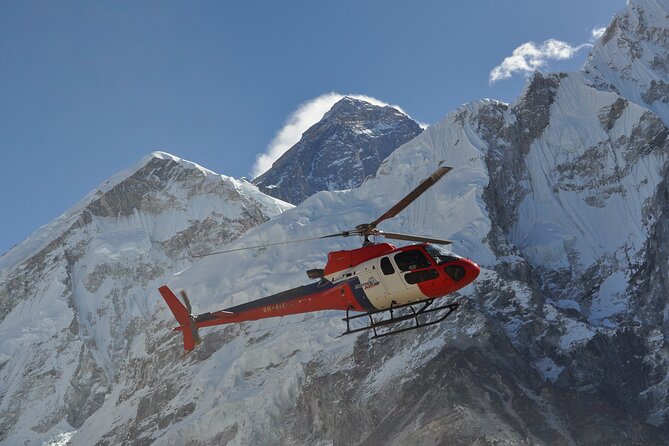
The helicopter model noted for the flight is a Eurocopter 350 B3. That matters because it gives you a sense of the aircraft category and how these routes are usually managed: not a giant airliner, more of a compact platform designed for regional flying.
Kalapatthar landing: the classic Everest viewpoint in helicopter form
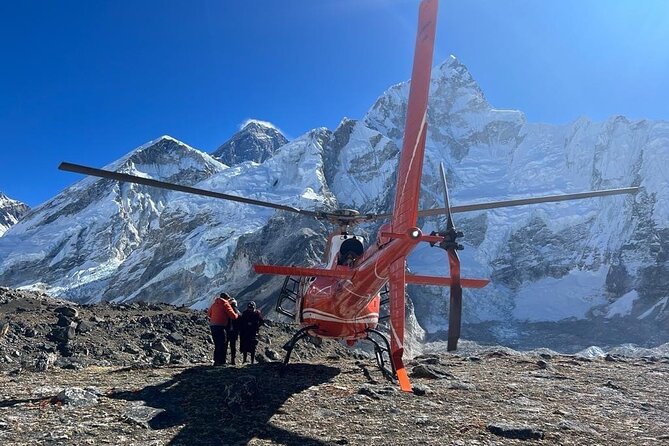
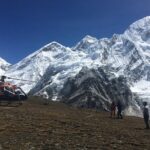
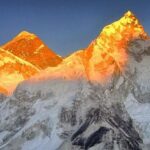
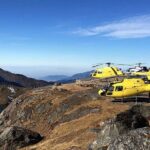
The tour route is designed around reaching Kala Patthar (5,545m.), including a landing there. This is the highest-point element of the experience and a big reason people book.
Here’s the practical takeaway: a landing changes the game. When you land, you get a steadier chance to take in the view without the constant motion of flying past. Even if you’re only on the ground briefly, you’re more likely to actually process what you’re seeing.
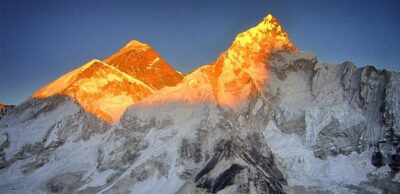
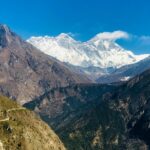
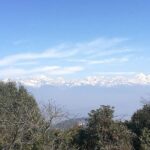
You’ll also get aerial passes over the Everest region as the helicopter works its way along the route. The description highlights close-up Himalayan views, plus overhead views of glaciers and the Khumbu Region. If you care about the “shape” of mountains and how the ridgelines stack up, a helicopter route can teach you a lot fast.
One consideration: altitude is not theoretical. The itinerary specifically mentions a need to manage passengers due to thin air later in the day, which tells you that the operator is watching capacity and conditions closely. That’s good planning, but it also means you shouldn’t expect the same experience for everyone at every moment.
Pheriche’s group split: how thin air affects what you actually get
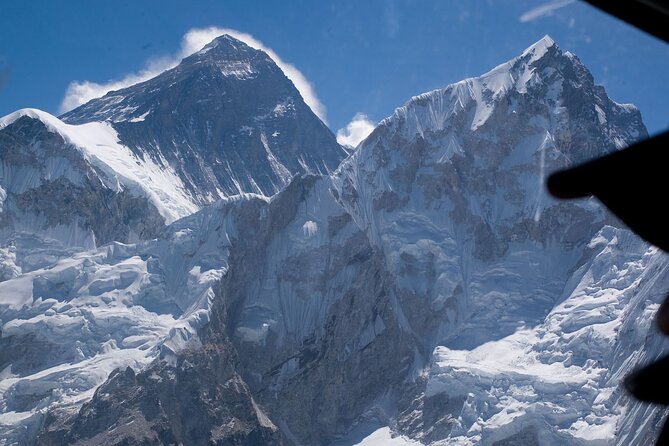
At Pheriche, the itinerary notes that the group may be split due to thin air. The key detail here: the maximum number of passengers who can go to the Everest Base Camp section and Kalapatthar is listed as 3.
What that means for you: while the tour is marketed as one experience, the reality is that not all seats translate into identical access at the highest-elevation parts. Depending on conditions and the aircraft/landing plan of the day, your route could vary slightly compared to the person next to you.
This is also where the operator’s experience matters. A split can feel confusing if nobody explains it clearly. The good news is the reviews highlight the value of proactive communication from Kesh, including being upfront about what the experience requires and how to prepare. That same approach usually shows up during day-of coordination too.
If you’re the kind of traveler who needs everything to feel fully equal and predictable minute-by-minute, this part may test your patience. If you’re okay with a bit of variability for the chance to see Everest from these elevations, it becomes part of the story.

Everest Base Camp and the Syangboche/Everest View Hotel stop
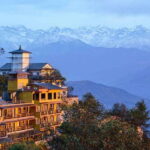
After passing through the high-view elements, the plan returns to Pheriche, then continues to Syangboche (listed as 3,870m.) where you land at Everest View Hotel.
This is the moment I’d call the “breathe and look” portion of the day. After the highest zones, you drop to a still-cold but more manageable elevation. From the hotel area, the itinerary says you get panoramic Himalayan views, and breakfast is optional in front of the mighty range.
A smart way to think about the breakfast option: you’re paying for more than just food. You’re buying time with a view, at a calmer pace than a helicopter window pass. If breakfast is important to your trip rhythm, go for it. If you’d rather keep energy for taking photos and staying warm, skip it and use the time to regroup.
Also, the itinerary includes a stop back at Lukla for refill fuel (again listed as 10 minutes) on the return to Kathmandu. It’s short, but it’s part of the overall flight structure that makes the entire loop possible.
Price and logistics: what you pay for beyond the helicopter
Let’s break down the cost using what’s included and what isn’t.
Included in the price
- Everest helicopter flight in group sharing of 5 passengers and a pilot
- Hotel pickup and drop-off in Kathmandu
- Fuel surcharge
That grouping detail matters. A shared flight can feel very different from private helicopter pricing, and in a place like Nepal, the operator’s ability to manage small groups is part of the value.
Not included (and easy to miss)
- Optional breakfast at Everest View Hotel
- Travel insurance and emergency evacuation cost
- Everest National Park Permit & Municipality fee
- Airport tax
These line items are common in Nepal, but they’re still real money. Before you book, I’d total up your likely extras so you don’t get surprised. Also, make sure your insurance actually covers helicopter activities and high-altitude travel, since this route hits serious elevation zones.
Who this fits best (and who should skip it)
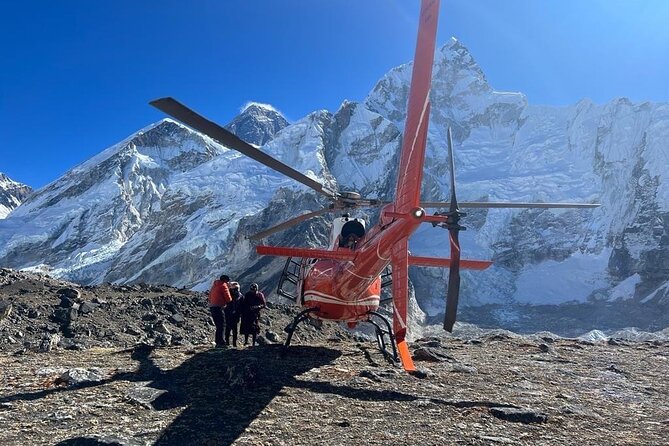
This tour is best for you if:
- you want Everest Base Camp and Kalapatthar views without trekking for weeks
- you like time-efficient, high-impact experiences
- you prefer organized logistics with a small group setup
It may not be for you if:
- you need guaranteed identical access to every high point for every passenger (because the itinerary notes a Pheriche split with a maximum of 3 for certain segments)
- you don’t handle cold well or you hate the idea of altitude factors affecting what happens on the day
- you expect a slow, flexible outing—this is a tight schedule with fuel stops and weather sensitivity
One more note: the tour lists a total weight per passenger of 176 lbs. If you’re close to or above that, confirm before booking. It’s not a detail you want to discover at the airport.
Weather day reality: why you need flexibility
This experience requires good weather. If it’s canceled due to poor weather, you’ll be offered a different date or a full refund.
That’s the key tradeoff. You’re paying for a time-efficient Everest view, but the mountains decide what happens that morning. If your Nepal schedule is packed with fixed, non-flexible commitments, plan extra buffer.
Also remember: even with good coordination, the high-altitude environment and thin-air constraints are part of the operational plan. The itinerary itself shows this through the group split at Pheriche, so you should treat the day as dynamic—not fully scripted.
My booking advice: should you book this Everest helicopter tour?
Yes, you should book this if Everest is the headline of your trip and you want the closest-to-trekking views without the trek. The combination of Kalapatthar landing, a flyover of Everest Base Camp, and the chance to slow down at Everest View Hotel (with optional breakfast) makes this feel like one coherent Everest day instead of a rushed helicopter hop.
I’d also feel good about booking with Himalayan Mentor. The reviews point to a standout strength: Kesh being proactive with pre-communications and going above and beyond to make the plan work for the group. On an Everest trip, that kind of planning is exactly what you want when conditions and capacity can shift.
I’d hesitate only if you can’t handle variability, you’re sensitive to cold altitude conditions, or you’re not comfortable managing the extra costs not included (permits, airport tax, and the optional breakfast).
If you want Everest in hours, with real altitude checkpoints built into the route, this is a strong choice.
FAQ
Where does the Everest Base Camp helicopter tour start in Kathmandu?
It starts at the TIA Domestic Terminal parking lot in Kathmandu (44600), Nepal.
What time does the tour begin?
The start time is 6:15 am.
How long is the tour?
The duration is approximately 3 hours 55 minutes.
Do you land at Kala Patthar and Everest View Hotel?
Yes. The itinerary includes landing at Kala Patthar (5,545m.) and later landing at Everest View Hotel in Syangboche (3,870m.).
How many people are on the helicopter?
The flight is described as group sharing 5 passengers and a pilot, and the activity has a maximum of 5 travelers.
What’s included in the price?
Included are the Everest helicopter flight, hotel pickup and drop-off, and the fuel surcharge.
Is breakfast included?
Breakfast at Everest View Hotel is optional, so it is not included by default.
What is not included in the tour price?
Not included are travel insurance and emergency evacuation cost, Everest National Park Permit & Municipality fee, and airport tax.
What is the weight limit per passenger?
The tour lists a total weight per passenger of 176 lbs.