REVIEW · EVEREST BASE CAMP TREKS
Everest Base Camp Helicopter Tour With Sharing Flight
Book on Viator →Operated by Nepal Horizon Treks and Expedition Pvt. Ltd. · Bookable on Viator
Everest looks unreal from the ground. From the air, it turns into a full-on spectacle. I love that this is a sharing heli flight with insurance coverage, so you get serious views without the full private-aircraft price. My only real caution is the schedule can shift because this experience depends on good weather.
The morning timing is also a big deal. You start early from Kathmandu with pickup in the Kathmandu Valley, and the whole experience runs about four hours, which keeps it from swallowing your entire day. That also means you’ll want to have your passport ready and your plan flexible for the sky.
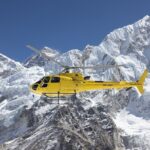
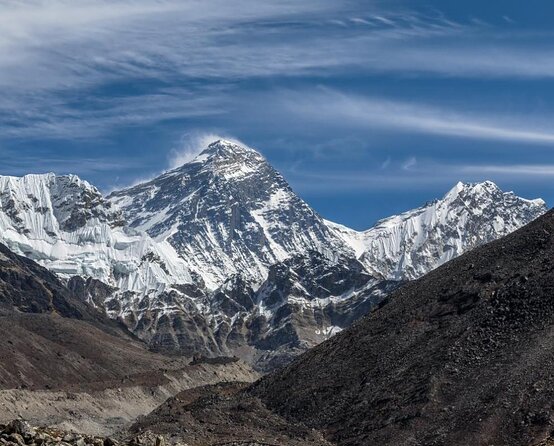
Finally, the best part is what you actually see. The Khumbu region is hard to capture from anywhere but the air, and this flight focuses on signature sights like the Mt. Everest area, the Khumbu Glacier, and Gokyo Lake. It’s the kind of tour that feels efficient—more wow per minute—especially if you want Himalaya views without multi-day hiking.
In This Review
- Key points before you go
- From Kathmandu to the Everest skyline: why air beats feet here
- 5:45 am pickup and the 4-hour flow of your morning
- Aerial route highlights: Everest, Khumbu Glacier, and Gokyo Lake
- Mt. Everest area from the air
- Khumbu Glacier views
- Gokyo Lake angles
- Sharing flight style: smooth operations and what small groups mean
- Price and logistics: what $1,550 buys (and what it doesn’t)
- Included value
- What you should budget extra
- Is the sharing aspect worth it?
- Weather and documents: the things that can change your plan
- Who should book this Everest Base Camp helicopter sharing flight?
- Should you book this tour?
- FAQ
- What time does the helicopter tour start?
- How long is the Everest Base Camp helicopter experience?
- Is hotel pickup included?
- Is breakfast included in the price?
- Do I need to pay national park fees?
- What happens if weather cancels the flight?
Key points before you go
- Sharing flight with a small cap (max 5 travelers) keeps things calmer than bigger group tours.
- Hotel pickup and drop in Kathmandu Valley reduces hassle on an early start.
- Insurance coverage included adds comfort for something as high-stakes as helicopter travel.
- You’re paying for aerial access to big Khumbu landmarks that are tough to reach otherwise.
- Passport required and national park fees are extra, so budget accordingly.
From Kathmandu to the Everest skyline: why air beats feet here
This tour is built around one simple truth: the Khumbu region is too big and too rugged for a quick, on-foot sightseeing plan. If your time in Nepal is short, a helicopter ride is the fastest way to take in Everest-scale geography without spending days on logistics.
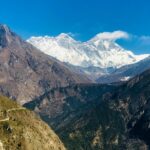
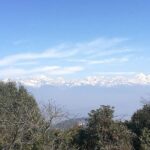
What you get is an aerial perspective you just can’t fake with photos from town. From the ground, Everest can look like a symbol. From the air, it becomes terrain—massive ice shapes, glacier textures, and valley lines that make the region’s scale click. That’s why this is one of the most popular ways to experience Everest country when you’re not trying to summit or trek.
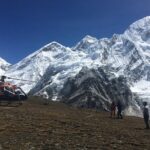
Also, the flight is positioned as an Everest Base Camp-style helicopter outing, but the real value here is the range of what you can see in a single window. The flight is described as taking you over dramatic scenery including the Mt. Everest peak area, the Khumbu Glacier, and Gokyo Lake. If your goal is to see multiple signature landmarks, this format makes sense.
You can also read our reviews of more tours and experiences in Kathmandu
5:45 am pickup and the 4-hour flow of your morning
You start at 5:45 am, and that early kick changes the whole vibe. You’re not running into traffic at peak hours. You’re also catching the day before clouds or weather patterns make things unpredictable. It’s not magic, but early flights often give you a better shot at clear views in mountain regions.
The operator offers pickup and drop from your hotel, or from anywhere in the Kathmandu Valley. That’s practical because you won’t have to figure out transport while coordinating with a tight morning schedule. It also helps if you’re already tired from altitude-free but busy Kathmandu travel days.
The total experience time is listed as about 4 hours. In practice, that time window matters because it helps you plan the rest of your day. If you’re sightseeing in Kathmandu after, this tour won’t force you into a full day stuck waiting around. If clouds cancel or reschedule, you’ll need to have a little flexibility—but the original structure is built to be time-efficient.
One more small-but-important detail: you’ll use a mobile ticket. Bring it up on your phone so you can show it quickly. And keep in mind that, for helicopter operations, smooth check-in and quick handoffs can make the morning go better than you’d expect.
Aerial route highlights: Everest, Khumbu Glacier, and Gokyo Lake
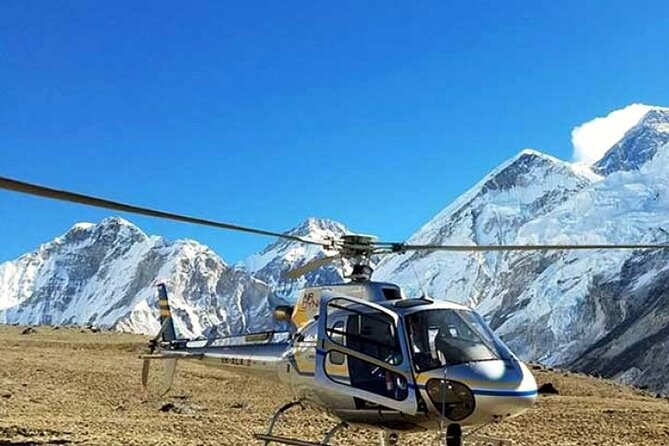
Even though the exact flight path can be weather-dependent, the advertised highlights give you a clear picture of where the wow-factor comes from.
Mt. Everest area from the air
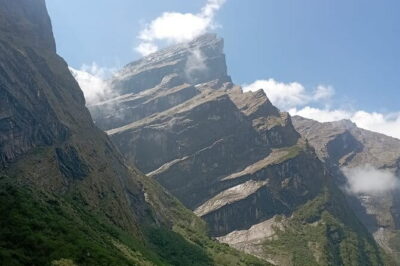
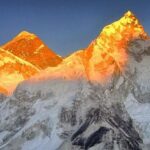
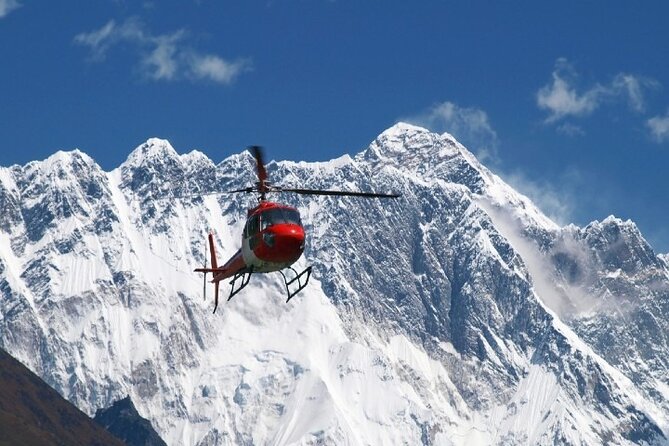
Everest from above is not just a peak. It’s a wall of rock and ice that looks impossibly steep. From an aerial angle, the scale becomes obvious. You also get a sense of how the terrain funnels weather and wind through the Khumbu valleys.
Khumbu Glacier views
The Khumbu Glacier is one of those features that looks almost smooth from a distance. From the helicopter, you can see more detail—striation and movement-like patterns in the ice. This is where the aerial format really pays off, because glaciers are three-dimensional things, not flat postcards.

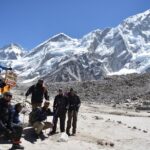
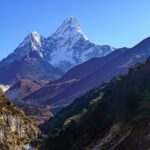
Gokyo Lake angles
Gokyo Lake is often photographed on its own, but the air view helps you understand how the lakes sit in relation to surrounding ridges and the broader Everest region. It gives you context that a single ground viewpoint usually can’t.
A practical note: you’re flying in a small aircraft environment, so you should assume lighting and angles will vary. If you want strong photos, the best approach is simple: be ready to shoot quickly, trust your guide’s cues, and don’t expect one perfect angle for every landmark.
Sharing flight style: smooth operations and what small groups mean
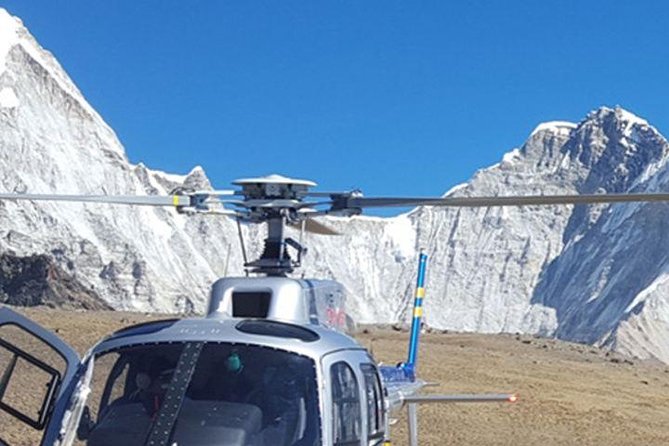
This is a sharing helicopter service, with a maximum of 5 travelers. That small cap matters more than you might think. Larger groups can mean more waiting and more time spent coordinating people. Smaller groups can feel calmer, and the whole day tends to move with fewer interruptions.
You also get hotel pickup and drop, plus all local and governmental taxes and a fuel surcharge listed as included. That reduces the usual Nepal travel annoyance of guessing what’s included and what’s not until you’re already at the airport-style handoff.
The experience provider is Nepal Horizon Treks and Expedition Pvt. Ltd. Operations like this run on exact timing, and the best sign to look for is how smoothly the team handles the early morning handover. In the info you’re given, there’s a clear emphasis on professionalism and organized service. People also specifically mention feeling safe during the flight, which is a big deal with helicopters.
One more detail that pops up in the overall story: Dip, the owner, is described as doing careful planning and tailoring. You can treat that as a good sign that communication is taken seriously, even for a short flight.
Price and logistics: what $1,550 buys (and what it doesn’t)
At $1,550 per person, this is not a budget play. So the real question is value. Here’s what helps justify the price if your priorities are views and time.
Included value
Your price includes:
- Sharing heli service with insurance coverage
- Hotel pickup and drop in Kathmandu Valley
- All governmental and local taxes
- Fuel surcharge
- The Everest helicopter flight service
For helicopter travel, those inclusions reduce uncertainty. You’re paying for the flight and the “getting there and back” pieces, plus costs that can otherwise sneak into the final bill.
What you should budget extra
Not included:
- Breakfast is optional at $30 each
- Everest national park fees at $30 each
- Personal expenses
- Passport must be carried
If you only add one extra line item to your mental math, make it the park fee. It’s not huge compared to the flight cost, but it can still change the total, especially if you’re booking for more than one person.
Also, breakfast being optional matters for the morning. Since pickup starts at 5:45 am, plan to either eat beforehand or accept that you might be buying breakfast at the listed rate, depending on timing.
Is the sharing aspect worth it?
If your goal is to see Everest country from the air without paying for a fully private helicopter, the sharing model is the whole point. It’s also why this works as a short, high-impact experience. You trade a bit of privacy for a much more achievable price—without giving up the core aerial access.
Weather and documents: the things that can change your plan
In the Himalaya, weather isn’t a minor factor. For this experience, it’s explicit: you need good weather, and the operator may cancel due to poor conditions.
If it’s canceled due to weather, you’ll be offered either:
- A different date, or
- A full refund
That’s the best kind of contingency because it avoids the annoying catch-22 where your money is locked but the views are out of reach.
You should also take the document requirement seriously. The tour notes that you must carry your passport. Even if you’re just flying a short time, helicopter ops need correct identification. If you’re traveling with a digital copy, keep that as backup, but follow the instruction: have the passport with you.
If you’re the kind of person who likes everything locked down, consider adding a little buffer around your Kathmandu plans. Not because the tour is chaotic, but because mountain weather can be stubborn.
Who should book this Everest Base Camp helicopter sharing flight?
This tour fits best if:
- You want major Everest-region scenery fast, without a multi-day trek
- You’re short on time and want the Khumbu’s headline views
- You prefer a small sharing group (max 5) rather than a large bus-and-boardwalk style tour
- You value a service with insurance coverage built in
You might think twice if:
- Your schedule is extremely tight and you can’t handle a weather-driven date shift
- You’re looking for a long, hands-on experience on foot (this is primarily an aerial viewing experience)
- You don’t want early mornings. The 5:45 am start is real.
If you’re traveling as a couple or as friends and you want to split the overall cost of getting high-impact views, sharing can be a smart sweet spot.
Should you book this tour?
I’d book this if your Nepal trip has one big question mark: how to see Everest-scale scenery without spending a week hiking. This helicopter format is one of the clearest answers. The included structure—pickup, taxes, fuel surcharge, insurance coverage, and the flight service—reduces the usual trip friction.
The decision comes down to two things:
1) Do you have at least a little flexibility for weather?
2) Are you okay with paying extra items like national park fees and optional breakfast?
If you can say yes, you’ll likely feel like you bought time and access. If you’re staring at a rigid calendar, consider keeping at least one backup option in mind.
FAQ
What time does the helicopter tour start?
The start time is 5:45 am.
How long is the Everest Base Camp helicopter experience?
The duration is listed as about 4 hours.
Is hotel pickup included?
Yes. Hotel pickup and drop are included, and pickup is available from any location in the Kathmandu Valley.
Is breakfast included in the price?
No. Breakfast is not included. It’s listed as optional for $30 per person.
Do I need to pay national park fees?
Yes. Everest national park fees are not included and are listed as $30 each.
What happens if weather cancels the flight?
If the experience is canceled due to poor weather, you’ll be offered a different date or a full refund.