REVIEW · HIKING & TREKKING
Ghorepani Poon Hill Trek
Book on Viator →Operated by Nepal High Trek & Expedition Pvt. Ltd · Bookable on Viator
Waking for Poon Hill feels worth it. The Ghorepani Poon Hill Trek mixes manageable hiking with big Himalayan payoff, plus village life and forests on the way to a sunrise viewpoint above 3,210 m. I especially like that the main show, Poon Hill sunrise, is a short morning hike to an overlook built for mountain-watching.
I also like the practical side of this trip: you get private attached bathrooms at your lodges for the trek nights, along with included three meals a day structure (breakfast, lunch, dinner) and tea breaks. That kind of comfort matters when you’re moving all day and want your evenings to feel like recovery, not survival.
One consideration: this is billed as a beginner-friendly trek, but it still involves uphill walking, early starts, and cold mornings at altitude. If you’re sensitive to altitude or dislike dawn hiking, you’ll want to plan for that up front.
In This Review
- Key highlights worth knowing
- Poon Hill sunrise at 3,210 m is the whole point
- Price and value: what you’re paying $399.67 for
- From Kathmandu to the Annapurna foothills: your “Day 1” rhythm
- Ulleri to Bhanthati: uphill legs, forest walking, and real village texture
- Poon Hill sunrise morning: the 1-hour climb that sets your whole trip
- Ghandruk: Gurung village life after the downhill calm
- Why the licensed guide support changes everything
- Teahouse comfort on this route: what “private attached bathroom” means
- How hard is this trek, really?
- Who should book the Ghorepani Poon Hill Trek
- Should you book this one with Nepal High Trek & Expedition?
- FAQ
- Where does the Ghorepani Poon Hill Trek start?
- How long is the trek?
- What does the tour include?
- Is transportation included?
- Is pickup included?
- Do I need travel insurance?
- Are porter fees included?
- How difficult is the trek for beginners?
- Are private tours available?
- Is cancellation free?
Key highlights worth knowing
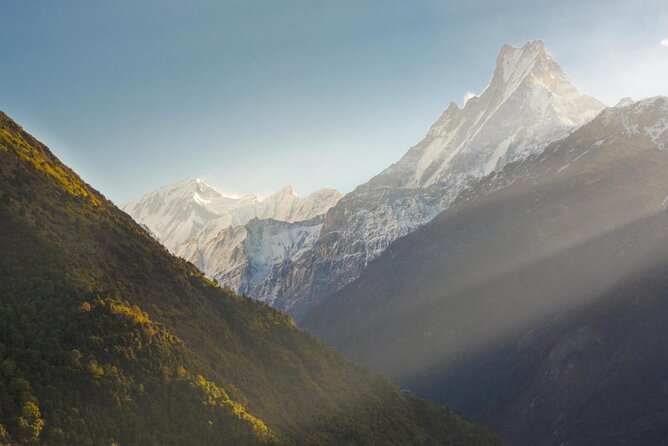
- Poon Hill sunrise at 3,210 m: A short morning climb to see a long line of peaks during early light.
- Annapurna view day, not a marathon: Days are built around short hikes, rest periods, and scenic stops.
- Private attached bathrooms for trek nights: A real comfort upgrade on a teahouse route.
- Licensed mountain guide + private group: Only your group participates, with a government license holder leading you.
- Ground transportation included: Pokhara to Nayapul, and later toward Ghandruk and back.
- Guide experience you can feel: Past trips name guides like Anos, Surya Tamang, Arbind, and Indako Tamang for patient, caring support.
Poon Hill sunrise at 3,210 m is the whole point
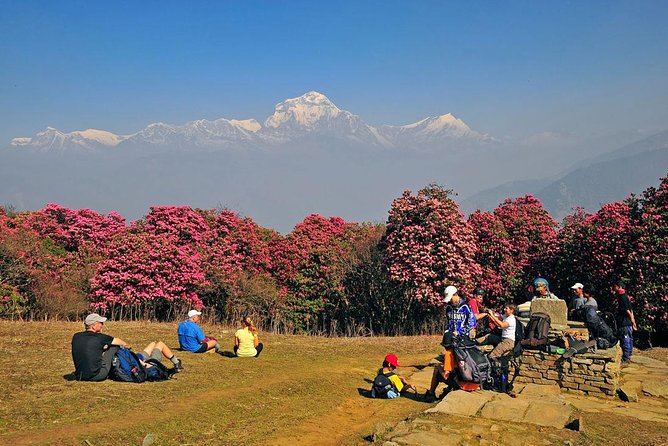
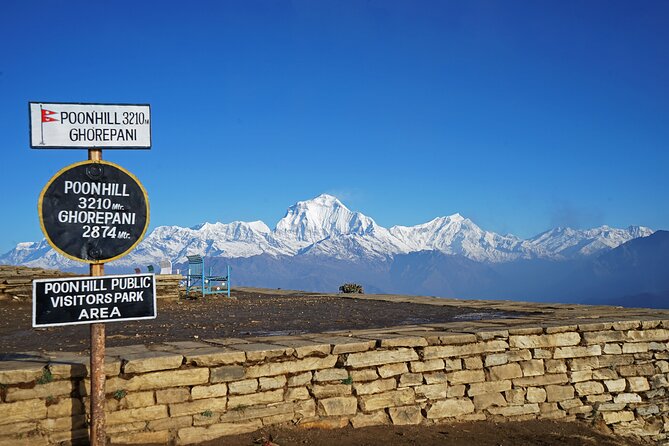
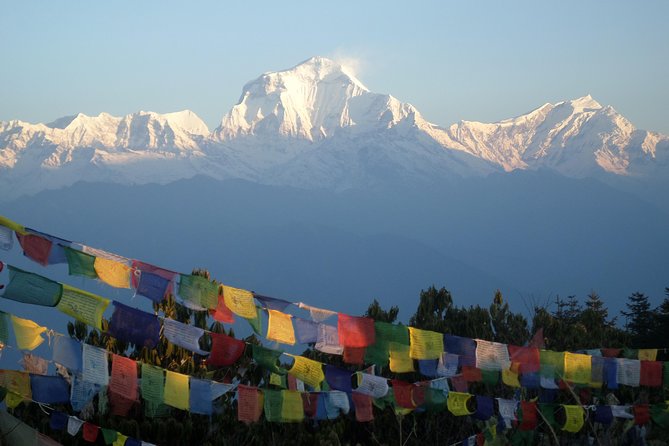
The reason people pick the Ghorepani Poon Hill Trek is simple: the views. Poon Hill sits above 3,210 m, and the morning run to the viewpoint is described as about an hour of hiking. You’re going up early enough to catch sunrise, when the mountain faces brighten in layers instead of all at once.
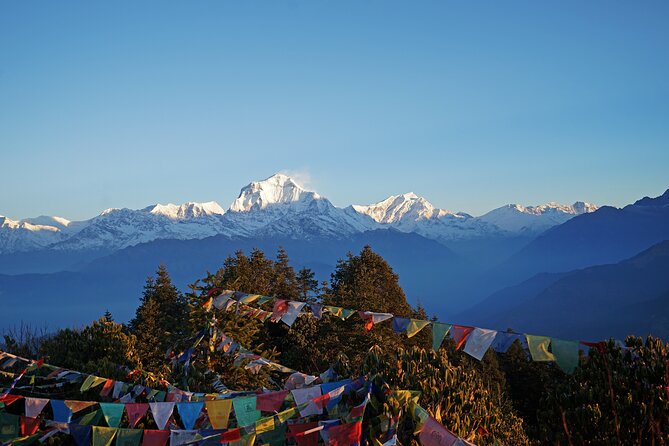
From that viewpoint, the mountain list is serious. Expect a wide panorama that can include Mt. Annapurna I, Annapurna South, Gangapurna, Annapurna III, and across the horizon Dhaulagiri and Manaslu. You may also see Machhapuchare (the Fish-tail), plus views toward Ganesh Himal. It’s the kind of scene where you stop talking and just look—then remember to check the sky, because clouds can change everything fast.
Practical truth: sunrise treks feel easier than they are. The hike up is short, but you’ll be moving in the cold and likely before you’ve had a full breakfast. Plan to be slow and steady, not fast. Bring warm layers you can actually move in.
You can also read our reviews of more hiking tours in Kathmandu



Price and value: what you’re paying $399.67 for
At $399.67 per person, this is not a bare-bones trek. You’re paying for the structure that makes a multi-day hike smoother: a licensed guide, permits, meals, tea, and covered transport.
Here’s what stands out as value in the included items:
- Meals included during the trek: Breakfast, lunch, and dinner are part of the package (with listed counts for breakfast, lunch, dinner).
- Annapurna Conservation Area Project permit: This is part of what keeps the route managed and legal.
- Government license holder mountain guide: Not just someone with enthusiasm—someone with the required credentials.
- Private attached bathroom throughout the trek nights: This is a big quality lever. Many tea house routes involve shared facilities; you’re getting private attached bathrooms instead (for the included trek nights).
- Three cups of tea per day: Tiny cost, but it changes how enjoyable cold breaks feel.
- All ground transportation: Pokhara to Nayapul, and later Ghandruk back toward Pokhara, is included.
- Pickup offered: If you’re staying in Kathmandu, pickup and transfer coordination can save time and stress.
What’s not included (and you should budget for it):
- Tips for the guide
- Travel insurance (important for any trek)
- Porter fees of $20 per day (so if you want a porter for your bag, plan for it)
Also note: it’s a private tour/activity, meaning only your group participates. That usually costs more than a shared group trek, but it also means fewer compromises.
From Kathmandu to the Annapurna foothills: your “Day 1” rhythm
Your start time is listed as 1:15 pm, and the first day includes a two-hour drive toward the foothills, passing towns and villages with views of the Annapurna mountain range and Machhapuchare (the Fish-tail). You reach Nayapul (new bridge), where the trekking component starts.
This matters because it sets expectations. You’re not walking immediately from the moment you meet. You’ll use the first hours to transition, get oriented, and settle your pack before you’re on steeper ground.
Then you head toward Ulleri, with Ulleri listed as a stop on day one. Even if your hiking is light that first afternoon, Ulleri is a good place to start because it’s established for trekkers. You’ll feel the rhythm of the route: lodges, trails, and villagers living along the path.
The small drawback to keep in mind: the schedule is partly car-based first. If you dislike being in a vehicle, you’ll want to treat the first day like a transfer day, not a hiking day.
Ulleri to Bhanthati: uphill legs, forest walking, and real village texture
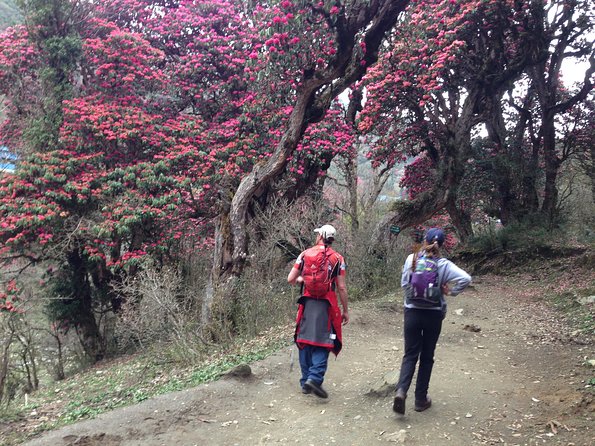
Day two is where the trek starts to feel like a trek. You begin with a two-hour uphill walk to Ulleri village, with views of Annapurna South and Machhapuchare. From there, the route is described as improving after Ulleri—passing Bhanthati, and continuing on a pleasant trail within alpine forest.
This stretch is where many people fall in love with the Annapurna region. It’s not just big mountain views; it’s the way the path threads through villages and farming terraces, with forests close enough that the air feels different as you climb.
A practical tip: uphill walking often feels easier when you stop thinking in distance and start thinking in effort. Short pauses, steady breathing, and foot placement matter more than speed. This is the part of the trek that rewards patience.
Also, if you’re hiking with kids or anyone who tires quickly, the day-two structure is helpful. It’s described as an uphill effort early, then a trail that’s characterized as more pleasant—meaning there’s likely a rhythm shift you can use to manage energy.
Poon Hill sunrise morning: the 1-hour climb that sets your whole trip
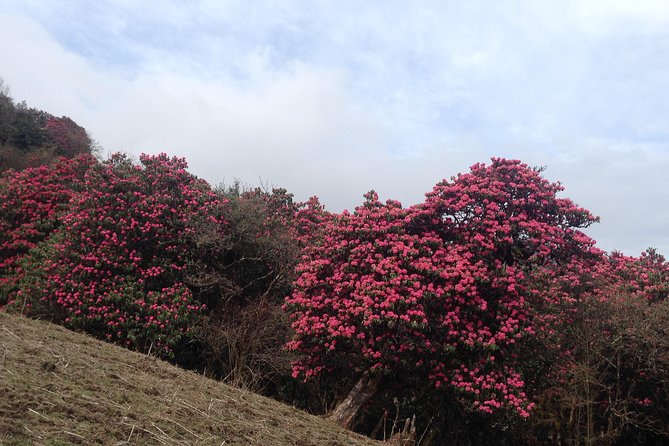
The highlight day is day three. You wake up early for a hike to Poon-Hill at 3,210 m and head out specifically for sunrise views.
The mountain lineup here is your “wow” moment. The description includes views stretching from Mt. Dhaulagiri and Mt. Manaslu across toward the Annapurna peaks, with Machhapuchare still visible in the mix and toward Ganesh Himal. It’s not just one peak; it’s the feeling of a whole wall of mountains across the sky.
What you’ll likely feel in that moment:
- The cold hits right away, then you warm up as you move.
- The air makes your vision sharper—until clouds soften everything.
- The hike is short enough that you can go slow and still reach the viewpoint.
After sunrise, you continue onward (the day-three stop text is truncated in the info you provided), but the trek continues to the next overnight area on the route. In other words: don’t assume sunrise is the entire day. It’s the centerpiece that happens early, then the hiking resumes.

Ghandruk: Gurung village life after the downhill calm
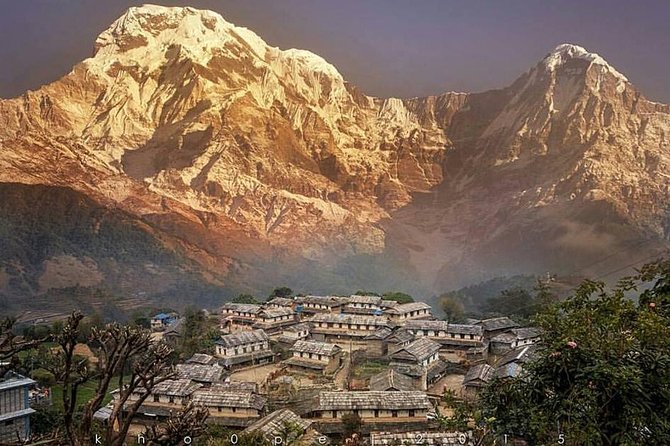
On day four, the mood shifts. You do a morning downhill walk into forest to reach Ghandruk, described as a large village populated by Gurung people.
Ghandruk is a key cultural stop on this trek because it’s not just a random lodge cluster. It’s a recognized community in the Annapurna region, where the trail connects you to local life—farm terraces, village pathways, and the steady hum of people running daily tasks.
You reach Ghandruk for lunch, and you also have free time in the afternoon to explore the village. That free time can be one of the best parts of the trip if you use it well: take a slow walk through side lanes, watch how people do everyday work, and compare what you saw on the mountain trail with what happens when you’re on a village scale.
One note on pace: downhill can be deceptively hard on knees. Take small steps, and plan to use trekking poles if you rely on them.
Why the licensed guide support changes everything
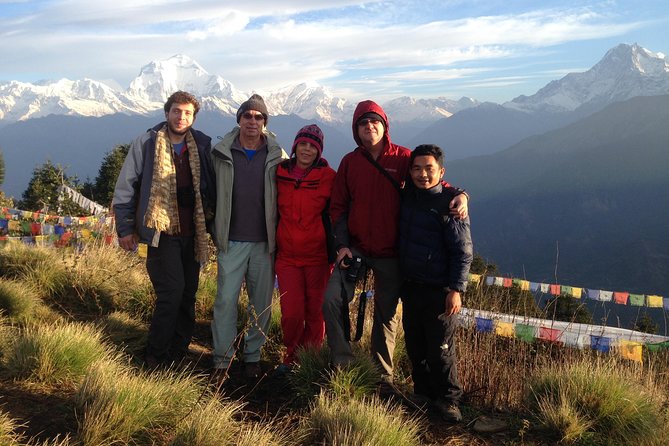
This trek is short, but it’s not effortless. A good guide helps you avoid the most common problems: walking too fast early, eating at the wrong times, and not knowing where to pause for the view.
In the experiences shared, guides named Anos, Arbind, Surya Tamang, and Indako Tamang show up with consistent themes:
- Caring and attentive support (including helping carry a bag at times)
- Professional, welcoming energy
- Patience for families, including kids
- Flexible adjustments to what the route covers
Because this is a private tour/activity, you’re not stuck with a big mixed group pace. You can ask questions, stop for photos without feeling rushed, and keep the trek aligned with your comfort level.
Also, this tour includes a government license holder mountain guide, which matters in Nepal. You’re buying know-how, safety judgment, and local route understanding—not just someone to point at trails.
Teahouse comfort on this route: what “private attached bathroom” means
A lot of Poon Hill-style treks are priced based on a trade-off: pay less, accept shared facilities. This one flips part of that trade-off by including 3 nights with a private attached bathroom.
That changes daily life. It means you can:
- Freshen up without waiting your turn
- Keep your routine calmer after cold hikes
- Reduce the stress of nighttime logistics
You also get 3 cups of tea per day included. Tea is more than a drink here—it’s a rhythm. It gives you a predictable pause after hiking, and it helps you warm up when temperatures drop at elevation.
One more practical detail: you’ll get structure around meals—breakfast, lunch, dinner—so you’re not constantly deciding what to eat mid-hike. In real trekking life, that’s a major quality-of-experience factor.
How hard is this trek, really?
Based on the trek style and the way this route is described, it fits beginner/intermediate hikers. But “beginner” doesn’t mean “effortless.”
Expect:
- Uphill days (day two includes a described two-hour uphill push early)
- Early morning starts (sunrise means cold, short-morning effort)
- Downhill walking (day four downhill toward Ghandruk)
- Altitude effects you should respect, even if you’re not going very high
The most realistic way to think about it: you’re hiking on a mountain schedule. You’ll feel it in your legs, not your lungs only. If you pace well and keep your breaks honest, most people can handle it.
If you’re bringing kids or planning a family hike, this route can work because it’s a shorter time commitment (about 4 days) and focuses on manageable segments rather than long grinds.
Who should book the Ghorepani Poon Hill Trek
I’d point you toward this trek if you want:
- A first multi-day trek in Nepal with a clear highlight day (sunrise at Poon Hill)
- A balance of mountain views and village time (especially Ghandruk)
- Comfort upgrades like private attached bathrooms
- A private group setup with a licensed guide
It’s also a strong choice for solo travelers, since the experience is organized and guided, and one of the named guide stories includes caring support like helping carry a bag at times.
Where I’d hesitate:
- If you hate early mornings, sunrise hikes may not be your thing.
- If you have knee issues or mobility limits, you’ll need to be honest about downhill walking and choose your pace carefully.
Should you book this one with Nepal High Trek & Expedition?
If your goal is a classic Annapurna taste with serious sunrise views and you care about comfort, I think this is a good booking choice. The combination of included meals, tea, permits, transport, and private attached bathrooms makes the trip feel planned instead of improvised.
If you’re okay paying a bit extra for that structure, it’s a smart way to do Poon Hill without turning it into a logistics project. And with the company’s history of named guide support like Anos, Surya Tamang, Arbind, and Indako Tamang, you’re likely to get a calm, patient experience—especially if you tell your guide what you want from the trek.
FAQ
Where does the Ghorepani Poon Hill Trek start?
The trek is located in Nepal, with the tour base listed as Kathmandu. Pickup is offered, and the start time is listed as 1:15 pm.
How long is the trek?
The duration is listed as about 4 days.
What does the tour include?
It includes 3 times meals during the trek (breakfast, lunch, dinner), the Annapurna Conservation Area permit, a government license holder mountain guide, private attached bathroom for 3 nights, 3 cups of tea per day, and all ground transportation (Pokhara – Nayapul – Ghandrunk – Pokhara).
Is transportation included?
Yes. Ground transportation is included, including routes between Pokhara, Nayapul, and Ghandrunk back to Pokhara.
Is pickup included?
Pickup is offered.
Do I need travel insurance?
Travel insurance is not included.
Are porter fees included?
No. Porter fees are listed as $20 per day.
How difficult is the trek for beginners?
Most travelers can participate. The trek is described as demanding but not so hard for beginner-level hikers.
Are private tours available?
Yes. This is a private tour/activity, and only your group will participate.
Is cancellation free?
Free cancellation is available. You can cancel up to 24 hours in advance for a full refund, and cancellations within 24 hours are not refunded.