REVIEW · EVEREST BASE CAMP TREKS
Everest Base Camp Trek
Book on Viator →Operated by Welcome Nepal Treks P.ltd · Bookable on Viator
Everest Base Camp is a big-name trek for a reason. You get Sherpa culture up close, plus the long build-up to Everest views without rushing the altitude too hard. I also like how the trip centers on a strong team, with guides such as Pradip (Master Zi) earning praise for safety-minded navigation and for spotting wildlife and mountain details you’d otherwise miss.
The main drawback is simple: you still have to earn it. Days are long, high altitude is real, lodges are basic in places, and the early Lukla flight can make the schedule feel tight—so you’ll want solid fitness and patience.
In This Review
- Key highlights before you go
- The real pull of Everest Base Camp in 14 days
- Kathmandu first: getting set up without wasting daylight
- Lukla day: the high-stakes start that shapes the whole itinerary
- Route breakdown: what each stop is doing for you
- Day 1: Arrive Kathmandu
- Day 2: Kathmandu to Lukla, then to Phakding
- Day 3: Phakding to Namche Bazaar (the altitude “gateway”)
- Day 4: Namche acclimatization day
- Day 5: Namche to Tengboche (monastery vibes, mountain views)
- Day 6: Tengboche to Dingboche
- Day 7: Dingboche acclimatization
- Day 8: Dingboche to Lobuche
- Day 9: Lobuche to Everest Base Camp via Gorakshep
- Day 10: Gorakshep to Kala Patthar, then Pheriche
- Day 11: Pheriche to Namche Bazaar
- Day 12: Namche to Lukla
- Day 13: Lukla to Kathmandu
- Day 14: Final drop at TIA
- What makes the guide team matter on this trek
- Lodges, meals, and charging your devices (the honest version)
- Price and value: what $1,500 buys you here
- Packing and fitness: the two things you control
- When plans change: Lukla delays and the helicopter option
- Who should book this Everest Base Camp trek
- Should you book with Welcome Nepal Treks?
- FAQ
- What does the trip include for Kathmandu?
- What’s included on the trek days?
- How does luggage work on the trek?
- Are airport transfers and flights included?
- What happens if my Lukla flight is delayed or canceled?
- Is there a single supplement option?
Key highlights before you go
- Pradip (Master Zi) as a standout guide, praised for mountain know-how and making the trek feel safe and fun
- Namche Bazaar and Dingboche acclimatization built into the route, not treated as an afterthought
- Tengboche monastery area, a classic spiritual pause on the way to higher country
- A real summit-style moment at Kala Patthar if weather cooperates, with views from a high vantage
- Porter support (1 porter for 2 people) that lets you trek with a manageable day pack
- Flight disruption plans for Lukla delays, including possible helicopter options at extra cost
The real pull of Everest Base Camp in 14 days
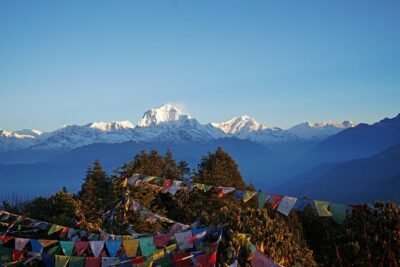
Everest Base Camp is not a “walk and pose” kind of trek. It’s a slow reveal. In just a couple of weeks you move from Kathmandu’s big-airport world into Khumbu’s high-altitude rhythm—tea houses, prayer flags, stone steps, and the constant awareness that every day is higher than the last.
What makes this specific 14-day version work is the pacing. You’re not spending every day climbing; you’re also resting where it matters. Namche Bazaar and Dingboche are key examples. Those breaks help your body adjust before you keep going upward toward Dingboche, Lobuche, and eventually the base camp area.
Another reason it’s a good value: the trek isn’t just walking. You’re guided by someone who knows the terrain and helps you read what you’re seeing. In the feedback I saw, Pradip (Master Zi) got repeated credit for being the difference between feeling stressed on the trail and feeling informed and supported.
You can also read our reviews of more hiking tours in Kathmandu
Kathmandu first: getting set up without wasting daylight
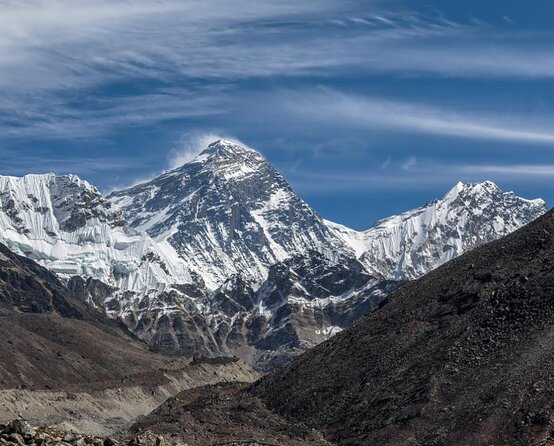
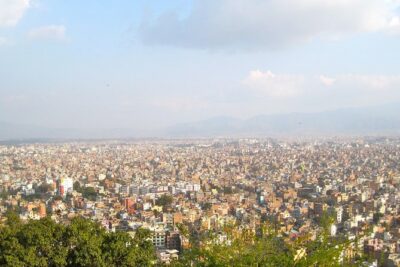
Your trip starts in Kathmandu with an airport pickup at Tribhuvan International Airport (TIA). Meeting is at the airport area, with the tour team coordinating a simple transfer to your hotel. You’re arriving at about 1,320 meters, so it feels like a “real city start,” not an immediate altitude grind.
The Kathmandu portion includes two nights in a standard 3-star category hotel, with attached bath and hot/cold shower and A/C. You also get a little structure on day one, so you’re not scrambling for dinner plans, cash exchange, or the right SIM setup right after landing.
This part matters more than it sounds. Everest trekking is a logistics sport. A comfortable base in Kathmandu means you can focus on sleep, water, and sorting your gear properly before the Lukla flight day.
Lukla day: the high-stakes start that shapes the whole itinerary
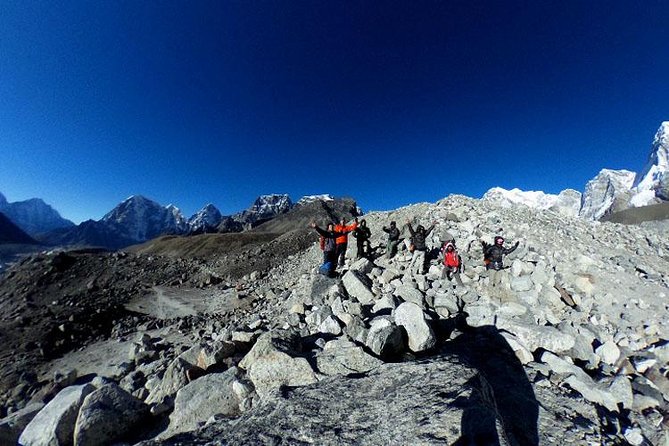
On trek day two (and then again on the way down), the schedule includes an early flight from Kathmandu to Lukla, then a trek to Phakding. That first flight is why this trek has a different feel than many “mountain hikes.” It’s quick, intense, and weather-dependent in the real world.
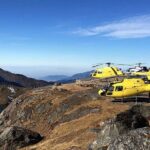
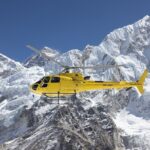
Here’s what you should know: in the event of flight cancellation or delay for the Lukla legs, the plan is to reschedule for the following day if possible. In a group, they can hire a helicopter to fly in/out to Lukla, but that is your cost, with a minimum starting price noted in the details. You’ll want travel insurance that covers that kind of flight cancellation scenario if you’re choosing to rely on that option.
Fitness-wise, the first trekking stretch is not the hardest, but it’s where your body learns the pattern: pack weight management, steady steps, and pacing your breathing. You’ll trek from Lukla down into the Phakding area (and later climb back up through key passes).
Route breakdown: what each stop is doing for you
This route is built like a ladder. Each rung gives you more altitude, but also more context—culture, terrain, and acclimatization.
Day 1: Arrive Kathmandu
Transfer from TIA to your Kathmandu hotel. You’ll mainly be settling in.
Day 2: Kathmandu to Lukla, then to Phakding
Early flight to Lukla (about 2,886 m), then trek to Phakding (around 2,640 m). This is your transition day. It’s about getting your legs moving and staying calm.
Day 3: Phakding to Namche Bazaar (the altitude “gateway”)
You trek up toward Namche Bazaar (about 3,440 m). Namche is where the trek starts to feel like a living system: shops, tea houses, and local life centered on the Khumbu trekking world. You’ll also feel the altitude as more than scenery.
Day 4: Namche acclimatization day
Rest day in Namche for acclimatization at the same elevation level. This day is a big deal. It helps reduce the chance that you rush into thinner air later. It also gives you time to adjust your routine—when to eat, how often to hydrate, and how you handle rest breaks.
Day 5: Namche to Tengboche (monastery vibes, mountain views)
Trek to Tengboche (about 3,867 m). Tengboche is famous for monasteries, and that shows in the atmosphere. It’s a spiritual pause on a physically demanding route.
One practical note: it’s not a “do nothing” day. Even on cultural stops, you’re still climbing and descending your way through cold air and changing light. The goal is to arrive ready, not wiped out.
Day 6: Tengboche to Dingboche
You rise to Dingboche (around 4,260 m). Dingboche is higher, colder, and more exposed. The trail here feels different—more open, more rock, and less of the dense village feel you had lower down.
Day 7: Dingboche acclimatization
Another acclimatization/rest day at roughly 4,260 m. You’ll go back toward the Dingboche area and rest. This is one of the best parts of the itinerary structure: you’re not just “taking a day off,” you’re giving your body time to catch up.
Day 8: Dingboche to Lobuche
Trek up to Lobuche (about 4,930 m). This is where the route starts feeling like high-altitude marching. You can expect longer “steady effort” segments and a clearer sense of being near the Everest orbit.
Day 9: Lobuche to Everest Base Camp via Gorakshep
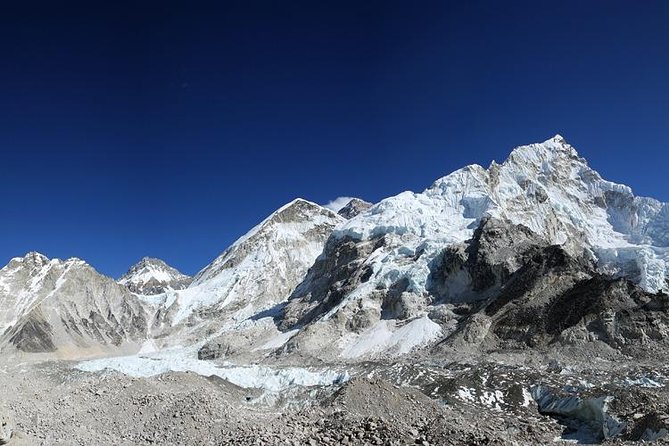
This is the rewarding section. You trek toward Gorakshep (about 5,140 m) and then continue toward Everest Base Camp (around 5,364 m), with the highlight being that you’re finally walking into the base camp area. Even without summit attempts, it feels like stepping into history.
This day is also where you’ll want to protect your energy. Base camp is the goal, but there’s a second goal after: Kala Patthar.
Day 10: Gorakshep to Kala Patthar, then Pheriche
You head up to Kala Patthar (about 5,545 m) and then trek down toward Pheriche (about 4,243 m). Kala Patthar is the “big view” moment on many EBC itineraries. Your actual payoff depends on weather, but the altitude alone makes this a serious day.
Day 11: Pheriche to Namche Bazaar
You descend back toward Namche (around 3,440 m). This is where you’ll either feel relief or feel the reality of trekking back downhill. Either way, your legs will notice the miles.
Day 12: Namche to Lukla
Trek down to Lukla (about 2,886 m). You’ll likely feel a wave of satisfaction here. You’re finishing the altitude loop and getting ready for the flight back.
Day 13: Lukla to Kathmandu
Early flight back to Kathmandu, then hotel transfer.
Day 14: Final drop at TIA
Drop-off to Tribhuvan International Airport for your departure.
What makes the guide team matter on this trek
On Everest Base Camp treks, the best guide is more than someone who points out the way. You want someone who helps you read the trail and the altitude day by day.
The feedback I saw repeatedly credited Pradip (Master Zi) for making the experience enjoyable and safe. People highlighted his ability to navigate difficult terrain and to share mountain and wildlife details you’d otherwise miss. That kind of guidance does two things for you: it reduces uncertainty, and it turns “survival effort” into real learning.
There’s also a staff system in place: the trip includes an experienced, helpful guide and porter support, listed at 1 porter for 2 people. Practically, this means you can keep your day pack reasonable. You carry what you need for the day—water bottle, camera, sunscreen, spare jacket—while your main luggage stays with the porter.
Lodges, meals, and charging your devices (the honest version)
Tea houses and lodges vary a lot up the route. You should expect clean and comfortable options, but not hotel luxury. In Kathmandu, you have 3-star style rooms with A/C and hot/cold shower. On the trek, accommodation is at Mt. Lodge and local tea houses, typically twin share unless you request a single supplement.
Meals on the trek are included: breakfast every day (14), lunch and dinner on the trek days (11 each). Lunch is picked by your guide where available, and dinner/breakfast are taken at your overnight lodge.
Water and charging are two practical issues you’ll actually feel.
- Water: normal water is available for free, and you’re recommended to use water purification pills. You can also buy bottled or boiled water along the way.
- Power: electricity and battery charging are available in some villages. There’s also mention of solar power in some places. You may need to pay for recharging, so bring spare batteries.
If you depend on your phone for photos and navigation, plan for limited charging windows. A low-tech backup (like spare batteries) saves stress later.
Price and value: what $1,500 buys you here
At $1,500 per person for an approximately 14-day trek, the key value isn’t just the walking. It’s the package support around it.
What’s included in the details:
- Airport picks ups and drops by private vehicles in Kathmandu
- Two nights in 3-star category accommodation in Kathmandu (arrival and after trekking)
- Lodges/tea house accommodation during the trek
- Guide and porter staffing, plus food, salary, accommodation, transportation, and insurance for the guide and porter
- TIMS card fees, first aid medical kit, and a duffel bag if necessary
- Scheduled meals on trek days (breakfasts, plus lunches and dinners on those days)
What isn’t included:
- Travel insurance (important here, especially with flight risk)
- Lunch/dinner in Kathmandu
- Alcoholic and non-alcoholic drinks
- Personal extras like snacks, souvenirs, tips, and some recharge costs
There’s also a single supplement option at an additional $200 by request.
Is it fair? For this route, you’re paying for coordination plus human support: early flights to Lukla, lodging transitions, porter labor, and guided pacing. If you were to self-organize, you’d likely spend time and face uncertainty. This package reduces that friction—especially if you’re new to Himalayan treks.
Packing and fitness: the two things you control
This trek is not a casual activity. The details call for a strong physical fitness level, and the itinerary supports that with sustained altitude and multiple long trekking days.
For gear, the plan is straightforward:
- Your main luggage is carried by porters.
- You carry a day pack with essentials (water, camera, sunscreen, spare jacket, etc.).
- A trek bag is ideal for your main items, plus a small lockable bag for travel clothes you don’t need during the trek. You can leave items in Kathmandu at a locker room/safe deposit box for free of charge.
Domestic airline weight matters. Your allowance is listed at 15 kg including your hand bag; extra weight is charged.
Most importantly, don’t pack like you’re going to a one-week cabin trip. On EBC, extra weight becomes extra fatigue, and fatigue becomes altitude stress.
When plans change: Lukla delays and the helicopter option
Lukla flights can be delayed or canceled. The details spell out a sensible response:
- If flights are canceled, they’ll reschedule for the next day if available.
- In a group, a helicopter can be hired for in/out to Lukla, but it’s an additional expense you’d cover.
The helicopter cost is listed as a minimum starting amount per person depending on group size. They also flag insurance: it should cover flight cancellation for at least that amount so you can claim afterward, and they’ll help with documentation.
That’s the kind of information you want to see before you pay, because it tells you how flexible the plan is when weather plays games.
Who should book this Everest Base Camp trek
This trek fits best if you want:
- A classic EBC route with structured acclimatization days
- A guided experience that emphasizes safety, mountain knowledge, and trail navigation
- Porter support so you don’t overpack
- A group size capped at 15 travelers, so it doesn’t turn into a crowded circus
You might want to think twice (or ask more questions) if you:
- Struggle with sustained uphill walking at altitude
- Hate basic accommodations in remote areas
- Are unwilling to plan around flight variability out of Lukla
If you’re organized, physically ready, and okay with modest lodge life, this is a smart way to tackle Everest Base Camp without feeling chaotic.
Should you book with Welcome Nepal Treks?
If you’re looking for a structured Everest Base Camp trek with airport help, Kathmandu comfort, real acclimatization breaks, and a guide team that has a track record (including Pradip, often praised as a highlight), this package is a strong option.
I’d book if:
- You value guidance on the trail and on altitude pacing
- You want porter support and meals organized for you
- You’re okay with basic lodges once you leave Kathmandu
I’d ask questions first if:
- You’re worried about the flight timing to Lukla and how your schedule will handle rescheduling
- You want specific room arrangements beyond twin share or have strict charging/phone power expectations
Overall, at $1,500 for roughly two weeks, the cost looks reasonable for the level of coordination and support involved—especially if you want less uncertainty and more confidence once you’re walking toward Everest.
FAQ
What does the trip include for Kathmandu?
You get an airport pickup and drop by private vehicle in Kathmandu, plus two nights in standard 3-star category accommodation on the arrival day and after the trek.
What’s included on the trek days?
All accommodations in lodges/tea houses are included, along with breakfast (14), and lunch and dinner (11 each) on trek days. Your guide helps with lunch choices where available.
How does luggage work on the trek?
Your main luggage is carried by porters and you carry a day pack. The details also note a 15 kg airline weight allowance (including hand bag) and mention that you can leave extra items in Kathmandu at lockers/safe deposit boxes.
Are airport transfers and flights included?
Airport transfers in Kathmandu are included. The trek includes scheduled flights between Kathmandu and Lukla as part of the program (with rescheduling handled if flights are canceled or delayed).
What happens if my Lukla flight is delayed or canceled?
They’ll try to reschedule for the following day (subject to availability). In a group, a helicopter can be arranged for an additional cost, and travel insurance covering flight cancellation is recommended.
Is there a single supplement option?
Yes. Single supplement accommodation is available on request for an additional $200 in Kathmandu (and your booking can be adjusted accordingly).