REVIEW · KATHMANDU
Cook and Dine with a Local family
Book on Viator →Operated by Royal Mountain Travel · Bookable on Viator
Cooking with a local family beats restaurant meals. I love how this experience pairs market shopping with real cooking lessons, so you’re not just watching from the sidelines. You start by going out with an English-speaking host family to choose spices and ingredients, then you’ll learn to make a classic Nepali meal, including dal bhat, step by step. It’s also the kind of cultural contact that feels practical: you learn what’s in the pantry and why it matters, not just how to follow a recipe.
Two big wins for me are the warmth of the home visit and the food skills you can actually repeat later. The only real drawback to think about is comfort with a hands-on, shared-family kitchen setup—and if you have allergies or strict dietary needs, you should plan on clarifying those directly with the provider ahead of time (the details aren’t spelled out in the tour info).
In This Review
- Key highlights I’d plan around
- Where the best Kathmandu meals come from: a home kitchen, not a demo table
- The 3:00 pm start: logistics that keep your afternoon from getting messy
- Market time: how “spice shopping” becomes a real cooking skill
- Inside the class: learning Nepali technique through dal bhat
- Dinner in the home: what it feels like to eat with the family
- Small group size and English support: the difference between a class and a performance
- Price and value: what $45 covers and why it’s not just a cheap meal
- Who this is best for (and who might want to adjust expectations)
- Practical booking tips for a smooth evening
- Should you book Cook and Dine with a Local Family?
- FAQ
- What time does the experience start?
- How long is the cooking class?
- Where does the tour start and where does it end?
- Is pickup offered?
- How many people are in the group?
- What’s included in the price?
- Can I cancel for a full refund?
Key highlights I’d plan around
- Pickup + private transportation so you don’t lose time wrangling rides at 3:00 pm
- Local market spice shopping where you choose ingredients you’ll cook with
- English-speaking host family for a smoother back-and-forth during the class
- Dal bhat cooking with clear, recipe-style guidance
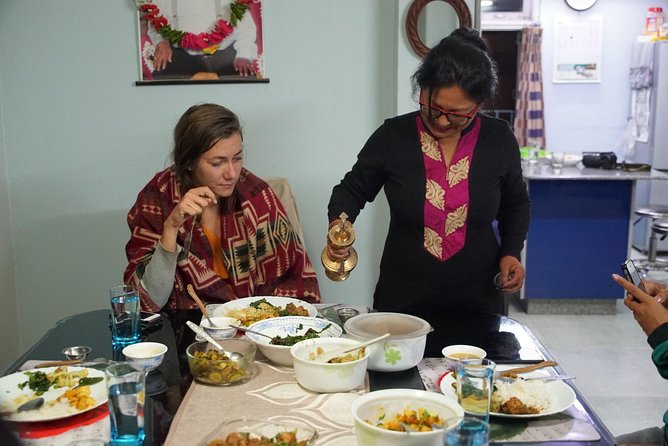
- Dinner in the home so you eat what you made (and it usually tastes better for that reason)
- Maximum of 4 travelers for a calmer, more personal feel
Where the best Kathmandu meals come from: a home kitchen, not a demo table
If you’ve ever sat in a restaurant and thought, I wonder what goes into the pot at home, this is the fix. The core idea here is simple: you go where the ingredients are chosen, and then you cook them in a real household setting with a host family. That matters in Kathmandu, because “Nepali food” isn’t one flavor—it’s spice choices, comfort food technique, and the everyday rhythm of meals.
I like that the class focuses on traditional ways of life alongside cooking. You’re not just handed a printed recipe and sent on your way. You learn what the spices do and how families typically handle prep, which turns the cooking lesson into something you can use later, even if your kitchen doesn’t look like theirs.
Also, the setting tends to be genuinely welcoming. One of the strongest signals from prior experiences is how friendly and warm the family experience feels—less stiff “tour activity,” more shared evening.
You can also read our reviews of more tours and experiences in Kathmandu.


The 3:00 pm start: logistics that keep your afternoon from getting messy
This activity begins at 3:00 pm and runs about 5 hours. The start time is great if you want something that doesn’t chew up your whole day, and if you’re trying to avoid the morning crush in busy parts of the city.
Your meeting point is Royal Mountain Travel, Lal Durbar Marg, Kathmandu 44601, Nepal, and the activity ends back at that same location. Pickup is offered, and you’ll travel by private transportation—so you’re not waiting in traffic on your own or stitching together multiple transit methods.
Practical note: the tour is described as requiring good weather. If weather is poor, you’ll either be offered a different date or get a refund. For planning, keep that in mind if you’re building a tight schedule.
Market time: how “spice shopping” becomes a real cooking skill
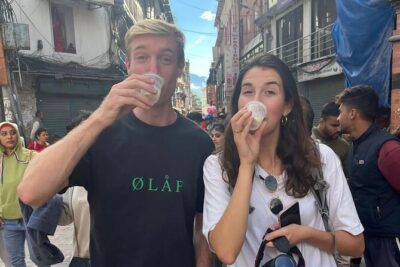
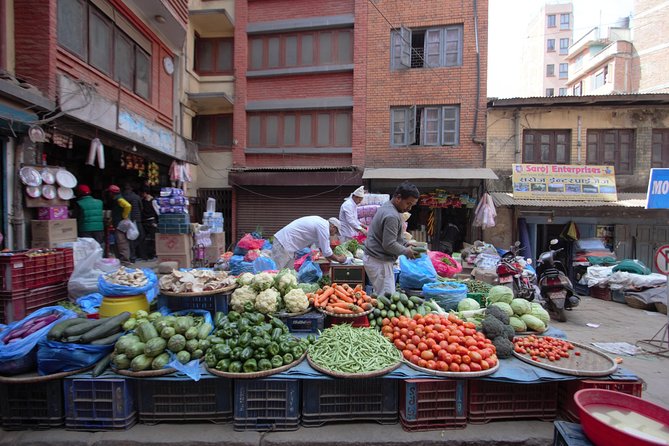
The first big step is going to the local market with your host family to buy groceries and spices. This part is more than an optional photo stop. You’ll choose ingredients that match what you’ll cook, and you’ll get explanations about why particular spices are used and how they change flavor.
Spice education in Nepal isn’t abstract. In this class, you’ll focus on spices that show up in daily cooking—especially the ones tied to classic dishes like dal bhat. Think along these lines:
- turmeric for color and earthy warmth
- cumin for a toasted, nutty note
- ginger and garlic for that hot-fragrant base flavor
Even if you’ve cooked with spices before, market shopping helps you connect the jar label to the dish result. You start to notice the role each ingredient plays—rather than relying on a single “curry powder” shortcut.
One more thing I appreciate: being with a local host makes the shopping quicker and more purposeful. You can ask questions in plain language, and you’re buying what the family actually cooks with, not what looks good in a tourist shop.
Inside the class: learning Nepali technique through dal bhat
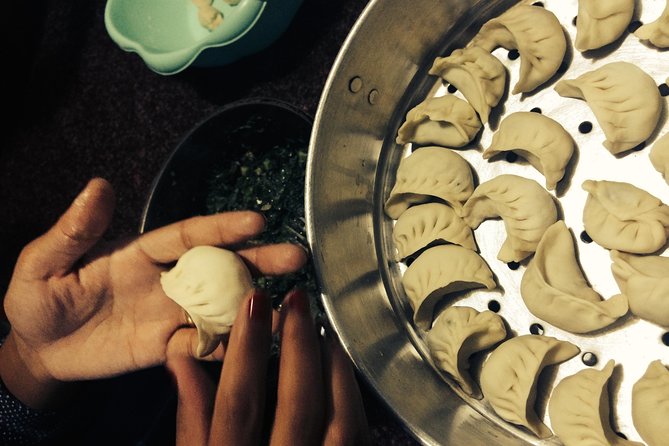
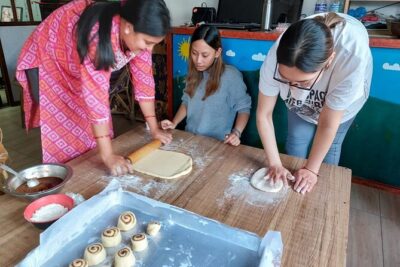
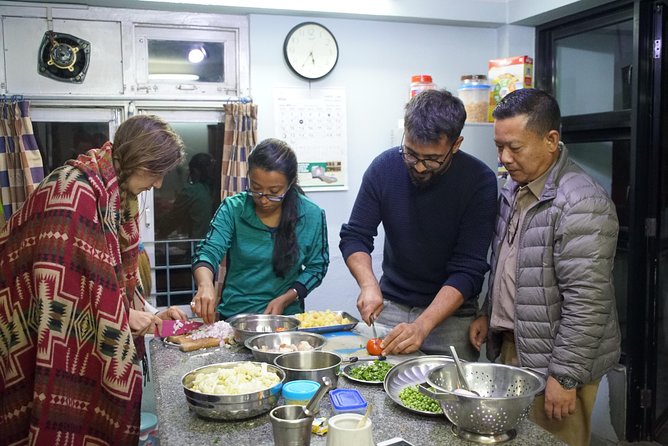
The cooking portion is centered on making a traditional meal, with dal bhat as the recipe focus. The teaching approach is practical: you’ll cut the vegetables and mix them with an assortment of spices to build flavor.
What makes this valuable is the method, not just the final plate. Dal bhat is popular for a reason—it’s a reliable template for understanding how a Nepali meal gets its taste from spices and prep. When you learn how the family handles basic steps like vegetable cutting and spice mixing, you’re picking up habits that transfer to other dishes later.
Here’s what you can expect from the cooking time:
- Ingredient handling: you’ll work with vegetables and spices
- Spice blending: you’ll learn which spices go together and how they affect flavor
- Following the recipe steps with support from your English-speaking host family
The class also helps you see how simple ingredients become dinner through the right spice balance. If you normally cook by following a recipe exactly and you want more “why this works” understanding, this format delivers that without needing a chemistry lesson.
Dinner in the home: what it feels like to eat with the family
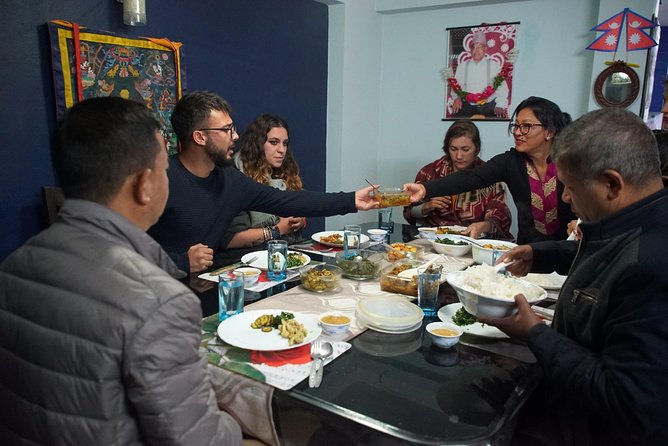
After cooking comes the best part: dinner in the home. This is where the experience becomes more human than instructional. You’re not only learning to cook; you’re experiencing the meal in the way a family would share it—calm, social, and grounded in everyday life.
From what I’ve seen described, the home portion is where the welcoming tone really hits. People tend to feel invited rather than managed. In one case, the host home was in the Patan area, which adds a sense of stepping beyond just “central Kathmandu sightseeing” and into the neighborhoods where daily routines happen.
Eating what you cooked also makes the lesson stick. When you taste the dish right after learning the steps, your brain links spice choice to outcome immediately. And because this is a small group (maximum 4 travelers), conversation is more natural and there’s more time to ask questions.
Small group size and English support: the difference between a class and a performance
This is listed as having a maximum of 4 travelers, which is a big deal. In a larger group, cooking classes can become a blur—one person chopping, another waiting, and everyone relying on the same quick explanation. With only a few people, you’re more likely to get hands-on time and clear coaching.
It also includes an English-speaking host family, which makes the learning smoother. You can ask about spices, technique, and everyday meal logic without turning the experience into a guessing game. That’s especially helpful for understanding how local cooking differs from what you might find in a generic “Nepali restaurant” setting.
So if you value interaction—questions, back-and-forth, learning what people actually do at home—this format fits well.
Price and value: what $45 covers and why it’s not just a cheap meal
At $45.00 per person, the value comes from what’s included: dinner, spice shopping at the local market, English-speaking host family, and private transportation. Many cooking classes stop at the lesson and leave you to handle food afterward. Here, you get the full loop: ingredients → cooking → eating.
You’re also paying for access. The market visit and home dinner aren’t the same as cooking at a studio kitchen. You’re essentially buying entry into local routines—plus the teaching time that makes the food understandable.
If you compare this to the cost of a nice meal plus a separate guide or a food-focused tour, the price starts to look more reasonable—especially because you leave with skills, not only memories. The real “worth it” factor is whether you care about recreating dal bhat (and similar flavors) at home. If you do, this gives you the foundation.
Who this is best for (and who might want to adjust expectations)
This experience is a strong match if you:
- want an authentic Nepali food class in Kathmandu
- enjoy hands-on cooking rather than watching
- like meeting locals in a real home setting
- prefer smaller groups with time for conversation
It may feel less ideal if you:
- need complex dietary accommodations (the tour info doesn’t list customization details)
- strongly dislike working with spices or cooking in a home kitchen environment
- want a strictly “sit and learn” experience with minimal participation
That said, the class is built around simple steps—cutting vegetables, mixing spices, and following a traditional recipe—so it’s usually approachable for most people who are willing to get a bit involved.
Practical booking tips for a smooth evening
A few things I’d do before you go:
- Plan to eat soon after cooking. This includes dinner, and it’s tied to the class flow.
- Wear comfortable clothes you don’t mind getting a little kitchen-spice energy on.
- Bring a mindset for interaction: you’ll get more from the experience if you ask questions about spices and cooking steps.
- If you have weather-sensitive plans, keep backup flexibility. The tour notes good weather is required.
Also, because it’s a small group, you’ll likely get more personal attention. That’s part of the value, so show up ready to participate.
Should you book Cook and Dine with a Local Family?
I think you should book it if you want more than a meal and more than a generic food tour. The combination of market spice shopping, hands-on instruction for dal bhat, and dinner with a host family is the recipe for a memorable experience that actually teaches you something.
Skip it (or ask extra questions before booking) if your dietary needs are very specific, or if you’d rather not cook in a home-kitchen setting. And if your schedule is tight, build in a little slack for the weather requirement.
If those boxes fit you, this is the kind of Kathmandu experience that turns food into real understanding.
FAQ
What time does the experience start?
It starts at 3:00 pm.
How long is the cooking class?
The duration is about 5 hours.
Where does the tour start and where does it end?
It starts at Royal Mountain Travel, Lal Durbar Marg, Kathmandu 44601, Nepal and ends back at the same meeting point.
Is pickup offered?
Yes, pickup is offered, and the tour includes private transportation.
How many people are in the group?
There’s a maximum of 4 travelers.
What’s included in the price?
The price includes dinner, spice shopping at the local market, an English-speaking host family, and private transportation.
Can I cancel for a full refund?
Yes. You can cancel up to 24 hours before the experience’s start time for a full refund. If you cancel less than 24 hours before, the amount paid will not be refunded.