REVIEW · ANNAPURNA BASE CAMP TREKS
Annapurna Base Camp Trek 12 Days
Book on Viator →Operated by Nepal Nirvana Trails · Bookable on Viator
Early buses, big mountains, big payoff. This 12-day Annapurna Base Camp trek pairs guided route planning with classic sunrise moments, from Poon Hill to dawn at base camp.
I especially like how the trip is built around early starts and clear pacing, which matters when the air gets thinner. I also like that meals on the trek and the core logistics are handled, so you spend less time guessing and more time hiking.
One thing to consider: weather can make the sunrise views hit or miss, and the itinerary still asks for solid daily walking even if the group keeps a steady tempo.
In This Review
- Key Things That Make This ABC Trek Worth Your Time
- Kathmandu Setup: From Airport Arrival to Trek Mode
- Value Check: What the $800 Covers on an ABC Adventure
- The Team Factor: Guides Who Keep the Hike Feeling Safe
- Day-by-Day: Walking From Kathmandu Into the Annapurna World
- Day 1: Arrive in Kathmandu and Get Ready
- Day 2: Kathmandu Early Bus to Malekhu
- Day 3: Pokhara Morning, Then to Nayapul
- Day 4: First Mountain Morning and Sunrise Views
- Day 5: Poon Hill Sunrise and the Peak-Spotting Moment
- Day 6: Downhill Ease Toward Sinuwa and Chhomrong
- Day 7: Sinuwa Sunrise, Then Climb Toward Deurali
- Day 8: Trek to Annapurna Base Camp
- Day 9: Dawn at Base Camp (If the Weather Plays Nice)
- Day 10: From Sinuwa Toward Siwai, Then Chhomrong
- Day 11: Back to Pokhara, Then on to Kathmandu
- Day 12: Fly Out of Kathmandu
- Permits, Water, and Safety Basics That Reduce Guesswork
- Meals and Tea Stops: What You’re Likely Eating, and What You Must Budget
- Weather and Sunrise Timing: How to Keep Your Expectations Healthy
- Who This Trek Suits Best
- Should You Book Annapurna Base Camp With Nepal Nirvana Trails?
- FAQ
- What’s included in the $800 per person package?
- What’s not included?
- How do you travel between Kathmandu and Pokhara?
- Is a guide included?
- Is this trek suitable for everyone?
- Where and when does the tour start and end?
- Can I cancel for a full refund?
Key Things That Make This ABC Trek Worth Your Time
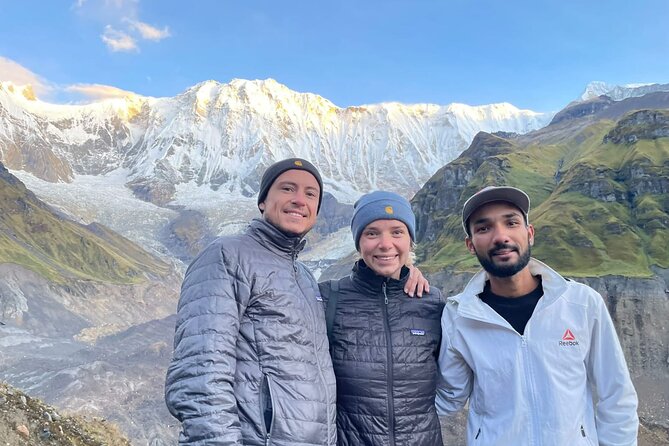
- Mapped route know-how from guides who have led groups on the Annapurna Base Camp trail many times
- Sunrise focus, including Poon Hill and a potential dawn at Annapurna Base Camp
- Support that shows up on the trail, with guides reported as caring, responsive, and willing to adjust pace
- Permits and paperwork handled, including ACAP, TIMS, and local requirements
- Water purification included, plus a trekking map to keep things grounded
- Easy logistics without fuss, including Kathmandu–Pokhara ground transport and airport transfers
Kathmandu Setup: From Airport Arrival to Trek Mode
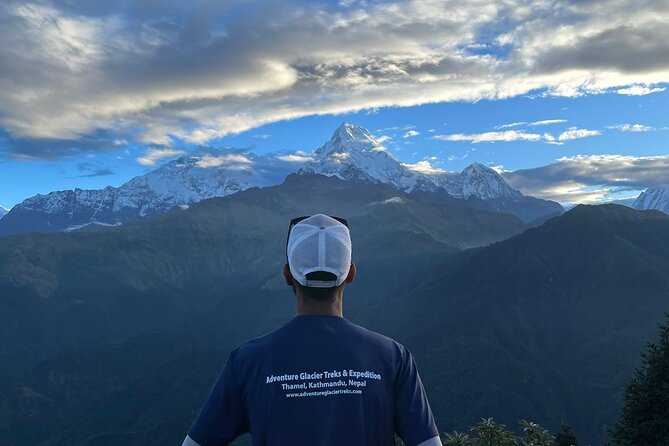
Landing in Kathmandu is one thing. Turning that landing into trek momentum is the real trick. On day 1, you meet your team at Tribhuvan International Airport (Kathmandu), then they escort you to your hotel so you can rest and do quick trek prep. It’s a smart buffer day. You’ll want to give your body time to catch up before the hiking rhythm starts.
The trip also flags an early start time (6:15 am) and builds day 2 around mornings right away. That matters because Annapurna mornings can be cold, and early light is when the mountain views start to look like they belong on a postcard.
You can also read our reviews of more hiking tours in Kathmandu
Value Check: What the $800 Covers on an ABC Adventure
Let’s talk money like adults. At $800 per person for roughly 12 days, you’re paying for more than a “guided hike.”
Here’s the value story based on what’s included:
- Airport transfers for arrival and departure
- Kathmandu–Pokhara–Kathmandu ground transport by tourist bus
- 11-night accommodations during the tour
- An experienced guide
- Meals while trekking (breakfast/lunch/dinner with tea/coffee during trek days)
- Pokhara to the trekking start point and trek ending point to Pokhara via private vehicle service
- Permits and fees including ACAP, TIMS, and local permits
- Trekking map and water purification drop/tablets
That’s a lot of the stuff that usually balloons costs on trekking trips: getting people to trailheads, handling permits, feeding you on the trail, and keeping water basics covered. Not having to manage those pieces yourself is real value, especially if this is your first Himalayan trek.
What’s not included is also clear, and you should plan for it:
- International flights and Nepal entry visa
- Travel and health insurance that covers emergency rescue/evacuation
- Personal expenses (snacks, extra drinks like beer/soft drinks/juice, Wi‑Fi, and similar)
- Lunch and dinner in Kathmandu and Pokhara
- A porter (only if you want one)
- Tips for your guide (expected)
If you compare this to piecing everything together, the permit + transport + trek meals combo is where this price starts to make sense fast.
The Team Factor: Guides Who Keep the Hike Feeling Safe
A great trek doesn’t feel chaotic. It feels organized. In the feedback for this operator, what stands out is how often people mention feeling safe and well-looked-after.
You’ll trek with professional leaders who know the Annapurna Base Camp route well. That planning shows up in pace and decisions on the trail. Guides are also repeatedly praised for being caring when someone gets tired, and for being willing to help with small, real needs—like snacks timed for tea stops and answering questions as the day unfolds.
Names that come up in the reviews include:
- Prajil, praised for helping with tea time and snacks and keeping the vibe fun
- Deepak, credited with making the experience special
- Bhairas Tamang, repeatedly highlighted for a good pace and looking out for everyone’s wellbeing
- Somnath Tripathi, described as well-prepared and able to handle issues smoothly
- Uttar and Buddha, noted for being fun and helpful
Even if your guide is different, the pattern is consistent: the human part matters here. You’re not just buying a route; you’re buying day-to-day reassurance.
Day-by-Day: Walking From Kathmandu Into the Annapurna World
This itinerary is built around a classic rhythm: travel days, then sunrise hiking days, then time around Annapurna Base Camp.
Day 1: Arrive in Kathmandu and Get Ready
You’re met at Tribhuvan International Airport, then escorted to your hotel. If you land with energy, you can use the rest of the day to get organized—charging devices, picking up last-minute supplies, and letting your body rest. It’s also scheduled with a half-day feel, not a full-on rushing day.
Day 2: Kathmandu Early Bus to Malekhu
Your guide meets you at your hotel/hostel at 6:30 am. Then you walk to the Sorakhutte tourist bus station, catch the bus at 7:00 am, and drive to Malekhu after a short ride.
This day is about transition. You’re trading city air for trail air, but you’re also avoiding the stress of trying to arrange local transport on your own.
Day 3: Pokhara Morning, Then to Nayapul
You’ll have breakfast in Pokhara, and the guide arranges a car/taxi to the bus park. From there, you take a sharing local bus/jeep to Nayapul, with about a 1.5-hour drive.
Nayapul is where the trekking story starts to feel real. By this point, you’ve moved through the core logistics—now it’s about putting your boots to work.
Day 4: First Mountain Morning and Sunrise Views
This is the first fresh wake-up on the trail. The itinerary calls out that mornings bring local noise—donkeys, goats, and hens are part of the vibe. Then you get sunrise views, and breakfast comes with mountain sightlines (the description specifically mentions impressive Annapurna views).
It’s a gentle first taste of the bigger days. You’re not at base camp yet, but you’re already living in the rhythm of the mountains.
Day 5: Poon Hill Sunrise and the Peak-Spotting Moment
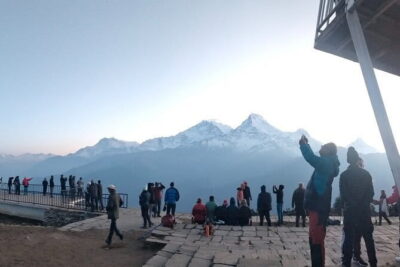
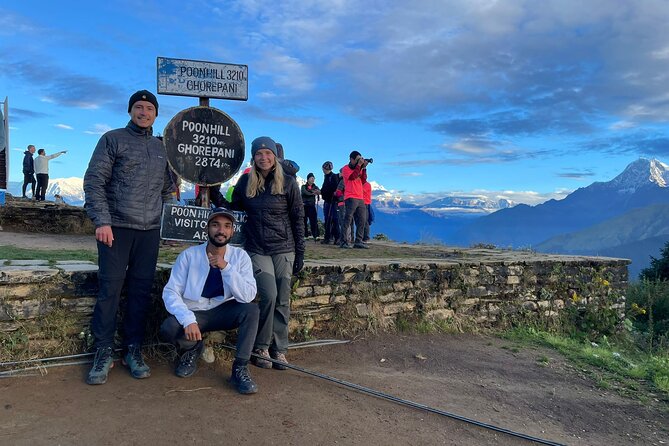
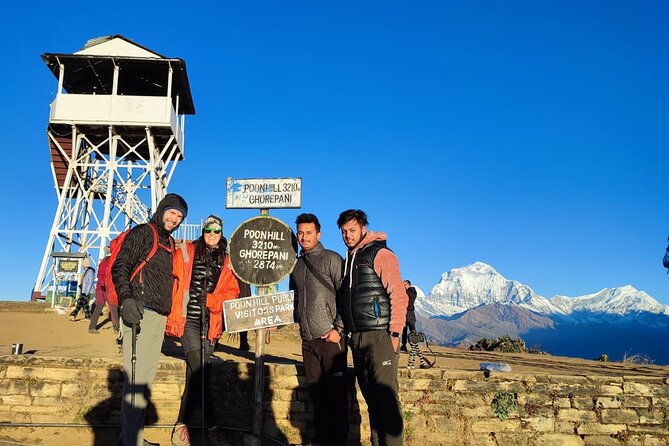
Day 5 is your big sunrise day before base camp. It’s chilly, and you hike roughly 45 minutes to 1 hour to reach Poon Hill Viewpoint for sunrise.
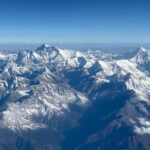
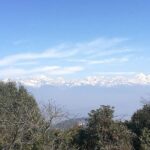
The itinerary notes you can see 18 countable Himalayas peaks from there (weather dependent). Whether you’re a serious peak-counter or just love a good sunrise, this stop is one of the most rewarding “effort-to-view” moments on the whole trip.
Practical tip: sunrise hikes reward layers. You’ll be cold at the start, then warm up while walking.
Day 6: Downhill Ease Toward Sinuwa and Chhomrong
Day 6 is described as enjoyable and easy because it’s mostly downhill toward Sinuwa. You’ll “say goodbye” to Tadapani, then ramble down, arriving in Chhomrong.
This is valuable. After days of early waking, a more manageable stretch can help you keep energy for later higher sections.
Day 7: Sinuwa Sunrise, Then Climb Toward Deurali
You wake to sunrise views from Sinuwa, then after breakfast start the ascent toward Deurali. The climb to Bamboo is listed at around 1.5 hours, and the day continues as you come closer to Deurali.
This is where the trek starts asking more from your legs. The upside is that you’re moving through a sequence of viewpoints rather than jumping to the hardest elevations too fast.
Day 8: Trek to Annapurna Base Camp
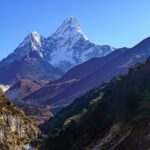
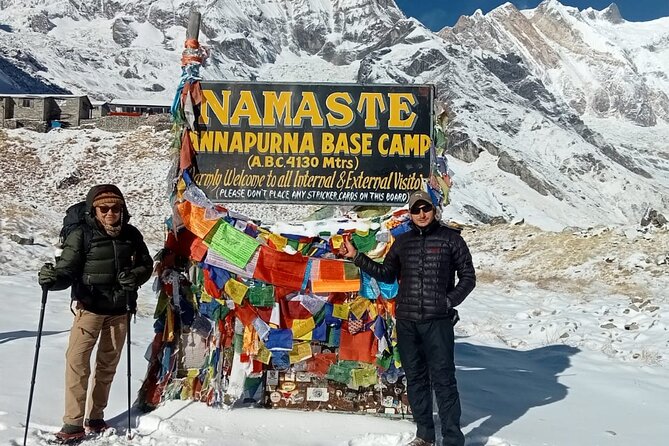
This is the “we made it” day. You trek to Annapurna Base Camp, described as encircled by mountains. Along the way, you pass through Machhapuchhre Base Camp.
Base camp is the goal, but the route matters. That in-between portion is where you start to feel the scale of the area rather than just reaching a single marker.
Day 9: Dawn at Base Camp (If the Weather Plays Nice)
If the weather is clean and clear, you watch dawn from Annapurna Base Camp. After breakfast, you head back toward Sinuwa using rugged trails and sparsely forested areas.
This is one of the most important “expectation management” days. Sunrise is often the headline, but clouds can change what you see. Still, the return hike is meaningful: you get a different feel for the same country on the way down.
Day 10: From Sinuwa Toward Siwai, Then Chhomrong
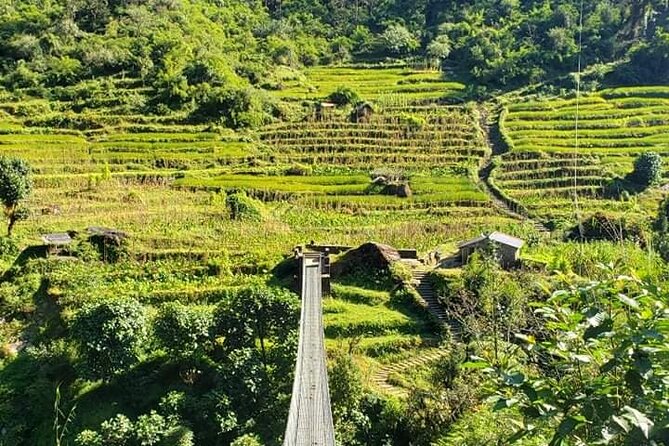
The itinerary describes about two hours of trekking from Sinuwa to Siwai, then you ascend to Chhomrong, taking in mountains, cascades, and farmlands.
This day reads like a mix of effort and scenery payback. It’s also a step toward getting back to the lower, easier-to-breathe rhythm before Pokhara.
Day 11: Back to Pokhara, Then on to Kathmandu
After breakfast, you head from Pokhara back to Kathmandu. Once you arrive, you have free time to relax or shop. There’s also a goodbye dinner in the evening.
After 10 full days of hiking energy, free time is a gift. It gives you room to eat like a normal person and catch your breath.
Day 12: Fly Out of Kathmandu
Your trek ends in Kathmandu, then you fly onward to your next destination. The team drops you at the airport.
It’s the final handoff. You’ve done the work; now you cash out with a straightforward departure.
Permits, Water, and Safety Basics That Reduce Guesswork
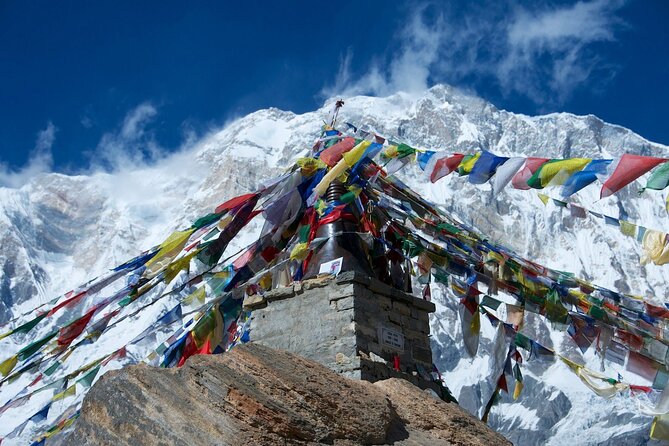
Hiking in Nepal means permits and rules. Here, they’re handled for you: ACAP, TIMS, and local permits are included, along with applicable fees and government tax/vat.
Water is another area where planning matters. You get a trekking map plus water purification drop/tablets included. That’s not glamorous, but it keeps you moving with fewer uncertainties.
And because the operator emphasizes professional trekking teams that know the Annapurna Base Camp route inside out, you should expect decisions to be guided by experience—especially on mornings with uncertain weather.
Meals and Tea Stops: What You’re Likely Eating, and What You Must Budget
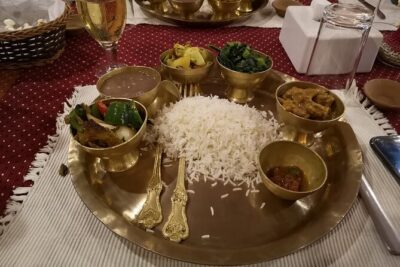
On the trail, meals are built in: breakfast on 11 days, plus lunch and dinner on the trek days (with tea/coffee included during trek time). This matters because it reduces the need to spend time hunting food or negotiating every meal.
If you like tea time with snacks, this trip has a reputation for that moment. One reviewer specifically described a guide helping with tea-time snacks at a guesthouse (named as Ossom), and that’s the kind of detail that makes the trek feel cared for.
Just remember: Kathmandu and Pokhara lunches/dinners are not included, and personal drinks and snacks on the trail are on you unless you choose them as part of your own spending.
Weather and Sunrise Timing: How to Keep Your Expectations Healthy
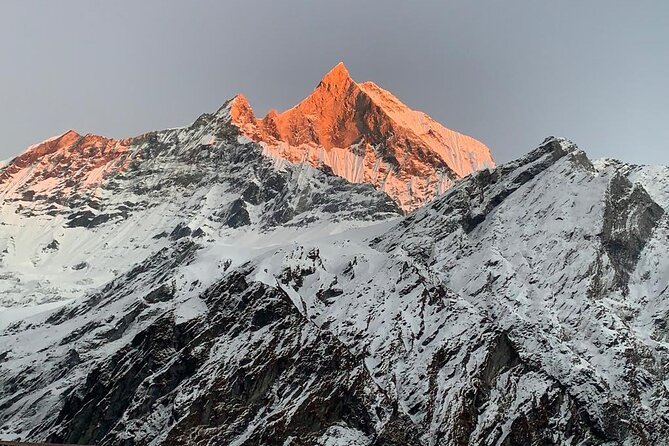
Two days are big for sunrise: Poon Hill and potentially Annapurna Base Camp at dawn. The trek is clearly designed around those windows.
But here’s the honest part: weather can interfere. The itinerary itself notes the base camp dawn sight depends on clean and clear conditions. Plan to love the mountains even on the gray days. Also plan to trust your guide if they adjust timing or pacing based on what you’re seeing that morning.
Who This Trek Suits Best
This trek is listed as moderate fitness level, and the walking is spread across travel days plus trekking days that build toward base camp.
This is a good fit if:
- You want all the core logistics handled (permits, transfers, meals on trek, guides)
- You like group trekking with a guide who keeps the day running smoothly
- You’re excited by sunrise viewpoints and big end-of-trek payoff
- You prefer not to self-manage water, maps, and paperwork
It may be less ideal if you want maximum independence. It’s described as private in the sense that only your group participates, but you’ll still be following a set schedule with guide-led timing.
Should You Book Annapurna Base Camp With Nepal Nirvana Trails?
If your goal is a classic Annapurna Base Camp trek with strong organization, guided safety, and sunrise highlights, this package makes sense. The price isn’t low in the way DIY trekking can be, but it’s built to cover the expensive-to-fix parts: permits, transport, trek meals, accommodations, and water basics.
I’d book it if you value a guide who keeps the group calm and on track, and if you want sunrise moments without having to wrestle logistics. I’d think twice if you’re extremely sensitive to weather-dependent views and you’re only comfortable with very flexible plans.
FAQ
What’s included in the $800 per person package?
The package includes airport transfer services for arrival and departure, Kathmandu–Pokhara–Kathmandu ground transportation by tourist bus, 11-night accommodations, an experienced guide, meals while trekking (breakfast/lunch/dinner plus tea/coffee), trekking map, and water purification drop/tablets. It also includes Pokhara to the trek start point and from the trek ending point back to Pokhara via private vehicle service, plus all applicable permits and fees (ACAP, TIMS, and local permits) and government tax/vat.
What’s not included?
International flight tickets, Nepal entry visa, and travel/health insurance that covers emergency rescues and evacuations are not included. Also not included are personal expenses during the trek (snacks, beer, coke, juice, water, Wi‑Fi, etc.), lunch and dinner in Kathmandu and Pokhara, a porter (if you want one), and tips for the guide.
How do you travel between Kathmandu and Pokhara?
Ground transportation between Kathmandu and Pokhara (and back) is by tourist bus, and the trip also includes private vehicle service between Pokhara and the trekking start point, and from the trek ending point back to Pokhara.
Is a guide included?
Yes. The tour includes an experienced guide.
Is this trek suitable for everyone?
The tour notes a moderate physical fitness level. It’s also described as a private tour/activity for your group, with a structured schedule.
Where and when does the tour start and end?
The meeting point is Tribhuvan Airport in Kathmandu, Nepal, with a listed start time of 6:15 am. The end point is Cooperative Department, Deurali Club, Kathmandu.
Can I cancel for a full refund?
Yes. Free cancellation is available up to 24 hours in advance for a full refund. If you cancel less than 24 hours before the experience’s start time, the amount paid is not refunded.