REVIEW · HIKING & TREKKING
Upper Mustang Trek 14 Days
Book on Viator →Operated by Trek Mania Nepal · Bookable on Viator
Upper Mustang Trek in Nepal feels like stepping into a closed chapter of history, yet it’s very real and very physical. You’ll move through a high-altitude desert world with Tibetan-influenced culture, stop in walled places like Lo Manthang, and even visit cave sites near town. It’s not just about walking from point A to point B.
I especially like the way this trip balances adventure with comfort through planned acclimatization and a thoughtful pace. I also like that the team uses deep local knowledge, and in my research I saw how the guide, Mr. Devaraj, and his daughter communicated professionally and kept things organized before the trek. That kind of calm planning matters when you’re operating at altitude with limited services.
One possible drawback to factor in: the price includes key permits and Kathmandu hotel nights, but meals and accommodation during the trek are not included, so you’ll need to budget for those day by day. Also, the Upper Mustang permit is only 10 days, so part of the trip is outside the restricted zone even though the whole trip is 14 days.
In This Review
- Key highlights that make this trek worth your time
- Why Upper Mustang feels different from other treks
- Price and logistics: what you’re paying for (and what you’re not)
- Kathmandu warm-up: Thamel + a real chance to reset
- Pokhara day trip style: Phewa Tal and Tal Barahi Temple
- Fly to Jomsom, then step into the Mustang gateway
- Kagbeni to Chele to Syanboche: arid trails and cave-country energy
- Ghami and Tsarang: monastery towns that make the region click
- Lo Manthang: walled capital, Thubchen Gompa, and Chhoser Cave
- The turn-around: Dhakmar back to Kagbeni
- Back to cities: Jomsom to Pokhara, then Kathmandu
- Who this trip suits best
- My booking advice: should you go on this one?
- FAQ
- Where is the Kathmandu meeting point?
- How long is the trek?
- What permits are included?
- What’s included in the price?
- What is not included?
- Is this tour private?
- What cancellation window is offered?
Key highlights that make this trek worth your time
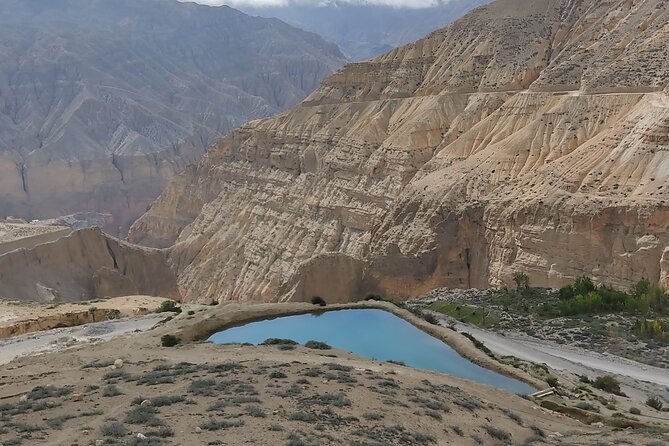
- Upper Mustang Restricted Area coverage for 10 days, paired with the Annapurna Conservation Area permit
- Lo Manthang visits including Thubchen Gompa and time near Chhoser Cave
- A guide-led, licensed setup with a government-licensed English speaking trekking guide
- Comfort-forward pacing with planned acclimatization and a fixed route rhythm
- Private tour format, so your group schedule stays coherent
- Smooth pre-trek communication noted in past experiences with Mr. Devaraj and family
Why Upper Mustang feels different from other treks
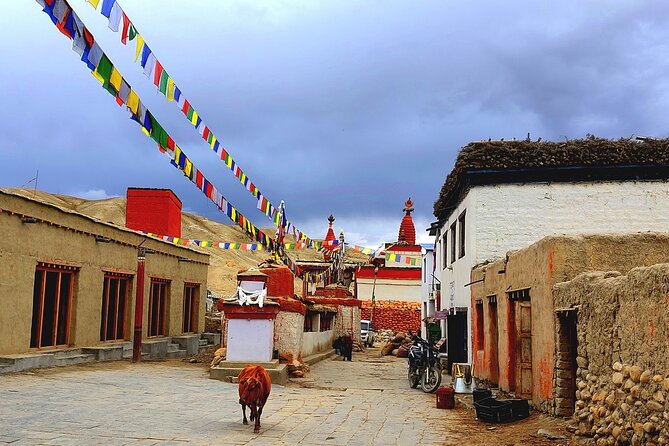
Upper Mustang has a special feel because it sits in that narrow zone where Tibetan-influenced culture, arid terrain, and old stone traditions overlap. You’re not just looking at views; you’re walking through villages with mud-brick buildings, monasteries, and the kind of stillness that makes a monastery stop feel more like a pause than a checkbox.
This trek also leans into culture in a practical way. You spend time inside Lo Manthang with monastery viewing and a cave visit near town, and you get multiple village-to-village walking days that help the region click as a lived-in place, not a photo backdrop.
Finally, the route is designed to be manageable for a moderate fitness level. The overall duration is long enough to spread out the effort, and the plan includes acclimatization planning rather than pushing you like a fitness test.
You can also read our reviews of more hiking tours in Kathmandu
Price and logistics: what you’re paying for (and what you’re not)
At $1,212 per person, the big value piece is what’s already handled. The package includes airport pickup and drop, transportation per the schedule, two nights in Kathmandu at Hotel Chhimeki, a government-licensed English speaking trekking guide, and both permits: Upper Mustang Restricted Area Permit (10 days only) plus the Annapurna Conservation Area Permit. It also includes a first aid medical box, and you receive a company-logo trekking map, plus a t-shirt and duffel bag.
What’s not included is also crucial for budgeting. Drinks are not included, and the package states that meals and accommodation during the trek are not included, along with porters, travel insurance/rescue costs, and tips for guides and porters. International flights and the Nepal visa fee are also on you.
So the best way to judge value is simple: if you want a guided, permit-secured route with transportation and Kathmandu hotel lined up, this price looks like a solid base. If you prefer fully catered trekking meals and porter support, you may want to confirm exactly how you’ll handle those missing pieces.
Kathmandu warm-up: Thamel + a real chance to reset
Day one keeps things human. You arrive in Kathmandu, check into your hotel (Hotel Chhimeki is the listed Kathmandu base), and then you have time in Thamel to get your bearings. This is a smart start because you’re not trekking immediately; you’re letting your body and schedule adjust.
Practical tip: use this time to organize your essentials—like separating items you’ll want daily from gear you can pack away. Since the trek moves into more remote areas, having your routine ready matters more than you might think.
This day is also when you’ll likely confirm small details with your guide team. The trip’s overall style—smooth communication and organization—is part of what keeps later days from feeling chaotic.
Pokhara day trip style: Phewa Tal and Tal Barahi Temple
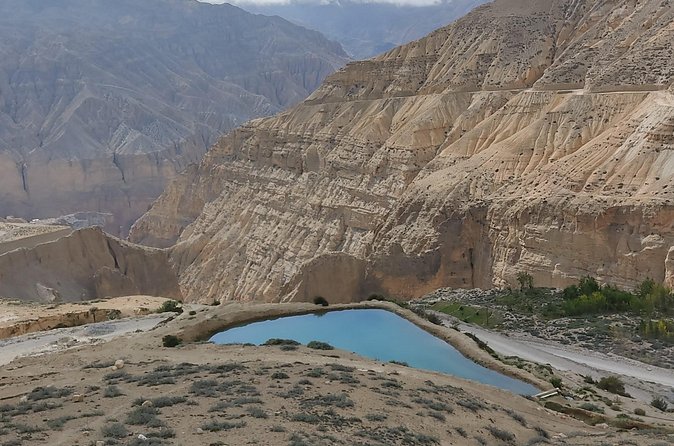
On day two, you travel from Kathmandu to Pokhara by scenic drive through countryside and terraced fields. Pokhara is your decompression day before the trekking rhythm starts, and you get a short, enjoyable set of sights.
You walk along Phewa Lake and have the option to rent a boat and see the Annapurna and Machapuchare peaks reflected on calm water. Then you visit Tal Barahi Temple, a Hindu shrine on a small island reached by short boat ride, which adds a quiet spiritual beat to the day.
One trade-off: since this is scheduled as a short stop day, you won’t have unlimited time to roam. If you love slow mornings and long café hangs, plan for a more relaxed pace in Kathmandu or Pokhara either before or after.
Fly to Jomsom, then step into the Mustang gateway
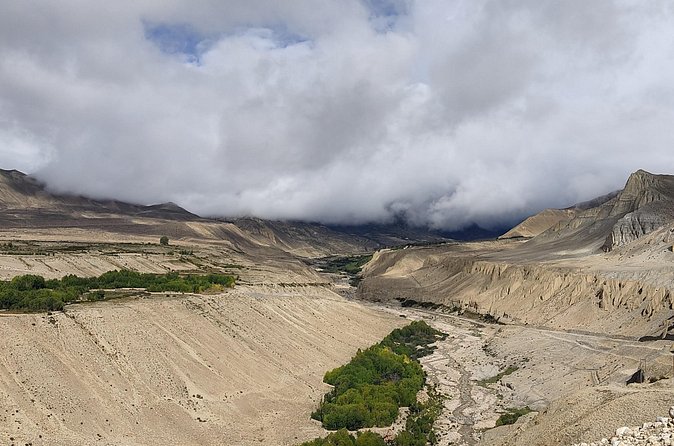
Day three is a key pivot day: you fly from Pokhara to Jomsom in the Kali Gandaki Valley, then begin the trek from Jomsom to Kagbeni. Flying is a practical choice here because it shortens the approach into Mustang and gets you into the walking zone sooner, with fewer long overland days.
Kagbeni is your cultural warm-up on foot. You’ll find narrow alleyways, mud-brick houses, and monasteries that reflect the region’s Tibetan Buddhist influence. It’s a good early stop because you start seeing Mustang’s building style and sense of place right away.
Also, Kagbeni acts like a rhythm-setter. By the time you’re settling in there, you’ll understand the pace you’ll keep for many days: steady movement, simple meals and stays, and frequent changing views as you go.
Kagbeni to Chele to Syanboche: arid trails and cave-country energy
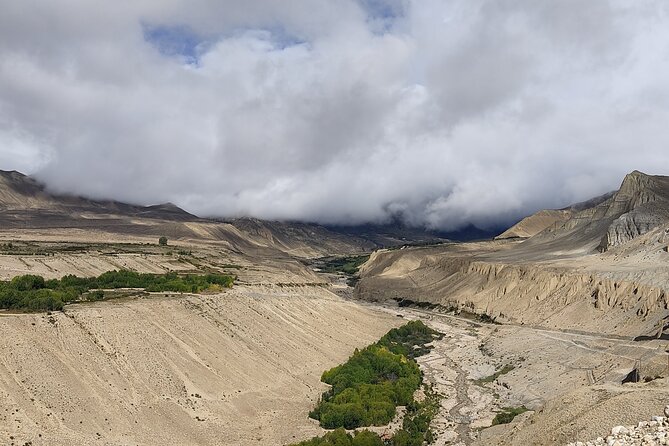
Days four and five shift you deeper into the high-desert feel. You trek from Kagbeni to Chele, then from Chele to Syanboche, with the route described as passing arid landscapes, ancient caves, and traditional Mustang villages.
This is where the trek’s “feel” becomes the main event. The scenery is stark, and that sparseness can actually be relaxing: fewer distractions, more focus on how the trail bends, how the village clusters sit, and how the air changes as you gain and settle.
Chele and Syanboche also help you understand why the trip emphasizes acclimatization and pacing. You’re not doing one huge push; you’re stacking walking days in a way that gives you time to adjust.
Ghami and Tsarang: monastery towns that make the region click
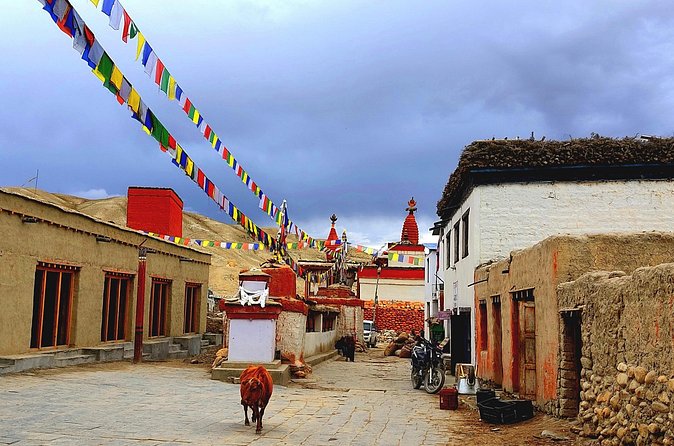
Day six brings Ghami, described as a larger and vibrant village in Upper Mustang with historical monasteries. It’s the kind of stop that helps you connect earlier cave and arid-trail days with the culture side of Mustang.
Day seven continues toward Tsarang, known for an ancient monastery and the Tsarang Fort. Stops like this matter because the monastery sites give context to what you’ve been walking through. Without them, Upper Mustang can feel like a scenic corridor. With them, it starts to feel like a place with meaning.
If you enjoy small moments, this is where you’ll get them: monastery architecture, local stone and plaster work, and that slow village energy that’s easier to notice when you’re traveling on foot.
Lo Manthang: walled capital, Thubchen Gompa, and Chhoser Cave
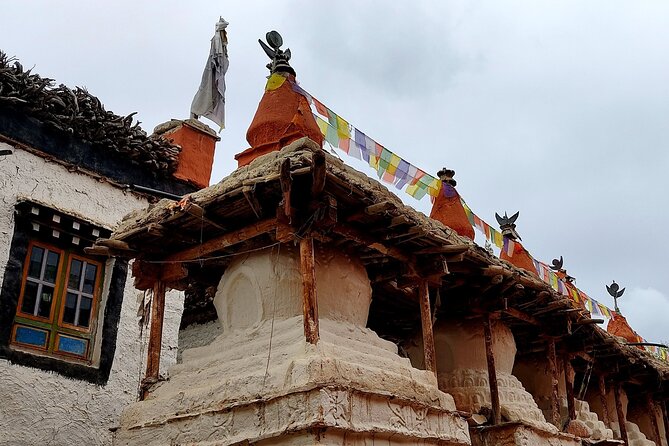
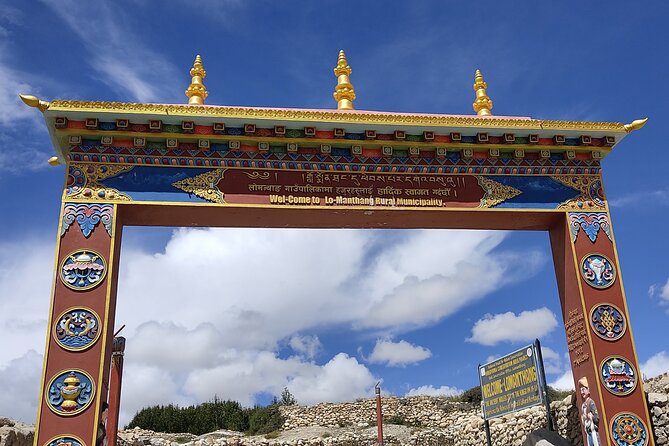
Lo Manthang is the headline for a reason. Day eight brings you from Tsarang to Lo Manthang, a walled city with narrow streets and traditional mud-brick architecture, shaped by Tibetan-influenced culture.
Then day nine is a packed cultural day. You visit Thubchen Gompa, noted as one of the oldest and most significant monasteries in Lo Manthang. You also explore Chhoser Cave, described as an ancient cave complex with long use over centuries and a stunning setting near the walled capital.
After those visits, you end back in Lo Manthang for the night. That choice helps because it prevents the “see it, leave it” feeling. Staying overnight means you can experience the town not only in motion, but also at rest.
One caution: cave visits can be weather-sensitive and require comfort with uneven paths. Since your physical level is expected to be moderate rather than athletic-only, it’s worth keeping your pace calm and asking your guide what the cave route is like in practice.
The turn-around: Dhakmar back to Kagbeni
Day ten starts the return trek, moving from Lo Manthang to Dhakmar. The route is described as offering fresh perspectives, with rock formations and expansive valleys. This is a good way to keep motivation high: you’re not replaying the same day, even though you’re going backward.
Day eleven takes you from Dhakmar to Kagbeni. Retracing steps can sometimes feel repetitive, but here it’s more like comparing two angles of the same place. As you head back, your brain starts matching buildings, valleys, and monastery silhouettes with what you saw coming in.
It’s also useful for you logistically. By day eleven you’ll know your daily routine better—when to start, how to pace breaks, and how to keep your day efficient.
Back to cities: Jomsom to Pokhara, then Kathmandu
On day twelve you fly from Jomsom back to Pokhara. That’s a relief day in the truest sense: your legs get a break, and you can reset mentally after trekking. From there you have time for a relaxed Pokhara day, with the same sense of lakeside calm that first got you oriented.
Day thirteen is the return drive to Kathmandu, again using the scenic route. Day fourteen is simply your departure from Tribhuvan International Airport, ending back at the Kathmandu meeting point.
This structure is smart. It prevents the trip from ending in exhaustion, and it gives you time to handle last-minute needs in Kathmandu instead of cramming everything into your final day.
Who this trip suits best
This Upper Mustang trek fits you if you want cultural focus plus remote walking days. The itinerary is built around monasteries and cave stops near Lo Manthang, while still keeping the trekking effort steady rather than extreme.
It also suits you if you prefer organization. The package includes permits, Kathmandu hotel nights, airport transfers, and a licensed English speaking guide. Past experiences also highlighted smooth communication beforehand with Mr. Devaraj and family, which usually translates into fewer surprises once you’re on the ground.
If you hate budget gaps, read the inclusions carefully. Because meals and trek accommodation aren’t included, you’ll need to plan for day-to-day spending on those items. If you want porters included, that’s not in the package either.
My booking advice: should you go on this one?
I’d book this trek if you want a guided route into Upper Mustang with permits handled, real time in Lo Manthang, and a schedule that gives acclimatization a place to work. The mix of walking days plus monastery and cave visits is the kind of combo that makes the trip feel meaningful, not just scenic.
I’d think twice if you’re hoping for full meals and full trek lodging included, or if you want porter support without extra cost. In that case, you’ll be doing more on-the-spot financial planning than the itinerary implies from a quick glance at the total price.
FAQ
Where is the Kathmandu meeting point?
The meeting point is Hotel Chhimeki, 17 Purano Dhalko Marga, Kathmandu 44600, Nepal.
How long is the trek?
The trek is listed as 14 days (approx.).
What permits are included?
Your package includes the Upper Mustang Restricted Area Permit (10 days only) and the Annapurna Conservation Area Permit.
What’s included in the price?
Included items are airport pickup and drop service, Kathmandu accommodation for 2 nights at Hotel Chhimeki, transportation as per the schedule, a government license holder English speaking trekking guide, the permits, a first aid medical box, and a t-shirt, duffel bag, and trekking map with company logo, plus all taxes. Dinner is also listed as included.
What is not included?
Not included are all drinks, Nepal visa fee, international flight tickets, extra night accommodation in Kathmandu due to itinerary changes, travel insurance/rescue operation costs, accommodation during the trek, meals all meals, porters, all personal expenses, and tips for guides and porters.
Is this tour private?
Yes. It’s a private tour/activity, and only your group participates.
What cancellation window is offered?
You can cancel up to 3 days in advance for a full refund. If you cancel less than 3 days before the experience start time, the amount paid is not refunded.