REVIEW · TEMPLES & STUPAS TOURS
The Boudhanath Yoga Experience in Nepal
Book on Viator →Operated by Himalayan Advisor Pvt. Ltd. · Bookable on Viator
Boudhanath changes how you breathe. This Buddhism-inspired yoga workshop places you near Boudhanath Stupa while you learn hands-on postures and breathwork, with hotel pickup so your only job is to show up.
What I like most is the teaching style. You get move-by-move guidance, and there’s room to ask questions, which is a big deal if you’re new to yoga or meditation. The session also feels peaceful, even though it’s in a lively part of Kathmandu.
One consideration: you’re practicing near a very active area. Even if the class stays focused, street sounds and crowds can be there, so you’ll want to use the breathing and attention practices right away.
In This Review
- Quick Takes
- Boudhanath Stupa, Then Yoga: Why This Location Works
- Getting Your Bearing Near Kathmandu’s World-Scale Stupa
- Your 2.30-Hour Workshop: What You’ll Actually Do
- Asanas: Postures With Purpose
- Mudras: Hand Gestures for Energy Flow
- Pranayama: Breathing That Calms and Purifies
- Dharana: Training Attention
- Dhyana: Meditation Toward Liberation
- The Teachings Behind the Mat: Eight-Fold Path Meets Daily Life
- Timing and Transfers: A 9:00am Start That Stays Easy
- Price and Value: Is $110 Fair for This Setup?
- What to Wear and Bring (So You Can Focus)
- The Teaching Style That Makes It Feel Like Care
- Who This Workshop Fits Best
- Should You Book the Boudhanath Yoga Experience?
- FAQ
- What time does the experience start?
- How long is the experience?
- What’s included in the price?
- Is food included?
- How big are the groups?
- Do I need to buy a ticket for the stupa?
- What should I wear?
Quick Takes
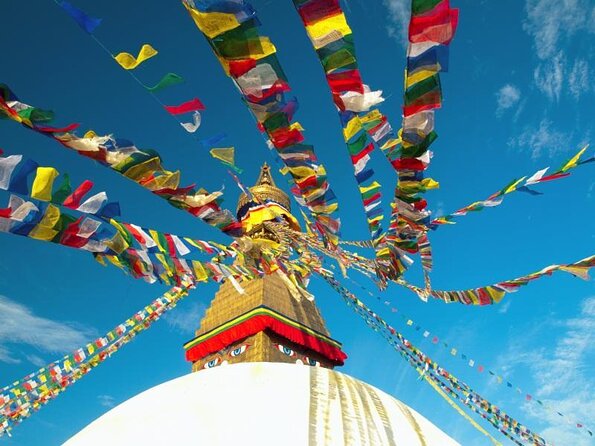
- Stupa within reach: You’ll have a strong chance to visit Boudhanath Stupa while your yoga ties directly to the site.
- 2.30-hour class: Most of the time is structured practice, not sightseeing fluff.
- Breath and mind tools: Asanas are only part of it. You’ll also work on pranayama, mudras, and mental training.
- Buddha-inspired framework: The lesson connects practice to the Eight-Fold Path and seven disciplines.
- Small group feel: Capped at 14 travelers, which keeps questions and personal pace realistic.
- No navigation stress: Round-trip private transfers from your Kathmandu hotel do the heavy lifting.
Boudhanath Stupa, Then Yoga: Why This Location Works
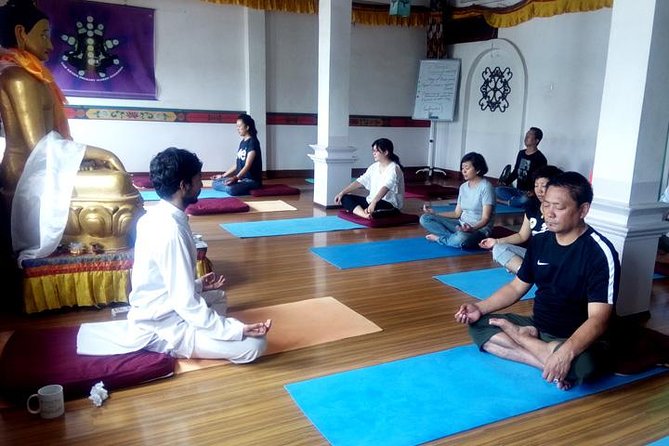
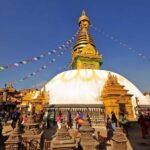
Kathmandu can be noisy, busy, and full of “what do we do next?” moments. This experience is built to reduce that stress fast. You start with pickup, then you land in a calm practice space that’s directly linked to Boudhanath, home to the world’s largest Buddhist stupa and a major exiled Tibetan community.
The best part is the logic of the setting. Yoga here isn’t treated like a gym class. It’s taught as a whole-life approach—body, breath, and attention—grounded in Buddhist themes you can literally see nearby. That connection can change your mindset. When your surroundings remind you to slow down, it becomes easier to actually do it.
You can also read our reviews of more tours and experiences in Kathmandu.
Getting Your Bearing Near Kathmandu’s World-Scale Stupa
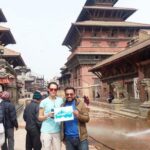
You’re not just learning yoga. You’re also getting your eyes around one of the biggest spiritual landmarks in Nepal. The plan gives you a great chance to see Boudhanath Stupa around your class time, and the yoga session happens while you’re watching the stupa nearby—so your practice has something real to anchor to.
Here’s how this helps you as a visitor:
- You get a sense of scale before you try to photograph everything.
- You practice while the stupa is part of the scene, not something you rush to at the end.
- You can link your breathing to what you’re seeing, which makes meditation feel less abstract.
If you’re the type who gets distracted easily, the surrounding area can be a factor. Still, the class itself stays structured, and the teaching approach is designed to help you keep your focus even when life is happening outside.
Your 2.30-Hour Workshop: What You’ll Actually Do
The core of the experience is a 2.30-hour yoga class, and it’s hands-on. This isn’t a passive lecture. You’ll work through posture and technique, then learn how to use breath and hand gestures to steer your practice.
Expect the lesson to cover five main components:
Asanas: Postures With Purpose
Asanas are taught as proper body positioning. The key value here is instruction. Instead of copying random shapes, you’re guided on what the posture is meant to do—how to hold it, how to move safely, and how to keep your body steady enough to settle the mind.
If you’ve only done yoga from a video, this is where you’ll feel the difference. You get clarity on form, not just stretching.
Mudras: Hand Gestures for Energy Flow
Mudras are included, which is a detail many yoga workshops skip. Here, you’ll learn proper hand gestures used to increase or direct energy in the body. Even if you don’t buy into the metaphysics 100%, mudras still give you something practical: a focused physical cue that helps your attention stay on track.

Pranayama: Breathing That Calms and Purifies
Pranayama is part of the teaching. You’ll practice breathing techniques meant to relax you and support purification of the body and energy. In plain travel terms, think of it as a way to downshift your nervous system after Kathmandu’s motion and noise.
You don’t need to be a meditation master to notice the effect. When your breath becomes slower and more deliberate, everything else follows.
Dharana: Training Attention
Dharana is the technique of controlling the mind for positive energy. This is not vague. It’s taught as a method—how to keep attention from wandering too far. For anyone who spends a lot of time sightseeing, this part can feel like a useful reset button.
Dhyana: Meditation Toward Liberation
Dhyana is described as meditation to liberate the mind. The framing here matches the idea that yoga is a full mental practice, not only movement. You’ll learn how to approach meditation as a skill you build, using breath and focus rather than hoping your thoughts magically stop.
The Teachings Behind the Mat: Eight-Fold Path Meets Daily Life
A big reason this workshop feels meaningful is that it connects the physical practice to a specific spiritual framework. The class teaches yoga through the Eight-Fold Path as taught by Lord Buddha, plus the seven disciplines.
Why that matters for you:
- It turns yoga into a philosophy you can apply, not just a sequence of poses.
- It gives your practice a structure. When you know what you’re working on—body, breath, attention—progress feels more real.
- It helps you understand why the session includes mind-training steps like dharana and dhyana, not only stretching.
If you like learning what something is for, you’ll enjoy this. If you prefer only physical movement, you might find the mental component a little more intense than some casual studio sessions. But the overall approach is still practical and guided.
Timing and Transfers: A 9:00am Start That Stays Easy
Start time is 9:00am, and the whole experience runs about 4 hours. The structure makes sense: morning energy, then practice, then stupa time without turning your day into a transportation puzzle.
You’ll get:
- Hotel pickup and drop-off
- Transport by private vehicle
- Entry fee at Boudhanath Stupa included
That last point is underrated. Stupa visits often come with extra tickets, and those costs add up quickly in a short trip. Having the entry fee handled means you can focus on the experience, not on whether you remembered the right payment method.
Group size is capped at a maximum of 14 travelers, and that helps in two ways: the instructor can keep everyone moving with less waiting, and questions don’t get swallowed by a crowd.
Also, the yoga center is near public transportation. So if you’re staying close or you want flexibility, it’s helpful to know the area isn’t totally off-grid.
Price and Value: Is $110 Fair for This Setup?
It costs $110.00 per person. That may sound simple on paper, but here’s what drives the value:
- You get a trained, highly qualified yoga instructor
- You get private transfers round-trip from your hotel
- You get a full 2.30-hour guided class
- You get Boudhanath Stupa entry included
If you tried to piece this together on your own, you’d likely pay more once you factor in transport, instructor time, and the entry fee. And Kathmandu logistics can eat time. Here, that friction is removed.
One more note: this experience is commonly booked about 113 days in advance on average. That suggests it’s popular enough to fill, so if your dates are firm, don’t wait for the last moment.
What to Wear and Bring (So You Can Focus)
The advice is straightforward: wear loose-fitting clothing so you can move comfortably. That’s a real comfort factor, especially when you’re doing asanas and breath practices.
Food and drinks aren’t included. So plan around that. I’d treat this like a morning commitment: eat a light breakfast before you go, or plan to get something after your drop-off.
If you’re the type who likes to write down notes, bring a small notebook. You’ll learn several technique names—asana, mudra, pranayama, dharana, dhyana—and seeing how the instructor explains them can help you practice later.
The Teaching Style That Makes It Feel Like Care
One of the most praised parts of this experience is the teacher’s presence. The instruction is explained move by move, which keeps you from feeling lost. You also get a sense of welcome, and there’s time for questions.
That matters more than people think. Yoga workshops can be intimidating when you don’t know what the instructor expects. Here, the teaching approach seems designed to reduce that stress quickly—so you can focus on breath and attention instead of anxiety.
And yes, it’s in a busy area. Still, the class environment is handled in a way that doesn’t throw you off. You’re guided back to your practice, not swept away by distractions.
Who This Workshop Fits Best
This is a strong choice if you:
- Want a yoga class tied to Boudhanath and Buddhist-inspired learning
- Like the idea of breathwork and meditation, not only stretching
- Prefer a guided experience with pickup and drop-off
- Like smaller group settings (max 14)
It’s also a good match for travelers who feel “tired of planning.” The whole point is you don’t have to figure out the city route by yourself.
You might want to consider a different style of class if you’re looking for purely physical fitness training with minimal spirituality. This workshop clearly includes mudras, pranayama, and mind-training steps.
Should You Book the Boudhanath Yoga Experience?
I’d book it if you want a Kathmandu morning that feels grounded, not rushed. The combination of stupa context + guided breath + meditation-focused techniques makes it more than a standard yoga session.
The price makes sense here because you’re paying for structure and logistics: private transfers, a real instructor-led class, and stupa entry already handled. In short, you get both meaning and convenience.
If you’re sensitive to noise and crowds, just go in ready to use the practice tools right away. The setting is active. The class is designed to help you stay steady anyway.
FAQ
What time does the experience start?
It starts at 9:00am.
How long is the experience?
It lasts about 4 hours (approx.), with a 2.30-hour yoga class included.
What’s included in the price?
Hotel pickup and drop-off, private vehicle transport, a trained yoga instructor, the 2.30-hour yoga class, and entry fee at Boudhanath Stupa are included.
Is food included?
No. Food and drinks are not included.
How big are the groups?
The maximum group size is 14 travelers.
Do I need to buy a ticket for the stupa?
No. The entry fee at Boudhanath Stupa is included.
What should I wear?
Wear loose-fitting clothing so you can move comfortably during the practice.