REVIEW · TEMPLES & STUPAS TOURS
Monkey Temple – Swayambhunath Tour – Private/Small Group
Book on Viator →Operated by Amazing Kathmandu Tours · Bookable on Viator
Swayambhunath is myths made visible. On this small-group walk (max 5), I love how Santosh blends Kathmandu valley origins with real-world temple details as you move through neighborhoods like Thamel, Bhagwan Pau, and the hilltop Swayambhunath stupa area. You’re not just ticking sites. You’re learning why these places matter when ceremonies are happening.
My favorite part is the pace: you get time to look, ask questions, and soak in the viewpoint without feeling rushed, which is a big win if you’re short on time. The possible drawback: it’s a moderate-walking tour and the Swayambhunath approach involves 365 stairs, so if you have knee issues or breathing limits, you’ll want to think twice.
In This Review
- Key highlights that make this tour worth your time
- Where Swayambhunath fits into Kathmandu’s bigger story
- Thamel start: Pumpernickel Bakery and an easy morning rhythm
- Stop at Bhagwan Pau: the Buddha’s feet at the base
- The “between-temples” stops that add meaning
- The big climb to Swayambhunath: what to do with the 365 stairs
- Entrance fee reality check
- Practical tip for the climb
- Harati Ajima: pagoda-style architecture with a mother-story
- World Peace Pond: small details that make the visit feel human
- Manjushree Temple: the Kathmandu-from-a-lake legend, plus a west-side view
- Amideva Buddha Park: giant idols you can’t ignore
- Shova Bhagawati: a shrine near the Bishnumati River
- Walking back to Thamel: end the tour with a plan
- Price and value: why $15 can work well here
- Who this tour suits best (and who should reconsider)
- Should you book this Swayambhunath Monkey Temple tour?
- FAQ
- FAQ
- How long is the Swayambhunath tour?
- What’s the group size?
- Where does the tour start?
- Where does the tour end?
- Is the Swayambhunath entrance fee included?
- Do I need to pay other entrance fees?
- What kind of guide do I get?
- Is coffee or tea included?
- Is it physically demanding?
- Can I cancel and get a refund?
Key highlights that make this tour worth your time
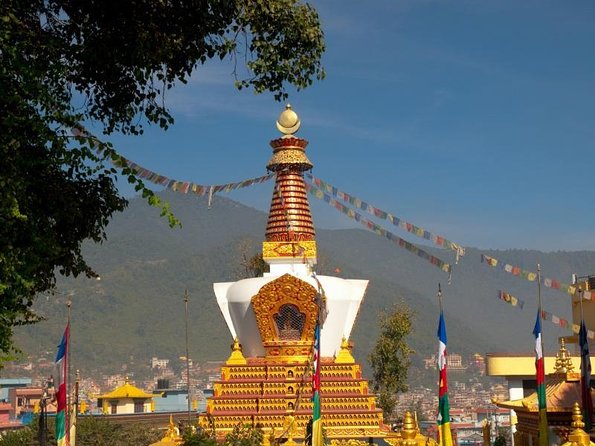
- Santosh’s storytelling connects Hindu and Buddhist sites into one walking route you can actually follow
- Small group size (up to 5) means less waiting and more time at the places that catch your eye
- 365 stairs at the main entrance gives you the classic hill experience, with breaks built into the route
- Admission handling is mostly simple, with one key exception: Swayambhunath entrance is paid in cash on site
- Giant statue stops (at Amideva Buddha Park) make the religious devotion easy to grasp visually
- Solo-friendly feel, with many people choosing this as a safe, straightforward morning plan
Where Swayambhunath fits into Kathmandu’s bigger story
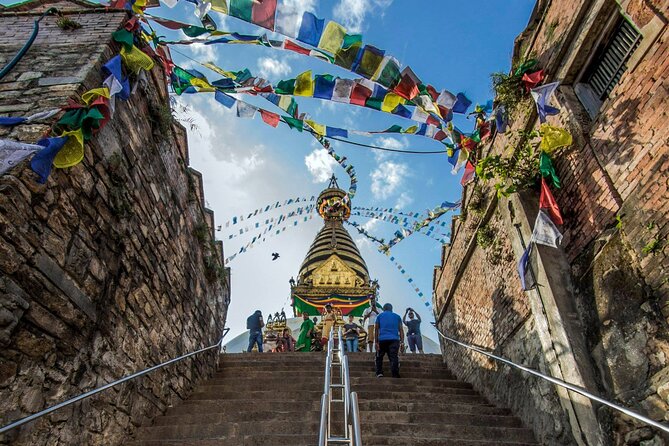
This tour is built around one idea: Kathmandu isn’t just a city of temples—it’s a city of origin stories. Swayambhunath sits on a hill in central Kathmandu, and it carries layers of belief from both Buddhism and Hinduism. What I like is how the route is designed to help you connect the dots instead of treating each shrine like a separate island.
You’ll also get a sense of how sacred spaces work day-to-day. The guide explains what you’re seeing, and it’s especially helpful when religious ceremonies are going on. Even if you’re not deeply religious, it makes the experience feel grounded, not like sightseeing from a distance.
You can also read our reviews of more private tours in Kathmandu
Thamel start: Pumpernickel Bakery and an easy morning rhythm
Your meeting point is Pumpernickel Bakery, right in Thamel. It’s a practical spot—easy to find, central, and good for getting oriented before you start walking uphill later.
From there, the tour heads toward the Bhagwan Pau area. Expect a slow build: neighborhood temples and small cultural stops come first, then the route gradually leads you toward the main hilltop stupa complex. One nice detail in the pacing is that you’re not thrown straight into stairs. You’re walking, learning, and getting your bearings.
Stop at Bhagwan Pau: the Buddha’s feet at the base
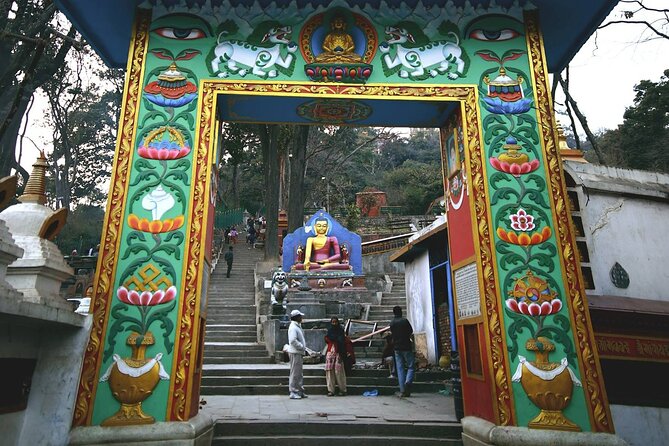
Bhagwan Pau is at the bottom of the Swayambhu hill. The name refers to the feet of Lord Buddha, and it marks the start of the main approach to Swayambhunath. This is a smart place to include early, because it gives you context before you start climbing.
You’ll get a short rest, drink water, and then move toward the entrance with the famous 365 stairs. That break matters more than it sounds. Stairs in Kathmandu can feel longer than you expect, and having a moment to reset makes the climb feel manageable instead of stressful.
Ticket-wise, the admission there is included, so you avoid extra on-the-spot decisions.
The “between-temples” stops that add meaning
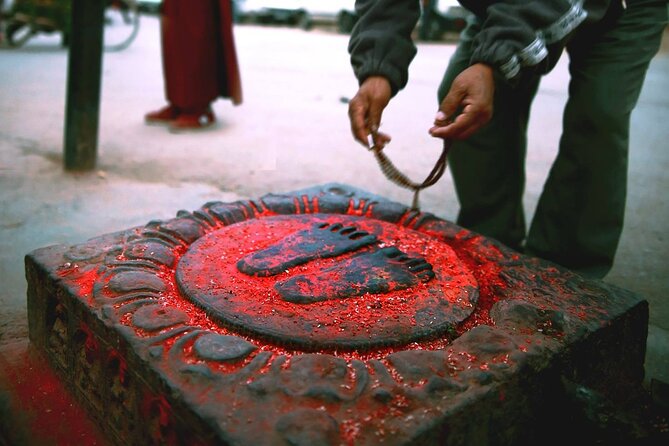
One reason this tour feels more worthwhile than a rushed hilltop visit is that it includes a few stops between the main anchor points. Two you’ll run into on the way up:
- Indrayani / Luti Ajima area: you’ll hear how, in the 13th century, the Licchavi King Gunakamdev established eight Matrikas shaped of Khadga, and how Indrayani / Luti Ajima is one of them. It’s the kind of detail that turns a small shrine into a clue about Kathmandu’s deep layers of tradition.
- Bijeshwori Temple: this one is considered sacred to both Hindu and Buddhist followers. It’s especially important for Tibetan Buddhists because it’s affiliated with Buddhism, while some Hindu disciples also regard it as significant. That blend helps you understand why Swayambhunath isn’t only “a Buddhist thing” and why people of different faiths share the sacred geography.
These stops don’t eat the schedule. They make the route feel coherent—like you’re moving through one story instead of walking past unrelated walls.
The big climb to Swayambhunath: what to do with the 365 stairs
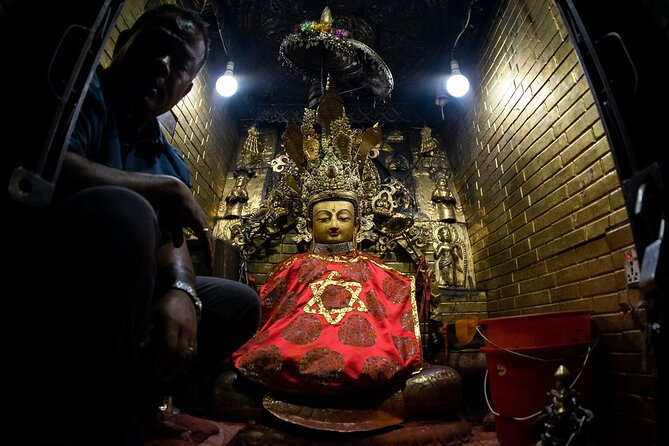
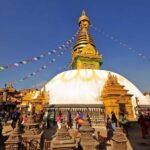
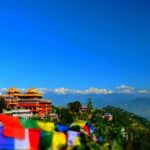
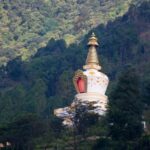
The main attraction is the Swayambhunath stupa area. It’s one of Nepal’s holiest Buddhist stupas, and it sits on the hilltop at the heart of Kathmandu.
You’ll explore the neighborhood around the stupa and hear the origin-related lore connected to Swayambhunath and Kathmandu valley. The guide also points out religious context—useful if you want to understand what you’re seeing while ceremonies are underway.

Entrance fee reality check
Swayambhunath has an entrance fee of 200 rupees paid in cash to temple authorities (about US$1.50). Your tour covers the guide and the walk, but that specific temple entrance is not included—so bring cash. This is the main logistics item you should plan for.
Practical tip for the climb
If you start feeling your legs go, don’t panic. You’re not racing. Take your time, stop when you need to, and let the guide know. In a group of up to five, the tour doesn’t feel like a conveyor belt.
Harati Ajima: pagoda-style architecture with a mother-story
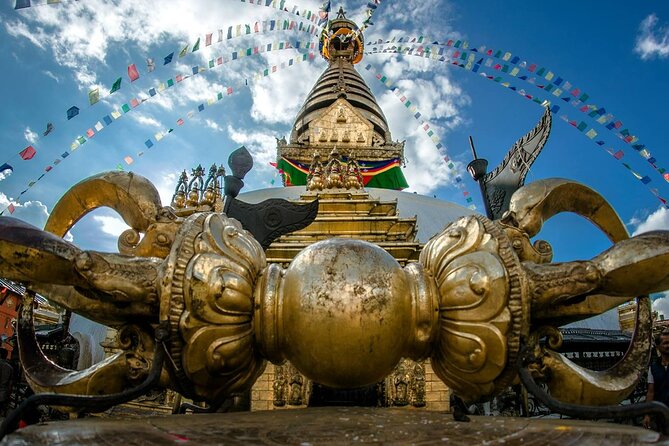
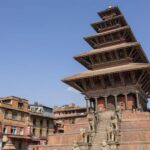
After Swayambhunath, you’ll shift to a different kind of stop: Harati Ajima Temple. It’s known for its Nepalese pagoda-style architecture, and the guide shares the story of Harati—how the demon became Mother Harati, and why people around the valley worship her.
This is one of those transitions that helps you understand Kathmandu’s religious layering. You’ll go from the stupa viewpoint and shrine atmosphere to a temple with its own myth logic and devotion style. Even if the story is new to you, the guide’s explanation makes it feel less abstract.
The admission here is included, so you only focus on looking and listening.
World Peace Pond: small details that make the visit feel human
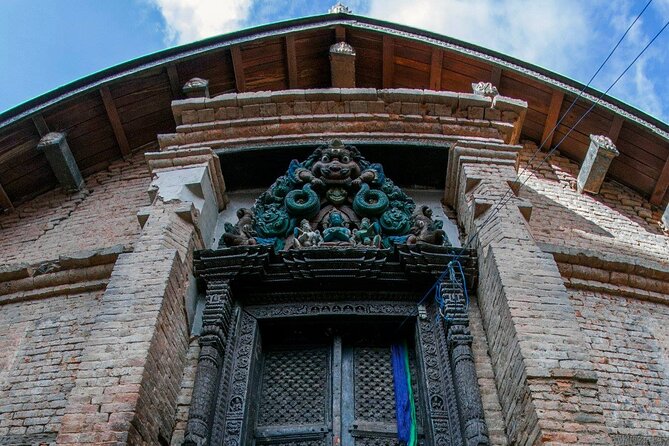
On the western side of the Swayambhunath temple area, there’s World Peace Pond. In the middle you’ll spot a brass statue of a Buddha standing on a lotus flower.
One practical note: the tour also mentions that there are words on the wall written in English. That means you can read some context without relying entirely on memory or translation.
This stop is short, but it’s a good break from the bigger crowds and a nice place to pause and frame what you’ve been seeing.
Manjushree Temple: the Kathmandu-from-a-lake legend, plus a west-side view
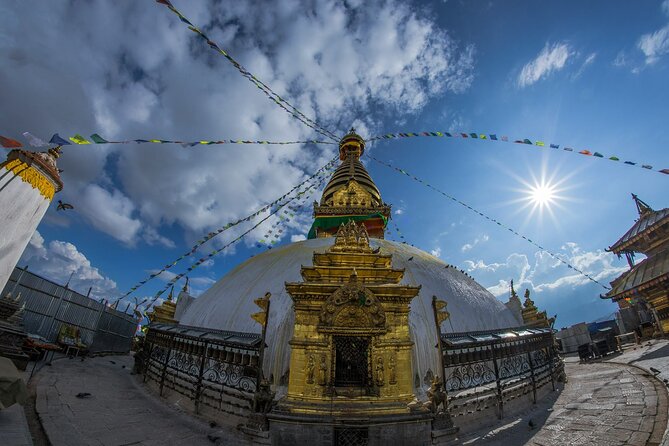
Next comes Manjushree Temple, dedicated to Maha Manjushree on the Swayambhu hill. Here, the guide ties in the legend of how Kathmandu valley became a city from a great lake. It’s the kind of story that makes the valley feel like more than modern streets and traffic—it connects the geography to belief.
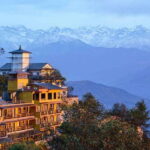
You’ll also get a panoramic view, especially toward the western side. The viewpoint makes the climb feel worth it because you can finally place what you’ve been walking through. For many people, this is where the tour turns from information into atmosphere.
Admission is included at this stop, keeping your day simple.
Amideva Buddha Park: giant idols you can’t ignore
If you want a visual moment that changes how you understand devotion, don’t skip the next portion: Amideva Buddha Park. It features three gigantic idols—Amitabha Buddha (Amideva) in the center at 67 feet, with Chenrezig and Padmasambhava at 64 feet on the sides.
You’ll walk around the park and the guide shares the story behind these Buddhas. Even without knowing every term, the size alone helps. It’s hard to treat a place like this as “just a photo stop.” You can feel why people visit with focus and patience.
Admission is included here too.
Shova Bhagawati: a shrine near the Bishnumati River
Later on the route, you’ll visit Shova Bhagawati, a holy shrine devoted to the goddess Bhagwati. It’s located on the bank of the Bishnumati River in Kathmandu.
This stop matters because it shows a different side of sacred Kathmandu—not only hilltop stupas, but also riverbank worship and local shrine traditions. You’ll also hear that it’s one of the four major Bhagwati temples in Kathmandu (the exact construction detail isn’t fully stated here, so I’d focus on the shrine significance and riverside setting rather than memorizing construction specifics).
If you like the mix of Hindu and Buddhist connections, this is a good place to feel the overlap in everyday practice.
Walking back to Thamel: end the tour with a plan
After the final temple stops, you head back toward Thamel. The tour notes a return walk to the Kathmandu Eco Hotel area and then ends back at the meeting point area.
This is a practical advantage: you’ll finish near where you started, so you can continue the day without complicated transit. I like building a simple plan afterward—coffee, a slow lunch, and maybe a short wander nearby—because you’ll have just learned how the neighborhood pieces fit together.
Price and value: why $15 can work well here
At $15 per person for a 3-hour private/small-group experience, the value comes from two things: time with a guide and a route that makes sense.
You get an English-speaking guide and a focused walk covering multiple religious sites—Swayambhunath itself plus several context stops along the way. That’s where your money actually goes. Entrance fees aren’t fully bundled, though—Swayambhunath’s 200 rupees cash fee still applies.
If you’re visiting Kathmandu briefly, this kind of short, coherent route is often the best use of limited time. You won’t burn a morning decoding where to go next. You’ll also get the context that helps the hilltop feel understandable rather than intimidating.
Who this tour suits best (and who should reconsider)
This is a strong match if you:
- want a walk + stories morning, not a checklist
- like Hindu and Buddhist connections and want them explained in plain language
- want a safe-feeling plan for solo sightseeing, since the group stays small
- are okay with a moderate walking day and stairs
You should reconsider if you have:
- severe asthma or knee problems (the tour specifically advises against joining with those issues)
- little tolerance for stairs, since the Swayambhunath approach includes the main 365-stair climb
Should you book this Swayambhunath Monkey Temple tour?
Yes, if you want a morning that mixes hilltop views with real context—especially if you like learning how religious stories connect to Kathmandu valley itself. The small group size (up to five) and the guide-led pacing make it easier to ask questions and linger where you want.
Skip it if you’re mainly chasing photos and don’t want to walk. You’d likely do fine with a self-guided route, but you’d lose the structured explanations—especially the myth connections and the way the route moves from Bhagwan Pau up to the main stupa complex.
FAQ
FAQ
How long is the Swayambhunath tour?
It’s about 3 hours (approx.).
What’s the group size?
The tour is limited to a maximum of 5 travelers.
Where does the tour start?
The start point is Pumpernickel Bakery on Parayatan Marg, Kathmandu 44600, Nepal.
Where does the tour end?
It ends back at the meeting point.
Is the Swayambhunath entrance fee included?
No. Swayambhunath entrance is 200 rupees, paid in cash directly to temple authorities.
Do I need to pay other entrance fees?
The tour includes admission for several stops (for example Bhagwan Pau, Harati Ajima Temple, Manjushree Temple, and Amideva Buddha Park). Only Swayambhunath is explicitly listed as not included.
What kind of guide do I get?
You’ll have an English-speaking guide.
Is coffee or tea included?
No, coffee and/or tea are not included.
Is it physically demanding?
It requires moderate physical fitness and includes walking and stairs. The tour is not advised for travelers with severe asthma or knee problems.
Can I cancel and get a refund?
Yes. You can cancel up to 24 hours in advance for a full refund. If you cancel less than 24 hours before the start time, the amount paid is not refunded.