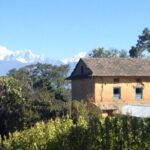
Five UNESCO sites. One well-planned day.
This Kathmandu Valley tour is interesting because you pack major spiritual landmarks and palace-square architecture into a single morning-to-afternoon flow, without trying to figure out transport on your own. You start at Swayambhunath (the Monkey Temple) and then work your way through iconic UNESCO stops like Patan Durbar Square, Bouddhanath Stupa, Pashupatinath, and Kathmandu Durbar Square, with a real guide in your ear the whole time.
I love how efficient the route feels for the time you have, and I love that the guide focus isn’t just names on a sign. People mention guides like Ram, Shiva, Ramesh, Ajit, and Ganesh for clear explanations and helpful context. One drawback: monument entrance fees and lunch are not included, so your day budget can creep up fast beyond the $40 tour price.
In This Review
- Five stops, one tight Kathmandu Valley route
- Price and Logistics (the part that changes your real cost)
- Swayambhunath (Monkey Temple): start with symbols and viewpoints
- Patan Durbar Square: Newari temple density in a palace footprint
- Bouddhanath Stupa: a massive dome, a clear Buddhist focus
- Pashupatinath: Hindu pilgrimage on the Bagmati River
- Kathmandu Durbar Square and the Kumari Temple stop
- Timing, pacing, and how to get the most from 4–6 hours
- Who this tour suits best (and who should skip it)
- Should you book this Kathmandu UNESCO circuit?
- FAQ
- FAQ
- What time does the tour start?
- How long is the Full Day Kathmandu Tour?
- Is pickup offered?
- What UNESCO World Heritage Sites are included?
- Are entrance fees included?
- Is lunch included in the price?
- How many people are in the group?
- What’s included in the tour price?
- What happens if the weather is bad?
Five stops, one tight Kathmandu Valley route
This is the kind of tour I like for a first visit to Kathmandu Valley. You get a curated sweep across the UNESCO World Heritage cluster, mixing Buddhist and Hindu sacred sites with Newari palace-square architecture. At the same time, the day is short enough (about 4 to 6 hours) that it won’t drain you the way a full-day marathon can.
It also helps that it’s built for convenience: pickup is offered, you travel by private transportation, and you use a mobile ticket. With a maximum group size of 15, it stays manageable for photo stops and quick questions without feeling like a school bus.
Price and Logistics (the part that changes your real cost)
The headline price is $40, which is strong value if you want a guided pass through several top sites without arranging taxis back and forth. The practical catch is that entrance fees are not included. The tour lists monument entrance fees worth $30 USD, plus lunch is also not included.
So what’s the real-value math? Think of it like this: you’re paying for guide + private transport + covering multiple UNESCO stops, while you pay site entry separately. If you’d otherwise hire a car and pay for guiding individually, $40 starts to look like a bargain. If you’re traveling on a shoestring, that extra $30 and any meal you grab will matter.
Timing is another big deal. The start time is 9:15 am, so you’ll want to be ready early—especially if you’re also dealing with jet lag. And because the experience requires good weather, you should plan for the day to be weather-dependent.
You can also read our reviews of more historical tours in Kathmandu
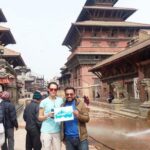
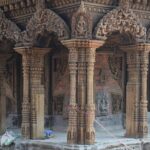

Swayambhunath (Monkey Temple): start with symbols and viewpoints
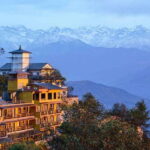
The tour begins at Swayambhunath Mahachaitya, one of Nepal’s holiest Buddhist chaityas. The story shared around the site connects it to the valley’s creation myth—legends say it emerged spontaneously when the valley formed from a primordial lake more than 2,000 years ago.
This stop works well at the start of the day because it sets the tone fast:
- You’re immediately in a spiritual mood, with a mix of Hindu and Buddhist presence.
- You’re high up, so the location helps you see how Kathmandu Valley sits around you.
- It’s a site where a guide matters. With a short visit window, you want someone pointing out what you should actually notice.
A practical consideration: plan for lots of steps and crowds. The tour time at each stop is about 30 minutes, which is enough for a circuit and photos, but not enough to wander aimlessly. Wear shoes you can move in.
Patan Durbar Square: Newari temple density in a palace footprint
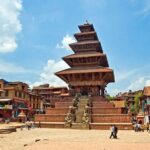
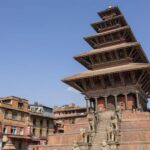
After Swayambhunath, the tour goes to Patan Durbar Square, the royal palace area of Patan. What stands out here is the concentrated mass of temples in Newari architecture. Even if you don’t know the architectural terms, you’ll feel it—tight layouts, repeated details, and a sense of one craft tradition speaking to itself from building to building.
Why this stop is worth your time even if you’ve seen Durbar Squares before: Patan tends to feel more like a dense, focused “city within the square.” And you can often add a bonus by checking what’s available inside the durbar area—one guide-led experience includes a museum inside the square that people found mesmerising.
Potential drawback: 30 minutes can go quickly here, especially if you’re attracted to temples and carvings. If you’re the type who wants to take your time, you may feel like you’re speed-walking. The fix is simple: come with a plan for what you want—temple facades, courtyards, or a single circuit—so you don’t spread yourself too thin.
Bouddhanath Stupa: a massive dome, a clear Buddhist focus
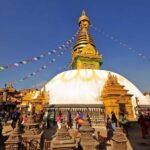
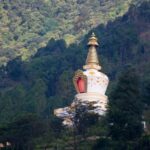
Next up is Bouddhanath Stupa, described as dating to around the 14th century. This giant monument is said to have been created after the passing of Buddha, and it’s built around a huge dome with a Buddhist pyramid positioned on top.
I like Bouddhanath because it doesn’t ask you to “decode” everything. You can grasp it from the first glance: the scale is the point. Then your guide can help you connect what you’re seeing to Nepal’s Buddhist traditions.
Because the stop is about 30 minutes, you’ll want to focus on:
- getting your orientation to the stupa’s shape and placement
- noticing how the spaces around it are used as a living religious environment
- taking photos without getting stuck in one tiny spot where everyone is blocking each other
Also, remember that admission tickets at stops like this are noted as not included, so keep some cash or a payment method ready for entry if required.
Pashupatinath: Hindu pilgrimage on the Bagmati River
The tour then highlights Pashupatinath Temple, Nepal and India’s biggest Hindu temple in this category, and a major pilgrimage site. It sits on the bank of the Bagmati River, and it’s known as the seat of Nepal’s national deity.
This is the most intense stop of the day in terms of spiritual atmosphere and visual energy. It’s a sprawling temple complex, so you’ll want your guide’s help to avoid getting overwhelmed by the scale. One reason this tour works as a bundle is that you’re not switching from Buddhism to Hinduism randomly—you’re moving from stupa symbolism to a major living pilgrimage site, with the same guiding voice helping you understand what you’re looking at.
Practical note: temple areas can be busy and rules can vary. You’ll do best with respectful clothing and a calm pace. Also, since entrances aren’t included, plan ahead so entry doesn’t become a delay.
You can also read our reviews of more tours and experiences in Kathmandu
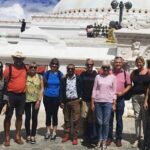

Kathmandu Durbar Square and the Kumari Temple stop
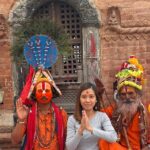
Your day wraps with Kathmandu Durbar Square, with time to visit Kumari Temple. This is where the tour connects you to the political-religious side of the valley’s heritage. Durbar Squares are famous for the mix of palace history, craftsmanship, and ceremonial life, and Kathmandu’s version keeps that identity front and center.
Kumari Temple is a big draw for many visitors, and a guided stop helps you understand why the site is special beyond its appearance. With about 30 minutes here, I suggest you don’t try to see everything. Pick what you most want—Kumari Temple focus, the main square architecture, or a quick loop so you still have time to breathe and take photos without rushing.
Timing, pacing, and how to get the most from 4–6 hours
Let’s talk pacing, because that’s where short tours either feel great or feel tight.
This experience gives you a set stop structure and keeps it short at each location (around 30 minutes per site at the listed UNESCO stops). That means:
- You’ll need to be decisive about what you want to photograph.
- You’ll benefit from a guide who can point out what matters quickly.
- You should carry water and keep an eye on your energy levels.
One detail I really like for a day like this: the guide support gets praised for being well-prepared and explanation-heavy. People mention guides such as Ganesh for being ready with details, and Shiva for helping connect the sights to what’s around you. That kind of prep is what turns a “checklist tour” into a day that feels coherent.
If you like food breaks, you might get a bit of local flavor added by the guide, too. In the experiences people shared, there are mentions of authentic momo around Patan and even lassi in the Indra Chowk area, plus pointers for local street food like freak street. That’s not the same as lunch being included, but it’s a reminder that Kathmandu sightseeing often pairs well with quick, local bites when time allows.
Who this tour suits best (and who should skip it)
This tour is a strong match if you:
- have limited time in Kathmandu Valley
- want a guided route through five UNESCO sites without arranging transport between them
- like cultural and sacred sites, especially when a guide helps you understand the meaning
- prefer small-group energy (up to 15 people)
You might want to consider something else if you:
- need lots of free roaming time at each site
- want a long, slow photography session at one place
- have a tight budget and can’t absorb the listed entrance fees on top of the tour price
Should you book this Kathmandu UNESCO circuit?
I’d book it if your goal is a first-hit, high-value Kathmandu Valley day. For $40, you’re not just paying for transport—you’re paying for a guide-supported route that links Buddhism and Hinduism with the region’s palace-square craftsmanship. And the small group size helps you stay human-sized rather than lost in a crowd.
The main “yes, but” is money and time: entrance fees (listed as worth $30 USD) and lunch aren’t included, and each stop is short. If you show up ready to move, this tour is an excellent way to see Kathmandu Valley’s headline UNESCO sites without turning your day into a logistics puzzle.
FAQ
FAQ
What time does the tour start?
The start time is 9:15 am.
How long is the Full Day Kathmandu Tour?
It runs for about 4 to 6 hours.
Is pickup offered?
Yes, pickup is offered.
What UNESCO World Heritage Sites are included?
The tour visits five UNESCO World Heritage Sites: Swayambhunath Stupa, Bouddhanath Stupa, Pashupatinath Temple, Basantapur Durbar Square (Kathmandu Durbar Square stop), and Patan Durbar Square.
Are entrance fees included?
No. Monument entrance fees worth 30 USD are not included, and the stops list admission tickets as not included.
Is lunch included in the price?
No. Lunch is not included.
How many people are in the group?
The maximum group size is 15 travelers.
What’s included in the tour price?
It includes private transportation and an experienced tour guide.
What happens if the weather is bad?
The experience requires good weather. If it’s canceled due to poor weather, you’ll be offered a different date or a full refund. Cancellation is non-refundable for other reasons.