REVIEW · EVEREST BASE CAMP TREKS
12 Days Everest Base Camp Trek
Book on Viator →Operated by Himalayan Scenery Treks and Expedition - Private Day Tours · Bookable on Viator
Few treks start with such drama.
This 12-day Everest Base Camp trek funnels you from Lukla’s short, nerve-jangling flight into classic Khumbu village life, with Everest views building day by day up to Kalapatthar (5,545m) and Everest Base Camp (5,364m). I really like the way the itinerary mixes hiking with smart recovery time, especially the acclimatization days around Namche and Dingboche. I also like that you’re not left guessing at altitude: you get a licensed, high-altitude trained guide, plus an oximeter and first-aid support. The possible drawback? You still face thin air, cold mornings, and a lot of stairs and rocks, so you’ll want a serious fitness base even if you’re a beginner.
The best part isn’t just Everest.
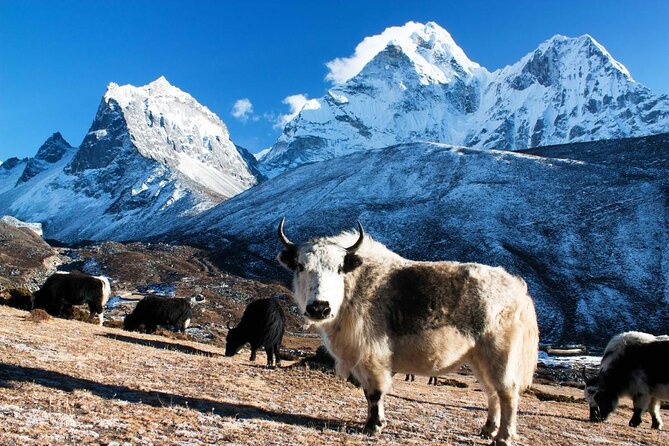
It’s the human rhythm of the trip: the Dudhkoshi (Milk River) valley, tea house stops, and the Sherpa villages where daily life continues right under giant mountains. One consideration: this is a group trek (max 20), so pace and logistics depend on your crew, and you’ll need to tolerate shared trail space on the busiest highlights.
In This Review
- Key highlights I’d plan around
- Lukla to Phakding: where the Everest dream turns real
- The Dudhkoshi climb to Namche Bazaar: long day, big payback
- Everest View Hotel and Syangboche: the acclimatization day that feels like a festival
- Tyangboche and rhododendron descent: where the trail gains personality
- Dingboche and Nagarjuna: the rest day you should treat like training
- Lobuche: the push toward the high country
- Everest Base Camp and the glacier path: what your big day actually looks like
- Kala Patthar sunrise: the steep, rocky lesson that’s worth it
- Coming back to Namche and Lukla: the long descent that still works
- Kathmandu wrap-up: one last flight and breathing room
- Price and what you actually get for $605
- Guides, pace, and the “small” safety details that matter
- Who should book this 12-day Everest Base Camp trek
- Should you book this Everest Base Camp trek?
- FAQ
- Where does the trek start and how do I get there?
- How long is the Everest Base Camp trek?
- What are the highest points on the trek?
- Are meals included during the trek?
- Are domestic flights included in the price?
- What permits are covered?
- Is a guide and porter included?
- What kind of accommodation should I expect?
- Can I cancel for a full refund?
Key highlights I’d plan around
- Lukla’s Tenzing-Hillary flight sets the tone fast, with a first look at what you’ll chase all trip
- Acclimatization that’s actually built in, including time around Namche and Dingboche so you don’t just rush upward
- Sunrise targets that matter: Everest View Hotel and especially Kala Patthar for the early, steep payoff
- Safety tools included: oximeter and first aid kit, with altitude checks as you go
- Guide quality is a strong theme, and you’ll see it in named pros like Rajesh Magar, Narayan Ntc, Bikram, and Gopal
- Value-packed package: lodge rooms, all three trek meals, permits, flights, and even essentials like trekking poles
Lukla to Phakding: where the Everest dream turns real
The experience starts in Kathmandu with a pickup and the domestic flight out to Lukla (Tenzing-Hillary Airport). That flight is about 45 minutes, but it feels like more because it’s your first real altitude preview of the trip you signed up for. As you land, you’re not talking theory anymore. You’re standing at the gateway to the Khumbu.
Then comes Day 1’s main hiking shift: a descent into Phakding, following the curves of the Dudhkoshi River—often described as milky white. This matters more than it sounds. Early on, you’re learning the “walking pace” of high trails: steady steps, frequent breath resets, and paying attention to trail footing on slopes and bridge crossings.
What I like for your first day: it’s not a brutal start. You get time to settle in after the flight, see daily village life in Phakding, and start building a routine: breakfast → hike → lodge check-in → food and early sleep.
Possible drawback: the flight itself can be affected by weather. The tour includes the flights, but nature still runs the schedule. Build flexibility around that.
You can also read our reviews of more hiking tours in Kathmandu
The Dudhkoshi climb to Namche Bazaar: long day, big payback
Day 2 is where the trek starts testing endurance in a proper way. You leave early from Phakding and work your way toward Namche Bazaar with long hours on the trail (about 7 hours). Much of the route stays near the Dudhkoshi, which gives you visual landmarks and a constant sense of direction.
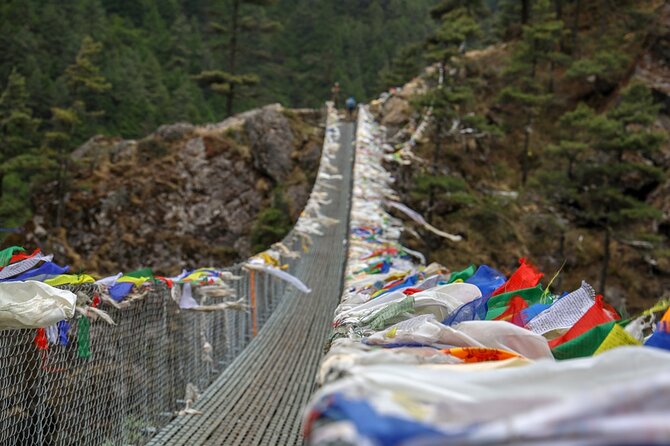
On the way, you’ll pass through suspension bridge crossings—those steel cable bridges the Khumbu is famous for. They’re not just scenic props. They also make you slow down and commit to stable footing, and that’s good training for later rocky stretches.
Namche is more than a town stop. It’s a feeling. You go from small villages into a hub packed with trekkers, shops, bakeries, and lodges. It’s also where your acclimatization logic starts to click.
Why this day is worth it: Namche positions you for the next stretch up. It’s also a comfortable place to absorb altitude without immediately “pushing for Everest.”
What to watch: Day 2 is long, and you’ll feel it in your legs even if the climb doesn’t look extreme on a map. Take your time on the steep bits. If you’re the type who tries to prove yourself, you’ll pay later.
Everest View Hotel and Syangboche: the acclimatization day that feels like a festival
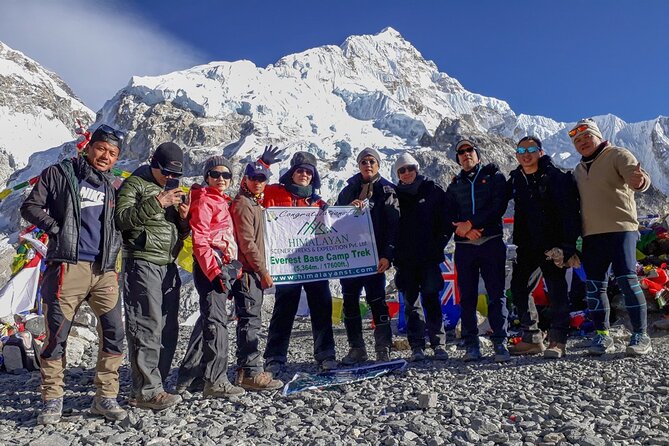
Day 3 is designed as an acclimatization day, even if you feel fine. You hike to Everest View Hotel via the Syangboche airstrip and enjoy a full day that’s more about rhythm than effort (the listed hike is short—around 2 hours—but the day is planned around recovery).
This is the kind of day you’ll love even if you don’t love rest. The air is thin, but you’re not struggling for distance. You’re looking outward, seeing the Everest region from a perspective that makes the rest of the trek feel real.
What you’re really doing: your body gets a chance to adjust while your mind gets a reward. That balance is why this trek works for beginners and seniors when it’s done right.
Small consideration: even on an acclimatization day, mornings can be cold. Bring layers you can manage without wrestling your gear.
Tyangboche and rhododendron descent: where the trail gains personality
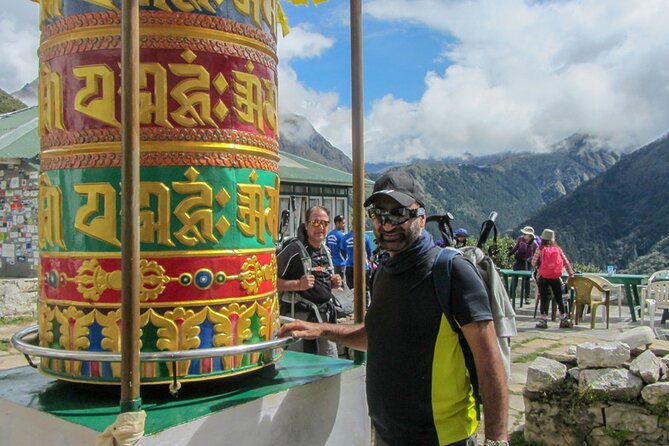
After Namche, Day 4 brings the jump forward toward Tyangboche. The day has a mix: a steep climb early, then a more moderate trek for a while. Total hiking time is about 5 hours.
This is also a day where the environment changes. You’ll be moving through forested sections and village viewpoints, with monasteries and stone paths that feel distinctly Khumbu—more than “just a trail.”
Then Day 5 continues the story around Tengboche monastery. The route is paced around an early attempt at sunrise, which is often when mountain views look most dramatic. After that, you descend through a rhododendron forest to Deboche (listed around 3,320m). That mix—sunrise effort followed by forest walking—is classic altitude strategy: earn a view, then settle your body with easier terrain.
What I like for your experience: this stretch adds emotional variety. You’re not only going upward; you’re also getting calmer walking sections and spiritual scenery.
What could annoy you: sunrise hikes mean early starts. If you want late mornings every day, this is not that trek.
Dingboche and Nagarjuna: the rest day you should treat like training
Day 6 is a dedicated acclimatization and recovery day near Dingboche. You’ll be in the zone where altitude already matters, so “easy” doesn’t mean “ignore it.” The plan includes a leisurely hike to a nearby hill called Nagarjuna to acclimatize and take in views.
This is one of the most valuable parts of the whole itinerary because it’s the difference between “I pushed through” and “I safely adjusted.” The tour also provides tools that support altitude awareness, including an oximeter for checking oxygen saturation and pulse at higher elevations.
Why this matters for value: you’re paying for the guide experience here—not just for walking hours. A well-run acclimatization day can prevent problems later, and the guide’s judgment matters.
Consideration: even on an acclimatization walk, you may feel winded. That’s normal. Focus on slow steps and steady breathing.
Lobuche: the push toward the high country
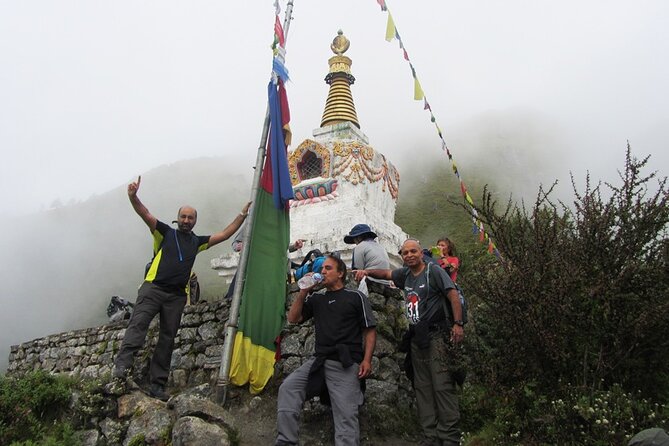
On Day 7 you move to Lobuche (about 6 hours). With acclimatization behind you, the itinerary pushes further into a wide valley under Cholatse and Tawache peaks.
The trail changes character again. You’re dealing with a more rugged, high-altitude feel, and the walking can feel more “technical” even when you’re still hiking at a similar pace.
What I like: you get that sense of transition—like the trek is leaving normal hiking territory and moving into true high-mountain terrain.
What to watch: you’ll likely want to protect your energy for Day 8, when Everest Base Camp becomes the headline.
Everest Base Camp and the glacier path: what your big day actually looks like
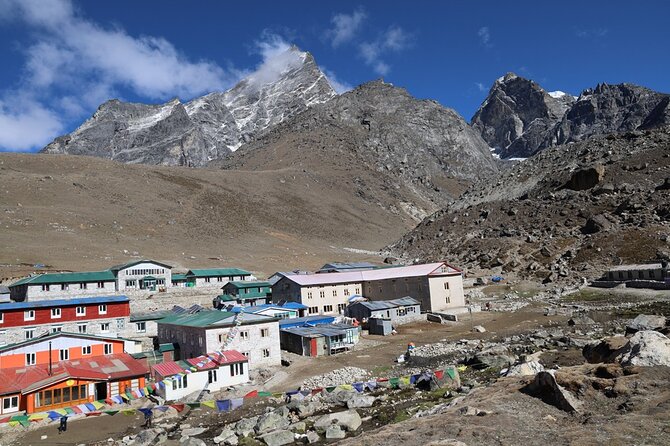
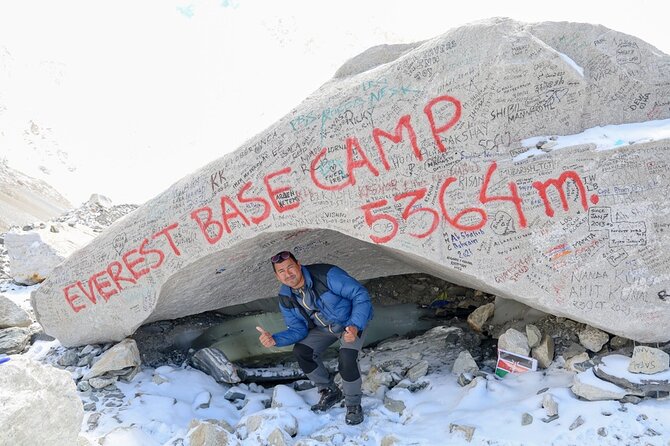
Day 8 is your Base Camp day, and it’s not just one long hike. You go from Lobuche to Gorakshep (around 3 hours), then continue to Everest Base Camp (listed around 4 hours).
The route includes a rocky ascent and travel along the Khumbu glacier area, passing notable features like the International Pyramid Labo on the way to Gorakshep. After Gorakshep, the final approach to Base Camp is described as rocky with downhill and uphill segments as you head alongside the glacier area.
Then—yes—you reach Everest Base Camp. But what matters is how you get there. This day is a combination of physical effort and mental payoff. You’re going to feel something shift after you arrive: the trek stops being a plan and becomes a place.
Why this is a peak-value day: Base Camp isn’t just a photo stop. It’s where you understand why people take the trek seriously. You’re surrounded by scale, cold air, and the sense that you’re standing at the edge of a different world.
Practical reality: the rocks can be slippery, and the footing demands attention. Your guide’s pace-setting is important here.
Kala Patthar sunrise: the steep, rocky lesson that’s worth it
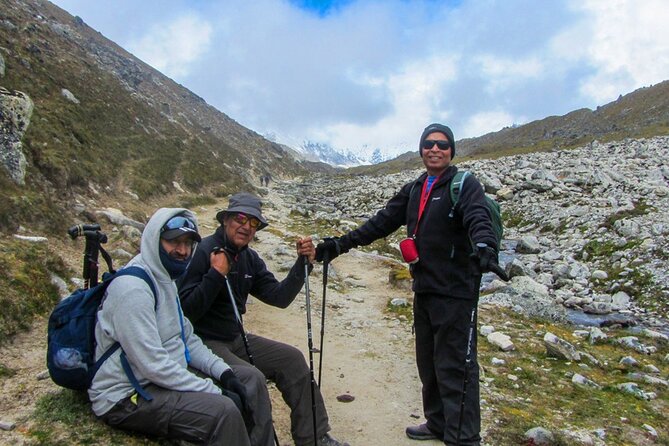
Day 9 is Kala Patthar day, and it’s scheduled around an early sunrise viewpoint over Mount Everest. The hike is described as steep and rocky, and the time estimate is about 8 hours total.
Kala Patthar (listed at 5,545m) is the kind of altitude moment where you feel every decision you’ve made earlier in the trek—pace, hydration, acclimatization, and sleep. The sunrise target is what turns that effort into a story you remember for years.
What I’d plan mentally: treat it like a mission. You don’t need speed. You need rhythm. Many people end up learning how to move efficiently on steep rock and how to steady breathing when your legs feel heavy.
Drawback: if you’re not comfortable with early wake-ups and a harder climb day, this could feel like a lot. But it’s also the most reliable “wow” payoff in the itinerary.
Coming back to Namche and Lukla: the long descent that still works
Day 10 takes you back toward Namche Bazaar (about 6 hours). The plan is a heavy breakfast first, then you trek downhill and through paths that are comparatively easier because elevation drops as you go. You’re back in “walking more, suffering less” mode.
Day 11 is the return toward Lukla, and it’s a full day (about 7 hours). The route retraces earlier steps through forests and villages, crossing multiple bridges and streams, going back via Monjo and Phakding.
Descent can still be hard. Your knees and ankles get the stress. The guide’s pacing and your trekking poles can make a big difference.
What I like about the return: you’re not suddenly rushed. The itinerary gives you enough time to move consistently and reach lower altitude before your body gets too tired.
Kathmandu wrap-up: one last flight and breathing room
Day 12 is your “last feat” day: the flight back from Lukla to Kathmandu, with mountain views on the way, then a drive to your hotel. The flight segment is listed at about 35 minutes, and your remaining time in Kathmandu is free.
This buffer matters. After ten days of trekking, a final day in Kathmandu lets you eat like a normal human again, catch up on laundry, and decompress instead of rushing into travel immediately.
Practical advice: don’t book anything stressful right after the trek. You’ll need a little recovery time even if you feel fine.
Price and what you actually get for $605
At $605 per person, this itinerary can feel like a bargain—or suspiciously low—depending on what you compare it to. The reason it can work is what’s included.
Your package covers:
- Domestic flights Kathmandu–Lukla–Kathmandu
- Three meals a day on trek (breakfast, lunch, dinner)
- Lodge accommodation (twin-sharing)
- A government licensed, high-altitude trained guide
- A porter (1 for 2 trekkers)
- Permits for Sagarmatha National Park and the TIMS card fee
- Basic altitude and medical support tools (first aid kit and an oximeter)
- Trekking gear basics like a trekking map, trekking hat, duffel bag, and trekking pole
You also get airport pickup/drop-off by private/shared vehicle and a walkie-talkie for group trekking.
What this means for value: you’re paying for the setup that reduces decision fatigue. Flights, permits, meals, and support tools are already arranged, so your energy goes into the trail.
What’s not included: personal travel insurance, snacks/drinks/personal expenses, personal trekking gear, and gratuity/tips for the team. That’s normal for this kind of trip, but you should budget for it.
Guides, pace, and the “small” safety details that matter
The strongest praise across named guides is simple: they’re helpful, competent, and tuned to how people actually hike at altitude. In particular, I see a pattern of high-touch guidance from pros like Rajesh Magar, Narayan Ntc, Bikram, and Gopal.
Here’s what that translates to for you, practically:
- Early starts matter for sunrise days, and the guide helps keep the schedule realistic
- Pace is adjusted to hikers who want to move efficiently, without skipping the acclimatization logic
- Logistics are coordinated day to day, so you spend less time figuring things out and more time focusing on the walk
Add in the support tools: an oximeter lets the guide check pulse and oxygen saturation during higher-altitude segments. That’s not a magic fix, but it supports good decisions.
Also, group size is capped at 20 travelers, and walkie-talkies are available for group trekkers. That’s useful for keeping everyone connected on busy or confusing stretches.
Who should book this 12-day Everest Base Camp trek
This trek is designed for trekkers of all levels, including seniors and beginners, and the tour notes you should have moderate physical fitness. That’s believable because:
- The route includes acclimatization days, not only summit-style pushing
- The trek stays in lodges rather than requiring you to be self-sufficient
- Your group setup includes a guide, porter support, and included meals
This is especially good if you want:
- The classic EBC experience with Kala Patthar sunrise
- A guided setup where permits, flights, and daily meals are handled
- A human team that knows how to run the high-altitude schedule
You might want a different plan if you’re prone to motion sickness on flights, hate cold mornings, or can’t handle a steep, rocky climb day like Kala Patthar.
Should you book this Everest Base Camp trek?
If you want a well-run, value-focused way to reach Everest Base Camp with structured acclimatization and a strong guide team, this is a solid choice. The package feels built for real hikers: flights, permits, lodge comfort, three meals, and altitude support are covered, and the itinerary includes the “earned rewards” days like Everest View and Kala Patthar.
Book it if you’re ready to hike daily, wake up early for sunrise targets, and respect acclimatization. Skip it if you’re looking for a low-effort nature stroll or you can’t manage the idea of thin air and steep rocky sections.
FAQ
Where does the trek start and how do I get there?
The meeting point is Tribhuvan Airport in Kathmandu, Nepal. The tour includes airport pickup and drop-off by private or shared vehicle for the domestic transfer.
How long is the Everest Base Camp trek?
The duration is 12 days (approx.), including flights to and from Lukla and free time back in Kathmandu on the final day.
What are the highest points on the trek?
Everest Base Camp is listed at 5,364m, and Kala Patthar is listed at 5,545m.
Are meals included during the trek?
Yes. The tour includes three meals a day: breakfast, lunch, and dinner during the trek.
Are domestic flights included in the price?
Yes. Domestic flights from Kathmandu to Lukla and back to Kathmandu are included.
What permits are covered?
The package includes entry permit for Sagarmatha National Park and the TIMS card fee.
Is a guide and porter included?
Yes. You’ll have one government licensed, high-altitude trained guide, and there is a porter included (one porter for every two trekkers).
What kind of accommodation should I expect?
Lodge accommodation is included during the trek, with best available twin-sharing rooms.
Can I cancel for a full refund?
Yes, free cancellation is available up to 24 hours in advance of the experience start time for a full refund.