REVIEW · HISTORICAL TOURS
UNESCO Heritage Sightseeing in Kathmandu Private Tour
Book on Viator →Operated by Yakthung Tours and Travels · Bookable on Viator
Four UNESCO stops in one day. If you want Kathmandu’s sacred side without chaos, this private tour strings together the big names in the Kathmandu Valley—Swayambhunath, Kathmandu Durbar Square, Pashupatinath, and Boudhanath—so you get meaning, not just photos. I especially like having a professional guide (and a lady guide option that adds comfort for female travelers). One drawback: temple-entry admissions aren’t included, so budget a bit extra for tickets and keep your pace realistic.
I like how the itinerary mixes Buddhist and Hindu landmarks so the city’s religion-on-the-street feel makes sense fast. I also like the private format: you’re not stuck following a fast herd, and your guide can slow down when questions come up. Still, at these sites you’ll be dealing with crowds, stairs, and respectful behavior rules—plan for walking and give yourself breathing room.
In This Review
- Key Highlights You’ll Feel Right Away
- Four UNESCO Sites, One Tight 6-Hour Plan
- Getting Oriented at Narsingh Chowk Marg (and Using Pickup Well)
- Swaymbhunath (Monkey Temple): Views and Prayer on a Hilltop
- Kathmandu Durbar Square: Royal Power and the Kumari
- Pashupatinath Temple: Shiva, Pilgrims, and Sacred Etiquette
- Boudhanath Stupa: The Kora Walk and the Rhythm of Prayer
- What Makes This Private Tour Work (Beyond the Stops)
- Price and Value Check: Is $55 a Smart Move?
- Timing Tips That Keep the Day Pleasant
- Who This Tour Suits Best
- Should You Book This UNESCO Heritage Kathmandu Private Tour?
- FAQ
- How long is the Kathmandu UNESCO private tour?
- Is pickup included?
- Which UNESCO sites are included?
- Are admission tickets included?
- Is this tour private?
- Do I get a mobile ticket?
- What time does the tour run?
- How soon will I receive confirmation?
- What is the cancellation window?
Key Highlights You’ll Feel Right Away
- A focused UNESCO day: four major Kathmandu Valley sites in about 6 hours
- Solo-friendly comfort: a professional lady guide is available for travelers who want it
- Meaningful explanations: you’re taught what you’re seeing, not just where to stand for pictures
- Private group experience: only your group participates, with room to set your own rhythm
- Easy start point: pickup is offered and you meet at Narsingh Chowk Marg
Four UNESCO Sites, One Tight 6-Hour Plan
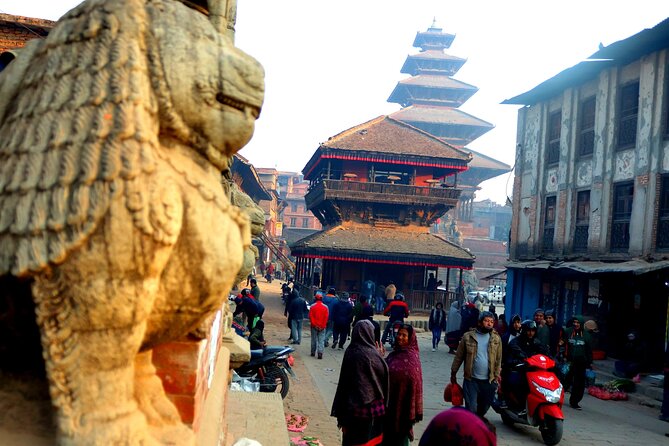
Kathmandu can feel like it’s moving faster than your camera can. This tour is built to fix that: you cover the high-impact UNESCO sites in a single day, guided from place to place so you don’t waste time trying to decode temples, courtyards, and palace squares on your own.
At roughly 6 hours, it’s long enough to feel substantial, but short enough that you’re not exhausted by afternoon. You also get a mobile ticket and pickup offered, which matters when you’re arriving in a new city and don’t want logistical headaches stacked on top of sightseeing.
The tour runs Monday to Friday, with hours listed from 9:30 AM to 4:30 PM (and it’s available through 2026). If your trip window is tight, this schedule makes it easier to slot in one “big day” without gambling on random opening times.
You can also read our reviews of more private tours in Kathmandu
Getting Oriented at Narsingh Chowk Marg (and Using Pickup Well)
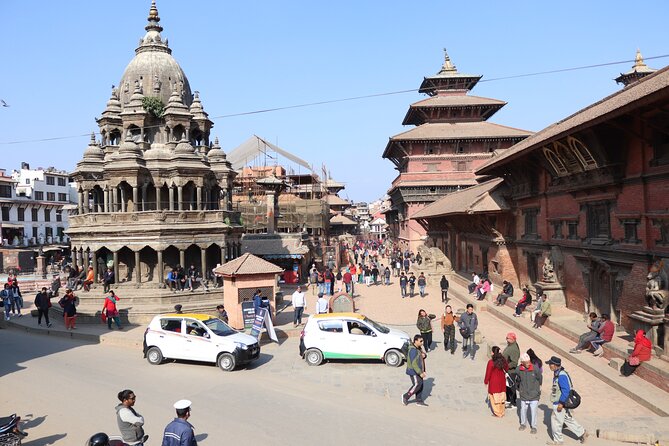
You start at Narsingh Chowk Marg in Kathmandu (44600). That’s helpful because it’s a known meeting point rather than a vague “somewhere downtown.” Pickup is offered, which is one of those simple details that can totally change your day—especially if you’re navigating traffic, or you don’t want to start your morning with a hunt for transport.
Practical tip: once you’ve agreed on pickup and timing, keep your day flexible around that block. Kathmandu’s streets can slow down unpredictably, and a guided tour works best when you give it a little room to breathe.
Swaymbhunath (Monkey Temple): Views and Prayer on a Hilltop
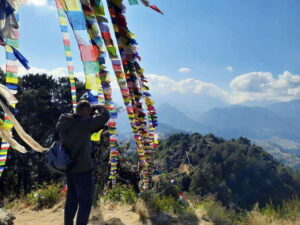
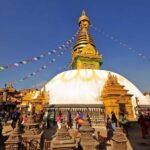
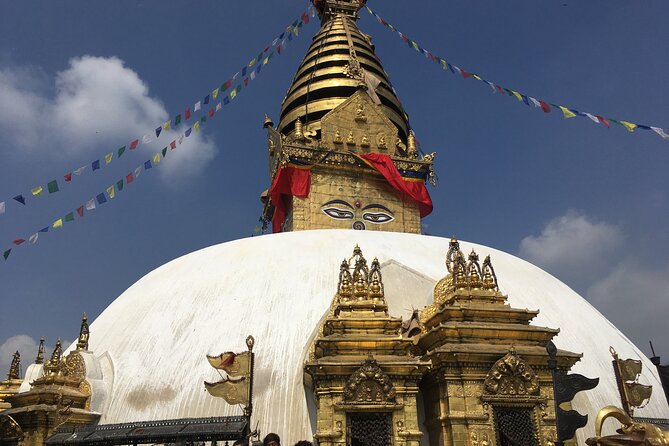
Swayambhunath is a famous old stupa complex, described here as a 5th-century pilgrimage site also known as Monkey Temple. It sits atop a hill in the west of Kathmandu Valley. In other words, you’re not just visiting a monument—you’re climbing into a living religious place that has been attracting pilgrims for generations.
This stop is about 1 hour, and that time is usually best used to do three things:
1) Take in the layout from the approach and notice how the area works like a pilgrimage route.
2) Walk at a respectful pace once you’re inside the main temple zone.
3) Use the views to understand where you are in Kathmandu Valley.
The “Monkey Temple” nickname is widely known, and you might notice playful monkeys around the hill area. That’s part of the atmosphere, but keep your phone and snacks secured and don’t act like you’re in a zoo documentary. When you treat it as a sacred site first, the whole experience feels better.
Why I like this stop: it gives you a fast orientation to the valley. From up here, the city’s geography makes more sense, so the next sites don’t feel like separate “tour stops.” They feel connected.
Possible consideration: it’s a hilltop visit, so stairs and uphill walking are part of the package. If you have mobility constraints, you may want to go a bit slower and ask your guide about the easiest route up.
Kathmandu Durbar Square: Royal Power and the Kumari
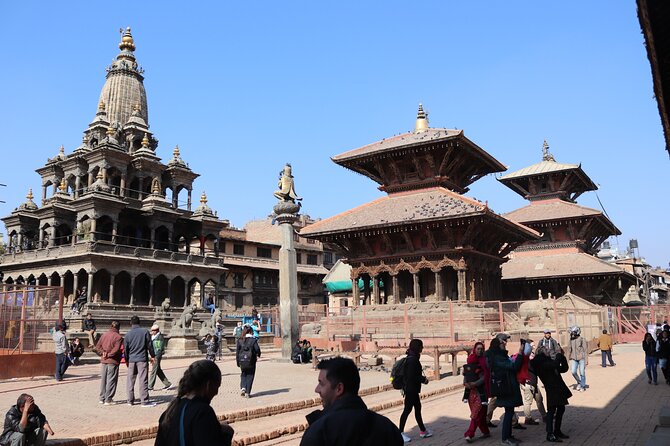
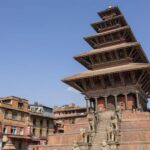
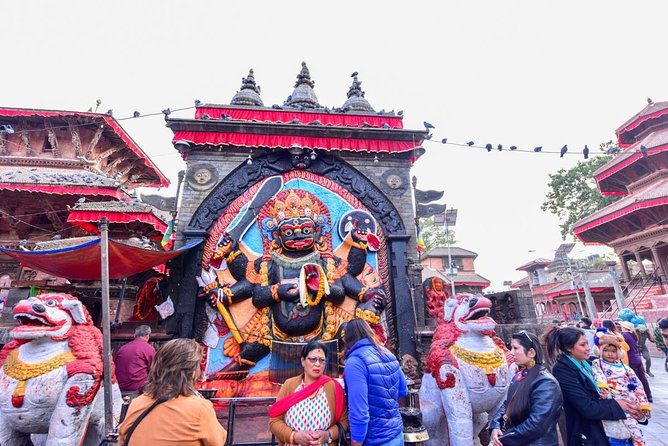
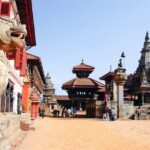
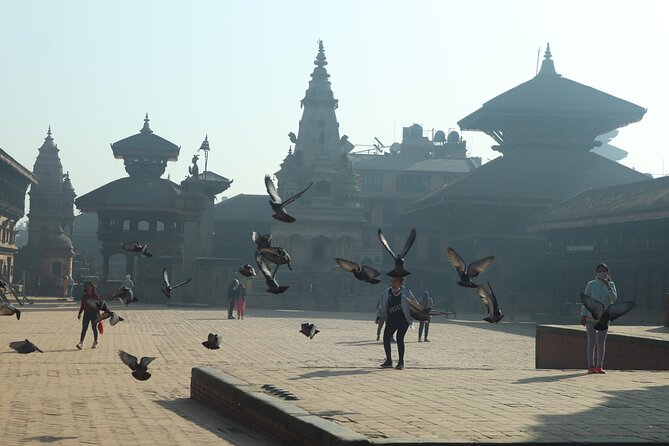
Kathmandu Durbar Square is described as a 16th-century royal palace area, mainly built by Pratap Singha Malla, right in the heart of Kathmandu Valley. The standout feature is Kumari, the living goddess—an important cultural symbol that adds a layer most people miss when they treat the square like just another historic photo spot.
This stop is about 2 hours, which is exactly what it needs. Durbar Square isn’t one building; it’s a space where you can watch how people move through a historic palace complex. With guidance, you’ll get context on why the palace layout matters and what you’re seeing when you look at the traditional architecture.
Why you’ll care about Kumari here: in Kathmandu, religion isn’t tucked away in museum rooms. It’s expressed in daily life and cultural practices. Having a guide explain the Kumari concept turns the square into a deeper story rather than a quick glance.
Possible consideration: this is a busy area. You’ll be weaving through people, so keep your belongings close and avoid getting boxed in by crowds while you’re trying to read signs or take photos.
Pashupatinath Temple: Shiva, Pilgrims, and Sacred Etiquette
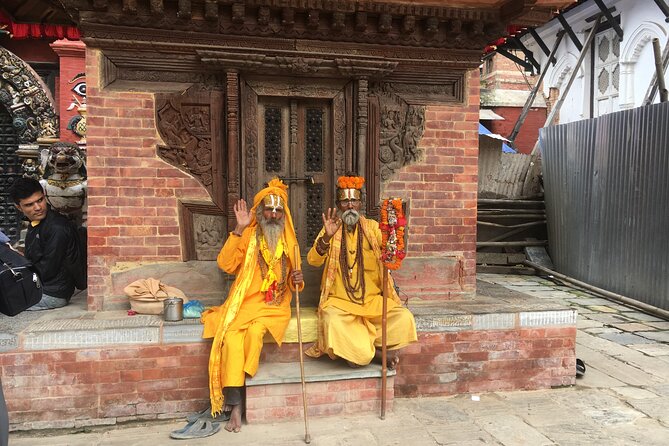
Pashupatinath Temple is highlighted as a 1st-century temple dedicated to Hindu Lord Shiva. It’s one of the important shrines for Hindus, and many pilgrims come—some from India—to pay homage. The day-of-week detail in the tour description is interesting: Saturday is known as the day of Shiva, so you may see extra religious attention on weekends (depending on when your tour falls).
This stop is about 2 hours. That’s useful because Pashupatinath can feel overwhelming without context: lots of activity, strong spiritual atmosphere, and visitors moving in different directions. With a guide, you’ll know what to look at and how to behave appropriately, which is the difference between feeling like an observer and feeling like a respectful guest.
Why I think this stop is worth the time: it’s where you see religion as something people live with daily. Even if you don’t share the faith, understanding the purpose of what’s happening changes how you experience the place.
Practical etiquette tip: dress and behave conservatively around temples. If you’re unsure, ask your guide before entering inner areas. It’s better to ask once than to guess and accidentally step into a rule you didn’t know existed.
You can also read our reviews of more historical tours in Kathmandu

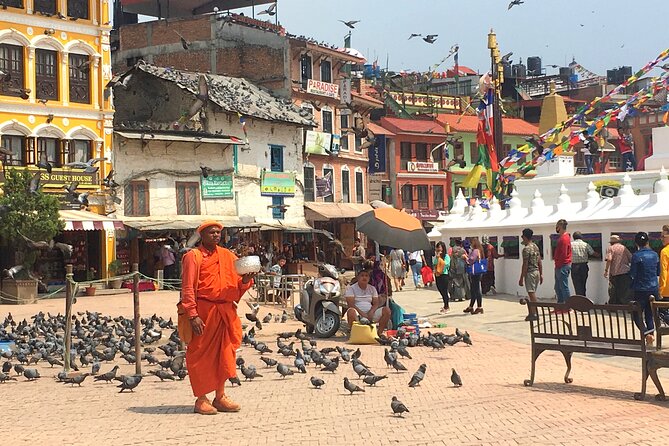
Boudhanath Stupa: The Kora Walk and the Rhythm of Prayer
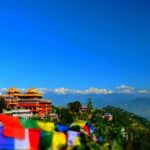
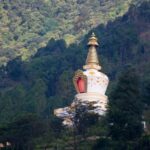
Boudhanath Stupa is another UNESCO star, described here as a 5th-century ancient stupa and one of the important Buddhist pilgrimage sites from ancient times. One of the best details included is that in the early morning and evening, there’s a mass of local people gathering to do Kora, the circumambulation.
Your visit here is about 1 hour. In that time, you can usually:
- see the stupa’s scale and symmetry up close
- notice how people use the surrounding path for Kora
- pick a spot to watch the flow of prayer movements (instead of rushing past)
Why this stop hits: you get the contrast. After Hindu-focused Pashupatinath, Boudhanath shifts the mood into Buddhist ritual movement. The Kora tradition gives you something concrete to watch, even if you don’t know every symbol yet.
Possible consideration: if you catch the stupa during a peak prayer period, it can feel crowded. That’s normal here. Your guide’s job is to help you get the best experience without getting stressed.
What Makes This Private Tour Work (Beyond the Stops)
A big part of the value is the human factor. The tour is run by professional tour leaders from Nepal, and the reviews highlight strong guide energy that makes the day feel smooth and safe.
Two names show up in the experiences shared: Kabita and Anjal. In particular, one solo female traveler praised Kabita for safety and convenience, and another described Anjal planning an excellent itinerary while handling questions with calm confidence. Another review emphasized how a guide made a day easy, fun, and enlightening, especially when weaving through narrow streets crowded with pedestrians and scooters.
That matters because Kathmandu isn’t a theme park. Streets can be tight. Crossings can be busy. If you’re solo, those details weigh more than you expect. A private guide helps you:
- move through crowds without feeling lost
- understand what you’re seeing in plain language
- ask questions when something doesn’t make sense
A small but important note for your mindset: private doesn’t mean effortless. You still walk, you still encounter crowds, and temples still have rules. But it usually means you get clarity, not confusion.
Price and Value Check: Is $55 a Smart Move?
The listed price is $55 per person for this private day tour (about 6 hours). For a Kathmandu experience that includes pickup, a professional guide, and four UNESCO sites, the cost can feel fair—especially if you’re comparing it to paying for transport plus hiring separate guides per stop.
The catch is the one practical line that affects your budget: admission tickets are not included at these sites. So your total day cost might be a bit higher once you add those entry fees.
Here’s how I’d think about value:
- If you want a one-day “greatest hits” UNESCO route with explanations, the guide time is doing heavy lifting.
- If you’re the type who loves reading on your own and hates structured schedules, you might feel boxed in.
- If you’re short on time in Kathmandu, a single coordinated day can actually save more money than it costs.
Also, the tour supports mobile ticket use, which tends to reduce paper hassle. Near public transportation, so you’re not totally dependent on pickup if something changes.
Timing Tips That Keep the Day Pleasant
Because this runs during daytime hours (9:30 AM to 4:30 PM), plan for a classic Kathmandu rhythm: morning energy tends to be stronger for some sites, while later in the day can mean more fatigue. The itinerary already staggers the experience: a hilltop visit, then Durbar Square, then Pashupatinath, then Boudhanath.
To keep it comfortable:
- wear shoes that handle uneven stone and stairs
- bring water (and keep it modest around sacred areas)
- set expectations that “1 hour” doesn’t mean you’ll see everything—use the guide to choose what matters most
If you’re visiting multiple religious sites back-to-back, your brain can get overloaded. Let the guide slow you down when needed and don’t feel guilty if you take extra time to just sit, watch, and reset.
Who This Tour Suits Best
This is a strong match for:
- solo travelers, especially female travelers who want safety and comfort (the lady guide option is a real plus)
- people who want UNESCO highlights without navigating by map and guesswork
- travelers who like understanding the “why” behind monuments, religions, and rituals
It’s also reasonable for couples and small groups, since the format is private. If you’re traveling with older family members, mobility constraints could be a factor because at least one major stop is hilltop and others include walking through active areas.
Should You Book This UNESCO Heritage Kathmandu Private Tour?
Book it if you want a guided day that connects Kathmandu’s top UNESCO sites with context, and you value the calm reassurance of a real guide—especially if you’re traveling solo.
Skip it or adjust expectations if you hate structured time blocks, you’re only interested in quick exterior photo stops, or you’d rather spend the day controlling your own pace without any guidance. Also, because admissions aren’t included, check your budget so surprise fees don’t sting.
If you want one day that gives you a clean, meaningful introduction to Kathmandu Valley’s sacred landscape, this private tour is a practical way to do it.
FAQ
How long is the Kathmandu UNESCO private tour?
The tour duration is about 6 hours.
Is pickup included?
Pickup is offered, and the tour starts at Narsingh Chowk Marg, Kathmandu.
Which UNESCO sites are included?
The tour includes Swaymbhunath, Kathmandu Durbar Square, Pashupatinath Temple, and Boudhanath Stupa.
Are admission tickets included?
No. Admission tickets are not included for the stops listed.
Is this tour private?
Yes. It’s a private tour/activity, and only your group participates.
Do I get a mobile ticket?
Yes, mobile ticket is listed as a feature.
What time does the tour run?
It lists opening hours as Monday to Friday from 9:30 AM to 4:30 PM.
How soon will I receive confirmation?
Confirmation will be received within 48 hours of booking, subject to availability.
What is the cancellation window?
Free cancellation is available if you cancel up to 24 hours in advance for a full refund.
—
If you tell me your travel dates and whether you’re doing other Kathmandu stops (like Patan or Bhaktapur), I can suggest how to pair this day so it feels efficient instead of rushed.