REVIEW · UNESCO WORLD HERITAGE TOURS
Swayambhu and Kathmandu Durbar Square Half Day Tour
Book on Viator →Operated by Himalayan Advisor Pvt. Ltd. · Bookable on Viator
Two UNESCO stops, one smooth half-day plan. This Swayambhu and Kathmandu Durbar Square tour is built for people with limited time, yet want the real feel of Kathmandu’s Hindu and Buddhist traditions. I love the hotel transfers and the entrance tickets included setup, so you spend less time figuring things out and more time looking around.
You’ll get a local guide to connect what you’re seeing to the bigger picture, from the stupa hilltop views down to the royal courtyards. One guide name that’s been called out for fun, clear storytelling is Pankaj, and the explanations focus on the everyday meaning behind the monuments.
The main consideration is the pace: it’s a tight 4-hour loop with multiple short stops, so you won’t get long, quiet time at just one place. If you want slow wandering, bring patience (and comfortable shoes).
In This Review
- Key things to know before you go
- Why this Swayambhu and Durbar Square loop is so efficient
- Hotel pickup, private transport, and included entrance fees
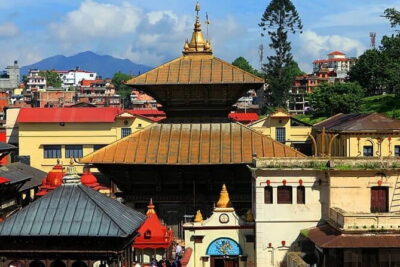
- Stop 1: Swayambhunath Stupa and the Monkey Temple hilltop views
- Amideva Buddha Park: a short, quieter layer inside Monkey Temple
- Kathmandu Durbar Square: royal dynasties, and why this place still matters
- Kumari Chowk: a chance to see the living Goddess Kumari
- Hanuman Dhoka and the feeling of local life
- Basantapur Tower and the shopping stretch you’ll actually walk through
- Akash Bhairav Temple: small stop, serious atmosphere (and lassi)
- The pacing reality check: 4 hours, multiple 15-minute stops
- Price ($65): where the value really comes from
- Who should book this half-day tour
- Should you book Swayambhu and Kathmandu Durbar Square for half a day?
- FAQ
- How long is the Swayambhu and Kathmandu Durbar Square half-day tour?
- What are the main places included on this tour?
- Is hotel pickup and drop-off included?
- Are admission tickets included for both places?
- How much does the tour cost?
- Are food and drinks included?
- Do I need to book this tour in advance?
- Is this tour private?
- What is the cancellation policy?
- Is the tour suitable for most people?
Key things to know before you go
- Hotel pickup and drop-off keep the trip stress-free, especially if this is your first day in Kathmandu
- Swayambhunath plus Kathmandu Durbar Square is the best high-impact combo for first-timers
- Amideva Buddha Park inside the Monkey Temple adds a calmer angle that most quick visits miss
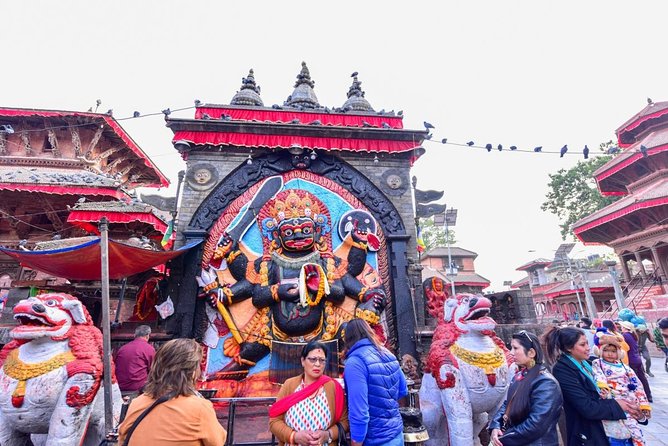
- Kumari Chowk access inside Durbar Square gives you a strong chance to spot the living Goddess Kumari and the famous peacock window
- Many 15-minute stops means you’ll move often, but you’ll see more than you would on your own
- No food or drinks included, so plan for a snack stop on your own
Why this Swayambhu and Durbar Square loop is so efficient
Kathmandu can feel big fast. This tour keeps things focused: it pairs Swayambhunath Stupa (Monkey Temple) with Kathmandu Durbar Square, two UNESCO World Heritage sites that show how Hindu and Buddhist culture coexist in the city.
What I like about the route is that it’s logical. You start high at Swayambhu, then you drop into Durbar Square, where the royal dynasties once lived, ruled, and held coronations. In just a half day, you see both the spiritual hilltop side and the historic power center.
It’s also a good fit if you’re trying to get your bearings fast. You’ll leave with mental “anchors”: where the stupa sits over the city, where Kumari Chowk is inside the square, and how places like Hanuman Dhoka and Basantapur connect to daily life around Durbar Square.
You can also read our reviews of more tours and experiences in Kathmandu.
Hotel pickup, private transport, and included entrance fees
This tour is built around removing friction. Hotel pickup and drop-off are included, and you ride in a private vehicle with a professional guide. That matters because Kathmandu traffic and finding the right entrance can eat time—especially when you’re trying to juggle temples, courtyards, and your energy level.
Entrance fees for both places are included too. That’s a big deal for value: you’re paying for access without needing to calculate costs on the fly, or worry about whether you’re buying the right tickets at the right moment.
You also get a private setup for your group, so the schedule is aimed at your pace. Group discounts are mentioned, which can help if you’re traveling with friends or family.
Stop 1: Swayambhunath Stupa and the Monkey Temple hilltop views
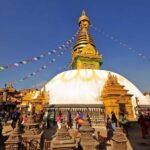
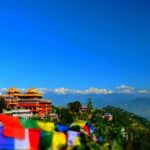
Swayambhunath sits on a high hill overlooking Kathmandu and the valley beyond. That alone makes it worth your first half-day: you’re not just stepping into a temple, you’re stepping into a viewpoint.
It’s also nicknamed Monkey Temple because of the large numbers of rhesus monkeys around the site. This is one of those places where the atmosphere comes from motion—people climbing, gathering, taking photos, and the monkeys treating the area like it’s theirs.
You’ll spend about 45 minutes here. That’s enough time to get oriented, see the stupa area, and notice details without feeling rushed in every direction. You’ll also hear context from your guide about what you’re looking at and why the site matters to local Hindu and Buddhist traditions.
A practical note: even with a guide, you’ll still be moving on temple pathways and stairs. Give yourself a little buffer if you’re not used to climbing. And keep your phone and valuables secured, since monkeys are a known part of the experience.
Amideva Buddha Park: a short, quieter layer inside Monkey Temple
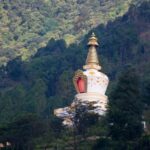
Inside the Monkey Temple complex, you’ll stop at Amideva Buddha Park. This is a compact add-on, around 15 minutes, but it changes the feel from the main stupa area.
The standout here is a big statue featuring three symbols and Buddha. It’s also described as a place with fewer tourists, which can make it feel more reflective than the main crowd flow. With your guide, it’s easier to understand what you’re seeing and why it’s placed where it is.
Think of this stop as your “breather” between the busy hilltop energy and the historic intensity of Durbar Square. If you only touched the main stupa for a quick photo, you’d miss this extra layer of symbolism.
Kathmandu Durbar Square: royal dynasties, and why this place still matters
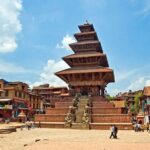
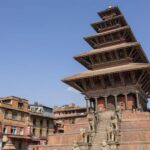
Then the tour drops you into Kathmandu Durbar Square, where kings ruled until 2008. For well over 1000 years, this square served as a home for royal dynasties in the Kathmandu Valley. Kings were crowned here and lived and reigned here—so you’re not just looking at buildings. You’re walking through the stage of power that shaped the city.
You’ll spend about 30 minutes in the main Durbar Square area. That time includes key features inside the square, but it’s also enough for you to understand the general layout: how different courtyards and monuments connect, and why people keep returning here for cultural and religious reasons.
Durbar Square is busy, and not just with sightseeing. It’s also part of everyday Kathmandu life, which is why the guide’s explanations help. Without that, you might see carvings and architecture but miss the meaning behind the place.
Kumari Chowk: a chance to see the living Goddess Kumari
Inside the Durbar Square complex is Kumari Chowk, and this stop is timed at about 15 minutes. This is one of the most watchable spots in the whole route because of the living Goddess Kumari tradition.
The tour description highlights a chance to see Goddess Kumari, along with the peacock window and fine carving work. Even if you don’t linger, it’s the kind of detail that makes Durbar Square feel different from a typical temple visit. You’re seeing a living cultural practice tied directly to the architecture.
Because this is time-bound, you’ll want to arrive ready to look. Keep an eye on where your guide directs you, and be respectful about personal space—people gather here for a reason, and good behavior helps everyone experience it better.
Hanuman Dhoka and the feeling of local life
Still inside Durbar Square, you’ll also visit Hanuman Dhoka for around 15 minutes. It’s described as a popular place inside the square where you can see local life and learn about the people and their culture.
This stop works well after Kumari Chowk because it shifts from a high-profile cultural moment into something more everyday. You get the sense of how the square functions beyond ceremonies—people come through, move around, and use these historic spaces as part of daily Kathmandu.
If you’re the type who likes to understand place through people, this is the right spot on the itinerary. It adds texture that pure monument-spotting can miss.
Basantapur Tower and the shopping stretch you’ll actually walk through
After the core Durbar Square monuments, the tour moves to Basantapur Tower and surrounding open areas. You’ll spend about 15 minutes here, and it’s described as an open area around the square with a busy street feel.
This is where shopping comes in. The tour description notes you can buy handicrafts and enter the Durbar Square area surroundings from here. Even if you don’t plan to shop, it’s a good “breathing zone” because you’ll feel the neighborhood energy around the heritage site.
There’s also mention of the busiest local shopping market in Kathmandu on the way to Durbar Square. That’s built into the route, so you’re not stuck with a sterile temple-only visit. You get a more real sense of how these landmarks sit in the flow of commerce and daily errands.
Akash Bhairav Temple: small stop, serious atmosphere (and lassi)
The final temple stop is Akash Bhairav Temple, again around 15 minutes. It’s described as small but one of the busiest places in town. That combination matters: small space, big attention.
The tour also notes that this is a place where you can have delicious lassi. Since food and drinks aren’t included, this is one of the most useful moments on the itinerary to plan your break. If you want something cold and sweet after climbing and walking, this is where you’ll likely find it easiest.
Even if you keep your time short, it’s a fitting last stop because it feels intense but accessible. You’ll see how the city’s devotion and street life overlap right where tourists often start to feel tired.
The pacing reality check: 4 hours, multiple 15-minute stops
This is a half-day tour, and the schedule reflects that. You’ll spend:
- 45 minutes at Swayambhunath
- 15 minutes at Amideva Buddha Park
- 30 minutes at Kathmandu Durbar Square
- 15 minutes each at Kumari Chowk, Hanuman Dhoka, Basantapur Tower, and Akash Bhairav Temple
Plus time moving between stops.
That means you won’t have time for deep, slow wandering at each site. Instead, you’ll get a sequence of highlights that teach you what to notice. If you’re traveling with limited time in Kathmandu, that’s a win.
If you’re someone who likes to sit with one view for 45 minutes and take in every angle, you might leave wanting more. The workaround is simple: do this tour first to learn the basics, then come back later on your own for extra time at whichever stop you liked best.
Price ($65): where the value really comes from
At $65 per person for a ~4-hour private group experience, the value depends on what you compare it against.
You’re paying for:
- Hotel pickup and drop-off
- Private vehicle transport
- A professional guide
- Entrance fees for both Swayambhunath and Kathmandu Durbar Square areas
If you try to do this on your own, the biggest hidden costs are time and logistics: arranging transport, paying multiple entry fees, and figuring out where to stand for key spots like Kumari Chowk. This tour turns that into a single, fixed price that includes the “annoying bits.”
Group discounts are also noted. If you can travel with others, your per-person cost is likely even easier to justify.
Also, the booking timing is usually about 6 days in advance on average. If you’re planning around a tight Kathmandu schedule, booking ahead helps you avoid last-minute scramble.
Who should book this half-day tour
I think this tour fits best if you:
- Have only half a day in Kathmandu and want two major UNESCO sites covered
- Prefer a guide to connect Hindu and Buddhist traditions to what you see
- Want a simple plan with pickup, transport, and entrance fees already handled
- Like a route that mixes monuments with local life and a shopping market stretch
It may not be ideal if you:
- Want long stays at one site for quiet photography
- Don’t enjoy frequent movement between spots
- Expect food to be included (it isn’t)
Should you book Swayambhu and Kathmandu Durbar Square for half a day?
Book it if your goal is efficiency with cultural context. The combination of Swayambhunath’s hilltop Monkey Temple energy and Kathmandu Durbar Square’s royal-era setting makes this one of the most practical ways to learn Kathmandu in a short window.
Skip it (or pair it with extra time) if you’re the type who needs slow hours to fully absorb temples and courtyards. This tour is designed to get you oriented and excited, not to replace a longer visit.
If you can only do one big sightseeing block, this is a strong choice.
FAQ
How long is the Swayambhu and Kathmandu Durbar Square half-day tour?
It runs for about 4 hours (approx.).
What are the main places included on this tour?
You visit Swayambhunath Stupa (Monkey Temple), Amideva Buddha Park, Kathmandu Durbar Square, Kumari Chowk, Hanuman Dhoka, Basantapur Tower, and Akash Bhairav Temple, plus a local shopping market area on the way.
Is hotel pickup and drop-off included?
Yes. Hotel pickup and drop-off are included.
Are admission tickets included for both places?
Yes. Admission tickets to both places are included, and all entrance fees are covered.
How much does the tour cost?
The price is $65.00 per person.
Are food and drinks included?
No. Food and drinks are not included.
Do I need to book this tour in advance?
You can receive confirmation at the time of booking, and it’s typically booked about 6 days in advance on average.
Is this tour private?
Yes. It’s described as private, meaning only your group will participate.
What is the cancellation policy?
Free cancellation is available. You can cancel up to 24 hours in advance for a full refund.
Is the tour suitable for most people?
The information says most people can participate.