REVIEW · BHAKTAPUR & PATAN DAY TRIPS
Private Day Tour: Patan and Bhaktapur from Kathmandu
Book on Viator →Operated by Pigeon Travel And Tours Pvt Ltd · Bookable on Viator
Old cities, big stories, one smooth day.
This private tour strings together Patan Durbar Square and Bhaktapur Durbar Square, both UNESCO sites, with a guide who explains the design of temples and royal palaces in a way that actually sticks. I especially like that it’s not just a photo run: you get time to absorb the courtyards, gates, and carved stone—plus a bit of context on how the 2015 earthquake changed the region.
What I love most is the small-group feel of a private day: hotel pickup and drop-off, a dedicated licensed guide, and a private vehicle mean you spend your energy on the sights instead of logistics. I also love the architecture focus—Newari details at Patan, then major landmarks like the 55-Window Palace and Golden Gate in Bhaktapur—so the day feels organized without feeling rushed.
One possible drawback: it’s a full day built around walking in old-city plazas and around heritage buildings, so comfortable shoes matter. And while lunch time is built in, food and drinks are not included, so you’ll want to budget for that break.
In This Review
- Key highlights at a glance
- Why these two Durbar Squares work as a pair
- Getting started in Kathmandu: pickup, timing, and flow
- Patan Durbar Square: Newari architecture you can actually spot
- Practical tip for Patan
- Jawalakhel: a Tibetan handicraft center stop that breaks up the day
- Bhaktapur Durbar Square: gates, squares, and the 55-Window Palace
- What you’ll see (and why it matters)
- Practical note about Bhaktapur
- Lunch time in Bhaktapur: how to use the break well
- The guide’s history angle: Kathmandu Valley and the 2015 earthquake
- Price and value: is $105 per person a fair deal?
- What to wear and bring for a comfortable heritage day
- Who this private day tour is best for
- Should you book this Patan and Bhaktapur private tour?
- FAQ
- What is the tour duration?
- What time does the tour start?
- Do I get hotel pickup and drop-off?
- Is this a private tour?
- Are entrance fees included?
- Is lunch included?
- What places are included in the itinerary?
- Is bottled water provided?
- How much does it cost?
- Does the tour include a guide and transport?
Key highlights at a glance
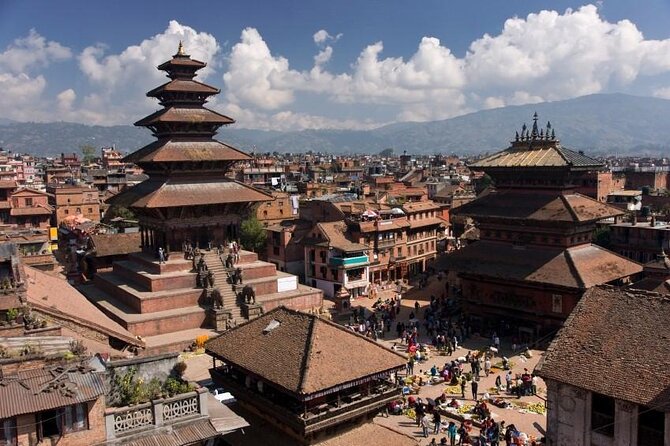
- Patan Durbar Square: Newari courtyards and palace-core layout, with classic stone-and-bronze craftsmanship
- Tibetan handicraft center stop in Jawalakhel: carpet weaving demonstration you can watch up close
- Bhaktapur Durbar Square (Bhadgaon): Golden Gate, Lion Gate, Potter’s Square, National Art Gallery, and the 55-Window Palace
- Guide context: history of the Kathmandu Valley and the impact of the 2015 earthquake
- Built-in lunch time: enough breathing room to eat in the square instead of “snack and run”
- All-in planning: entrance fees, private vehicle, and hotel pickup/drop-off included in the price
Why these two Durbar Squares work as a pair
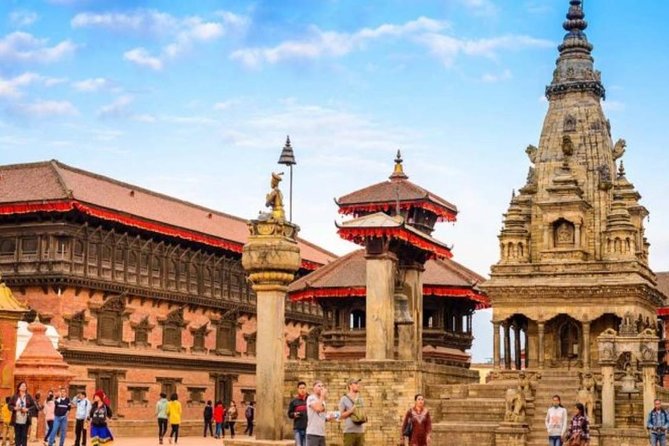
Patan and Bhaktapur are often called sister cities, and the comparison is more than a slogan. Patan (Lalitpur) gives you a sense of palace power and temple craft across courtyards—lots of stone work and fine detail. Bhaktapur then shifts the mood to a medieval city center where the royal complex reads almost like a map of civic life: gates, squares, and monuments laid out for movement and ceremony.
The value of doing them together is pacing. Instead of jumping between random neighborhoods on your own, you get two UNESCO heritage cores in one day, guided in a logical sequence. You’re also not trapped in one city’s crowds for the whole time; you get a change of scenery and rhythm once you cross from Kathmandu toward Patan and then head onward to Bhaktapur.
You can also read our reviews of more private tours in Kathmandu
Getting started in Kathmandu: pickup, timing, and flow
The tour starts at 10:00 am with pickup from your accommodation in Kathmandu. From there, you drive to Patan, which sits on the opposite side of the Bagmati River. This matters because it gets you into the heritage area without you spending time figuring out transport, parking, or the best route through city traffic.
The total time is listed as about 7 hours, which is a practical length for a heritage day. You’re not stuck for half a week, and you’re not stuck with only 60–90 minutes at each site either. The schedule gives roughly 2 hours at Patan Durbar Square and 2 hours at Bhaktapur Durbar Square, plus travel time and a lunch break.
You’ll also have a guide with a private vehicle. That means if the group needs a short pause—shade, bathroom break, or a slower stop near a carving—you’re not negotiating with a public bus schedule.
Patan Durbar Square: Newari architecture you can actually spot
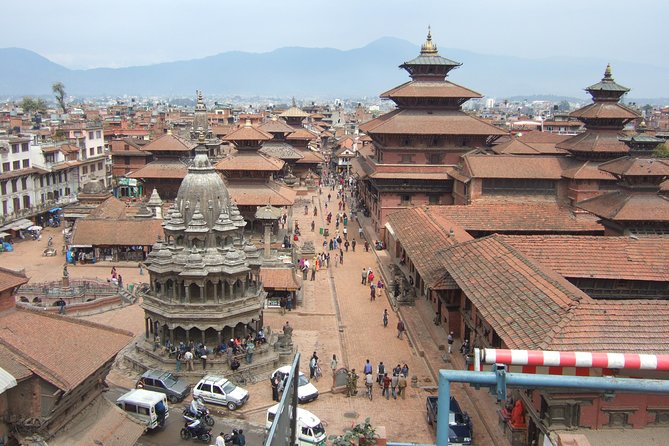
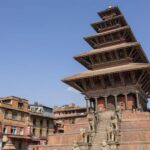
Patan Durbar Square sits in the center of Lalitpur, and it’s one of the three Durbar Squares in the Kathmandu Valley that are recognized as UNESCO World Heritage Sites. The key word here is “core”: this is where royal presence and religious structure overlap.
You begin with a walking tour around the square’s courtyards—areas like Mul Chowk, Sundari Chowk, and Keshav Narayan Chowk—where the guide points out the features that make Newari architecture famous. If you’ve ever looked at a temple and thought, I can tell it’s old, but what am I looking at, this is the fix. You start noticing how gateways, courtyards, guardians, and carved stone create movement and meaning.
One standout you’ll likely hear about is Krishna Mandir, built in 1637 by King Siddhi Narsingh Malla. The temple is constructed of stone, and it’s tied to the idea of Patan as a city associated with fine arts and skilled metalworkers and craftsmen. Even if you only catch a few details, the scale and workmanship help you understand why this area is so central to Patan’s identity.
Practical tip for Patan
Patan’s best moments are often at eye level and within the courtyards. So don’t rush straight to the biggest-looking structure. Slow down for the carvings and doorways—the small stuff is what makes Newari design feel distinctive.
Jawalakhel: a Tibetan handicraft center stop that breaks up the day
Between the big heritage plazas, there’s a stop in Jawalakhel at a Tibetan handicraft center. The highlight here is a carpet weaving demonstration, which gives you a break from stone and sculpture while staying connected to craft traditions.
This stop is valuable for two reasons. First, it adds variety to the day without taking it off-topic—you’re still learning about heritage and making. Second, it gives you something interactive to watch, so the morning doesn’t become a single long wall of monuments.
If you like seeing the process behind what you buy (and you’re not just shopping to check a box), you’ll appreciate this pacing. Also, it can be a helpful pause if the morning sun is already warming up.

Bhaktapur Durbar Square: gates, squares, and the 55-Window Palace
After Patan, you head to Bhaktapur, locally known as Bhadgaon. This medieval city has its own UNESCO Durbar Square complex, set in the town center. It’s about 14 km east of Kathmandu, and the difference between the two sites becomes obvious as soon as you arrive: the layout feels more like a functioning old city center rather than a single palace-centered stage.
Bhaktapur Durbar Square includes multiple distinct squares—Durbar Square, Taumadhi Square, Dattatreya Square, and Pottery Square—even though many people refer to the area as one place.
What you’ll see (and why it matters)
Here are the highlights you’ll want your eyes on:
- Golden Gate: A major statement entrance that helps you read how the royal complex controlled access and movement.
- Lion Gate: Another gateway that signals authority and symbolism through sculpted forms.
- Potter’s Square: A reminder that heritage isn’t only about palaces; it’s also about everyday craft life embedded in the city layout.
- National Art Gallery: A chance to connect the architecture and craft traditions to how art is preserved and presented.
- 55-Window Palace: This is the big attention-grabber. The name comes from the many windows on the structure, and it was the royal seat of Nepal. When you look at it from the right angle, it’s easy to see why it’s so memorable.
Practical note about Bhaktapur
Bhaktapur rewards slow looking. The gates and palaces are impressive, but the real payoff is noticing how the complex pulls you from gate to square to courtyard. If you spend the full time here, you’ll get a clearer sense of how the city was organized for ritual, governance, and community life.
Lunch time in Bhaktapur: how to use the break well
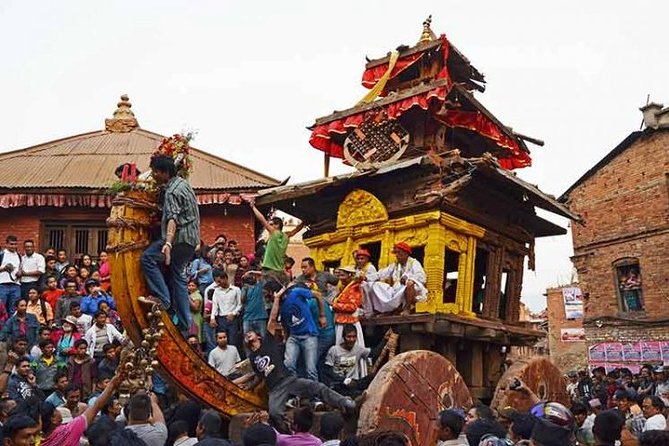
A traditional lunch stop is built into the schedule, with time to eat in the square area. Food and drinks are not included, so treat lunch as both a pause and a local experience.
Here’s how to use the break wisely:
- Take advantage of the fact that you’re already in the heritage core. Eat without rushing out of the area.
- If you’re sensitive to timing, remember you still have sightseeing on the other side of lunch—so don’t plan a long sit-down that turns into a nap.
- Stay hydrated. Bottled water is included on the tour, but Bhaktapur can still feel warm depending on the season.
Lunch in this setting can make the whole day feel more grounded. You’re not just walking through monuments—you’re working your body back into rhythm like you would in an actual old city day.
The guide’s history angle: Kathmandu Valley and the 2015 earthquake
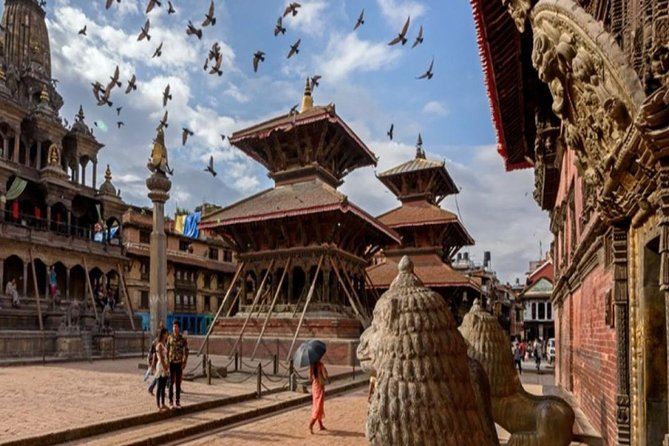
One thing that elevates this tour is that the guide shares history beyond dates. You’ll hear about the Kathmandu Valley and how the 2015 earthquake affected the region, including what the damage and rebuilding mean for the built heritage you’re seeing today.
Why that matters: architecture isn’t just decoration. When you understand the context of restoration and loss, you look at the stones differently. You’re not treating the Durbar Squares like a static museum piece—you’re seeing living heritage that has been tested.
This kind of explanation also helps you make sense of why certain restoration choices might be visible to the careful eye.
Price and value: is $105 per person a fair deal?
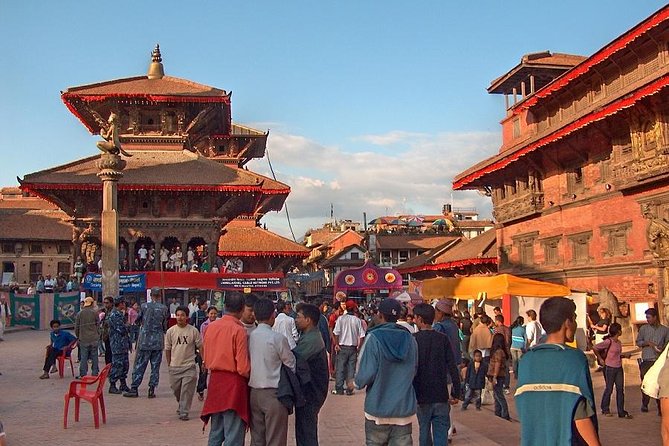
At $105 per person for about 7 hours, this is priced like a serious day, not a quick hop between sites. The value comes from what’s included:
- Hotel pickup and drop-off
- Licensed tour guide
- Private vehicle transport
- Entrance fees for temple and monuments
- Bottled water
- Free WiFi
- A private format where it’s only your group
If you try to piece this together yourself—driver or taxi hires, tickets you might forget, and a guide who can explain what you’re looking at—the cost tends to climb fast. This tour bundles the planning and the interpretation.
The only obvious extra is lunch (and any drinks), since food is not included. If you budget for a decent meal and water refills as needed, the rest of the day is predictable.
Also, group discounts are mentioned, which can help if you’re not traveling solo.
What to wear and bring for a comfortable heritage day
Even with a private vehicle, you’re walking in and around heritage plazas. Plan for uneven stone surfaces and stairs near monuments. I’d bring:
- Comfortable, well-gripped shoes
- A hat and sunscreen (especially if you catch midday light at Bhaktapur)
- A light layer for shade breaks
- Some cash for lunch, since food isn’t included
You’ll also be fine on the ticket side because a mobile ticket is included, and confirmation is received at booking.
Who this private day tour is best for
This fits best if you want:
- A guided explanation of Newari architecture and royal complex layouts, not just sightseeing
- A full day that covers two UNESCO Durbar Squares with enough time to absorb them
- A comfortable plan with private transport and hotel pickup/drop-off
- A little variety, like the Jawalakhel carpet weaving demonstration, inside a heritage-heavy schedule
It might be less ideal if you want a slow, unstructured day where you can wander off on your own for hours without a set program. This is structured for efficiency and interpretation.
Should you book this Patan and Bhaktapur private tour?
If you’re aiming to understand the Kathmandu Valley’s heritage instead of just collecting landmarks, I think this is a strong yes. The pairing of Patan Durbar Square and Bhaktapur Durbar Square is a smart use of time, and the guide-led architecture focus makes the monuments feel readable. Add in the craft stop at Jawalakhel and a real lunch break, and you’ve got a full day that feels more human than “checklist travel.”
Only pause if you know you don’t enjoy walking on older stone surfaces or you prefer food to be handled for you. If you can handle comfortable shoes and budget for lunch, this is the kind of day that leaves you thinking about what you saw long after you return to Kathmandu.
FAQ
What is the tour duration?
It runs for about 7 hours.
What time does the tour start?
The start time is 10:00 am.
Do I get hotel pickup and drop-off?
Yes. The tour includes hotel pickup and drop-off in Kathmandu.
Is this a private tour?
Yes. It’s private, and only your group participates.
Are entrance fees included?
Yes. Temple and monument entry fees are included.
Is lunch included?
Food and drinks are not included, but you’ll have time to purchase lunch in Bhaktapur.
What places are included in the itinerary?
You visit Patan Durbar Square and Bhaktapur Durbar Square, plus a stop at a Tibetan handicraft center in Jawalakhel.
Is bottled water provided?
Yes. Bottled water is included.
How much does it cost?
The price is $105.00 per person.
Does the tour include a guide and transport?
Yes. You get a licensed tour guide and transport by private vehicle.