REVIEW · 1-DAY TOURS
Kathmandu City in One Day with Bodhnath Stupa
Book on Viator →Operated by Mosaic Adventure · Bookable on Viator
Kathmandu in one day can feel like speed-dating for temples. This tour is interesting because it strings together major Hindu and Buddhist sites with hotel pickup, so you spend less time guessing and more time seeing.
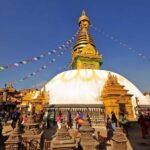
I especially like the tight focus on the places first-timers need most: Swayambhunath for the famous viewpoint and monkeys, plus Boudhanath for big, hypnotic stupa energy. You also get a real guide who can explain the meaning of what you’re looking at, not just the dates and names.
The main drawback is the obvious one: it’s a lot of sacred stops in one day. If you want slow browsing, long sits, and lots of spare time, you may find the pacing a bit full.
In This Review
- Key things that make this Kathmandu day tour work
- A 9:00 AM loop that hits Kathmandu’s must-sees fast
- Price and logistics: what $95 buys you (and what it doesn’t)
- The heart of Patan: Old Durbar Square as your warm-up
- Krishna Temple: short stop, old feel
- Pashupatinath: Hindu temple grounds and the riverfront reality
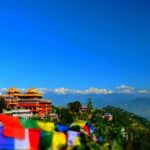
- Boudhanath Stupa: big Buddhist worship energy
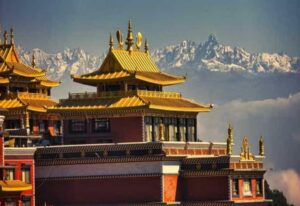
- Swayambhunath and the Monkey Temple viewpoint
- Earthquake damage awareness: what to expect in 2016-era Kathmandu
- Your guide experience: why Keshar stands out
- Pacing and group size: the balance between coverage and calm
- Best fit: who this tour suits best
- Should you book this Kathmandu City tour with Bodhnath Stupa?
- FAQ
- FAQ
- How long is the Kathmandu City day tour?
- What time does the tour start?
- Is hotel pickup and drop-off included?
- What major places are visited during the day?
- Are entrance tickets included?
- Is food included in the price?
Key things that make this Kathmandu day tour work
- Small group size (up to 12) keeps it manageable while moving between sites.
- Hotel/port pickup and drop-off saves you from arranging transport in a short stay.
- You see both Buddhist and Hindu landmarks in one sweep: Swayambhu, Bodhnath, Patan, and Pashupatinath.
- Guide-led context helps you understand why these places matter to Nepali life and belief.
- The route includes stops with different vibes and settings, from square courtyards to riverfront temple grounds.
- You may encounter post-2015 earthquake damage at some sites, which affects what you can view.
A 9:00 AM loop that hits Kathmandu’s must-sees fast
This is built for travelers with limited time and a strong desire to get their bearings quickly. The day starts at 9:00 am, then rolls through some of the best-known religious landmarks in and around Kathmandu Valley, including Patan (Lalitpur) and the Bodhnath area, before finishing at Swayambhunath—the Monkey Temple with the big city views.
The scheduling matters. Instead of doing one neighborhood per day, you compress the highlights into roughly 7 to 8 hours, which is about right if you want a full cultural sampler without burning your whole travel day. It’s also designed as a small-group experience, so you’re less likely to feel like you’re trapped in a huge bus with no breathing room.
One more detail that helps: you get a mobile ticket plus pickup and drop-off. That combo reduces friction when you’re arriving in a new city and your brain is already busy.
You can also read our reviews of more city tours in Kathmandu
Price and logistics: what $95 buys you (and what it doesn’t)
At $95 per person, the value mostly comes from what’s included. You’re paying for a professional local guide, all taxes/fees, and hotel pickup and drop-off. Admission details are mixed by stop, but the tour lists certain tickets as included and others as free.
What’s not included is simple: food and drinks. So plan on a snack break that you pay for yourself, or eat on your own schedule around the tour timing. If you’re the type who likes to pick up local meals while you travel, this can actually be a plus because the day doesn’t force one set meal.
Also note the tour is set up as a full-day sightseeing plan, not a long sit-and-stay meditation day. If your ideal day is quiet and slow, you might supplement with an extra half-day on your own at one of the stupa or temple areas.
The heart of Patan: Old Durbar Square as your warm-up
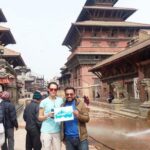
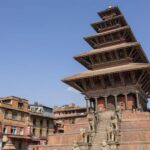
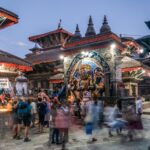
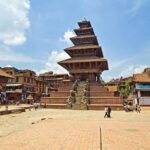
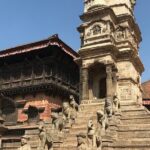
The day kicks off in Patan (Lalitpur) with a stop at Old Durbar Square. This is a smart move early, because it gets you into the architecture and rhythm of the Kathmandu Valley right away—before you head into temple rituals and stupa crowds.
Your time here is about 40 minutes, and the admission is listed as free. That makes it a low-risk, high-reward starter. You can look for the shapes and carvings that make Patan feel distinct from Kathmandu proper, and you get a sense of the craftsmanship that runs through many Nepalese sacred spaces.
Practical takeaway: if you enjoy “one good square” experiences—courtyards, temples, stone details—this first stop helps you connect the dots for the rest of the day.
Krishna Temple: short stop, old feel
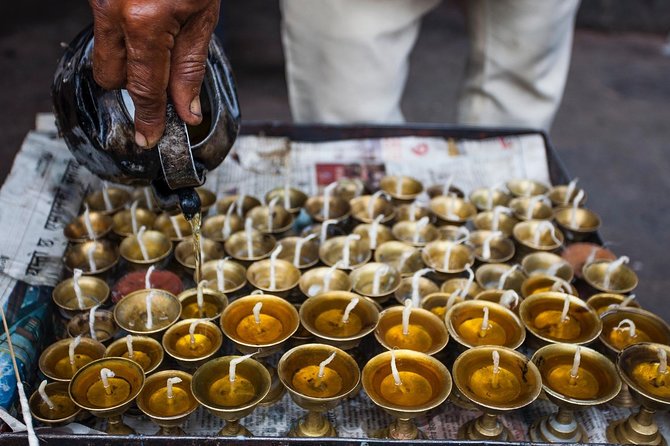
Next comes Krishna Temple, one of the oldest in the Patan area, with about 15 minutes on the clock. Admission is listed as included.
This is the kind of stop that works best when you treat it like a quick chapter break. You’re not meant to spend an hour and exhaust the details. Instead, you’re meant to notice the age and style, then move on while the whole day still feels energetic rather than rushed.
Pashupatinath: Hindu temple grounds and the riverfront reality
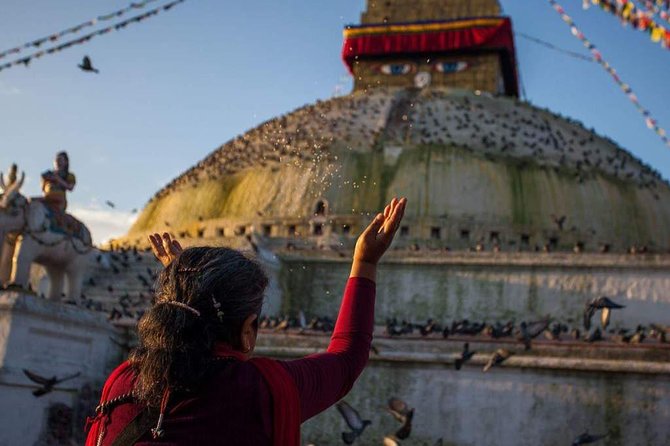
Then the tour shifts to Pashupatinath Temple, about 40 minutes. Admission is included here too.
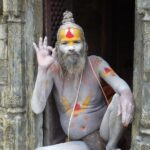
Pashupatinath is known as both a major Hindu temple and a cremation site, meaning you’re not just sightseeing—you’re seeing a living religious world. That can be moving in a way that feels different from visiting a purely historical monument. The tour gives you time to understand the site’s spiritual role without treating it like a quick photo stop.
What to consider: because this is a working sacred site, you’ll likely notice people coming and going with purpose. It’s not a museum atmosphere, and you’ll get more out of it if you stay respectful and patient.
You can also read our reviews of more tours and experiences in Kathmandu

Boudhanath Stupa: big Buddhist worship energy
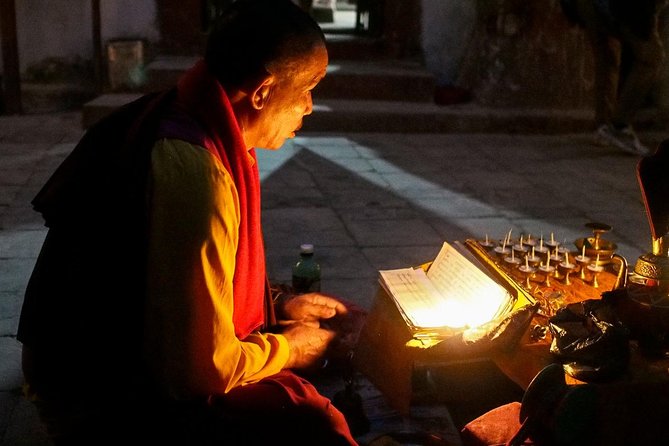
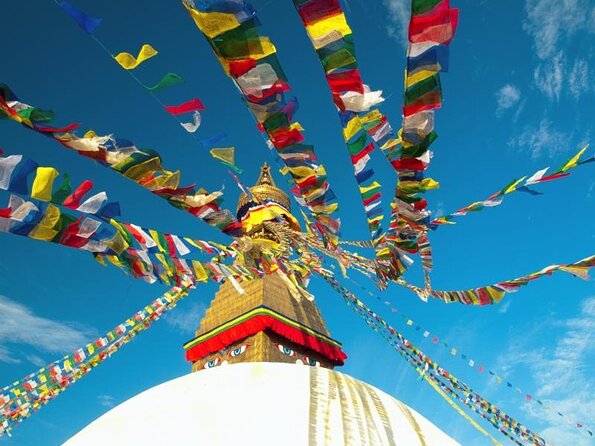
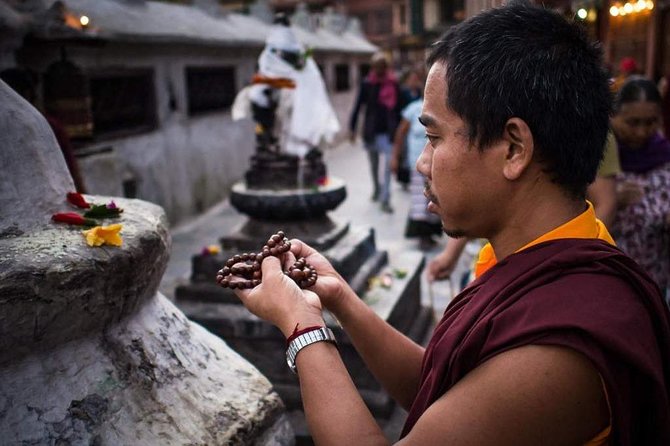
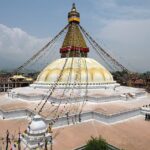
After Pashupatinath, you head to Boudhanath Stupa, labeled as the biggest Buddhist stupa in Kathmandu. You get about 30 minutes.
This stop is one of the best reasons to take a guided route. A stupa isn’t just a structure—it’s a focal point for practice. When you’re standing in the area, you can feel how the site shapes daily devotion. The tour includes admission, so you’re not juggling ticket steps while you’re trying to focus.
A useful planning note: the tour spends less time here than at Swayambhunath. That’s the tradeoff when you hit multiple major sites in one day. If you want more time at Bodhnath, you might consider saving an extra hour for your own return later.
Swayambhunath and the Monkey Temple viewpoint
The final major religious stop is Swayambhunath, also called the Monkey Temple, with about 40 minutes.
This is where Kathmandu’s skyline feeling kicks in. The tour highlights mention an awesome view of Kathmandu Valley, and that matches why Swayambhunath is so famous: it gives you a “map in your head” moment. Once you’re up there and looking down, the city starts making more sense.
You also get to experience the mix of sacred space and animal presence that makes Swayambhunath memorable. It’s not only about the stupa; it’s about the atmosphere—people pausing, praying, watching the world go by.
What to consider: with the stupa complex and the viewpoint focus, this stop is usually where your patience gets tested if you’re rushing for photos. Give yourself time to look around first, then take pictures after you understand what you’re seeing.
Earthquake damage awareness: what to expect in 2016-era Kathmandu
The tour info flags that some sites were significantly damaged by the earthquakes in April and May 2015. That means the day you go may include areas where you notice reconstruction, barriers, or partial access, depending on what’s been repaired at the time of your visit.
This is one of those travel realities where context makes the experience better. If a section looks different from what you expected from older guidebook images, you’ll be less frustrated if you remember that the city has been rebuilding.
In other words: it’s still worth going. Just calibrate your expectations to the fact that Kathmandu is both historic and actively recovering.
Your guide experience: why Keshar stands out
One of the strongest themes from the tour’s reputation is the guide. A recurring name is Keshar Jung Thapa, and the praise is consistent: he’s described as having a friendly personality, answering questions with substance, and explaining the relationship between Buddhism and Hinduism in a way that feels understandable rather than lecture-like.
That matters because the stops can look similar if you only skim the surface: many temples, many symbols, many rituals. A good guide helps you connect what you’re seeing to the culture around it—how people live with these beliefs day to day.
If you want to make this day feel personal instead of generic, ask your guide questions. Even simple ones like what a particular symbol means or why people behave a certain way in a given spot can turn a sightseeing list into real understanding.
Pacing and group size: the balance between coverage and calm
This tour caps the group at up to 12 travelers, which is a good size for a day like this. It’s small enough for questions and easy movement, but big enough that you’ll still feel the social energy of being in a group.
Time allocations are also part of the design: 40 minutes at Patan and Pashupatinath, 30 minutes at Bodhnath, and 40 minutes at Swayambhu, with short transitions in between. It’s structured for people who want a strong set of highlights rather than one neighborhood spent leisurely all afternoon.
If you’re someone who likes to linger, you may want to treat each stop as a taste, then plan your own follow-up on the site you liked most.
Best fit: who this tour suits best
This is a strong match if:
- you’re in Kathmandu for a short stopover and want a high hit-rate route
- you care about both Hindu and Buddhist sacred sites
- you prefer a guided day that handles transport and timing
- you want someone local to help translate what you’re seeing into context
It may be less ideal if:
- you want slow travel with long free time at each stop
- you’re easily worn down by a packed schedule
- you need lots of downtime built into the day
Should you book this Kathmandu City tour with Bodhnath Stupa?
If your goal is a first-time orientation in Kathmandu Valley, I’d say this is a smart booking. You’re getting a guided tour that covers Patan, Pashupatinath, Bodhnath, and Swayambhunath in one go, with pickup and drop-off to protect your day from logistical headaches. At $95, the guide and transport make the price feel reasonable for a full sightseeing day.
I’d book it if you want structure, meaningful explanations, and a fast path to the city’s big religious landmarks. I’d think twice if you’re craving a slow, quiet, unhurried day—because this tour is designed to move.
FAQ
FAQ
How long is the Kathmandu City day tour?
The tour runs for about 7 to 8 hours.
What time does the tour start?
The start time is 9:00 am.
Is hotel pickup and drop-off included?
Yes. Hotel/port pickup and drop-off are included.
What major places are visited during the day?
You’ll visit Patan (Old Durbar Square), Krishna Temple, Pashupatinath Temple, Boudhanath Stupa, and Swayambhunath.
Are entrance tickets included?
Admission is listed as included for some stops (such as Krishna Temple, Pashupatinath, Boudhanath, and Swayambhunath). Old Durbar Square is listed as free.
Is food included in the price?
No. Food and drinks are not included.