REVIEW · KATHMANDU CITY & WALKING TOURS
Full Day Sightseeing Tour of Kathmandu
Book on Viator →Operated by Shepherd Holidays · Bookable on Viator
Seven UNESCO stops in one Kathmandu day. This full-day shared sightseeing tour is built for people who want the major Kathmandu Valley icons without wrestling with transport or timing, with hotel pickup and a day that can cover seven UNESCO World Heritage sites. It is a small-group setup (up to 15) with a guide who explains what you are seeing as the morning moves from hilltop temples to riverbank shrines.
I like that the route hits the big ideas of Nepal in one day: Buddhism and Hinduism side by side, plus the royal-city architecture of the Durbar Squares. One consideration: it is a long day, and entrance fees are not included, with the listed prices varying by nationality.
In This Review
- Quick hits
- The Kathmandu Valley tour that saves you from logistics math
- Routing the day: how the seven-stop circuit flows
- Swayambhunath: Monkey Temple views and prayer details
- Boudhanath Stupa: one of Nepal’s biggest Tibetan anchors
- Pashupatinath: Shiva at the riverbank (and why that matters)
- Kathmandu Durbar Square: royal courtyards and carved wood
- Patan Durbar Square: Newar artistry in a second royal seat
- Bhaktapur Durbar Square and Changu Narayan: where the day slows down
- Price and entrance fees: what your $40 really covers
- Group size, guide style, and why Sumit gets high marks
- Who this tour fits best (and who should skip it)
- Should you book this Kathmandu Valley sightseeing tour?
- FAQ
- How long is the full-day Kathmandu Valley sightseeing tour?
- Is hotel pickup and drop-off included?
- Are entrance fees included in the tour price?
- How many people are in the group?
- Can I choose a shorter version of the tour?
- What happens if the weather is poor?
Quick hits
- Up to 15 people means it stays social, not chaotic
- Hotel pickup and drop-off saves you from sorting taxis all day
- 7 UNESCO stops in one day if you choose the full route
- Changu Narayan is listed as free, while other sites have separate tickets
- Bottled water and mobile ticket keep the logistics simple
The Kathmandu Valley tour that saves you from logistics math
Kathmandu can be confusing on your first day. Neighborhood names, traffic, and where temples sit in relation to each other can make a “quick plan” turn into a slow, stressful day. This tour helps because it controls the big variables: pickup, transportation, and a driver-and-guide rhythm between sites. You show up, you follow the plan, and you get your bearings fast.
The other reason this works is the structure. You can pick a shorter version (four must-see landmarks) or the full-day route that includes all seven heritage stops. If your schedule is tight, the full route makes sense because you are not spending extra hours commuting between far-flung corners of the Valley.
The group format also helps. It is not a private, silence-only experience. You are in a small group, which usually means questions get answered and conversations pop up naturally—especially when the sites start to feel similar in the best way. One stupa looks like the next at first glance, until your guide points out details you would likely miss on your own.
You can also read our reviews of more tours and experiences in Kathmandu

Routing the day: how the seven-stop circuit flows
The day moves in a practical order. It starts with a hilltop site (Swayambhunath), then drops into central Kathmandu for other major pilgrimage spaces, and then expands outward toward Patan and Bhaktapur before finishing near Bhaktapur at Changu Narayan. That sequencing matters because you are stacking easier-to-connect areas while keeping the total time to about 7 hours.
Walking and stairs are likely, especially at hilltop temples like Swayambhunath and the Changu Narayan area. The good news is that your guide sets expectations, and you are not doing this route while also trying to solve the “where is the entrance” puzzle. This is one of the biggest values here: the plan handles the friction.
Also, the tour is designed to keep you moving even when conditions are not perfect. In one strong review, the guide and the day still felt smooth despite rain. That is worth remembering if your Kathmandu days come with monsoon-style weather.
Finally, this is shared sightseeing, not a museum crawl. The goal is to experience working sacred spaces: prayer, architecture, crowd flow, and the everyday people who treat these places as part of life, not just scenery.
Swayambhunath: Monkey Temple views and prayer details
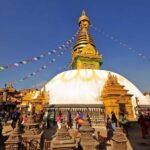
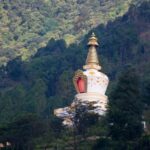
Swayambhunath, often called the Monkey Temple, sits on a small hilltop west of the Valley. It is an ancient Buddhist stupa with a distinctive white dome and the kind of steady, watchful presence that makes you look longer than you planned to.
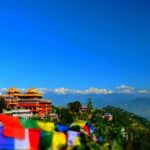
This stop is usually where your eyes recalibrate. Once you are up there, the whole setting makes more sense—the way Kathmandu Valley feels layered, with different cultures and religions sharing the same visual space. A guide helps here because the stupa is not just a dome you pass by. It is a place with symbolism everywhere: how people move around it, the way prayer flags add color, and how attention gets drawn to the details.
Admission is not included in the tour price. The listing gives a maximum of $1.50 per person, and rates can vary by nationality. If you want to reduce friction, bring a copy of your passport details and keep some cash on hand.
You will spend about 1 hour here. With a hilltop stop, that is a good amount of time: long enough to look, take photos, and understand what you are seeing, without turning the day into a slow climb.
Boudhanath Stupa: one of Nepal’s biggest Tibetan anchors
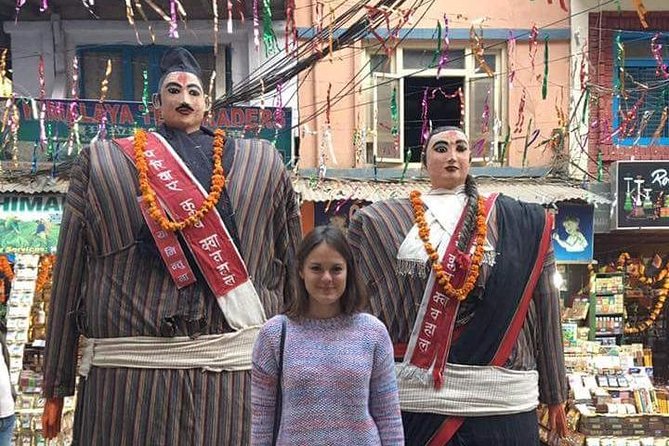
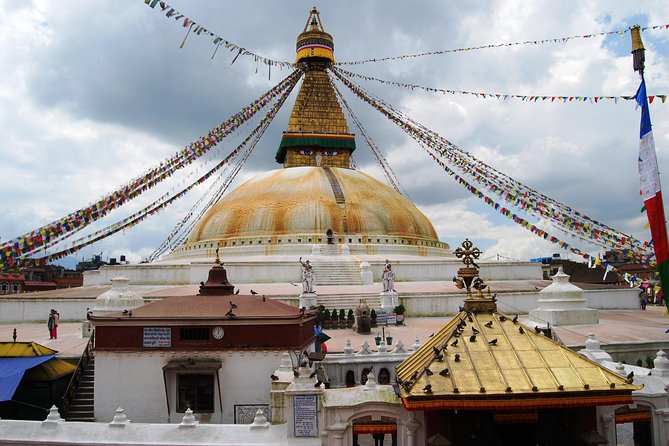
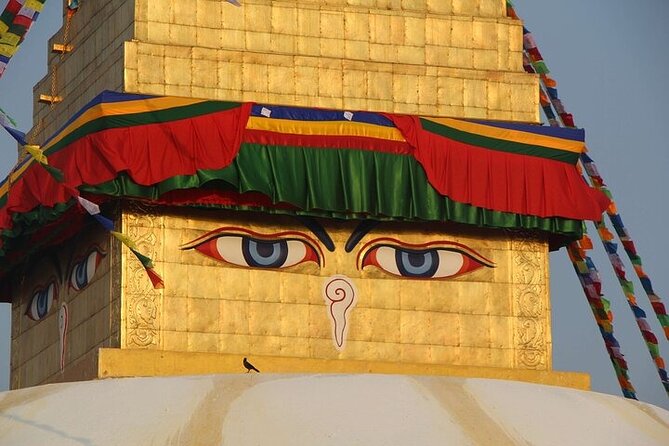
Next comes Boudhanath Stupa, located in the heart of Kathmandu. This is one of Nepal’s largest stupas and an important center for Tibetan Buddhism. The mandala design and the colorful prayer flags give it a very different energy than Swayambhunath, even though both are Buddhist sites.
What I like about including Boudhanath in the same day is contrast. You get architecture and spiritual design that feels coordinated and intentional, but different enough to keep your brain engaged. If you have only seen one stupa in photos, this stop teaches you what a working pilgrimage site looks like.
You will likely notice people walking around the stupa in a steady loop. Your guide can explain what that routine means and why it matters. That is where a guided visit beats a self-guided wander: your time is spent understanding, not just guessing.
Admission is not included here either. The maximum listed price is $3.00 per person, and it again can vary based on nationality. This is one of the easiest stops to budget for if you carry cash.
Plan for about 1 hour at Boudhanath. It is a calm pause in the day, and a good spot to slow down before moving into the Hindu temple sites.
Pashupatinath: Shiva at the riverbank (and why that matters)
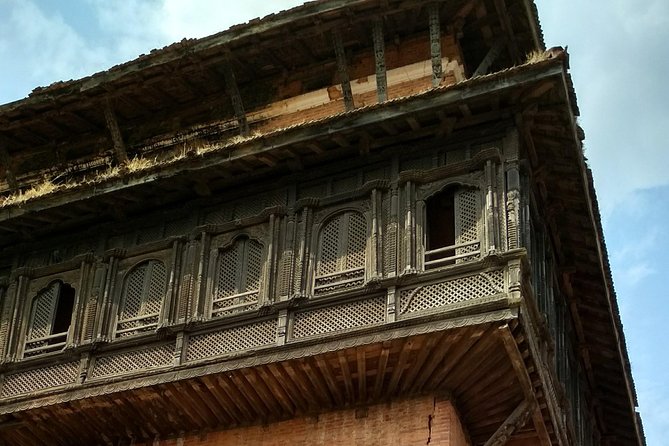
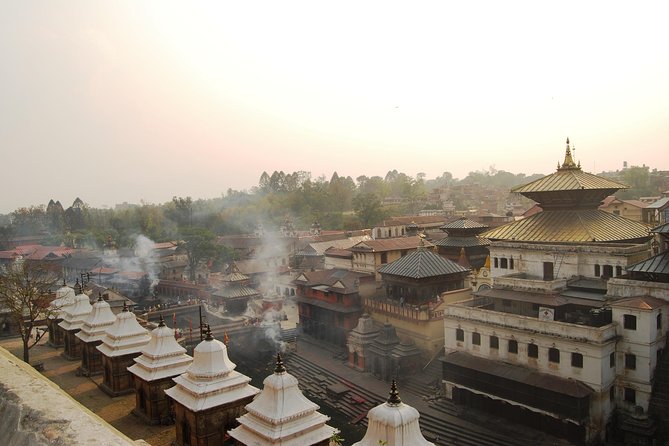
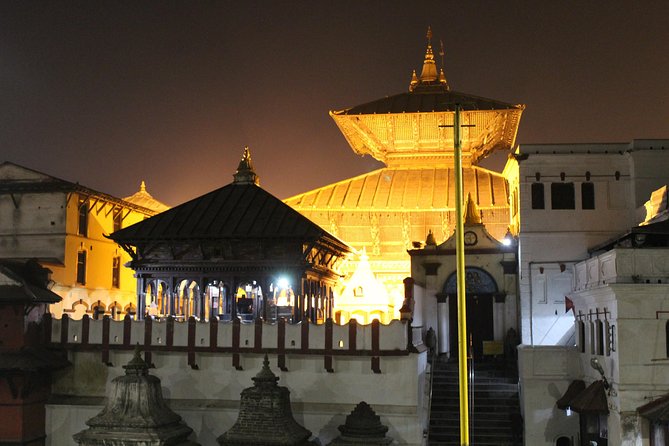
Then you head to Pashupatinath Temple, one of Nepal’s most sacred Hindu temples, dedicated to Lord Shiva. It sits on the banks of the Bagmati River, and the site is known for its intricate architecture and the presence of cremation ghats.
This stop is intense, even if you approach it with respect and curiosity. The beauty of the architecture and the spirituality of the place can feel worlds apart from how temples are experienced in many countries. Here, religion is not “on display.” It is part of the daily order of things.
Because Pashupatinath is sacred and active, you need to follow guide instructions and local norms. The best advice I can give: stay flexible with where you can stand, expect crowds, and avoid trying to rush for one perfect photo. Spend the time watching how people move through the site and where attention naturally gathers.
Admission is not included in the tour price. The listing shows a maximum of $7.50 per person, but it also notes it is free for Indian nationals. Rates vary by nationality, so bring your documents if you can and plan to pay on site.
You get about 1 hour here. That is enough time to see the main areas and learn what you are looking at, without your day turning into something that feels heavy and endless.

Kathmandu Durbar Square: royal courtyards and carved wood
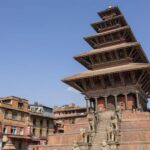
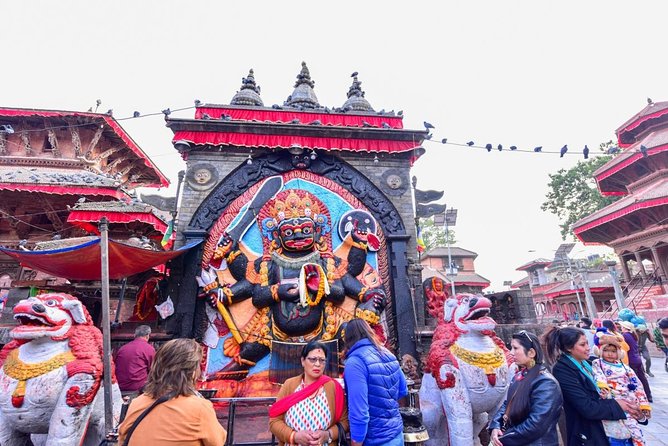
After the big religious sites, the tour shifts to the political and artistic heart of the old city at Kathmandu Durbar Square. This historic royal palace complex is known for stunning architecture and intricately carved wooden buildings. It served as the ancient seat of the Malla kings.
What makes a Durbar Square visit practical on a sightseeing tour is that it ties culture to place. You are not only seeing individual temples. You are seeing how power, art, and religion were physically arranged and expressed in everyday city life.
You will spend about 1 hour here, which is the right pace for crowded squares. There is a lot to look at—doorways, courtyards, and patterns carved into structures. If you arrive with one clear question in mind, like how the city’s royal history shaped today’s spiritual spaces, the guide can steer you toward answers.
Admission is not included. The maximum listed ticket is $7.50 per person, with different prices for different nationalities. Again, carry cash and expect the ticket line to move at a local rhythm.
Patan Durbar Square: Newar artistry in a second royal seat
Next up is Patan Durbar Square, about 8 kilometers from Kathmandu. Patan is another former royal center, and this square is famous for Newar architecture and artistry, plus well-preserved temples and courtyards.
I like the way Patan works in the itinerary because it is a sibling experience to Kathmandu Durbar Square—but it is not a copy. You start noticing differences in how the art is expressed and where the eye goes first. A guide can point out what to look for, so your hour does not turn into random photo-taking.
Expect about 1 hour here. It is a manageable block of time because the square has multiple visual layers, and you can only process so much in one day without feeling mentally fried.
Admission is not included. The maximum listed price is $7.50 per person, with nationality-based differences.
If you are short on time in Kathmandu Valley, seeing two major Durbar Squares in one day is one of the best efficiency wins of this tour. You get a broader view of how the Valley’s cultural center evolved across cities.
Bhaktapur Durbar Square and Changu Narayan: where the day slows down
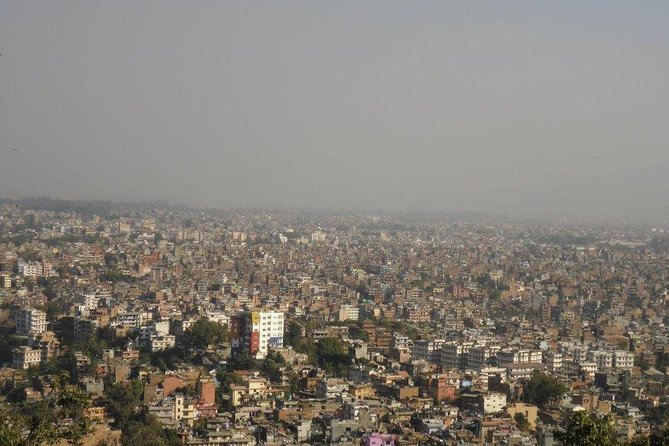
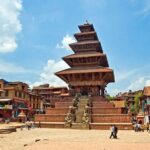
Bhaktapur is where the atmosphere can feel more medieval and less rushed, and this tour gives you Bhaktapur Durbar Square next. The square is known as a masterpiece of art and for its well-preserved heritage, with numerous temples and an overall charm that feels different from the central Kathmandu areas.
This is also where the timing starts to matter. By now you have been on the move since the morning. The good tours keep the experience meaningful by balancing packed sightseeing with places where you can look longer if you choose.
Admission is not included, and the maximum listed ticket is $13.50 per person. Since this one has the highest listed fee, it is a stop worth budgeting for early in your planning.
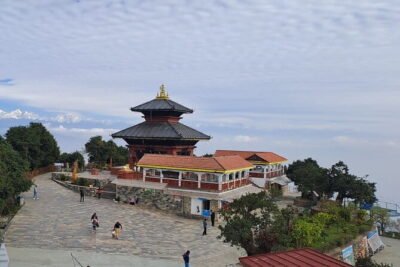
Then the day finishes at Changu Narayan Temple, located on a hilltop near Bhaktapur. This temple is one of the oldest Hindu temples in Nepal and is renowned for exquisite stone inscriptions and intricate woodwork. The dedication is to Lord Vishnu, and the focus here feels more scholarly and architectural than ceremonial.
Admission is listed as free for Changu Narayan. That is a nice relief after the other paid sites and helps you keep the day’s total closer to the plan.
You get about 1 hour at Changu Narayan as well. Since it is on a hilltop, you might run into steps or uneven surfaces, so comfortable shoes are not optional.
Price and entrance fees: what your $40 really covers
The tour price is $40.00 per person, and it is booked about 11 days in advance on average. That upfront cost covers the core logistics: hotel pickup and drop-off, bottled water, parking, transportation, and the guide and driver costs (and private guide/driver if you book private).
What it does not include is entrance tickets for most sites. The tour listing is explicit about that, and it is important because the entrance fees can change based on nationality.
Using the maximum listed fees, you can roughly estimate the entrance total like this:
- Swayambhunath: up to $1.50
- Boudhanath: up to $3.00
- Pashupatinath: up to $7.50
- Kathmandu Durbar Square: up to $7.50
- Patan Durbar Square: up to $7.50
- Bhaktapur Durbar Square: up to $13.50
- Changu Narayan: listed as free
That maximum add-up comes to about $43.50 in entrance fees. So the day can land around $83.50 at the maximum ticket rates, plus food (not included). In practice, your total may be lower depending on the nationality-based pricing.
This is why I tell people to pack for entrances, not just for the tour price. One helpful tip from the guide style in the reviews: carry cash for entrance fees and purchases. It saves you from last-minute stress when lines are moving and prices depend on documents.
Group size, guide style, and why Sumit gets high marks
This is a shared tour with a maximum of 15 people, so you get the best of both worlds: you have company, but you are not stuck in a bus-like crowd. That group size matters at UNESCO sites where crowd flow can be tight.
The guide quality is a major part of the value. One of the standout names from the experience feedback is Sumit. The praise is consistent: he gives strong explanations and makes the day feel worth it, including when the weather turns wet. When you see seven major sites in a single day, you need someone who can keep the pacing intelligent and connect the visuals to meaning.
A good day like this also depends on the driver, since you are moving continuously between sites. The listing includes guide and driver salary support, which usually translates into a smoother experience because the team is working as a unit.
If you are trying to do a lot with limited time, this setup is a practical way to compress the Valley into one day while still learning what you are looking at.
Who this tour fits best (and who should skip it)
This tour is a strong match if you:
- Have limited time in Kathmandu Valley
- Want to see major UNESCO sites without handling transport
- Prefer a guided explanation for what makes each site unique
- Like small-group energy rather than total solitude
It might not be ideal if you:
- Want a slow, unstructured day with lots of breaks and no fixed route
- Are uncomfortable with a long 7-hour day and a sequence of multiple sites
- Have a very tight budget and hate the idea of separate entrance tickets
If you are the type who likes to plan, this tour gives you structure. If you want spontaneity, you may feel boxed in by the schedule.
Should you book this Kathmandu Valley sightseeing tour?
If you are short on time and you want the highlights with less logistical pain, I think this tour is a smart choice. The price covers the heavy lift—pickup, transport, bottled water, and a guide—while you add entrance fees as you go.
Book it especially if you value efficiency and explanations. Seeing all seven UNESCO sites in one day is not casual sightseeing; it is a concentrated tour that works best with an experienced guide and a plan that keeps you moving.
Just plan for entrances, wear good shoes, and keep your expectations realistic: it is a full day. When you accept that and show up ready for temples and architecture back-to-back, the payoff is a big-picture view of Kathmandu Valley that you cannot get from one or two random stops.
FAQ
How long is the full-day Kathmandu Valley sightseeing tour?
The duration is listed as approximately 7 hours.
Is hotel pickup and drop-off included?
Yes. Hotel pick up & drop off is included.
Are entrance fees included in the tour price?
No. Entrance fees are not included for the listed paid sites. Changu Narayan is listed as free. The tour also notes that entrance prices vary by nationality.
How many people are in the group?
The tour has a maximum of 15 travelers.
Can I choose a shorter version of the tour?
Yes. You can choose a shorter highlights version covering four must-see landmarks, or a full-day version that includes all seven heritage sites.
What happens if the weather is poor?
The experience requires good weather. If it is canceled due to poor weather, you will be offered a different date or a full refund.