REVIEW · EVEREST SCENIC FLIGHTS
From Kathmandu: Everest Flight with Window Seat and Transfer
Book on Viator →Operated by Cordial Trek Pvt. Ltd. · Bookable on Viator
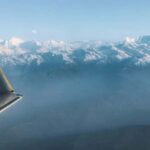
One look at Everest’s ridgeline from the air feels unreal, fast. This Everest Mountain Flight is a simple, year-round way to get a close view of Sagarmatha, plus sweeping Himalayan angles on a morning timetable that fits most trips.
Two things I really like: the guaranteed window seat, which matters a lot when you’re trying to photograph or just study the peaks; and the hotel pickup and drop-off inside Kathmandu Valley, so you’re not scrambling for transport at 5:30am.
One consideration: mornings at the airport can get hectic, and if weather or operations shift, you may have to move quickly. Also, window clarity isn’t always perfect, so it’s worth handling that first thing once you’re seated.
In This Review
- Key highlights before you go
- Why this Everest mountain flight is so compelling from Kathmandu
- Hotel pickup and the 5:30am start: making sense of the morning rush
- The flight route you’ll care about: from Langtang Lirung to Chamlang
- Mount Everest from the air: what Sagarmatha feels like in real scale
- Namche Bazaar from the sky: why this spot shows up on a flight itinerary
- Sagarmāthā National Park: seeing the protected Everest region as a whole
- Makalu Barun National Park: the eastern extension you may recognize from trekking plans
- Guaranteed window seat: the best way to get what you came for
- Airport reality check: check-in lines, quick boarding, and handling the pace
- Price and value: is $69 for an Everest flight a good deal?
- Who should book this flight (and who might want a different plan)
- Should you book the Everest Flight with window seat and transfer?
- FAQ
- What time does the Everest Mountain Flight start?
- How long is the flight in the air?
- How long is the whole experience including pickup and drop-off?
- Is hotel pickup and drop-off included?
- Do I get a window seat?
- What does the tour include and not include?
- What peaks and areas will I see?
- What happens if weather is bad?
Key highlights before you go
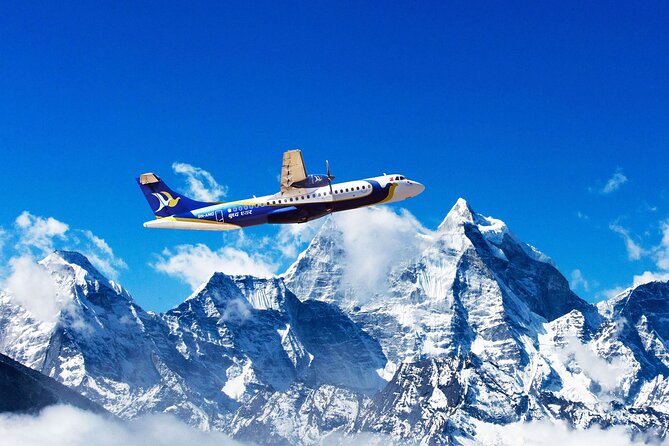
- Guaranteed window seat so you’re not stuck behind someone taller.
- Short flight time, about an hour in the air, with a total tour window of 2–3 hours door-to-door.
- Aerial route over ~20 major peaks, including Langtang Lirung, Everest (Sagarmatha), and Chamlang.
- Hotel transfer in Kathmandu Valley plus a mobile ticket and airport tax included.
- Views tied to major regions you’ll recognize from trekking maps: Everest area, Sagarmāthā National Park, and Makalu Barun National Park.
- Small-group cap (35 travelers max), which helps keep the morning calmer than bigger tours.
Why this Everest mountain flight is so compelling from Kathmandu
If you only have a day (or a half-day with a tight schedule) in Kathmandu, this flight is one of the most direct ways to feel the Everest story without committing to a multi-week trek. You’re not driving to viewpoints that might be hazy. You’re flying above the cloud layer and getting that top-of-the-world perspective that you just can’t replicate from the ground.
The flight is in service all year long, and that’s a big deal in a place where your whole day can hinge on weather. The catch is that the specific flight still requires good weather, so the operator may adjust dates if visibility is poor.
You’ll be in the air for roughly 50 minutes to an hour, but the overall experience stretches to about 2–3 hours because you’re starting early and moving through the airport process. That timing is actually practical: it gives you Everest views early, then leaves your afternoon open.
And because it’s a mountain flight focused on visibility, the experience is designed around seeing peaks in sequence. You don’t just get one quick angle—you get multiple passes as the plane moves eastward and then turns back toward Kathmandu.
You can also read our reviews of more tours and experiences in Kathmandu
Hotel pickup and the 5:30am start: making sense of the morning rush
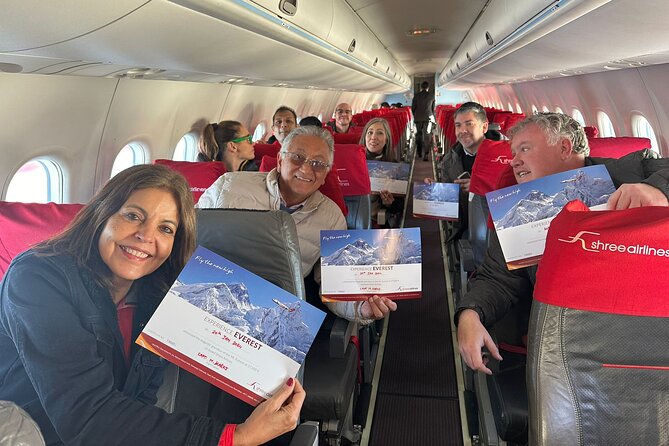
This tour starts at 5:30am. That’s early, but it’s the kind of early that pays off: in the morning you’re more likely to have clearer air, and the airport process is paced out before the bigger crowds hit.
You’ll get private transportation with pickup and drop-off from inside Kathmandu Valley. That matters because, in a city, the time and stress cost of “figuring it out yourself” can be surprisingly high. With pickup included in the total plan, you can focus on the airport day instead of logistics.
You also get a mobile ticket, and an adventure certificate is included. Those extras are small, but I like when a tour feels complete—like someone thought about the whole day, not just the plane ride.
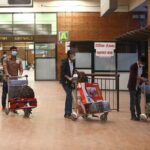
One thing to mentally prepare for: airport check-in can be chaotic. In past experiences with this kind of operation, you may encounter long lines and systems that aren’t running smoothly. The good news is that the service includes a staff-guided flow through the airline process, and you should have someone ready to get you after the flight.
The flight route you’ll care about: from Langtang Lirung to Chamlang
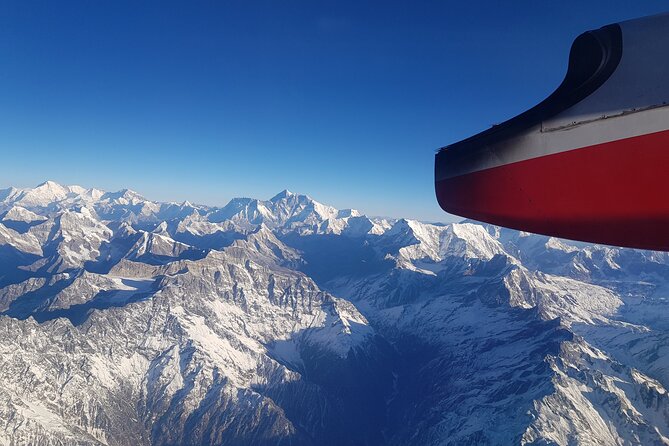
The heart of this experience is the flight path. You’ll take off from TIA (Tribhuvan International Airport) and fly over the high Himalayas to the east of Nepal.
A helpful way to understand the route is to think in thirds:
1) Closest peaks first (Langtang Lirung region): Langtang Lirung is described as the peak closest to Kathmandu, so you start with dramatic mountains relatively near your departure geography.
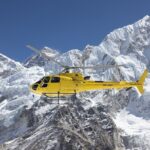
2) Move toward Everest (Sagarmatha): as the plane heads farther east, Mount Everest becomes the focal peak, with views designed to get you as close as possible without landing.
3) Continue to Chamlang, then turn back: you’ll also see Chamlang peak, and then the aircraft turns so you get a second look at the views on the return portion back to Kathmandu.
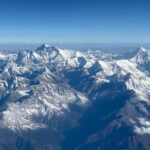
The route is described as highlighting an up-close and aerial view of Mt. Everest, and you’ll get glimpses of about 20 of the highest peaks east of Nepal during the flight. That’s a lot for such a short time in the air, and it’s why a window seat is not a luxury—it’s the main event.
If you like “reading” mountains visually, this flight gives you a rare chance to compare ridges and snowfields in motion. You’ll likely recognize areas on your trek-map mental wallpaper, which makes your Everest trip feel more grounded even if you’re not hiking today.
Mount Everest from the air: what Sagarmatha feels like in real scale
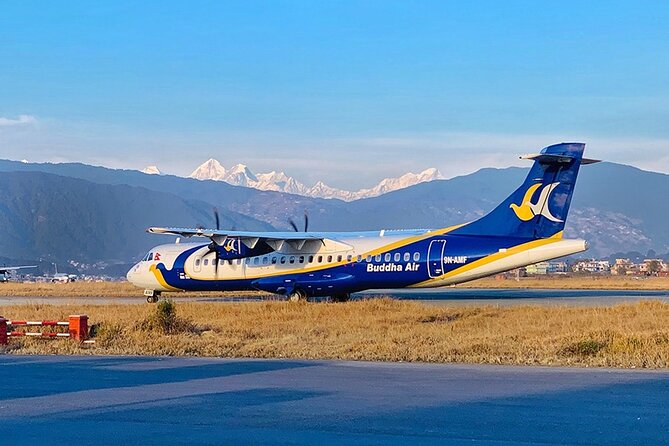
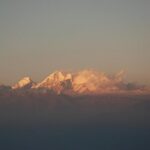
Seeing Mount Everest from the ground can be limited by distance and haze. From the air, the experience changes. You’re not just looking at a peak—you’re watching the mountain occupy the horizon while the plane changes its angle.
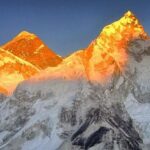
In this flight, Everest is explicitly highlighted as Sagarmatha, the highest peak at 8,848 m. That naming matters, because it reminds you this is not just a Western landmark. It’s part of Nepal’s living geography, shared across the border region with the Tibetan side (the flight route also references Nepal’s eastern border with the autonomous region of Tibet in China).
What I’d focus on in your planning is how the flight uses time: Everest isn’t just “somewhere out there.” The plane’s path is arranged so Everest comes into view as part of the sequence. Then, on the way back, you’re in position for another look as the aircraft turns.
If you’re the kind of traveler who cares about photographs, give yourself the first 30 seconds to settle your framing. After that, keep your camera ready for quick changes. Peaks can shift fast relative to the window, and you’ll want to capture both the initial approach and the return angle.
Namche Bazaar from the sky: why this spot shows up on a flight itinerary
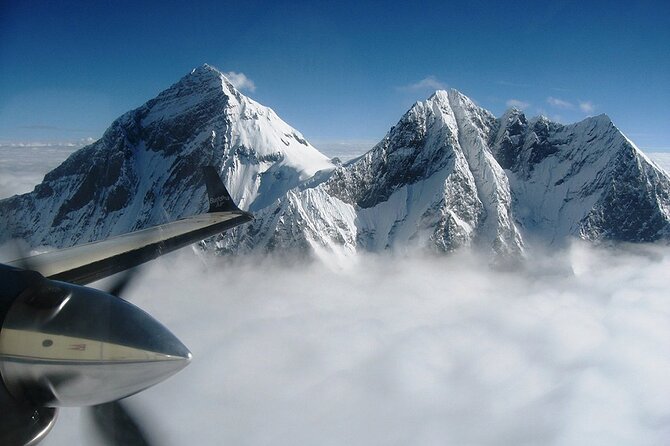
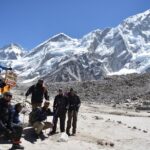
Even though you’re not hiking today, you may still see Namche Bazaar from above as part of the mountain-air route focus. Namche is well known as a stop on the trekking route to the Everest region.
Why include Namche in an aerial flight plan? Because Namche sits in the middle of the story. When you see it from the air, it helps you visualize where trekkers actually spend time—what’s “down” and what’s “up.” It turns the Everest view from an abstract peak into a lived geography: towns, valleys, and stair-step elevation.
A practical note: you shouldn’t expect city-level details at 8,000–10,000+ feet. But you will get enough of a sense of the terrain layout to connect it to what you’ve seen on trekking routes and maps.

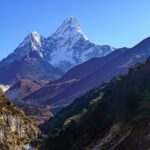
Sagarmāthā National Park: seeing the protected Everest region as a whole
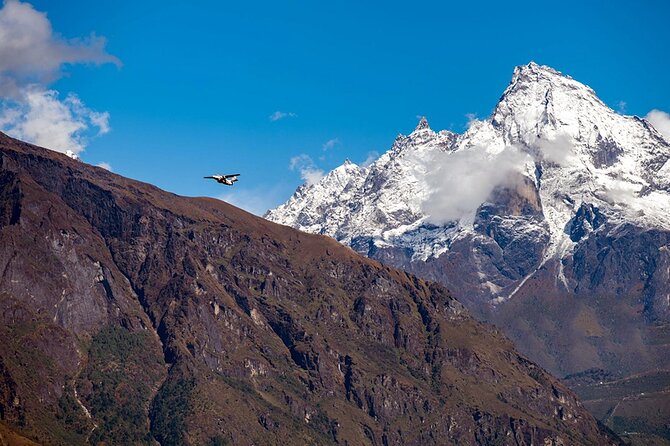
This experience also ties into Sagarmāthā National Park, an area dominated by Everest. The park covers 1,148 km² and sits in eastern Nepal’s Solukhumbu District.
From the air, the biggest value of a national park viewpoint is perspective. On the ground, you experience the region through trails, viewpoints, and specific valleys. In the sky, you can sense how large the protected area is and how the mountains form the boundaries of everything else.
If you’re the type of traveler who likes to understand what you’re looking at, this is a satisfying bonus. The flight route isn’t only about a single “hero peak.” It gives you context for the broader conservation landscape surrounding Everest.
Makalu Barun National Park: the eastern extension you may recognize from trekking plans
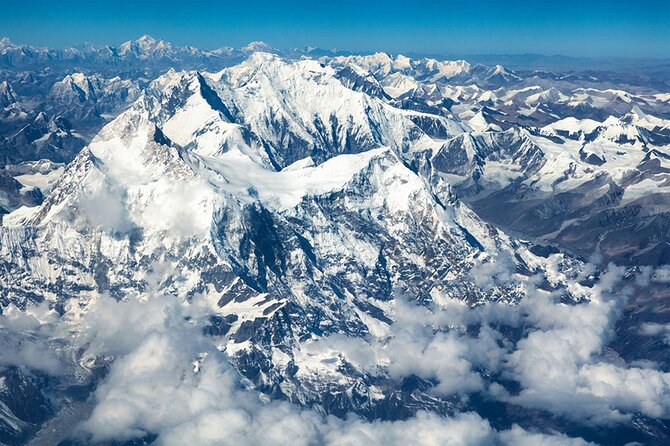
Another named highlight in the route is Makalu Barun National Park. It was established in 1992 as the eastern extension of Sagarmatha National Park.
This matters because it broadens your Everest day beyond Everest’s own silhouette. Even if you never hike Makalu or reach that side of the Himalayas, the park name signals something important: the region is part of a larger network of protected mountain environments.
From an aerial view, you’ll likely appreciate how different valleys and mountain masses create separate “zones” in the same broad Himalayan arc. That’s useful if you’re planning a future trek, because it helps you imagine that the Himalayas aren’t one continuous view. They break into regions with their own character.
Guaranteed window seat: the best way to get what you came for
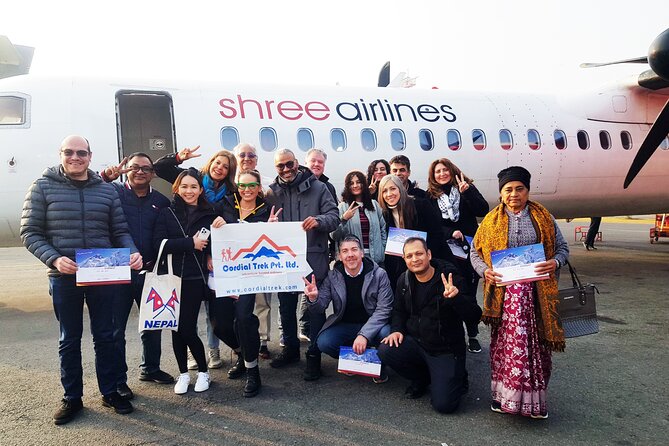
A “window seat” sounds simple until you’re on a plane and realize how much it affects your whole experience. Here, the seat is guaranteed, and that’s a real value-add. It reduces uncertainty, especially with early-morning departures when you might otherwise be rushed.
That said, keep your expectations realistic. Aircraft windows can get smudged, and visibility depends on cleaning, lighting, and how the plane is handled between flights. In one experience, the windows were perfectly serviceable; in another, dirty windows limited what could be seen and photographed.
Here’s how you can improve your odds without causing a scene:
- Once seated, take a quick look and check if the view is blocked by obvious streaks.
- If there’s a lot of smearing, you might ask the crew if another window can be reassigned (polite, quick, and based on availability).
- Bring small items that make you comfortable in the moment, like a lens cloth or tissues, since the tour data doesn’t promise anything about window condition.
Also, dress for cockpit-style temperature swings. Mountain flight days can be cold at the airport and then feel different once you’re moving. Layers make this easier.
Airport reality check: check-in lines, quick boarding, and handling the pace
The flight itself is short, so the “real” test of the day is the airport process. Some mornings can feel smooth. Others can feel like controlled chaos: long lines at check-in counters, broken computer systems, and tight timing between security and boarding.
When that happens, the key is mental prep. Accept that you might have to move fast without getting comfortable along the way.
The service includes pickup that includes guidance through the airline process, and you should have someone waiting after your flight. I like this structure because it reduces the most stressful part: being the one who doesn’t know where to go next.
If you’re prone to overthinking at airports, try this approach:
- Know your time window.
- Keep your phone charged.
- Move with the group and trust the process.
If operations change, you might be re-routed between planes. In one past case, there was a stand-by bus situation and then a different plane boarding step. That’s not something you can predict, but you can stay flexible.
Price and value: is $69 for an Everest flight a good deal?
At $69 per person, this is priced for the budget-minded traveler who wants an Everest highlight without paying for a trekking operation or losing a week to higher-altitude logistics. When you look at what’s included—airport tax, hotel pickup/drop-off, the hour-long mountain flight, and a guaranteed window seat—the price starts to make sense.
You’re also booking for a short time investment. You’re out early, then back soon enough to enjoy the rest of Kathmandu. That’s value if you’re doing other activities in the city or planning a trek later.
What’s not included matters too. Food and drinks are not included, so plan to grab breakfast before pickup (or carry a simple snack). Also, there’s a note that gratuity for your driver is optional, so you’re not locked into a mandatory add-on—but it’s still normal to budget a little if service feels attentive.
One more practical detail: the average booking time is 19 days in advance. That suggests availability can move faster than you’d expect for something this popular. If Everest is your priority, it’s wise to avoid last-minute indecision.
Who should book this flight (and who might want a different plan)
This is a great fit if:
- You want an Everest view but don’t have time for a trek.
- You prefer short, structured activities with transport handled.
- You care about getting your best view through a guaranteed window seat.
- You like the idea of seeing multiple peaks, not just one.
You might choose something else if:
- You’re expecting a viewpoint like you’d get from a viewpoint hike. This is a flight, not a walk-up stop.
- You’re extremely sensitive to airport process speed. The flight is quick, and the airport portion is where you have the most variables.
It also suits people who want an “Everest orientation” day. Even if you plan to trek later, flying gives you a mental map: where peaks sit relative to each other, and how the geography feels from above.
Should you book the Everest Flight with window seat and transfer?
If your goal is to see Everest (Sagarmatha) and you want the easiest possible morning plan from Kathmandu, I think this is a strong yes. The combination of a guaranteed window seat, hotel transfer, and a short flight window makes it good value for time-pressed travelers.
I’d book it if you can handle early mornings and airport momentum. For some people, the only stress is the check-in pace. If you go in with that expectation, you’ll get what you came for: a close, awe-inducing view of the Himalayas from the air.
FAQ
What time does the Everest Mountain Flight start?
The start time listed is 5:30am.
How long is the flight in the air?
The mountain flight is about 50 minutes to an hour (approx.).
How long is the whole experience including pickup and drop-off?
The total duration is listed as 2 to 3 hours (approx.).
Is hotel pickup and drop-off included?
Yes. Pick up and drop off from hotels inside Kathmandu Valley is included, with private transportation.
Do I get a window seat?
Yes. A guaranteed window seat is included.
What does the tour include and not include?
Included: private transportation, pickup/drop-off, about an hour flight, guaranteed window seat, adventure certificate, and airport tax. Not included: food and drinks and optional gratuity for your driver.
What peaks and areas will I see?
You’ll fly over about 20 high peaks east of Nepal, including Langtang Lirung, Mt. Everest (Sagarmatha), and Chamlang. The experience also references views connected to Namche Bazaar, Sagarmāthā National Park, and Makalu Barun National Park.
What happens if weather is bad?
This activity requires good weather. If canceled due to poor weather, you’ll be offered a different date or a full refund.