REVIEW · HIKING & TREKKING
Annapurna Poon Hill Trek Package in Nepal Himalayas
Book on Viator →Operated by Himalayan Recreation Treks & Expedition Pvt.Ltd · Bookable on Viator
Sunrise at Poon Hill is the payoff. This package pairs that iconic moment with a private trekking guide, so you can spend your energy on the trail instead of chasing details. I also love that trekking poles and safety gear are included, and meals are planned each trekking day. The main thing to consider is altitude: you’ll be walking around 3,210 m, and weather can turn fast.
You’ll get a guided, step-by-step route through classic villages and viewpoints, with pre-booked stays rather than last-minute searching. I like that permits are handled for you, including the Annapurna permit and TIMS card, plus round-trip ground transport from Kathmandu. The downside is simple: you still need to pack light and carry your own day-to-day luggage on the hike.
In This Review
- Key Points Worth Booking For
- What You’re Really Paying For at $599
- Kathmandu to Pokhara: A Long Ride, Then Lakeside Time
- Getting to the Trek Starting Point: Ulleri and the First Real Climb
- Ghorepani Day: Annapurna Views and Machapuchare in Sight
- Poon Hill Sunrise: The Moment You Plan Your Alarm For
- Descent to Nayapul, Pokhara Reset, and a Kathmandu Night Off Your Feet
- Tea Houses, Hotels, and Meals That Remove Daily Guesswork
- Guide Support and Permits: The Hidden Value on This Route
- Altitude Reality Check: 3,210 m Means You Need a Plan
- Packing Tips: Keep It Under 10 kg and Let the Team Hold the Rest
- Who This Poon Hill Package Fits Best
- Should You Book This Trek?
- FAQ
- How long is the Annapurna Poon Hill trek package?
- What is included in the trekking meals?
- Does this package include permits for the trek?
- Is a trekking guide included?
- Are trekking poles and safety gear included?
- Is travel insurance required?
- What is the minimum age and the cancellation window?
Key Points Worth Booking For
- Private guide support with real safety basics: licensed guidance, first-aid kit on the group, and leaders with basic first aid training
- Early-morning timing for Poon Hill sunrise: you’ll head up early to catch the clearest views
- Beds and meals are taken care of: Pokhara hotel nights plus tea-house/guesthouse trekking nights, with breakfast, lunch, and dinner while on trek
- Permits are included in the package price: Annapurna trekking permit and TIMS card handled for you
- Small-group experience: maximum 12 people per booking, so you won’t feel lost in a crowd
- Extra luggage can stay in Kathmandu or Pokhara: you can lighten your load during the trek
What You’re Really Paying For at $599
At $599 per person, this trek package isn’t just “a route with a guide.” It bundles the parts that usually cause stress on Nepal treks: transport, permits, pre-booked lodging, and daily meals while you’re walking. If you’ve ever tried to put together a trek on your own, you know how fast costs and confusion stack up once permits, guides, and beds enter the picture.
Here’s what this price includes:
- Round-trip transfers from Kathmandu (including Kathmandu to Pokhara to Kathmandu)
- Private trekking guide (government license holder), plus their costs (insurance, equipment, taxes, etc.)
- Annapurna trekking permit and TIMS card
- Trekking poles and safety gear
- Pokhara accommodation: 2 nights in a 3-star hotel
- Trekking accommodation: 3 nights in tea houses / guesthouses
- Meals on the trek: breakfast, lunch, and dinner are provided during your trekking days
What’s not included (so you budget realistically):
- Travel insurance (required for participation)
- Tips for trekking staff and driver
- Lunch and dinner in Kathmandu and Pokhara
- Bar bills and personal shopping/laundry
- Any personal trekking equipment you choose to bring
The value sweet spot here is that you aren’t hunting for logistics every day. You’ll still make choices (what to wear, when to take a break), but the “where do we sleep” and “what paperwork do we need” parts are handled.
You can also read our reviews of more hiking tours in Kathmandu
Kathmandu to Pokhara: A Long Ride, Then Lakeside Time
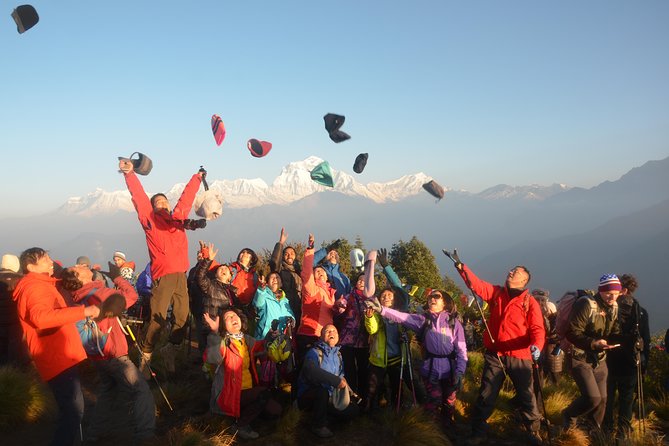
Your trip starts in Kathmandu with pickup from your accommodation and an early departure. You’ll head to Pokhara along the Prithvi Highway for a drive that’s about 6–7 hours, then spend time exploring the lakeside area.
On this day, you’ll have stops around:
- Phewa Tal
- Begnas Lake
- Pokhara Lakeside
The big practical point: this first day is built to reset you. You get out of Kathmandu, you see a different rhythm of Nepal life, and you arrive with enough time to settle before the trekking starts. It’s not a short day, but it’s a useful setup—because the first real hiking day climbs out of the foothill energy and into the mountain plan.
Also note the extra-luggage option: you can leave extra bags in Kathmandu or Pokhara and pick them up when you return, which helps you keep your pack manageable.
Getting to the Trek Starting Point: Ulleri and the First Real Climb
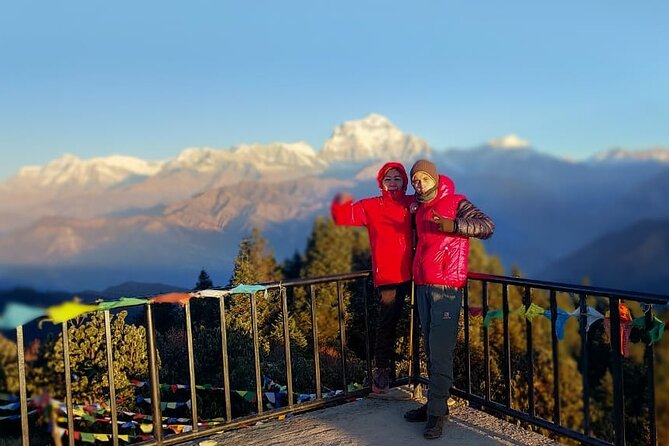
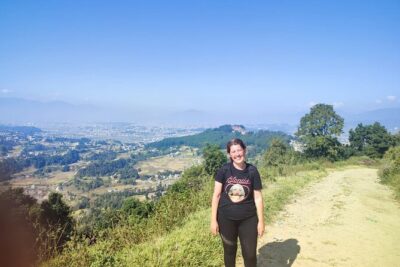
After breakfast, you’ll drive to the trek area. The route begins around Nayapul, with mountain views in the background as you get oriented. From there, the trek starts and you’ll follow the path toward Birethanti, including a short walk segment that connects you to the broader trail system.
Ulleri comes into the picture as a key early trekking point. This is also where many hikers feel the mix of “this is scenic” and “my legs are learning something new.” The trail up to and through Ulleri is part of why this trek is such a good introduction: it’s active and rewarding, but not an extreme altitude grind on day one.
You’ll also pass through or near a Peace Temple stop. Even if you don’t do a deep detour into it, these kinds of stops are helpful for the day’s rhythm: quick mental resets, a chance to straighten your posture, and a moment to look back at how far the valley has opened up.
Ghorepani Day: Annapurna Views and Machapuchare in Sight
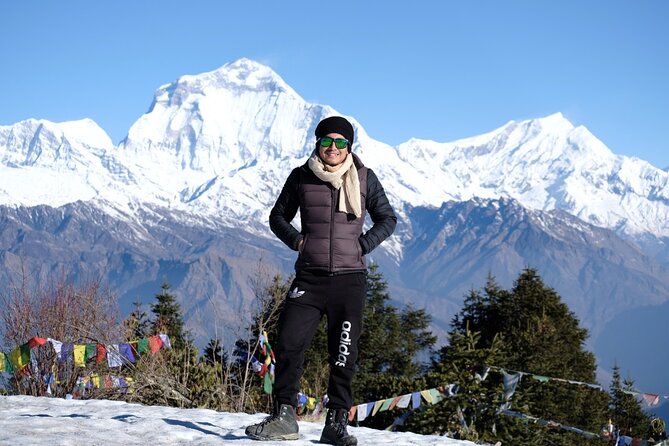
Day 3 is a classic trekking day because it layers effort with payoff. You’ll start after a breakfast around 8:00 am, then begin ascending (around 1,000 meters on this stage). The route includes time on the trail toward Nangethanti and onward to Ghorepani.
What makes this day special is the viewpoints:
- Annapurna Mountain Range views are built into the day
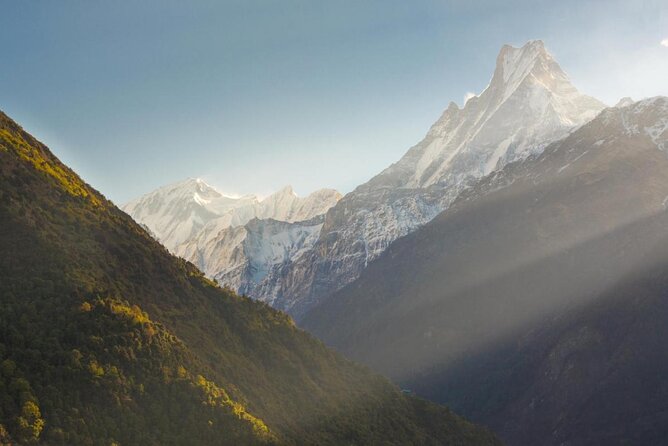
- Machapuchare (the Fishtail) appears as another major view point
These stops matter because they break up the grind. Instead of thinking only about the next step, you get moments where you can pause and actually see what you’re climbing toward—especially with the Annapurna range stretching out and Machapuchare showing in a way that feels instantly recognizable once you’ve seen it.
You’ll end up in Ghorepani for the night, positioning yourself for the sunrise push the next day.
Poon Hill Sunrise: The Moment You Plan Your Alarm For
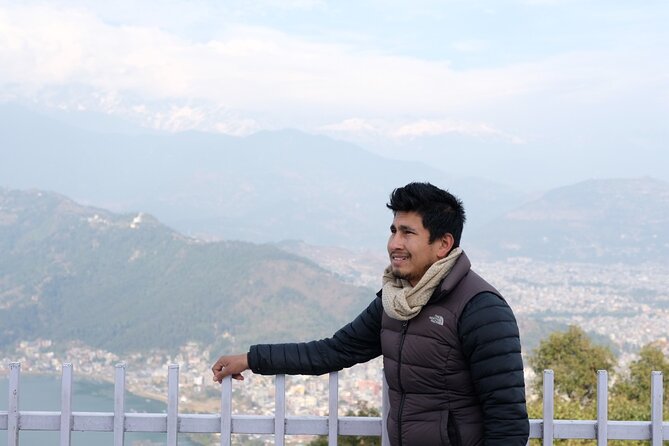
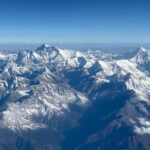
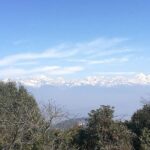
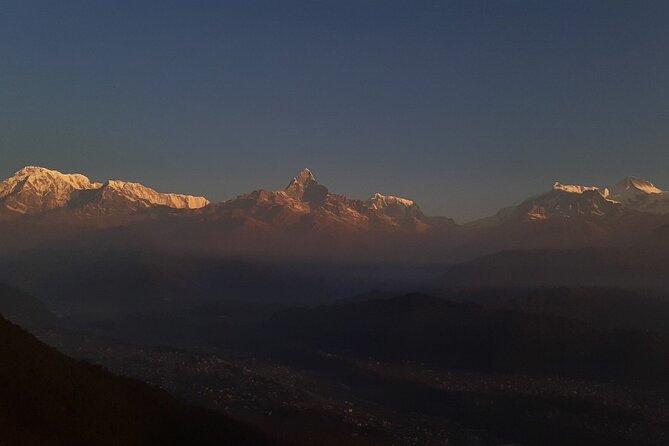
This is the headline. You’ll wake up early and make your way to Poon Hill before sunrise, when the chance of clear Himalayan views is best. The goal is simple: watch the light come up over the mountains and get that famous panorama over the Annapurna chain and the surrounding peaks.
You’ll enjoy views of the White Mountains from the viewpoint. Even if you’ve seen photos before, the timing and scale make a difference. Sunrise hikes can feel cold and slow at first, but they’re usually worth the early departure because you’re catching the show when the sky is at its most cooperative.
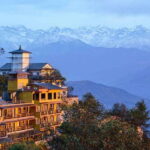
After the sunrise moment, you’ll trek onward to Ghandruk for your overnight stay. Ghandruk is described as a beautiful village on the trek, and it fits the overall mood shift of the itinerary: you move from viewpoint energy back into village life, where the pace feels a bit more human and you settle in after the big morning.
Descent to Nayapul, Pokhara Reset, and a Kathmandu Night Off Your Feet
Day 5 keeps things practical. After breakfast, you’ll begin the trek down with about a 2-hour straight-down walk to Nayapul. From there, a car takes you back to Pokhara.
This is a key part of why Poon Hill treks are popular with first-timers: you get sunrise and big views without needing a week of constant uphill motion. The downside is also honest: the descent can be hard on knees and calves. Trekking poles help here, and so does taking short, controlled steps rather than rushing the downhill.
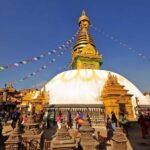
In Kathmandu on the final day, your trip ends with a transfer to your accommodation. Then you’ll have an evening dinner with a cultural show. The day also includes stops related to:
- a Buddhist site
- an old royal place
- and a peace and quiet place
This gives you a satisfying wrap-up. You go from mountain mornings to city evenings, without adding more complicated sightseeing planning at the end.
Tea Houses, Hotels, and Meals That Remove Daily Guesswork
This package builds your days around food and rest, which is a big deal at trekking altitude.
While you’re on the trek, you’ll have:
- Breakfast
- Lunch
- Dinner
That matters because it keeps energy steady. On routes like this, hunger or meal delays can quickly turn a good hiking day into a cranky one. Having meals planned also reduces decision fatigue: you’re not trying to figure out where to eat each time your legs demand a break.
For sleep, you’ll do:
- 2 nights in Pokhara at a 3-star hotel
- 3 nights during the trek in pre-booked tea houses / guesthouses
The Pokhara hotel nights are a real recovery tool. They help you come back to more comfortable rooms after spending multiple nights in basic trekking-lodge settings. Even if you prefer simplicity, it’s nice to get a proper reset before returning to Kathmandu.
Guide Support and Permits: The Hidden Value on This Route
On paper, Poon Hill sounds straightforward. In reality, the parts that trip people up are the admin and the safety.
This trek includes:
- A government-licensed private trekking guide
- A first aid kit
- Leaders with basic first aid training who know the closest medical facilities
One extra thing I’d pay attention to is the human element. In the past, a guide named Santosh has been associated with leading this itinerary, and the main takeaway is that your guide isn’t an improviser. They’re operating under the umbrella of a licensed trekking setup.
Permits are another big value lever. You get:
- Annapurna trekking permit
- TIMS card
That saves you the hassle of tracking requirements down after you arrive. You’re free to focus on training your legs rather than training your paperwork skills.
Altitude Reality Check: 3,210 m Means You Need a Plan
You’ll be walking at demanding altitudes around 3,210 m (10,530 ft), with the possibility of extreme weather changes. The tour info is clear that adverse health effects can happen to anyone regardless of age or fitness, so it’s worth treating altitude seriously.
Here’s what you can do with this information:
- Talk to your doctor before you go, especially if you have heart or lung issues or have had altitude problems before
- Pack layers. Weather up high can shift quickly.
- Take it slow when you feel off. A slower pace is often the smartest pace.
The route is designed as a manageable trek, but the altitude is still real. Plan for the possibility that you need extra rests, and don’t treat the sunrise day as a guaranteed perfect experience.
Packing Tips: Keep It Under 10 kg and Let the Team Hold the Rest
The expectation here is that you’ll carry your own luggage, so pack light. The recommendation is to keep your load under 22 lbs (10 kg). If you overpack, you’ll feel it most on the steep sections.
Good to know:
- Extra luggage can be left in Kathmandu or Pokhara and collected when you return.
- You’re given trekking poles and safety gear, so you don’t have to buy or rent everything.
This trek is also set up with practical boundaries:
- Minimum age is 5 years
- Service animals are allowed
- There’s mention that the tour has a near public transportation advantage, which is helpful in the city legs (though not a replacement for trek-day logistics)
Who This Poon Hill Package Fits Best
This is a strong choice if you want:
- the iconic Poon Hill sunrise experience
- a guided route with private support
- pre-booked lodging so you aren’t scrambling
- meals included during trekking days
- a package that handles permits and major logistics
It’s probably not the best fit if you:
- want a fully self-guided, do-it-your-own-way trek
- hate early mornings (sunrise means early starts)
- don’t have travel insurance that covers medical needs and emergency repatriation (it’s required)
If you’re a first-time trekker or you just want a reliable plan with fewer moving parts, this kind of setup often feels like a smart trade. You still earn every viewpoint with your legs, but you don’t have to engineer the whole trip in advance.
Should You Book This Trek?
I’d book it if your priority is an organized, guided Poon Hill trek with meals, permits, and trekking support handled, plus a comfortable hotel base in Pokhara. At $599, the real value is that you pay for the hard-to-manage logistics upfront: transport from Kathmandu, guide support, and pre-booked stays.
I’d hesitate if altitude worries you or if you don’t want to meet the insurance requirement. Also, remember that this is not a carry-everything-free trek: you still need to manage your pack and your energy.
If you’re prepared for an early sunrise day and you pack light, this package is a very practical way to get the Annapurna viewpoint payoff without turning your trip into a project.
FAQ
How long is the Annapurna Poon Hill trek package?
It runs for about 6 days.
What is included in the trekking meals?
While trekking, you get breakfast, lunch, and dinner provided.
Does this package include permits for the trek?
Yes. It includes the Annapurna trekking permit and a TIMS card.
Is a trekking guide included?
Yes. You’ll have a private trekking guide who is a government license holder.
Are trekking poles and safety gear included?
Yes. Trekking poles and safety gear are included.
Is travel insurance required?
Yes. Travel insurance that covers medical expenses and emergency repatriation is required, and you must show proof to the tour leader on the first day.
What is the minimum age and the cancellation window?
Minimum age is 5 years. You can cancel for a full refund up to 24 hours in advance of the experience start time.