REVIEW · HINDU TEMPLE TOURS
Sacred Pashupatinath: Aarati,Cremation Rites & Boudha Stupa
Book on GetYourGuide →Operated by Enticing Himalayas Travels Private Limited · Bookable on GetYourGuide
Fire, prayer wheels, and river rituals. This tour pairs Boudhanath Stupa with Pashupatinath Temple, so you move from quiet Buddhist kora practice to the Hindu river ghats with chants, bells, and Aarati. I also like that the guide doesn’t just point and move on; you get help understanding the symbols at Boudha and the meaning behind what you’re seeing at Pashupatinath.
One key consideration: the cremation rites are open-air and emotionally intense, even with explanations and a respectful viewing setup.
In This Review
- Key highlights you’ll feel quickly
- Why Boudhanath and Pashupatinath are a smart 2-site combo
- Price and what you’re really paying for: $11 plus entry fees
- Boudhanath Stupa: kora, prayer wheels, and that slow spiritual focus
- What you’ll do there
- What makes this stop special (and why guidance helps)
- From Boudha calm to Pashupatinath intensity: how the complex works
- What the tour includes at Pashupatinath
- Seeing cremation rites on the Bagmati ghats (with respectful context)
- Aarati ceremony atmosphere: chants, bells, and conch shells
- Markets near Boudha and the crafts stop near Pashupatinath
- Transportation, timing, and meeting point reality
- What to bring, what not to bring, and who should think twice
- Guides that people consistently name: Razz, Pranav, Karma, Sudhir, Anish
- So, should you book Sacred Pashupatinath?
- FAQ
- What is the duration of the Kathmandu Spiritual Day Tour?
- Where does the guide meet you?
- Is hotel pickup and drop-off included?
- Are entry fees included in the price?
- Is food and drinks included?
- What languages are available for the live guide?
- Can I bring luggage or large bags?
- Are drones allowed?
- Is the tour suitable for children?
- Can I cancel for a full refund?
Key highlights you’ll feel quickly
- Boudhanath kora: walk the sacred circuit around the stupa
- Prayer-wheel energy: watch worshippers spin wheels and offer prayers
- Cremation rites with context: you’re guided to understand the ritual meaning
- Aarati ceremony focus: the guide helps you follow each step and find a good spot
- Markets and local life: time near Boudha for shopping and cultural browsing
- Small-group or private options: easier to ask questions during the visit
Why Boudhanath and Pashupatinath are a smart 2-site combo
Kathmandu’s spirituality isn’t stuck inside museums. It happens outside, in public view, with people praying, trading, chatting, and preparing rituals on the same streets. This tour works because it puts two worlds side by side: Buddhist devotion at Boudhanath Stupa and Hindu worship at Pashupatinath Temple.
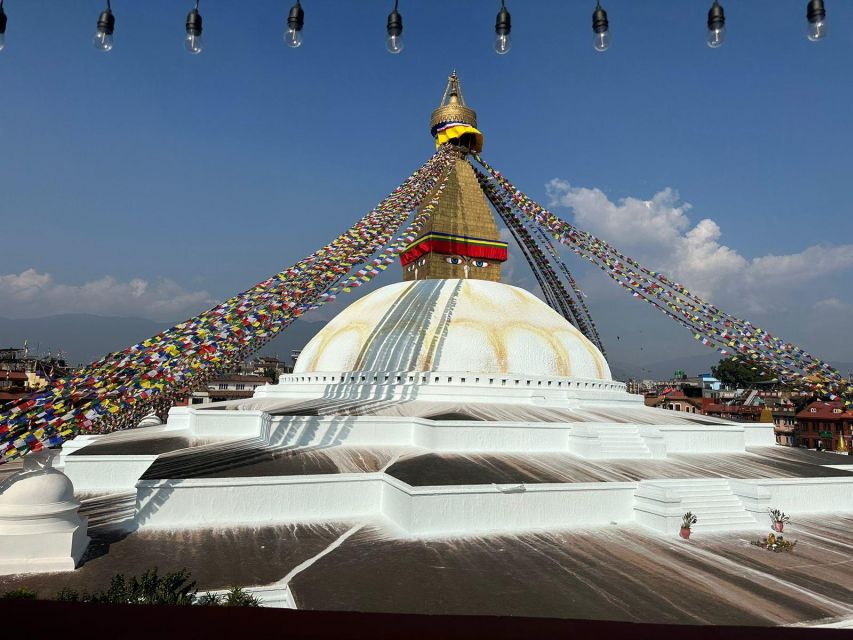
At Boudhanath, the stupa’s scale hits you first. The white dome and golden spire dominate the area, and you’ll see daily rhythm right away—pilgrims circling in kora, prayer wheels turning, and monasteries and small shops wrapping around the stupa like a living border. Then the mood shifts at Pashupatinath. On the Bagmati River, cremations happen openly at the ghats and the complex becomes a place of sound and motion—chants, bells, and (in the evening) conch shells.
So what do you actually get from combining them? Contrast, with guidance. You’re not just collecting sights; you’re learning how different traditions use the same basic ingredients—ritual, repetition, community, and symbolism—to make sense of life.
You can also read our reviews of more tours and experiences in Kathmandu.



Price and what you’re really paying for: $11 plus entry fees
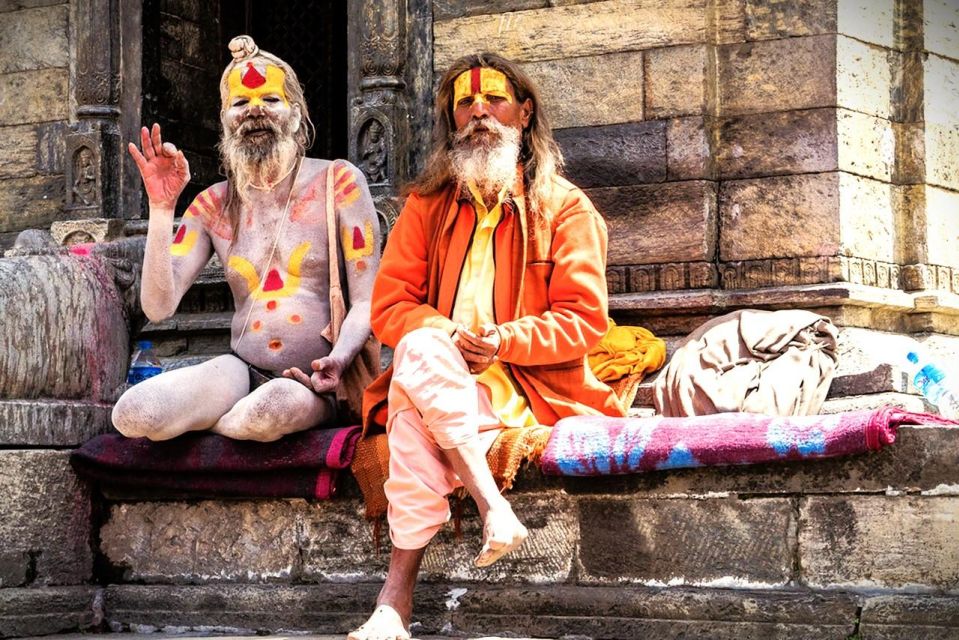
The base price is listed around $11 per person, and the value depends on what’s included. In many cases, you’re getting hotel pickup/drop-off (when that option is selected), a live guide, and guided time at both places—plus time for local markets near Boudha.
But the UNESCO site entry fees are not included. You’ll want to budget for:
- NRs 1000 at Pashupatinath
- NRs 400 at Boudhanath Stupa
That means the true cost is more than the headline price. Still, it can feel fair because you’re paying for time, interpretation, and “how to stand where” at places where it matters. One big bonus that helps your money stretch is that you can skip the ticket line.
Also remember: food and drinks are not included. Bring water, and plan on buying snacks or a drink during breaks, especially if your schedule runs into the evening Aarati period.
Boudhanath Stupa: kora, prayer wheels, and that slow spiritual focus
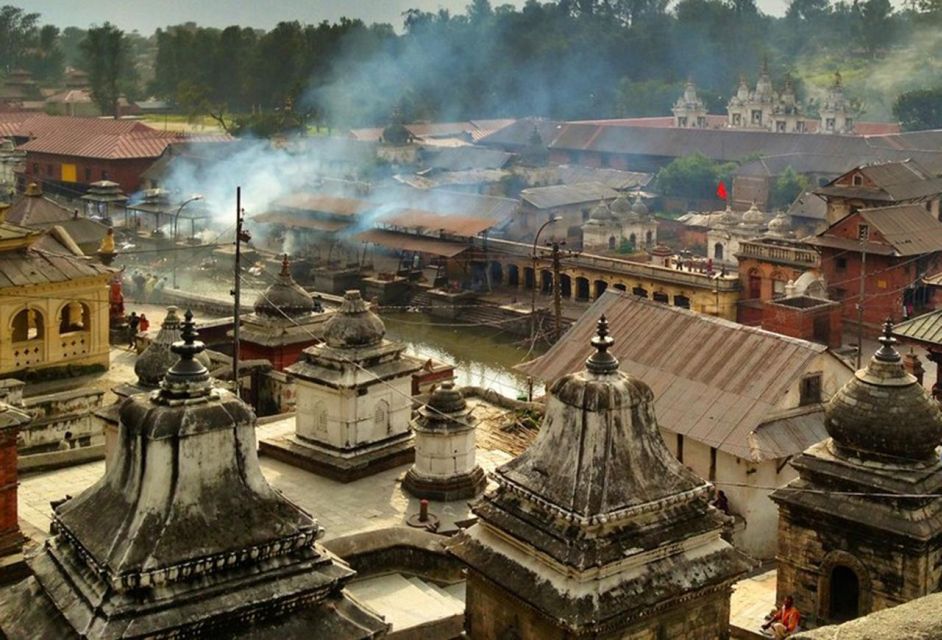
Your tour time at Boudha typically includes guided visit time plus photo stops and a walk (about an hour in the plan). Even in that limited window, Boudhanath offers multiple ways to experience it.
What you’ll do there
- You’ll approach the stupa and get oriented by your guide.
- You’ll spend time observing the daily rhythm around the complex.
- You can join the kora (the sacred circumambulation) and watch prayer wheels in motion.
- There’s time to browse nearby shops and spiritual artifacts.
- If you like a break from standing, you may have options nearby for a drink while you watch the stupa’s light change.
What makes this stop special (and why guidance helps)
Boudhanath isn’t only pretty; it’s symbolic. A good part of the experience is learning what the symbols and rituals mean, rather than treating them like scenery. When your guide explains the significance of what people are doing—like circling the stupa or spinning prayer wheels—you start noticing details you’d otherwise miss.
One small reality check: shops can be persistent. It’s a normal part of the area, so keep your goals simple. Decide what you want to look at, and politely say no if you don’t want to buy.





From Boudha calm to Pashupatinath intensity: how the complex works
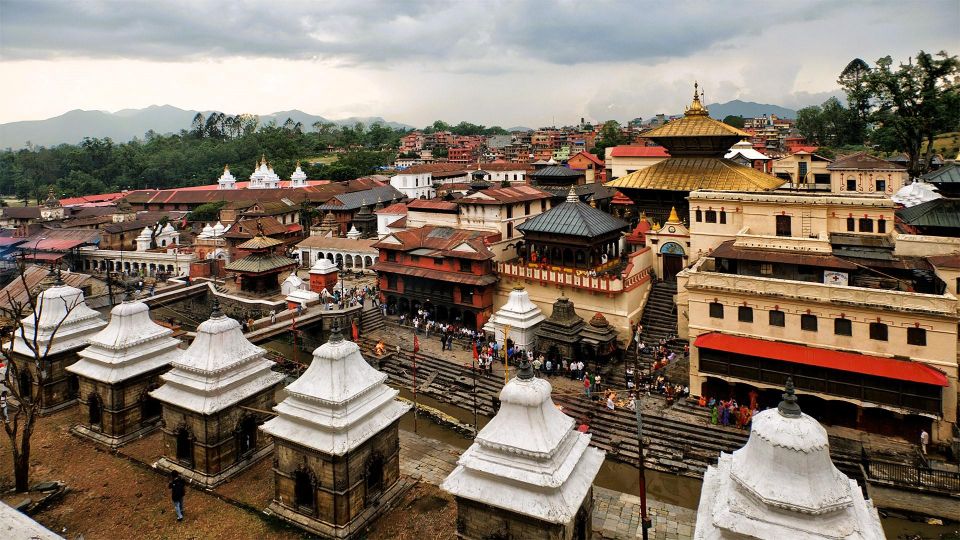
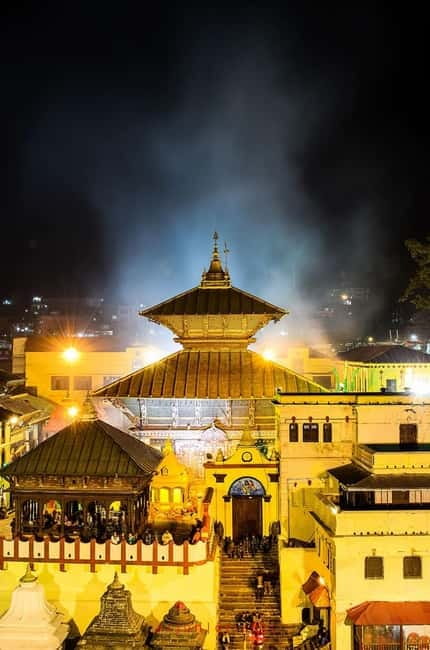
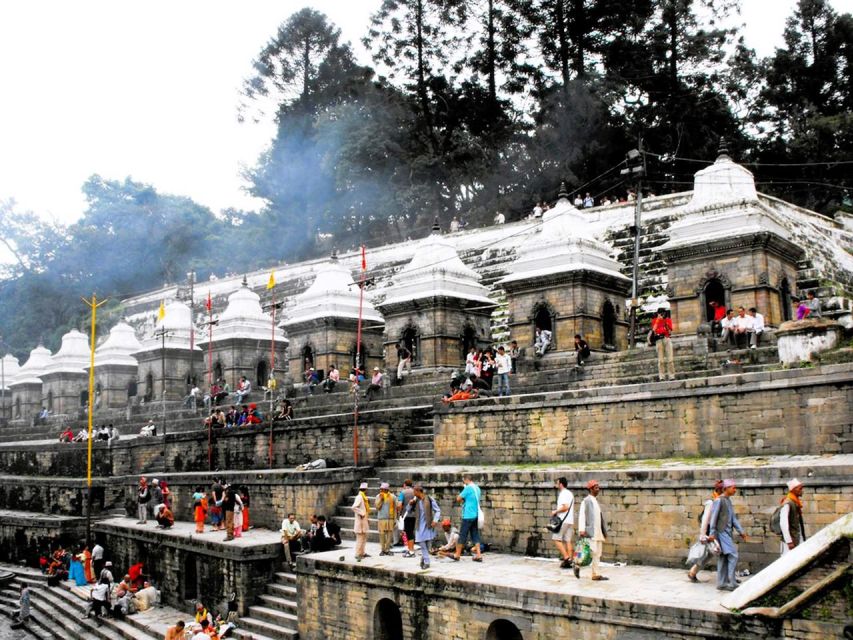
After Boudhanath, you shift to Pashupatinath Temple, the holiest Hindu shrine in Nepal and a major Shiva temple. It sits on the Bagmati River, which is central to the rituals you’ll see.
In the main temple complex, there are rules about access. Your guide will show you what you can see, and you should know this clearly: non-Hindus are not permitted inside the main sanctum. That doesn’t mean you’ll feel left out. You can still walk the outer complex, see architectural details, and view statues and shrines that give the area its intensity and mystery.
What the tour includes at Pashupatinath
You’ll get:
- guided temple complex time
- photo stops and free time
- time that may overlap with market browsing in the area
- guided viewing for the Aarati portion
The plan also suggests a shopping stop tied to arts and crafts near the temple area. If you’re shopping, keep it practical. Compare prices quickly, watch for quality, and don’t overcommit your budget on the first stall.
Seeing cremation rites on the Bagmati ghats (with respectful context)
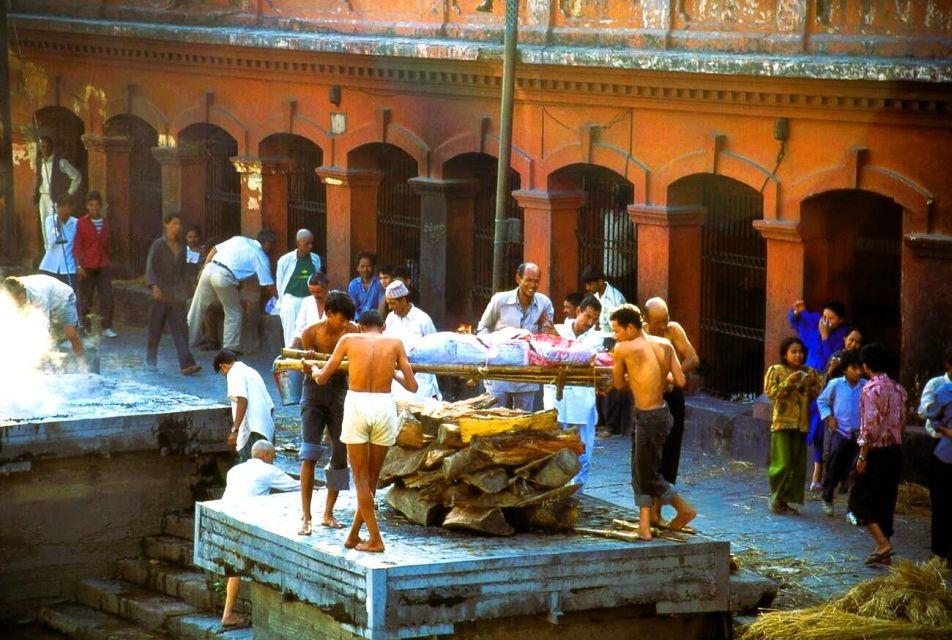
This is the reason many people choose this tour. You’re not going to a staged show. You’re witnessing real Hindu cremation ceremonies performed along the river’s ghats, which is why emotions run high.
It can help to know what your guide will do for you. With guidance, you’ll understand the symbolism behind:
- the sacred fire
- how the river is seen as cleansing and aiding the soul’s transition
- what the steps mean, so the ritual becomes understandable rather than just frightening
The intensity is real. Multiple guides and bookings emphasize that the experience can be emotional, even when it’s presented respectfully and explained step by step. If you’re sensitive to the topic of death, or you know you get overwhelmed easily, this is a consideration you should take seriously before booking.
One more practical point: your group won’t be doing anything casual here. You’ll want to dress appropriately, keep your voice down, and follow your guide’s instructions about where you stand.
Aarati ceremony atmosphere: chants, bells, and conch shells
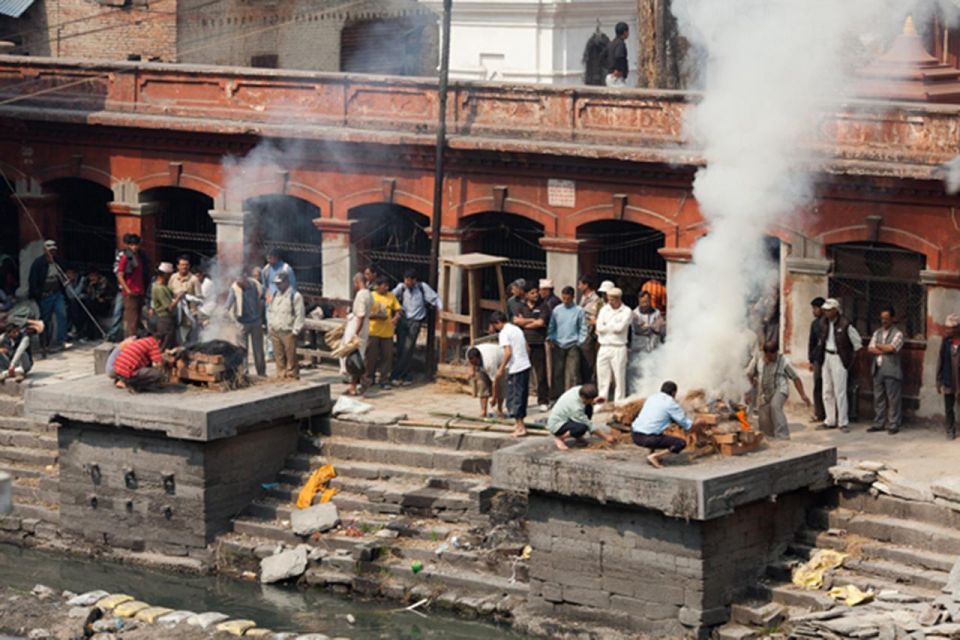
As the sun starts to lower, Pashupatinath shifts from daylight activity to something more ritual-like—sound rises and the site feels more alive. The plan specifically notes spiritual chanting and the presence of bells, plus conch shells.
What you gain from a guide at this part:
- You don’t spend the whole time trying to figure out what’s happening.
- Your guide helps you understand the steps of the Aarati and its rhythm.
- You’re guided to a viewing spot so you can actually see what matters.
Some past bookings highlighted guides such as Razz and Pranav for explaining each step clearly and making sure people had a good place to watch. That matters because Aarati is not a static event. It moves, and crowds form quickly.
If you’re comfortable with religious observances that involve intense emotion, this is one of those times in Kathmandu where you feel you’re seeing faith functioning in real time.
Markets near Boudha and the crafts stop near Pashupatinath
This isn’t only temples-and-river. There’s also a real dose of daily Kathmandu life.
Near Boudha, the tour includes time to explore lively local markets and browse spiritual items and everyday goods. Nearby shops can be part of the story, since Boudhanath isn’t isolated—it’s surrounded by the kind of small commerce that supports worship.
The itinerary also includes time for an arts and crafts market visit near Pashupatinath. That’s useful if you want keepsakes that match the cultural setting instead of generic souvenirs.
My practical advice:
- treat markets like an opportunity to compare, not a timed challenge
- set a rough budget early
- keep your purchases light enough for walking and temple rules
Transportation, timing, and meeting point reality
Your total duration is listed as 2 to 5 hours, and the plan includes about an hour at each main stop with breaks and market time.
Two logistics details matter:
- Meeting point is at the ticket counter of Pashupatinath Temple, where the guide meets you and takes you to tour and Aarati.
- Pickup may be optional. If your package includes hotel pickup and drop-off, great. If not, you’ll manage your own transport (or you can purchase transport with the agency at a reasonable rate).
Because you start at Pashupatinath ticketing, it’s smart to arrive a bit early so you’re not rushing when you first meet your guide.
What to bring, what not to bring, and who should think twice
Before you go, check the practical rules—this kind of site is strict.
Bring:
- Passport or ID card (a copy is accepted)
Not allowed:
- luggage or large bags
- drones
- alcohol and drugs
- nudity
Not suitable for:
- children under 12
- people with respiratory issues
If you’re carrying a bag, keep it small. Large bags can cause delays and hassle, and you don’t want that stress at the start of a ritual-heavy day.
Also, mentally prepare for sensory input. Cremation areas can include smoke and strong smells. If you have any respiratory concerns, take the “not suitable” note seriously.
Guides that people consistently name: Razz, Pranav, Karma, Sudhir, Anish
One reason this tour can feel smooth is that the guide is doing heavy lifting. You’re learning symbol meaning at Boudha, managing expectations at Pashupatinath, and following the Aarati as it unfolds.
Several guide names show up in bookings:
- Razz: praised for clear explanations and making the emotional Aarati easier to follow
- Pranav: praised for politeness, detailed temple explanations, and guiding people to a good Aarati viewing place
- Karma: praised for being friendly and answering questions, with guidance around the ritual
- Sudhir: praised for a highly information-rich tour with a spiritual feel
- Anish: mentioned for guiding at both Pashupatinath and Boudhanath with explanations tied to what you’re seeing
If you get one of these guides, that’s a good sign. More importantly, if your guide speaks your language well (English, Chinese, Hindi, or Russian are listed), you’ll get far more out of it. You’ll be able to ask questions and understand steps instead of guessing.
So, should you book Sacred Pashupatinath?
Book it if:
- you want an authentic Kathmandu experience centered on living ritual, not only architecture
- you can handle emotional intensity with respect
- you like having a guide explain symbolism and what you’re seeing at every step
Skip it (or choose carefully) if:
- cremation rites would seriously distress you
- you have respiratory issues
- you’re traveling with children under 12
Value-wise, it can be a smart pick: the live guide, guided access at major sites, and the chance to understand Aarati and cremation meaning often justify the extra time and the entry fees. Just plan for the reality that the headline price isn’t the full cost.
If you’re coming to Kathmandu to feel spirituality in action, this tour delivers that in a very direct way.
FAQ
What is the duration of the Kathmandu Spiritual Day Tour?
The duration is listed as 2 to 5 hours, depending on the selected option and starting times.
Where does the guide meet you?
The guide meets you at the ticket counter of Pashupatinath Temple.
Is hotel pickup and drop-off included?
Hotel pickup and drop-off is included in the option where it is mentioned, and pickup is listed as optional.
Are entry fees included in the price?
No. Entry fees are not included: NRs 1000 at Pashupatinath and NRs 400 at Boudha Stupa.
Is food and drinks included?
No. Food and drinks are not included.
What languages are available for the live guide?
English, Chinese, Hindi, and Russian are listed.
Can I bring luggage or large bags?
No. Luggage or large bags are not allowed.
Are drones allowed?
No. Drones are not allowed.
Is the tour suitable for children?
No. It is not suitable for children under 12.
Can I cancel for a full refund?
Yes. Free cancellation is available up to 24 hours in advance for a full refund.