REVIEW · HINDU TEMPLE TOURS
PashupatiNath and BoudhaNath – Private/Small Group
Book on Viator →Operated by Amazing Kathmandu Tours · Bookable on Viator
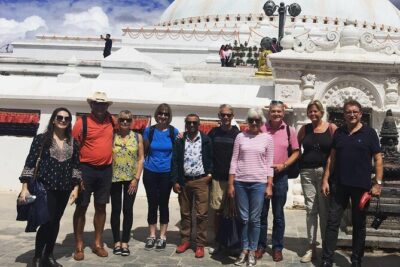
Two religions, one Kathmandu afternoon. This is a 3-hour, max 5-person tour that walks you through Hindu and Buddhist ideas in the places where they’re practiced. I like that it keeps things personal with an English-speaking guide, and that it connects rituals and symbols instead of treating temples like photo stops.
I also like the balance of stops: you’ll see Pashupatinath and its 16 samskaras story, then shift to Boudhanath for core Buddhist concepts in the Tibetan Vajrayana setting. One caution: some entry is restricted and you may not go into every main structure (like the main Pashupatinath temple), and your total cost rises once you add entrance tickets paid in cash.
In This Review
- Key points I’d mark before you go
- Two Temples, One Kathmandu Story
- Starting at Pashupatinath: What You Can See and Why It Matters
- Aryaghat Crematoria and the 16 Samskaras Explained
- Mrigasthali Deer Park: A Shiva Detour That Connects the Dots
- Gorakhnath Mandir, Guhyeshwari, and the Road Toward Boudhanath
- Boudhanath Stupa: Vajrayana Basics You’ll Actually Remember
- Guru Lhakhang Monastery and the Art of Sacred Practice
- Boudha Stupa Thanka Center: Thangka, Mandala, and Healing Bowl Basics
- Value and Pricing: Where the Real Budget Comes From
- Where This Tour Fits Best (And Who Might Skip It)
- The Verdict: Should You Book This PashupatiNath and BoudhaNath Tour?
- FAQ
- How long is the PashupatiNath and BoudhaNath private/small group tour?
- What are the main stops on the tour?
- Are entrance fees included in the tour price?
- How much is the entrance fee for Pashupatinath and Boudhanath?
- Where does the tour start and end?
- How big is the group?
Key points I’d mark before you go
- Max 5 people means you can ask real questions and get answers in plain English
- Pashupatinath + Boudhanath in one route shows how Hindu and Buddhist traditions sit side by side in Nepal
- Aryaghat crematoria stop gives context for Hindu last rites and the 16 samskaras
- Boudhanath stupa focus covers Tibetan/Vajrayana basics plus core teachings like the four noble truths
- Thangka center lesson adds a creative, hands-on angle with mandala basics and healing bowl introductions
- Guide flexibility can help if you want to catch an aarati ceremony, when timing allows
Two Temples, One Kathmandu Story
Kathmandu’s religious life isn’t neat and separated. It’s layered, shared, and sometimes surprisingly blended. That’s why this tour is smart: it threads Hindu ceremony and life-cycle rites through one side of Kathmandu, then lands you at Boudhanath, one of the world’s most famous Tibetan Buddhist centers.
You’re not just shown sights. You’re given the “why.” The guide explains what people believe, what ceremonies mean, and what symbols are doing—so when you’re standing in front of a stupa or watching a crematoria setting, it makes more sense than it would from signage alone.
And since the group is kept small (no more than five), the pace feels human. You can ask why certain steps matter, why certain words are repeated, and how both faiths influence everyday Nepalese life—including the idea of religious harmony and even the way cuisines can reflect that mix.
You can also read our reviews of more private tours in Kathmandu
Starting at Pashupatinath: What You Can See and Why It Matters
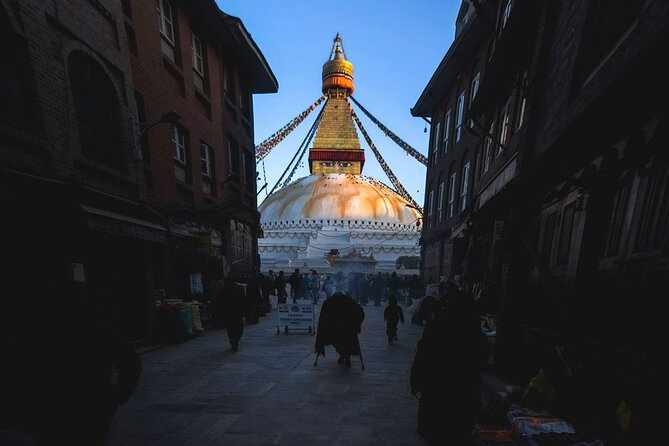
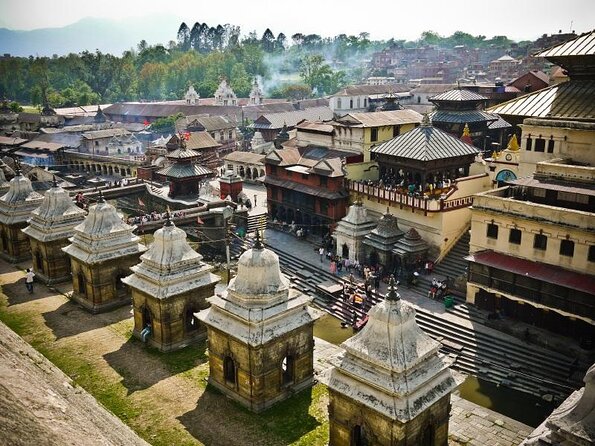
Pashupatinath is one of the most important Hindu sites in the Kathmandu Valley. It’s also a place with clear boundaries. The main temple area inside is restricted to Hindus, so you’ll view the temple complex from outside while heading toward where the ceremonies connect to daily life and the riverfront.
That outside pass-by isn’t a disappointment—it’s part of the lesson. You learn how religious access works at this kind of major shrine, and you notice something practical: this isn’t a museum. It’s a living spiritual space where rules come from tradition, not convenience.
The guide’s job here is to set the frame: why Pashupatinath is so revered, how worship is structured, and how the next stop ties into Hindu ideas about life, death, and passing on. If you’re coming in unsure about Hinduism, this is the section that helps you get your bearings fast.
What to expect: temple views from the outside, context about the site’s importance, and a transition from shrine architecture to life-cycle meaning.
A possible drawback: you’re limited on what you can enter at the main Pashupatinath temple, so plan on learning from observation and explanation rather than full interior access.
Aryaghat Crematoria and the 16 Samskaras Explained
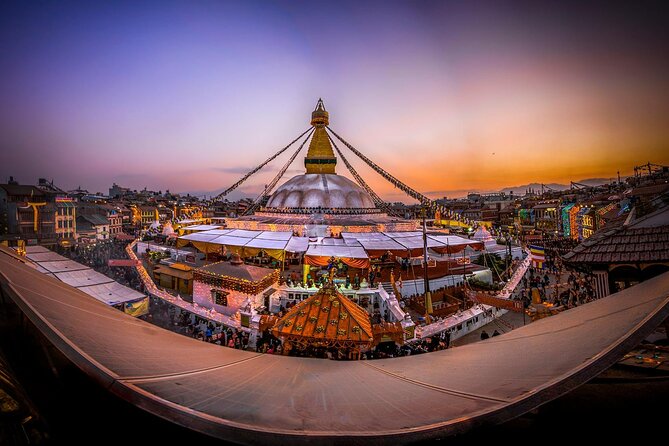
Then you head to Aryaghat, the crematoria area, which is famous because it’s one of the places where visitors can understand Hindu last rites in action. This stop is where the tour takes the most emotional weight.
The key point the guide brings is not only what happens, but what those steps represent. You’ll hear about Shodasha Samskaras, the 16 rites of passage within Hindu life-cycle thinking. Even if you don’t memorize every rite (you don’t need to), you come away with the bigger idea: Hindu ritual isn’t random. It’s a system that marks life stages and spiritual transitions.
This is also a moment where having a guide matters. Without context, the setting can feel confusing or even awkward. With context, you can read the scene as a structured set of beliefs about the end of life and how family and community participate.
What to expect: the crematoria setting by the riverfront and explanations of Hindu rites of passage and last rites.
A reality check: ceremonies can depend on timing. You’ll be in the right place for understanding, but you won’t control whether everything is happening the exact way you imagine.
Mrigasthali Deer Park: A Shiva Detour That Connects the Dots
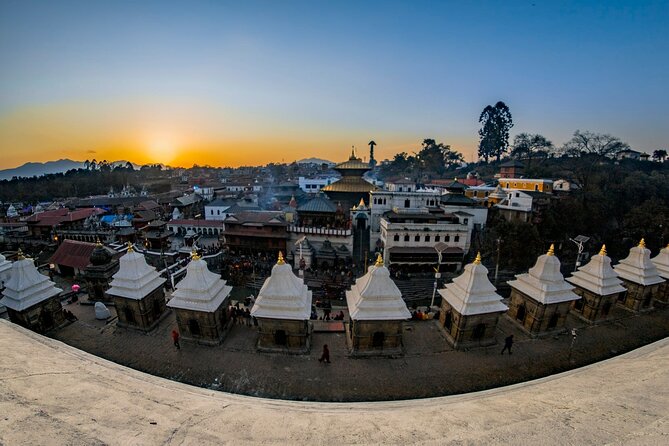
From the intensity of Aryaghat, the route shifts to Mrigasthali Deer Park. This stop is short, but it’s purposeful. You’ll get the story of Lord Shiva’s journey to the area and how the park got its name.
This is one of those stops that works if you’re curious about myth as a way of explaining geography. In Nepal, stories often label what you’re seeing. A park isn’t just a park—it’s a place with a narrative, a reason it matters, and a spiritual connection that helps explain why locals might treat it differently than a generic green space.
What to expect: a brief walk-and-story segment with Shiva-related context, plus time to look around the area.
Time note: it’s only about 15 minutes, so come with questions ready if you want more detail.
Gorakhnath Mandir, Guhyeshwari, and the Road Toward Boudhanath
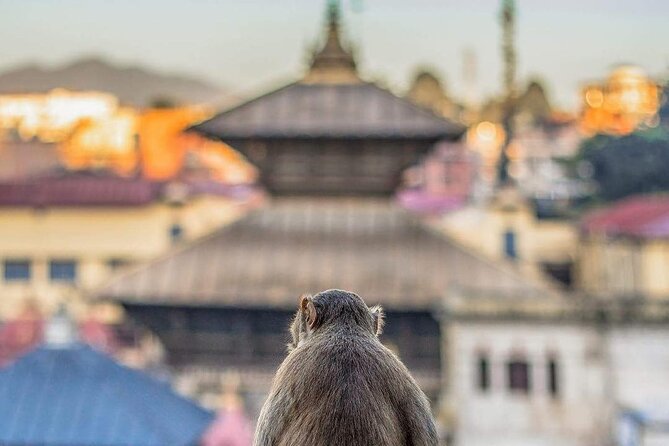
Next comes a sequence that feels like a bridge between worlds. You take a rest at Gorakhnath Mandir, then continue toward Boudhanath via Guhyeshwari Temple while hearing stories tied to Guru Gorakhnath.
Then you reach Guhyeshwari Shaktipeeth, where the guide tells the story of Satidevi and the concept of Shaktipeeth. This is where Hindu sacred geography shows up again in a different form. Instead of rites of passage, you’re learning how places become sacred through mythic relationships and devotional power.
By the time you’re heading into Boudhanath’s orbit, the tour has already done something important: it trains your eye to recognize that religion here isn’t a single line. It’s networks of stories, saints, places, and meanings that overlap.
What to expect: short temple stops, story-based learning, and a transition route that leads you directly toward the Buddhist stupa area.
Practical note: some temple entrances are listed as free, so not every stop adds ticket cost—though the biggest-ticket sites are still ahead.

Boudhanath Stupa: Vajrayana Basics You’ll Actually Remember
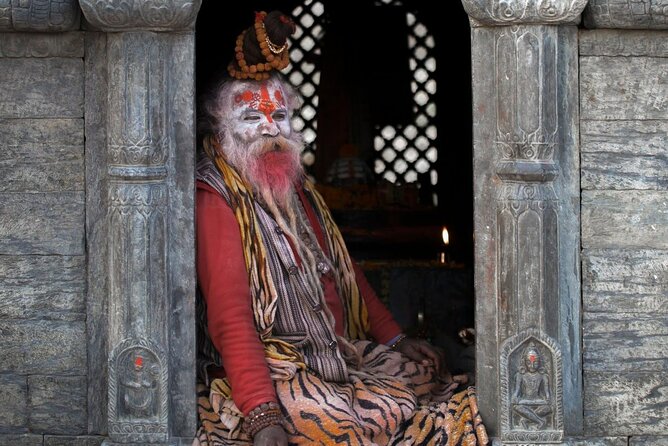
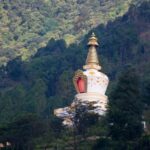
Now the tour turns toward its star: Boudhanath Stupa. This is described as the second largest stupa of this type in the world, and it’s strongly associated with Tibetan Buddhism and Vajrayana practice.
You get real basics here, not just “this is a stupa.” The guide explains core ideas and what you might notice on-site: prayer flags, the concept of the five elements, and key teachings like the four noble truths and the eightfold path.
This part is where you’ll start linking symbol to meaning. A stupa is an object, yes—but it’s also a teaching tool. When you understand what certain elements represent, you don’t just look at the structure. You read it.
Also, Boudhanath is the kind of place where you’ll likely feel the steady rhythm of practiced devotion—so it helps to have your mental checklist. The guide’s explanations give you that checklist in human language.
What to expect: stupa time (about 45 minutes), with Buddhism basics paced for first-timers.
A small consideration: entrance to Boudhanath is not included in the base price and is paid in cash at the site, so bring the right amount ahead of time.
Guru Lhakhang Monastery and the Art of Sacred Practice
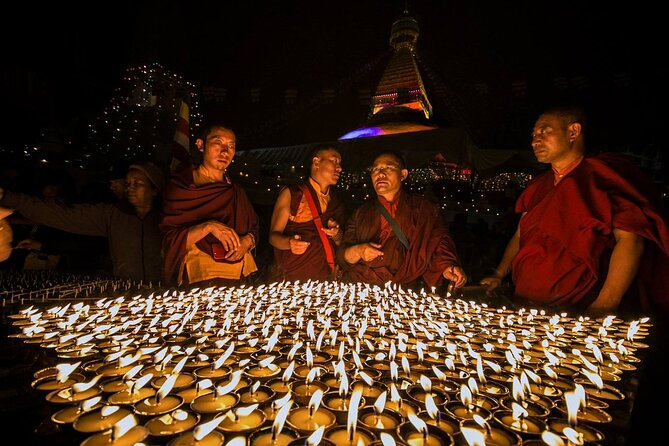
After Boudhanath, you make a quick stop at Guru Lhakhang Monastery. This is a shorter visit, but it adds a “behind the scenes” feeling. You’ll see what a typical Buddhist monastery environment looks like and hear about Padmasambhava and the idea of Dharma Chakra Pariwartana.
This stop matters because it keeps your understanding from staying at the stupa-only level. You learn that Buddhism here includes teaching, ritual, and practice spaces—not just iconic architecture.
What to expect: monastery context and a few key Buddhist story concepts, with time kept short so the overall schedule stays smooth.
Boudha Stupa Thanka Center: Thangka, Mandala, and Healing Bowl Basics
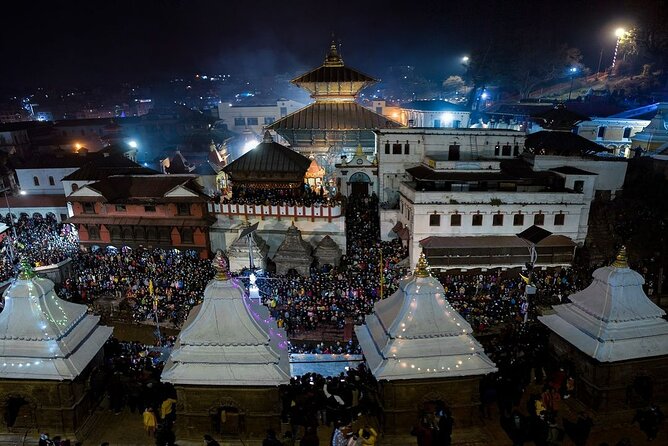
The final education stop shifts into creativity. At the Boudha Stupa Thanka Center, you learn about thangka art (the traditional religious painting style), the concept of mandala, and you’re introduced to the idea of healing bowls.
This is a smart ending because it changes the way you process the tour. The earlier stops are heavy and ritual-heavy. Here, you get a chance to see Buddhism through visual teaching and structured design—mandala thinking is a perfect bridge between belief and art.
You also get a practical takeaway: even if you don’t buy anything, you leave with a better eye for what you saw earlier around the stupa. Mandala patterns and religious iconography start to make more sense.
What to expect: about 15 minutes focused on thangka basics, mandala concept, and an introduction to healing bowl ideas.
Good to know: this is listed with admission included, so you’re not scrambling for another ticket later in the route.
Value and Pricing: Where the Real Budget Comes From
The tour price is listed at $15 per person, and it’s designed for small groups with an English-speaking guide and a mobile ticket. That’s a nice base deal because a guide here isn’t optional—Pashupatinath and Boudhanath are complex places where explanations change everything.
But here’s the math you should plan for: entrance fees for Pashupatinath and Boudhanath are not included. You’ll pay in cash at the entrance—about NRP 1000 (around US$9) for Pashupatinath and NRP 400 (around US$4) for Boudhanath. Put together, that’s roughly US$13 in additional entry fees.
So your realistic all-in cost is closer to $28. For many visitors, that still feels fair because you’re covering two major religious sites plus a guided explanation that ties the dots: last rites and samskaras on one side, Vajrayana basics and stupa symbolism on the other.
Where This Tour Fits Best (And Who Might Skip It)
This tour is a strong match if you want religion explained in plain language and you like learning through context, not just checking off landmarks. It’s also ideal if you’re in Kathmandu for a short time and you don’t want to guess your way through sacred spaces.
It’s especially good if you have questions. The guide on this route has a reputation for handling follow-ups, and the format supports that. One example: if you’re hoping to see an aarati ceremony, ask ahead and your guide can sometimes adjust timing to try to make room.
You might consider a different style of tour if you’re mainly after architecture and sweeping views rather than meaning-making. This is a “why” tour more than a “look” tour, and one stop in particular—Aryaghat—carries a heavy topic even with the right framing.
The Verdict: Should You Book This PashupatiNath and BoudhaNath Tour?
Book it if you want a guided route that shows religious harmony in action and gives you context for Hindu rites and Buddhist teachings in the same afternoon. The small group size helps a lot, and the ending at the thangka center turns what could feel like information overload into something you can actually visualize.
Skip it only if you’re uncomfortable with the crematoria context and prefer lighter, purely scenic sightseeing. Otherwise, if you bring curiosity and patience, this tour gives you a more meaningful Kathmandu than you’d get from wandering through major shrines without guidance.
FAQ
How long is the PashupatiNath and BoudhaNath private/small group tour?
It’s about 3 hours.
What are the main stops on the tour?
You’ll visit Pashupatinath, Aryaghat crematoria, Mrigasthali Deer Park, Gorakhnath Mandir, Guhyeshwari Temple and Guhyeshwari Shaktipeeth, Boudhanath Stupa, Guru Lhakhang Monastery, and the Boudha Stupa Thanka Center.
Are entrance fees included in the tour price?
No. Entrance fees for Pashupatinath and Boudhanath are not included and must be paid in cash at the entrance.
How much is the entrance fee for Pashupatinath and Boudhanath?
Pashupatinath is listed at NRP 1000 (about US$9) and Boudhanat is listed at NRP 400 (about US$4).
Where does the tour start and end?
It starts at Gaushala Bus Stop and ends at the Boudha Stupa Gate, where you can explore around Boudhanath or head back.
How big is the group?
The tour is a maximum of 5 travelers, with an English-speaking guide.