REVIEW · BHAKTAPUR & PATAN DAY TRIPS
Kathmandu: Private Bhaktapur and Patan Sightseeing Tour
Book on GetYourGuide →Operated by Cordial Trek Pvt. Ltd. · Bookable on GetYourGuide
Two UNESCO squares, one unforgettable Nepal day. In this private 6-hour route, you link Patan and Bhaktapur, former kingdoms with temple courtyards that still feel like living history.
I love that you focus on two UNESCO World Heritage areas without wasting time on guesswork, and I love the way a good English-speaking guide can connect the architecture to Hindu traditions and the Malla-era story.
One thing to plan around: you’ll want cash for monument entrance fees, and since meals aren’t included, you may feel a bit snack-dependent during the day.
In This Review
- Key Highlights You’ll Actually Notice
- How This Private Tour Works in Real Life
- Patan Durbar Square: Malla Power, Red-Brick Floors, and the Stone Krishna Mandir
- Between Kingdoms: The Private AC Ride Through Kathmandu Valley
- Bhaktapur Durbar Square: Golden Gate, 55 Jhyale Durbar, and Nyātāpola
- Golden Gate and 55 Jhyale Durbar
- Nyātāpola: The Five-Tier Temple You Can’t Ignore
- How many temples?
- Pottery Square: Handicraft Stops That Don’t Hijack the Tour
- Guide Quality Is the Difference Maker
- Price and Value: Is $45 a Good Deal?
- What to Bring (and What Will Make Your Day Easier)
- Who This Tour Best Fits
- Should You Book This Kathmandu Valley Patan + Bhaktapur Tour?
- FAQ
- How long is the Kathmandu: Private Bhaktapur and Patan Sightseeing Tour?
- Is this tour private?
- What time does the tour start and when do I get back?
- What is included in the price?
- Are meals included?
- Do I need cash during the tour?
- What language is the guide?
- Is transportation included, and is it comfortable?
- What should I avoid bringing?
Key Highlights You’ll Actually Notice
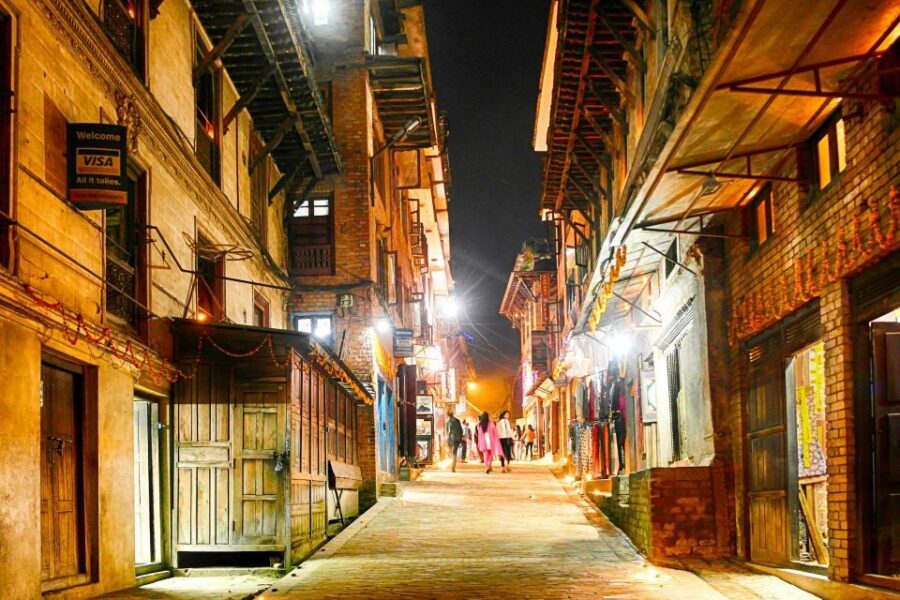
- Two UNESCO World Heritage Sites packed into one efficient half-day plan
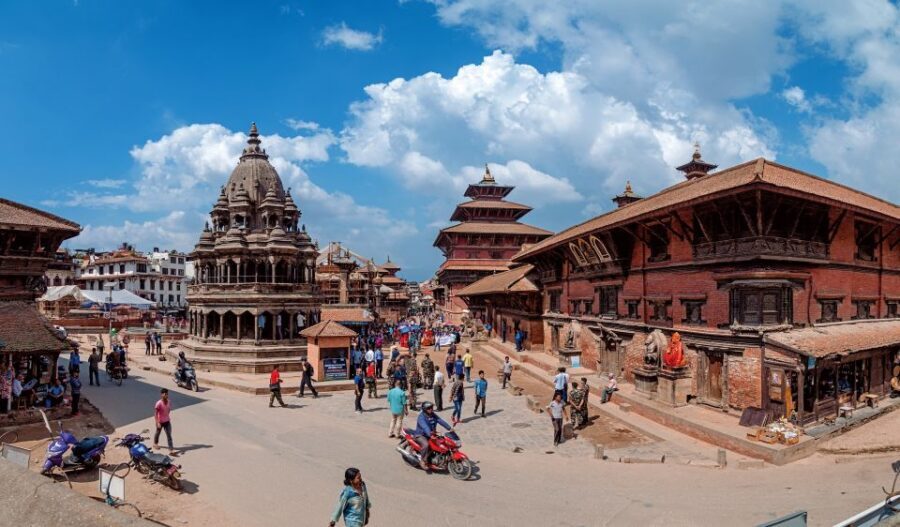
- Patan Durbar Square with royal-era temples and the stone Krishna Mandir
- Bhaktapur Durbar Square landmarks like the Golden Gate, 55 Jhyale Durbar, and Nyātāpola
- Newari culture in daily detail, from temple craftsmanship to courtyard layout
- Pottery Square for practical browsing and small handicraft shopping
How This Private Tour Works in Real Life
This is a straightforward Kathmandu Valley day: hotel pickup, a private AC vehicle, and an English live guide moving you between two historic centers. You’re not trying to win the city’s maze—your guide handles the pacing and the context, and that matters here because the details are the point.
The time structure is also realistic. You start around 10:00 AM with pickup, then you split the day between Patan and Bhaktapur. Expect to be back to Kathmandu in the early-to-mid afternoon window (the plan is framed as about 3 to 4 PM depending on traffic and timing at sites).
Because it’s private, you can ask more specific questions—why certain buildings look the way they do, what functions temples and courtyards served, and how the Newari world shaped royal and religious life. If you’ve ever wandered a durbar square and wondered what you’re looking at, this style of tour is built for that moment.
You can also read our reviews of more private tours in Kathmandu
Patan Durbar Square: Malla Power, Red-Brick Floors, and the Stone Krishna Mandir
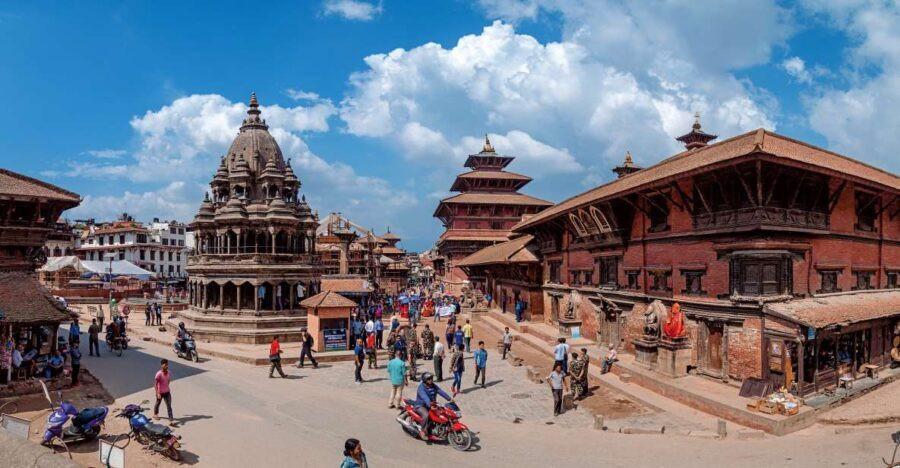
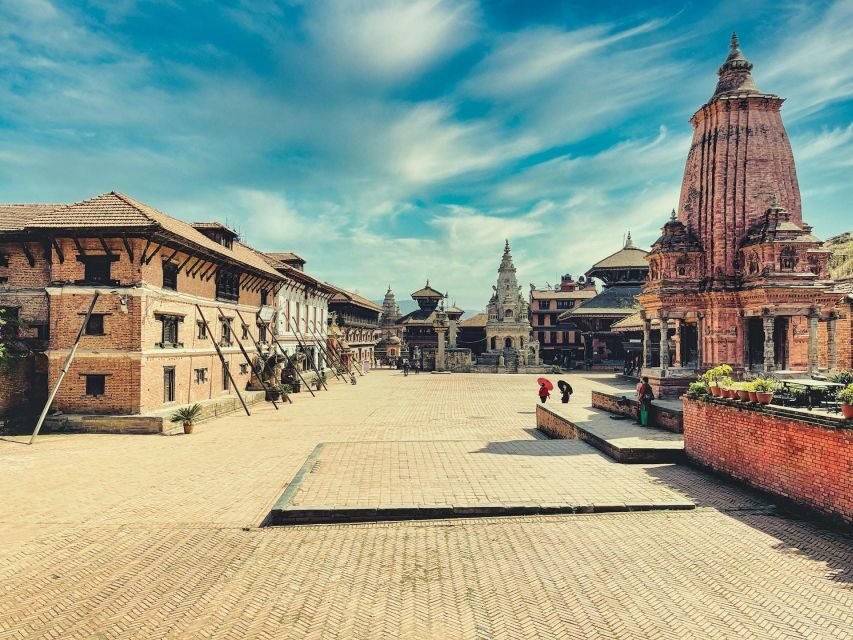
Your day starts in Patan (also known as Lalitpur). After roughly half an hour driving, you step into Patan Durbar Square and get the royal palace core of the Malla Kings of Lalitpur. This is a perfect first stop because Patan’s layout helps you build an eye for what comes next in Bhaktapur.
What I like most here is how much of the architecture is still readable. The durbar square floor is described as red brick, and that kind of visual detail helps you orient quickly. Patan also gives you that classic Newari temple-and-statue density: multiple shrines, carvings, and focal points packed into a walkable area.
The highlight to look for is the Krishna Mandir, built in stone and considered the most famous temple in the area. Even if you’re not a serious Hindu history nerd, a guide can point out how this temple fits into the broader pattern of royal patronage and local devotion—why a palace complex would concentrate religious landmarks, not just administrative ones.
Practical downside: this part can be a lot of standing and looking. Comfortable shoes are more than a suggestion. If you start with tired legs, you’ll rush the details, and that’s where Patan really pays off.
Between Kingdoms: The Private AC Ride Through Kathmandu Valley
The transfer between Patan and Bhaktapur takes about 40 minutes by road, but it can stretch depending on traffic. The good news is you’re in a private AC car/van, so you’re not sweaty and scattered when you arrive.
Use this ride time for a quick mental reset. Your guide will often set up what you’ll see next: how Bhaktapur’s durbar square functions differently, which structures are considered the signature achievements, and where you should stand for the best “read” of each landmark.
Also, keep an eye on your timing. When tours run on a schedule, it’s usually because entrance lines, photo moments, and short guided walks add up faster than you think.
Bhaktapur Durbar Square: Golden Gate, 55 Jhyale Durbar, and Nyātāpola
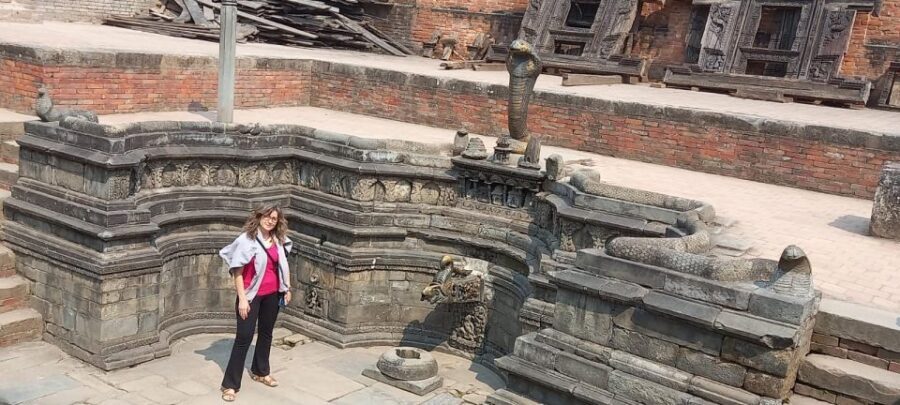
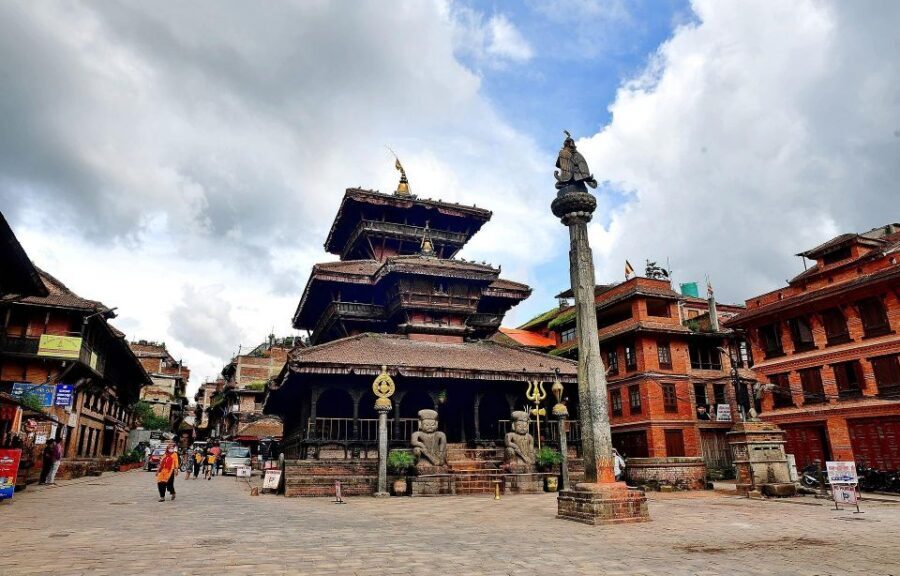
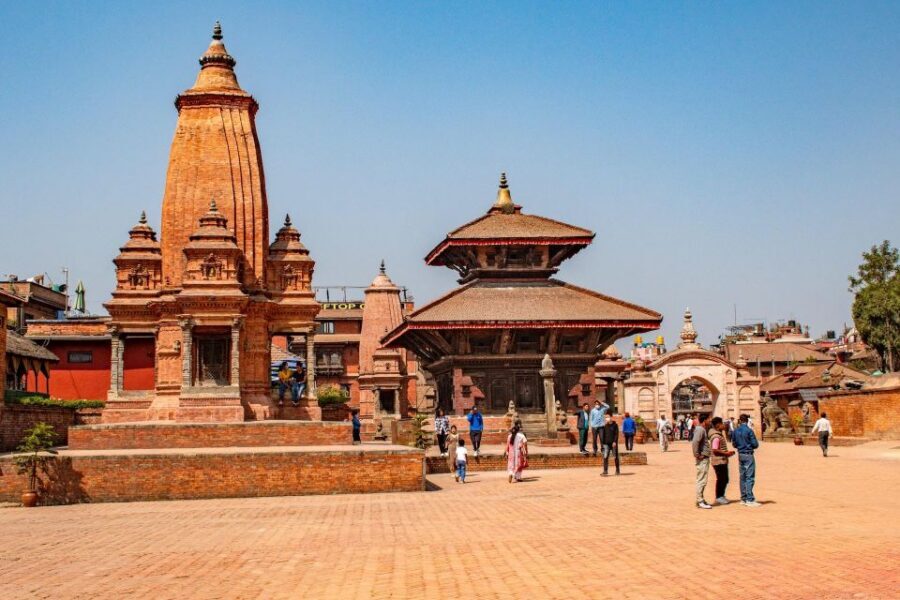
Bhaktapur is where the tour really locks in. You arrive and begin at Bhaktapur Durbar Square, the former royal palace complex of the Malla kings from the 14th–15th centuries and later the kings of Bhaktapur until the kingdom was conquered in 1769.
It’s not just one building. It’s a whole palace landscape made of temples, palaces, and courtyards. The plan notes that parts of the old palace grounds were later used as government offices, schools, and private houses. That mix of sacred and everyday use is what makes Bhaktapur feel different from a purely museum-style site.
Golden Gate and 55 Jhyale Durbar
Right behind the Golden Gate, you’ll find the 55 Jhyale Durbar. This building is known for wood carvings from the Malla period. If you’ve ever wondered why some Nepalese architecture looks almost like it has texture even at a glance, this is the kind of spot where a guide’s description helps you see the carving logic—layers, motifs, and craft traditions that would be easy to miss if you only snap photos.
Nyātāpola: The Five-Tier Temple You Can’t Ignore
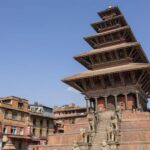
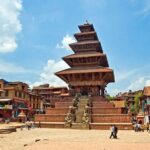
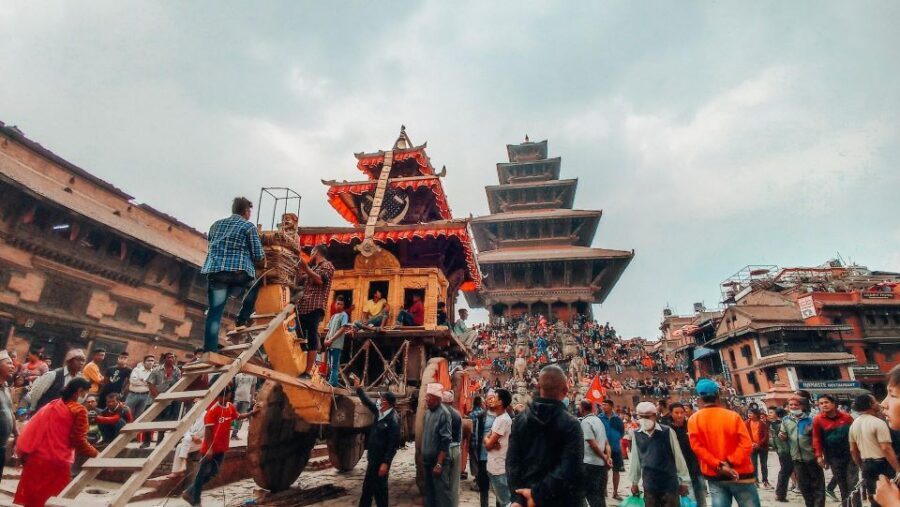
Then there’s Nyātāpola, a five-tier temple located in Bhaktapur’s central area. It’s described as the tallest monument within the city and the tallest temple of Nepal. Construction completion is listed as 1702 under King Bhupatindra Malla.
Even if you don’t memorize dates, Nyātāpola is the kind of structure that changes your scale. It’s tall, theatrical, and built to draw your eyes upward. A good guide will also connect it to the temple tradition and explain why this kind of monumental religious architecture sat at the heart of a royal complex.
How many temples?
One review highlights that the temple complex is known for having around 170 individual temples. Whether the exact count is debated or not, you should expect serious density: multiple altars, shrine points, and temple forms inside a compact walking area.
Practical consideration: Bhaktapur durbar square can feel like a maze if you’re trying to self-navigate. Let the guide lead your route so you don’t spend your limited time guessing which structures matter most.
Pottery Square: Handicraft Stops That Don’t Hijack the Tour
The itinerary includes Pottery Square, described as a hub for shopping for Nepalese handicrafts. It’s named for the pottery work around it, and while it may not be as large as the main durbar square, it’s a good “reset” stop.
Think of Pottery Square as the place where the day turns from architecture to everyday craft. You can browse without committing to a full shopping detour. If you’re picking up small souvenirs—things you can actually carry home—this kind of stop is often more useful than random markets pulled in at the last minute.
Tip: if you’ve been busy with temple photos, give yourself a moment here to look at hands-on craft. It helps you understand how the city’s artistic traditions keep living outside palace walls.
Guide Quality Is the Difference Maker
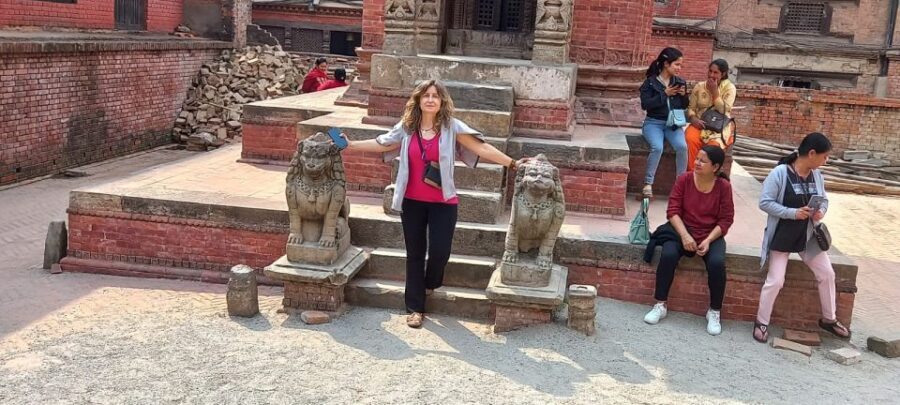
This tour depends heavily on the guide, and the supplied guide info backs that up. For example, Nilakantha is mentioned as an excellent guide with strong English and an ability to explain Nepalese and Hindu history and culture with real enthusiasm. Sharmila is also highlighted for deep knowledge of history and religion.
What you should look for, regardless of which guide you get, is a guide who can do two things at once:
1) point to the exact structure you’re looking at
2) translate why it matters into normal human language
That’s how you leave Bhaktapur not just with photos, but with actual understanding of what you saw.
Price and Value: Is $45 a Good Deal?
At $45 per person for a private 6-hour sightseeing tour, the value is mostly in what’s included: hotel pickup and drop-off, a live English tour guide, private AC transportation, and bottled drinking water.
Meals are not included, so don’t plan on lunch being handled for you. You’ll want to have a light breakfast or plan a snack stop near your return time.
Also remember the monument fees. The tour advises bringing cash to pay entrance fees, and one review gives a concrete example of 1000 NPR per person for Bhaktapur entrance. Your exact total can vary because entrance costs can differ by site, but the takeaway is the same: bring cash so you’re not scrambling on arrival.
If you’re traveling as a couple or small group, private transport can be a smart way to control pacing. You also avoid the coordination headaches that come with joining a bigger group that moves at one rigid speed.
What to Bring (and What Will Make Your Day Easier)
The practical checklist is simple and worth following:
- Camera (this is a photo-heavy day)
- Cash (for monument entrance fees)
- Comfortable shoes (you’ll walk and stand)
- Sunglasses (daylight on courtyards can be bright)
- Avoid oversize luggage (it’s noted as not allowed)
One small mental prep: bring a little patience for photos and crowds. Even in a private tour, durbar squares are popular, and you may pause for others to move through key viewpoints.
Who This Tour Best Fits
This works especially well if:
- You want a guided understanding of Nepal’s sacred art and royal architecture
- You’re short on time and want to hit two major UNESCO areas efficiently
- You enjoy Newari cultural context more than just quick stop-and-snap tourism
It may be less ideal if:
- You want long meal breaks built into the schedule (meals aren’t included)
- You prefer very slow, unguided exploration with no set pacing
- You hate paying separate site entrance fees (cash is required)
Should You Book This Kathmandu Valley Patan + Bhaktapur Tour?
I think this is a strong choice if your goal is to understand Kathmandu Valley’s two standout historic centers in one day. Patan gives you the Malla royal atmosphere and a famous stone Krishna shrine, while Bhaktapur answers the bigger question: what happens when a palace complex becomes a dense map of temples, carvings, and religious monument-making.
Book it if you:
- want a private AC vehicle and a plan that keeps you from wasting time
- care about architecture with context, not just architecture from a distance
- are comfortable bringing cash for entrance fees
Skip it (or swap your strategy) if you need the tour to include meals, or if you want more free time than a tight 6-hour route allows. For many people, though, this is the most satisfying way to spend a first trip day in the Valley—two UNESCO squares, one guided thread, and enough time to still enjoy Kathmandu afterward.
FAQ
How long is the Kathmandu: Private Bhaktapur and Patan Sightseeing Tour?
The tour duration is listed as 6 hours.
Is this tour private?
Yes, it’s a private group tour.
What time does the tour start and when do I get back?
Pickup starts around 10:00 AM from your hotel. You’ll return to Kathmandu in the afternoon (the plan mentions about 3 PM to 4 PM depending on timing).
What is included in the price?
Hotel pickup and drop-off, an experience tour guide, private AC car/van transportation, and bottled drinking water are included.
Are meals included?
No, meals are not included.
Do I need cash during the tour?
Yes. You’re asked to bring cash to pay monument entrance fees.
What language is the guide?
The live tour guide is in English.
Is transportation included, and is it comfortable?
Yes. You’ll use a private AC car/van for transportation between sites.
What should I avoid bringing?
Oversize luggage is not allowed.