REVIEW · KATHMANDU
Fixed Departure Tibet Overland Group Joining Tours.
Book on Viator →Operated by Outshine Adventure Pvt Ltd · Bookable on Viator
Tibet starts at 5:15 a.m. and this fixed-departure group joining tour keeps the paperwork and routing simple with an English-speaking Tibetan guide and a focused monastery circuit from Tashlhumpu to Sera. The trade-off is that you’ll ride early, cross high passes, and deal with long drive days where you pay for lunch and dinner out of pocket.
For about 8 days from Kathmandu (around $1,300 per person), you get twin-sharing rooms on bed-and-breakfast basis, van/bus transportation, monastery entrance fees, and a Tibet travel permit. Pickup is offered too, which is a small detail that can save you from scrambling before a border day.
One more reason this works: the operator (Outshine Adventure Pvt Ltd) coordinates the trip with people like Asmita and trip support from Gokul, who’s been noted as bilingual (including Spanish) and very hands-on with the whole setup. If you want guided structure for Tibet, without turning it into a checklist, this is a solid option.
In This Review
- Key highlights worth your attention
- Why This Fixed-Departure Kathmandu-to-Tibet Plan Makes Sense
- Meeting Time, Pickup, and Group Size (What to Expect Daily)
- The Altitude Reality: Gyatchu La, Karo La, and Kamba La
- Kerung Border to the High Plateau: Your First Day’s Big Shift
- Day 2 to Shigatse: Scenic Drives with Real Himalayan Views
- Tashlhumpu, Gyantse Kumbum, and Gyantse Dzong: Monuments That Feel Local
- The Lhasa Approach via Yamdrok Tso and the Brahmaputra River
- Potala Palace and Norbulingka: Lhasa’s Power and Daily Life
- Sera, Drepung, Jokhang, and More: A Monastery Circuit That Explains the System
- Day 8: Checking Out and Heading Back to Kathmandu (or Onward)
- Price and Logistics: What You Get for $1,300 (and What You Pay Separately)
- Permits and Passport Timing: The Small Print You Should Treat Seriously
- Who This Tibet Overland Group Tour Fits Best
- Should You Book This Tibet Overland Group Tour?
- FAQ
- What is the starting time for the tour?
- Where does the trip begin and end?
- How long is the tour?
- What’s included in the price?
- Are lunch and dinner included?
- How large is the group?
- Is pickup offered?
- How early do I need to submit my passport?
- Does the tour include a guide?
Key highlights worth your attention
- Kerung border start early (5:15am): You’ll be on the road before the day gets chaotic.
- Big-mountain views built into the drive: Mt Everest (8,848m) is on the radar for panoramic moments on clear days.
- Multiple major monasteries, not just one stop: Tashlhumpu, Gyantse Kumbum, Jokhang, Sera, Drepung, Shalu, and Sakya all appear in the program.
- Altitude passes are part of the plan: Gyatchu La (5,220m), plus Karo La and Kamba La on the way into Lhasa.
- Good value “logistics included”: Permit + guide + transport + entrance fees are bundled, while meals remain your call.
Why This Fixed-Departure Kathmandu-to-Tibet Plan Makes Sense
The best part of a fixed-departure group tour isn’t glamour. It’s friction removal. This one is designed so you don’t have to piece together the hard parts on your own: Tibet permit handling, border timing, overland transport, and an itinerary that strings together key cultural stops from the Gyantse region into Lhasa.
What you’re buying is a managed route. You still get real monasteries, bazaars, and palace history—but you do it with an English-speaking Tibetan guide and a schedule that keeps you moving between destinations. That matters in Tibet, where travel time is not just “time on the bus.” It’s also road conditions, altitude, and planning windows for sightseeing.
I also like that the tour doesn’t pretend altitude is optional. The route includes multiple passes (and they’re high), so you’re not signing up for a light stroll. It’s an overland adventure with culture threaded through the days.
You can also read our reviews of more tours and experiences in Kathmandu.
Meeting Time, Pickup, and Group Size (What to Expect Daily)
This tour starts with a 5:15am morning wake-up and drive to Kerung Border. That’s early by anyone’s standard. The upside is that border days tend to go smoother when you’re not arriving at the same time as everyone else.
You’ll travel with a group capped at 30 people, which is large enough to feel like a proper group, but small enough that the days don’t turn into a chaotic herd. It also helps when guides need to manage timing—especially when you’re moving between monasteries and viewpoints.
Pickup is offered, which is helpful because you don’t want your first day in Tibet to be a scavenger hunt for a meeting point. If pickup matters to you, confirm the pick-up details before you arrive in Kathmandu, since early start days leave no room for delays.
The Altitude Reality: Gyatchu La, Karo La, and Kamba La
The route climbs into the high plateau zone and crosses passes that can make even seasoned travelers slow down. The itinerary calls out:
- Gyatchu La (5,220m)—described as the highest pass of the trip
- Karo La Pass (5,010m)
- Kamba La Pass (4,794m)
This is not a trip where you can treat altitude like background noise. You’ll likely feel the air thinner, and the best approach is to pace yourself—less rushing, more pauses for breathing and photos. If you’re sensitive to altitude, talk with your doctor before you go and bring the medication you’ve used before at elevation.
Also, remember that long driving days can make you feel more tired than you expect. If you pack with motion sickness and cold weather in mind (layers, not just one jacket), you’ll enjoy the scenery more and fight fewer discomforts.
Kerung Border to the High Plateau: Your First Day’s Big Shift
On the first day, you wake up early and drive to Kerung Border, passing through countryside before handling border formalities. After that, the route continues with an uphill drive toward Kerung.
Even if you’ve traveled internationally before, this kind of border day has its own rhythm: waiting, paperwork flow, and then the immediate shift from lower elevation to higher road travel. The program is set up so that once you clear the border, you keep going—so you’re not stuck in limbo for the whole day.
Practically, I’d treat this as a “settle into motion” day. Don’t plan to sprint from one viewpoint to another. Your win here is simply arriving and adjusting, then using the rest of the week to take your time with monuments and monasteries.
Day 2 to Shigatse: Scenic Drives with Real Himalayan Views
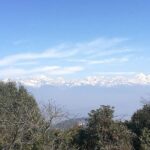
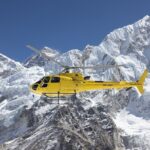
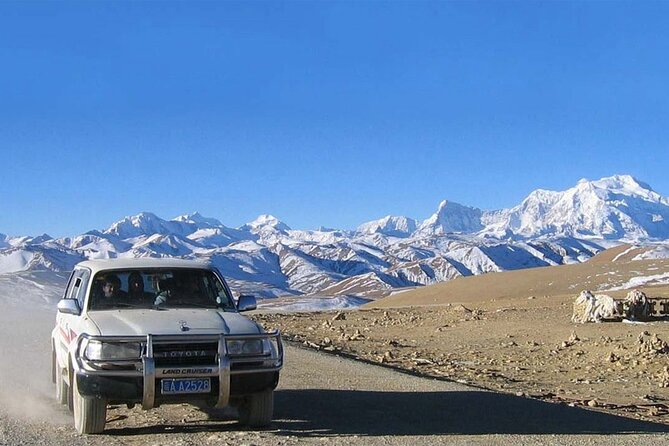
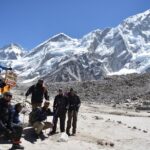
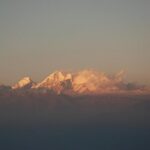
Day 2 is all about the road as scenery. As you move toward the highest plateau, you get Tibetan terrain views and expansive Himalayan sightlines. Mt Everest (8,848m) is specifically noted as part of the panoramic mountain experience, so if skies are clear, you’re in the right place to see why people come back year after year.
Then the tour continues toward Shigatse on Day 3, including the pass crossing over Gyatchu La (5,220m). The itinerary frames this segment as scenic and focused on Tibetan landscape views. Even if you don’t get a perfect view of every peak (weather happens), the pass crossing itself is a memorable marker of scale—wide roads, high air, and that long-distance feel where the horizon seems far and close at the same time.
And yes, you’re still on a tight schedule. That’s the nature of fixed-departure touring: you trade freedom for reliable flow.
Tashlhumpu, Gyantse Kumbum, and Gyantse Dzong: Monuments That Feel Local
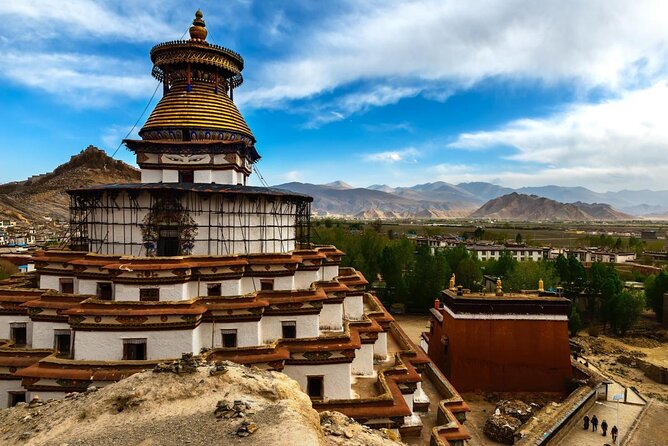
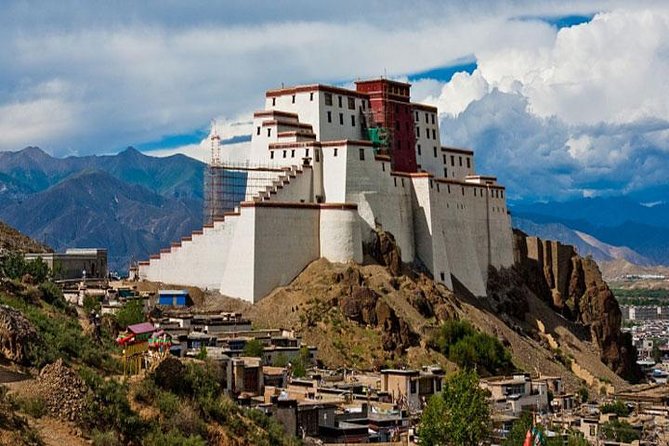
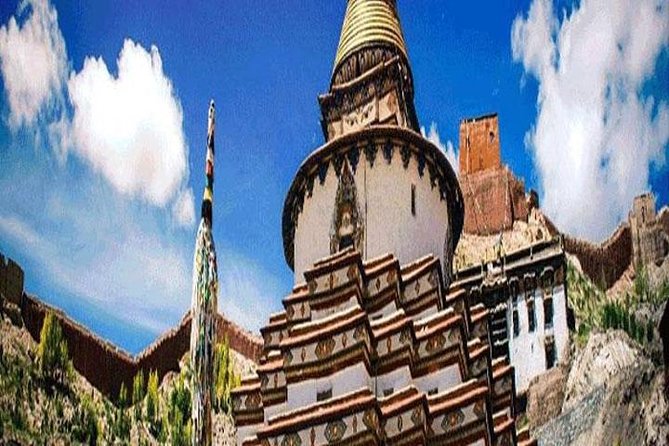
Day 4 shifts from travel into heritage. You visit Panchen Lama’s Tashlhumpu Monastery, described as a key stop, and then drive through the Gyantse valley via Tibetan villages.
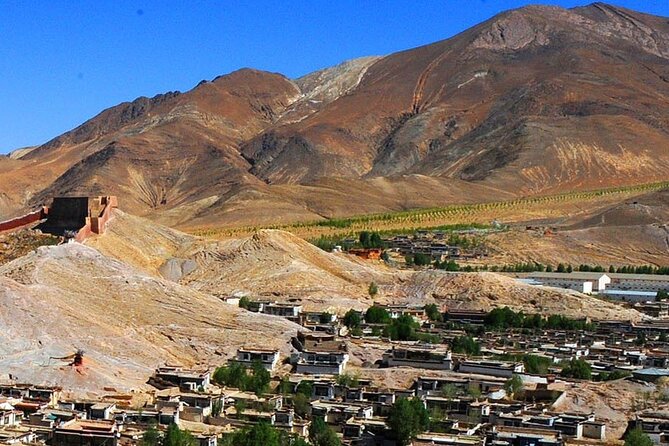
From the program list, the area also includes Gyantse Kumbum and Gyantse Dzong—and these are the kinds of sights that reward slow looking. The monastery world in Tibet isn’t only about buildings; it’s also about how people use space. Even when the day is structured, you’ll feel the difference between a big city stop and a regional heritage site.
What makes this part of the itinerary valuable is variety. You’re not only climbing toward Lhasa; you’re also seeing how Tibetan Buddhist culture plays out across different towns and valleys. It gives you a broader sense of daily life and religious tradition, instead of compressing everything into Lhasa only.
A possible drawback: if you’re prone to feeling rushed, Day 4 can feel like a “see a lot” day. The best fix is simple—ask your guide for short pauses where you can stand back, take in the carvings and courtyard rhythm, and then move on.
The Lhasa Approach via Yamdrok Tso and the Brahmaputra River
By Day 5, you’re headed to Lhasa. The route includes two passes—Karo La and Kamba La—and you’re also scheduled for mountain-and-water scenery: Yamdrok Tso (Turquoise Lake) and the Brahmaputra River.
This is one of the strongest scenic corridors on the whole program because you get both high-altitude road drama (pass crossings) and a visual break from it (lake and river views). For many people, this is the day when Tibet starts to feel real in a new way—less about the idea of Tibet, more about how the environment shapes life.
If you want the best photos, plan your timing with the guide rather than trying to outsmart the schedule. Stops at lake and river viewpoints are usually short and dependent on road timing and weather. In other words: be ready, not frantic.
Potala Palace and Norbulingka: Lhasa’s Power and Daily Life
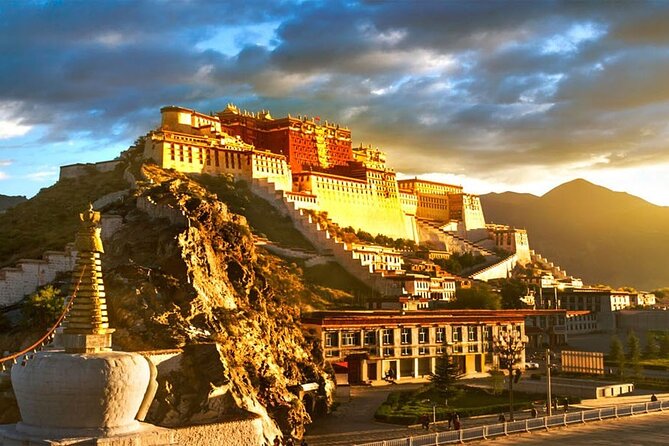
Day 6 begins the core Lhasa sightseeing. The first landmark is Potala Palace, described as the winter palace of the Dalai Lama. From here, the itinerary notes you’ll see an overview view of Lhasa town, which is exactly why this palace matters. It’s not only history in stone—it’s also a way to understand how the city sits in relation to its spiritual and political center.
The program also lists Norbulingka Palace, plus Barkhor Bazaar and the Tibet Museum. Put together, those stops do a nice job of balancing three angles:
- power and tradition (Potala)
- palace culture (Norbulingka)
- everyday religious life and local commerce (Barkhor)
- museum context for how to read what you’re seeing (Tibet Museum)
The bazaar is one of those places where you can slow down without feeling like you’re falling behind. If you enjoy small observations—how people move, what they carry, how religious spaces pull daily routines—you’ll like this kind of stop.
Sera, Drepung, Jokhang, and More: A Monastery Circuit That Explains the System
Day 7 is your second Lhasa sightseeing day, and it leans hard into monastic tradition:
- Drepung Monastery (the program describes it as the world’s largest monastery sheltered by 10,000 monks in the past)
- Sera Monastery (listed as part of the visit)
- Jokhang Temple (listed in the overall program)
- plus other monastery visits included in the itinerary program such as Sakya Monastery and Shalu Monastery
This monastery circuit is valuable because it helps you see the internal logic of Tibetan Buddhism: monasteries are not only spiritual landmarks, they’re teaching centers, community anchors, and living institutions.
A practical note: monasteries involve lots of walking and lots of looking upward. Light matters too—inside can be dim and outside can be harsh. Bring a small camera-ready kit (extra battery, lens cloth) and expect to spend time switching between viewpoints and courtyards.
Also, don’t assume you’ll “understand it all” in one day. With a guide, you’ll learn the names, roles, and traditions behind the sites—but the real payoff is getting better at noticing patterns: prayer, courtyard layout, iconography, and the way visitors behave as part of the space.
Day 8: Checking Out and Heading Back to Kathmandu (or Onward)
On the last day, you check out after breakfast and drive toward your next destination, either back to Kathmandu or to Mainland China. The key idea is that Day 8 is still a drive day. Even if you feel like you’re done with sightseeing, this is when you should keep yourself hydrated and ready—because travel days can feel longer than the sightseeing days.
If your schedule includes another flight soon after arrival, build in buffer time. Even with a well-run fixed-departure plan, road travel timing can shift.
Price and Logistics: What You Get for $1,300 (and What You Pay Separately)
Let’s talk value with clear eyes. At $1,300 per person for roughly 8 days, this tour covers:
- Twin sharing rooms on a bed-and-breakfast basis
- English speaking Tibetan guide
- Transport by van or bus
- Monastery entrance fees
- Tibet travel permit
- Breakfasts (7)
It does not include:
- Lunch and dinner
- Train or air fare for any sector
- Visa fee and flight fare (as applicable)
- tips and personal expenses
- single supplement if you need a single room
So is it worth it? For many people, yes—because Tibet permits, guided routing, and entrance fees can be time-consuming to arrange. This package pulls those moving parts together for you.
But be honest: you’re still paying for daily meals and you’re still giving up personal pacing. If you’re the type who hates group timing and prefers to choose every lunch spot yourself, this won’t feel as satisfying.
Permits and Passport Timing: The Small Print You Should Treat Seriously
The trip requires your original passport for Tibet visa processing at least 3 working days in advance, and your Tibet tour permit booking needs confirmation at least 15 working days in advance.
That’s not the kind of deadline you want to handle after you’re already in Kathmandu. If you’re planning flights, build your timeline backward. If you don’t have your passport details locked and stable, don’t wait until the last week to book.
This is where a well-organized operator matters. When the permit timing is managed correctly, entry feels smooth. When it isn’t, it becomes stressful for everyone. So plan early, send documents promptly, and don’t assume last-minute fixes work.
Who This Tibet Overland Group Tour Fits Best
This tour is a good fit if you:
- want a structured overland route from Kathmandu with major sights included
- prefer an English-speaking guide rather than doing monastery interpretation on your own
- like traveling in a group of up to 30 people (not a tiny private tour, not a huge busload)
- value the “logistics included” approach: transport, permit, entrance fees, and breakfast
It’s also a decent choice if you want the culture mix: palaces, bazaars, and the monastery circuit—not just scenery.
You might want a different style of trip if you:
- hate early starts and long driving days
- need flexible, independent meal planning every day
- want to avoid altitude-driven pacing (because passes are central to the schedule)
Should You Book This Tibet Overland Group Tour?
If you want Tibet with fewer headaches and a clear, guided route, this is a strong pick. The biggest reasons to book are practical: permit support, transportation, and a full cultural sequence that goes beyond one or two showpiece stops.
I’d book it especially if you like the idea of waking up early, riding across high terrain, and then spending real time in monasteries where a guide can explain what you’re seeing. The value is strongest when you appreciate structure—and when you accept that you’re signing up for altitude and drive-heavy days.
If you’re unsure, do this one quick check: can you comfortably handle long days and early mornings? If yes, you’ll likely find the experience very rewarding.
FAQ
What is the starting time for the tour?
The tour start time is 5:15 am.
Where does the trip begin and end?
It starts in Kathmandu, Nepal, and on Day 8 you drive either to Kathmandu or to Mainland China.
How long is the tour?
The duration is 8 days approximately.
What’s included in the price?
Included items are twin sharing rooms on a bed and breakfast basis, an English speaking Tibetan guide, transportation by van or bus, monastery entrance fee, Tibet travel permit, and breakfast for 7 days.
Are lunch and dinner included?
No. Lunch and dinner are not included.
How large is the group?
The group has a maximum of 30 travelers.
Is pickup offered?
Yes, pickup is offered.
How early do I need to submit my passport?
You need your original passport at least 3 working days in advance for Tibet visa and booking confirmation for the permit needs to be at least 15 working days in advance.
Does the tour include a guide?
Yes, you’ll have an English speaking Tibetan guide throughout the itinerary.