REVIEW · LALITPUR NEPAL
Patan and Bhaktapur City Full Day Tour
Book on GetYourGuide →Operated by Himalayan Travel Consultant · Bookable on GetYourGuide
Two UNESCO squares in one smooth day. You’ll move between Patan and Bhaktapur and see how Newari art, temple design, and royal architecture shape daily life in Kathmandu Valley. It’s history you can walk through, not just read about.
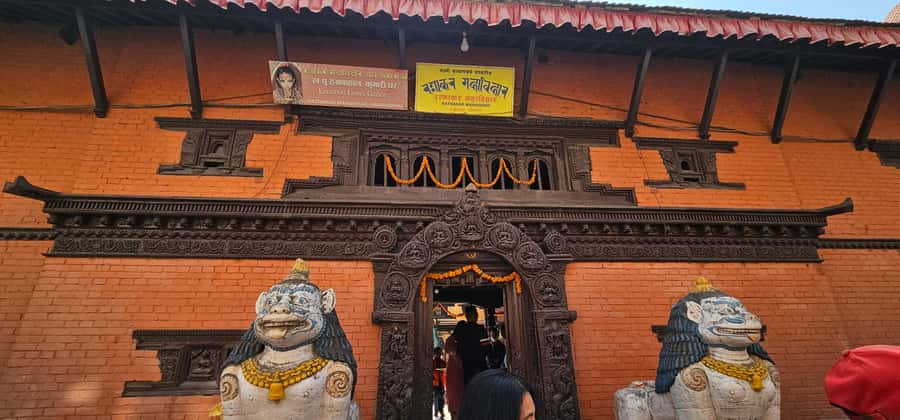
I love the contrast: Bhaktapur feels medieval and tight, while Patan Durbar Square leans ornate and artist-driven. The second big win for me is the stop at the Golden Temple (Hiranyavarna Mahabihar), where metalwork details make the whole place feel alive.
One thing to consider: monument entrance fees are not included, so your total cost may rise once you’re on site. Also, 6 hours means you’ll be smart about time—this is a highlight tour, not a slow museum day.
In This Review
- Key things that make this tour worth your time
- Why Patan and Bhaktapur feel different from the start
- Getting there from Kathmandu without turning it into a slog
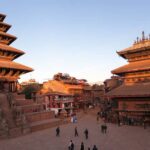
- Bhaktapur Durbar Square: Taumadhi Square and the royal-temple layout
- Patan Durbar Square: where Newari artistry shows up in every corner
- The palace complex in Patan: Sundarichok, Mulchok, and Keshavnarayan Chok
- Hiranyavarna Mahabihar, the Golden Temple: metalwork you can’t fake
- Courtyards, gardens, and the Bhandarkhal Tank details
- Pace and lunch: how to make 6 hours feel like more
- Price and value: what $50 buys you in Kathmandu Valley
- Who this tour is best for (and who should skip it)
- Should you book this Patan and Bhaktapur full day tour?
- FAQ
- What’s the duration of the tour?
- Where do you get picked up in Kathmandu?
- What’s included in the price?
- Are monument entrance fees included?
- What languages is the live guide available in?
- Is there free cancellation?
Key things that make this tour worth your time
- Two UNESCO World Heritage sites in one day, with guided context that helps the sights make sense
- Golden Temple (Hiranyavarna Mahabihar) for striking Newari metalwork and an easy-to-follow story of the monastery’s importance
- Bhaktapur’s royal squares and temples, including Taumadhi Square and Nyatpole-style temple architecture
- Patan palace courtyards and carvings, including Sundarichok with its royal bath history and water-courtyard details
- Flexible pacing with photo stops and shopping time, especially useful if you’ve already seen parts of Kathmandu
- Hotel pickup and air-conditioned transport, which keeps the day practical rather than exhausting
Why Patan and Bhaktapur feel different from the start
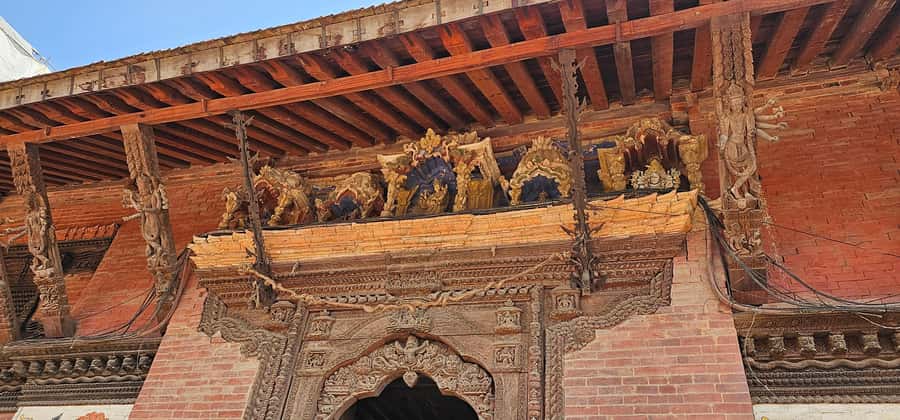
Patan and Bhaktapur sit in the same Kathmandu Valley world, yet they don’t feel like copy-paste “same city” sightseeing. Bhaktapur leans medieval—royal squares, tightly framed temple streets, and stone layouts that keep you moving in small loops. Patan, meanwhile, is famously tied to master artisans, so the architecture often reads like craft work you can walk up to.
This tour makes that contrast easy to understand. You’re not just seeing one Durbar Square and calling it a day. You get the royal-palace logic in Patan and the square-and-temple rhythm in Bhaktapur, side by side.
You can also read our reviews of more tours and experiences in Lalitpur Nepal.
Getting there from Kathmandu without turning it into a slog
The day starts with pickup from your hotel in Kathmandu, then you transfer by air-conditioned transport to the heritage core areas. That matters more than it sounds: Kathmandu traffic and short distances can still eat time, and this tour protects your sightseeing hours.
You also get a live guide in English or Spanish, plus a private group setup. Private here means you’re not trapped in a slow-moving pack, and you can ask questions as you go. The schedule runs about 6 hours, so you’ll cover a lot, but you won’t feel stuck for hours inside a single building.
Since the day includes guided walks through squares and courtyards, I’d plan for comfortable shoes and a water bottle. You’ll be out long enough that small comfort choices pay off.
Bhaktapur Durbar Square: Taumadhi Square and the royal-temple layout
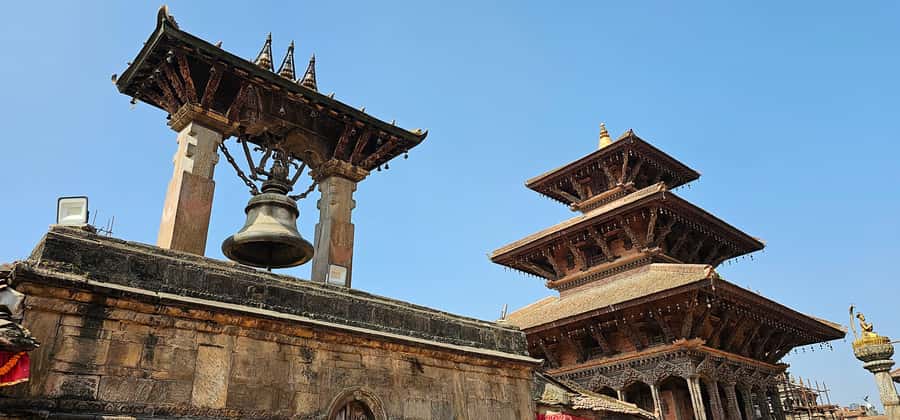
Bhaktapur Durbar Square is the kind of place where a guide helps you see patterns. Without that context, you might notice the temples but miss how the squares relate to royal power, religious space, and everyday movement.
In Bhaktapur, you’ll spend time around key royal areas, including Taumadhi Square, where you’ll find the Nyatpole Temple, described as the tallest temple in town. It’s the sort of structure that makes you look up, then back down again as your eye traces the square’s edges.
You’ll also check out Dattatraya Square, noted as the first square used by royalties. That detail is useful because it turns the square from “pretty stone” into “a place where power was performed.” If you like architecture, this is where the day starts clicking.
A nice bonus in this style of tour: your guide can point you toward side streets and everyday scenes, including how people still wear distinct ethnic costumes. That helps Bhaktapur feel like a living city, not a sealed-off museum.
Patan Durbar Square: where Newari artistry shows up in every corner
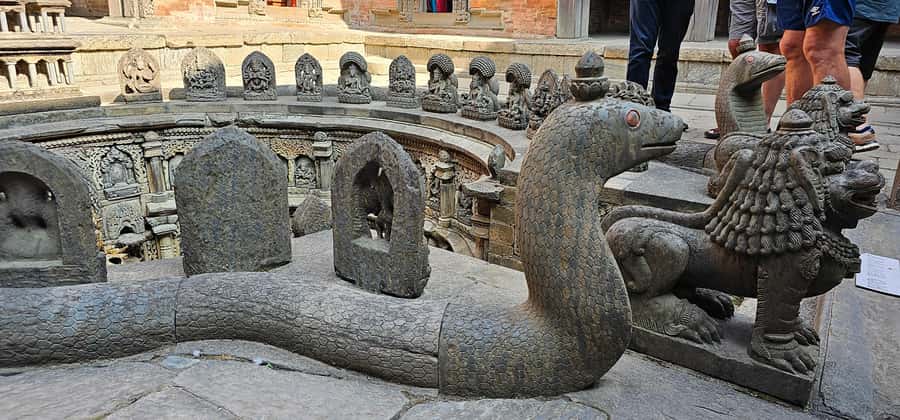
Patan is often described with the name Lalitpur, and it fits. The overall vibe is less about one grand monument and more about layers of temple and craft details—like the city was built by repeating a high standard.
You’ll spend time around Patan Durbar Square and work toward the most famous nearby temple highlight: the Golden Temple at Hiranyavarna Mahabihar. But Patan’s charm doesn’t stop there. The day also includes several major temples and palace-area sights.
If you’re into temple design, Patan gives you a quick sampler. You’ll see the Krishna temple, highlighted as a masterpiece of Shikhar architecture, and you’ll notice Garuda placed in front of the temple. Next to it is the Vishnu temple, so the religious layout isn’t random—you can read it as a set.
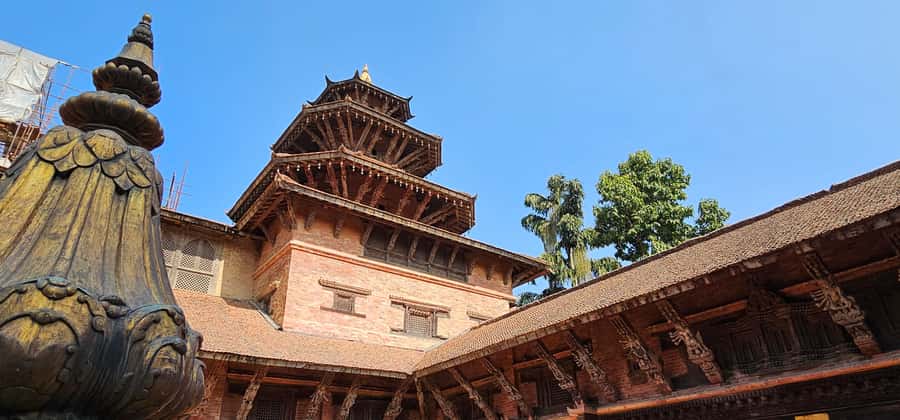
You’ll also encounter the Bhimsen Temple, especially worshipped by the business community. It’s described as a richly ornamented three-story pagoda, with hanging household items like pots, pans, brooms, and wooden slippers. That’s an excellent example of how belief and daily life get linked in Newari art.
One additional detail worth noting: a statue of the Malla king Yoga Narendra Malla, reported as fallen in the 2015 earthquake and now restored, is still part of the story you’ll see on site. It’s a reminder that heritage places aren’t frozen; they recover, reappear, and keep meaning.
The palace complex in Patan: Sundarichok, Mulchok, and Keshavnarayan Chok
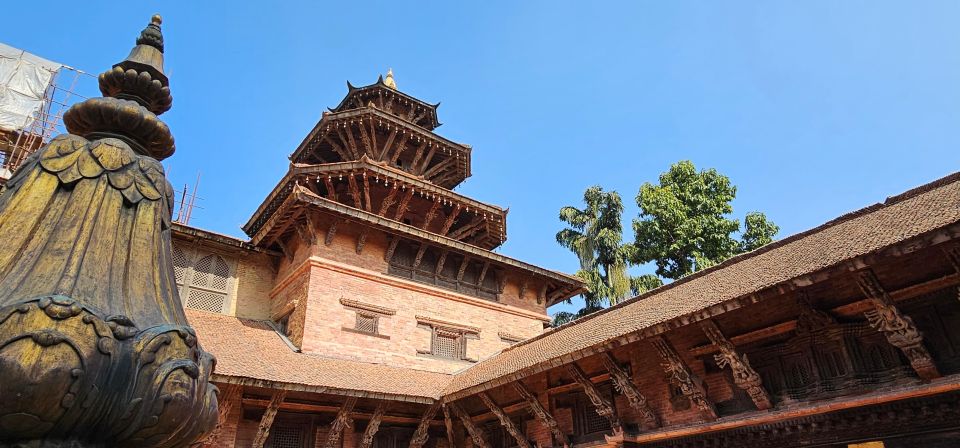
Patan’s old royal palace complex is one of the strongest stops on this day, because it’s where you feel the city’s structure as a whole. Instead of only temple exteriors, you move through the courtyard logic that shaped palace life.
You’ll see three main courtyards, each tied to a different function. The southernmost courtyard is Sundarichok, linked with the idea of the most beautiful courtyard and once described as a royal bath. Nearby, carvings of 72 different gods and goddesses appear near a water fountain, and the courtyard is tied to the king offering a handful of water to favorite deities.
Next is Mulchok, described as the main courtyard for social and religious occasions, and housing a temple for Taleju, a tutelary deity of the royal family. This is the kind of detail that makes you understand what these courtyards were for beyond aesthetics.
Finally, Keshavnarayan Chok includes a Vishnu temple area where you can see Vishnu with Laxmi and his transport Garuda. It’s the courtyard associated with where the king and queen lived in the past, and today it’s said to house the best preserved museum in Nepal.
If you like architecture, this palace sequence is also a great way to avoid feeling overwhelmed. You’re not trying to memorize every temple. You’re learning a system: courtyard, function, deity focus, and royal life.
Hiranyavarna Mahabihar, the Golden Temple: metalwork you can’t fake
After the palace, the tour typically heads toward Hiranyavarna Mahabihar, commonly called the Golden Temple. The name fits because the monastery is described as one of the richest in Patan, with a glittering example of Newari metalwork.
This stop works well even if you only have limited time. You can spend a short, focused window soaking up the craft details, then let your guide explain how monastery traditions connect to Patan’s identity as a city of artists.
It’s also a good place to slow down slightly, because the value is in seeing fine work closely rather than racing from one doorway to the next. That balance is part of why this tour gets strong marks: the day is structured, but there’s breathing space in key moments.
Courtyards, gardens, and the Bhandarkhal Tank details
Patan’s palace area isn’t just stone and temples. You’ll also get references to the royal garden and water infrastructure, including Bhandarkhal Tank with a fountain.
The tank is described as a supposed treasure store for the palace, and the water fountain is noted as a major supply of water for the palace. Even if you’re not an architecture nerd, that kind of practical detail helps you picture how royal life functioned.
There’s also mention of a small restaurant in the royal garden area, which can make the transition from sightseeing to food feel smooth. If you’re hungry, it helps that the day doesn’t force you to wait until you’ve fully escaped the heritage core.
Pace and lunch: how to make 6 hours feel like more
A short day tour lives or dies on pacing. This one works because the guiding style is described as organized but flexible, with time for questions, photo stops, and some shopping.
Lunch is not treated like a rushed factory stop. You’ll likely have options—some guides even help you choose where to eat. One highlight from past guests: rooftop dining with good views is mentioned as a nice way to end the day, especially after you’ve walked through dense temple areas.
Still, keep your expectations realistic. With a 6-hour total, you won’t see every corner of Patan or every temple in Bhaktapur. What you’ll get is a strong hit list, backed by context that connects the sights.
Price and value: what $50 buys you in Kathmandu Valley
At $50 per person, this tour is priced like a focused heritage package: hotel pickup and drop-off in Kathmandu, a live guide, and air-conditioned transport for the transfer and day movement. What’s not included is monument entrance fees, so treat $50 as the base cost and budget a little extra once you’re on site.
For the money, the value comes from two places. First, you’re combining two UNESCO-listed heritage environments in a single day. Second, you’re not just getting a route—you’re getting explanations that help you understand why a square, courtyard, or temple matters.
Private-group setup also improves value. You’re not spending the day waiting for strangers. That tends to make photo time and question time actually usable, which matters in places where details reward close attention.
Who this tour is best for (and who should skip it)
This tour is ideal if you have limited time and want the core heritage “story” of Kathmandu Valley. If you like temples, palace courtyards, and craft-focused design, you’ll likely feel satisfied because the day connects art to daily life.
It also fits first-timers. Patan and Bhaktapur can be overwhelming on your own if you don’t know what to look for. A guide helps you decide where your eyes should land first—like Nyatpole’s vertical dominance, or the palace courtyards’ function-based layout.
Skip this tour if you need a slow, unstructured day. With 6 hours, you’ll move. The day is built for highlights, not deep museum time and not for wandering until your feet give up.
Should you book this Patan and Bhaktapur full day tour?
I think this is a strong booking choice if you want UNESCO heritage with practical guidance and a day that stays organized. You’ll cover Patan Durbar Square, the Golden Temple, and royal palace courtyards like Sundarichok and Mulchok, then balance it with Bhaktapur Durbar Square and key temple squares like Taumadhi and Dattatraya.
The biggest reasons to book are simple: the guided context and the efficient pairing of two heritage cities. The main reason to hesitate is entrance fees and the fact that 6 hours is still tight if you want a long, independent deep dive.
If you want a smart day plan that still leaves room for questions, photos, and decent food, book it. If you prefer a slower travel rhythm, consider adding an extra day in either Patan or Bhaktapur later.
FAQ
What’s the duration of the tour?
The tour runs for about 6 hours.
Where do you get picked up in Kathmandu?
Pickup and drop-off are included at your hotel in Kathmandu.
What’s included in the price?
The tour includes hotel pickup and drop-off, a live tour guide, and air-conditioned transport.
Are monument entrance fees included?
No. Monument entrance fees are excluded.
What languages is the live guide available in?
The live guide is available in English and Spanish.
Is there free cancellation?
Yes. You can cancel up to 24 hours in advance for a full refund.